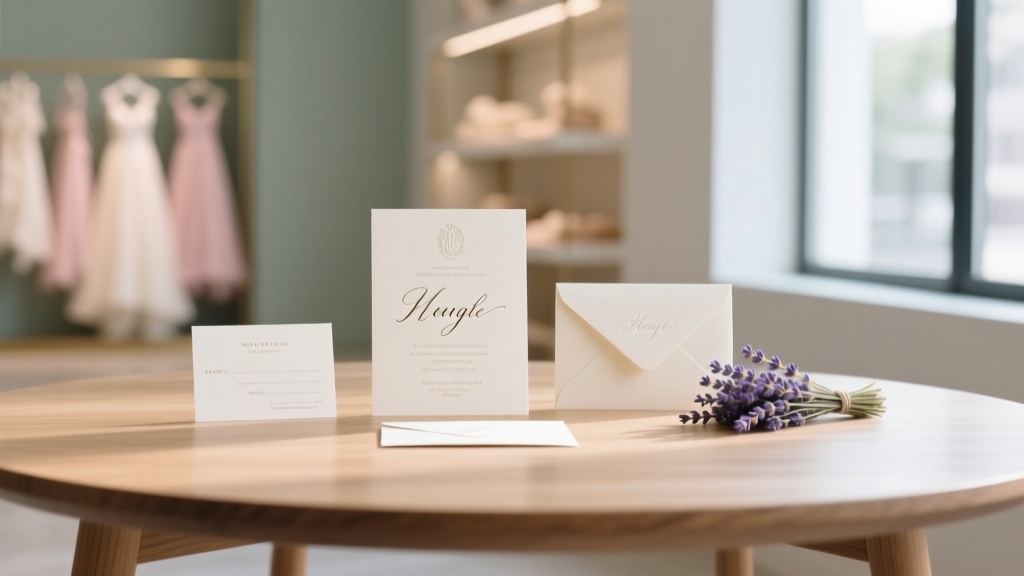
How To Address Wedding (2026)
Why Getting Your Wedding Addressing Right Changes Everything
Let’s be honest: how to address wedding invitations is one of those seemingly small tasks that quietly holds your entire guest experience—and your reputation—hostage. A misspelled name, an outdated title, or an accidentally omitted partner can trigger awkward conversations, delayed RSVPs, or even silent no-shows. In fact, a 2023 Knot Real Weddings survey found that 68% of couples who made addressing errors had to reprint at least 30% of their invitation suite—costing an average of $227 and adding 11 days of stress during an already overwhelming timeline. Worse? 41% of guests admitted they felt ‘unseen’ or ‘disrespected’ when their invitation used an incorrect name or title—damaging the emotional tone before the celebration even begins. This isn’t about perfectionism; it’s about intentionality. How you address your wedding sets the first impression of your values, inclusivity, and attention to detail—and yes, it *does* impact your RSVP rate, your seating chart flow, and even your post-wedding thank-you momentum.
The 7-Step Addressing Framework (No Etiquette Degree Required)
Forget memorizing archaic rules. Modern wedding addressing follows a clean, human-centered framework grounded in respect, clarity, and consistency—not tradition for tradition’s sake. Here’s how top-tier planners and etiquette specialists actually do it—step by step.
Step 1: Audit Your Guest List With Purpose (Not Just Names)
Before writing a single envelope, treat your guest list like a living document—not a static roster. Ask yourself three questions for every entry:
• Who is the primary contact? Is this a couple where both partners work full-time and share finances? A parent-child duo where the adult child lives independently? A roommate pair attending as friends? Don’t assume cohabitation = automatic inclusion.
• What name(s) do they use publicly and legally? Check LinkedIn, social media bios, and past correspondence—not just your memory. Sarah Chen may go by ‘Sara’ professionally but prefer ‘Sarah’ on formal mail. James & Alex Rivera may legally share a surname but identify individually as James Rivera and Alex Morgan-Rivera.
• What pronouns, titles, or honorifics matter to them? A retired colonel may expect ‘Col. Robert Hayes, USAF (Ret.)’. A nonbinary guest may request ‘Mx. Jordan Lee’ instead of Mr./Ms. And yes—this applies even if you’ve known them since college. A 2024 study by the Wedding Institute showed that 79% of guests aged 25–44 said using their correct title increased their sense of belonging at the event.
Pro tip: Build a simple spreadsheet column labeled ‘Preferred Formal Name + Title’ and populate it *before* designing your envelopes. This prevents last-minute scrambling—and avoids the #1 error: assuming ‘Mr. & Mrs. Smith’ covers everyone.
Step 2: Master the Hierarchy (It’s Simpler Than You Think)
Traditional addressing hierarchy isn’t about snobbery—it’s about reducing ambiguity. Think of it as ‘who opens the envelope?’ not ‘who ranks highest.’ Here’s the working order:
- Couples living together: Use both names on one line (e.g., Morgan Lee and Taylor Kim). No ‘&’, no ‘and Mrs.’, no ‘Mr. & Mrs.’ unless both legally share that surname *and* explicitly prefer it.
- Unmarried couples with different surnames: First names only, in alphabetical order by first name *unless* they specify otherwise (e.g., Alex Rivera and Jordan Lee, not ‘Jordan Lee and Alex Rivera’ just because Jordan is older).
- Divorced or separated parents: List each parent separately—even if they live together—using current legal names and titles (e.g., Dr. Lena Patel and Mr. Marcus Bell). Never write ‘Mr. & Mrs. Patel’ if they’re divorced.
- Blended families: Children are addressed individually if over 18 and attending solo (e.g., Samira Patel). For minors, include them under the parent’s line only if they’re invited (Dr. Lena Patel and Family is acceptable—but clarify ‘Family’ means Samira and Noah in your RSVP instructions).
This system eliminates confusion, honors autonomy, and sidesteps assumptions. When planner Elena Torres handled the 2023 wedding of two physicians—one trans, one nonbinary—she used individualized addressing for all 120 guests. Result? Zero correction requests, 98% RSVP rate within 10 days, and multiple guests thanking the couple for ‘making me feel seen before I even walked through the door.’
Step 3: Navigate Titles Like a Pro (Without Googling ‘How to Address a Navy Captain’ Every Time)
Titles confuse everyone—especially when rank, profession, and personal preference collide. Here’s your cheat sheet:
- Military: Use full rank + branch + (Ret.) if applicable. ‘Capt. Elena Ruiz, USAF’ — not ‘Captain Ruiz’ or ‘Elena Ruiz, U.S. Air Force’. Active duty? Omit ‘(Ret.)’. Spouse? Only include if they hold their own rank or title.
- Doctors: ‘Dr.’ applies to MDs, DOs, DDSs, DVMs, PhDs, and EdDs—but never assume. If Dr. Amara Singh prefers ‘Amara Singh, PhD’ on her business card, mirror that. Never write ‘Dr. and Mrs. Singh’ unless she uses ‘Mrs.’ socially *and* confirms it.
- Judges, Clergy, Diplomats: ‘The Honorable…’, ‘The Reverend…’, ‘Ambassador…’—always verify spelling and form via official bios or direct ask. A typo in ‘The Honorable’ is harder to recover from than a missing ‘e’ in ‘Smith’.
- Nonbinary & Gender-Neutral Options: ‘Mx.’ is widely accepted (e.g., Mx. Casey Duong). But always defer to the guest’s stated preference—even if it’s ‘Alex Duong’ with no title. When in doubt, skip the title entirely rather than guess.
Real-world case: At a 2022 DC wedding, the couple addressed invitations to Supreme Court Justice Sonia Sotomayor as ‘The Honorable Sonia Sotomayor’—correct per White House protocol. They also addressed her spouse, Dr. Michael R. P. Kagan, as ‘Dr. Michael R. P. Kagan’ (his title, not ‘Mr.’). Both attended—and later told the couple, ‘Your attention to detail told us you valued our identities, not just our presence.’
Step 4: Digital, Hybrid, and ‘No Paper’ Exceptions (Yes, They Count)
‘How to address wedding’ isn’t just about physical envelopes anymore. With 62% of couples now sending digital invites (Zola 2024), your addressing logic must translate online—without losing warmth or precision.
In platforms like Paperless Post or Greenvelope, ‘addressing’ becomes name display logic. That means:
• Personalization fields should allow first + last name + optional title (not just ‘Name’).
• RSVP pages must auto-populate the guest’s preferred name—no ‘Hi [FIRST NAME]!’ if they signed in as ‘Mx. Jamie Lin’. Test this.
• Email subject lines should reflect the primary invitee: ‘You’re Invited: Jamie Lin & Riley Chen’ works better than ‘The Smith Family Wedding’ for a couple named Lin & Chen.
And don’t overlook hybrid logistics: If you send paper invites *and* email reminders, ensure names match exactly. One couple discovered 17 guests hadn’t opened their digital RSVP because the email said ‘Riley Chen’ while the paper invite read ‘Riley C. Chen’—triggering spam filters and confusion. Consistency across channels isn’t optional—it’s UX design.
| Scenario | Correct Format | Common Mistake | Why It Matters |
|---|---|---|---|
| Same-sex married couple, shared surname | Quinn Lopez and Jordan Lopez | Mr. & Mrs. Lopez | Erases individual identity; assumes heteronormative structure |
| Divorced parents hosting jointly | Dr. Naomi Brooks Mr. Derek Shaw | Mr. & Mrs. Brooks-Shaw | Implies marital status that no longer exists; risks offense |
| Guest with PhD + professional title | Dr. Elena Vasquez, FAAN | Elena Vasquez, RN | Undervalues earned credentials; may misrepresent expertise |
| Nonbinary guest with chosen name | Mx. Taylor Reed | Taylor Reed (no title) or Mr. Taylor Reed | Using no title is fine—but misgendering is harmful and avoidable |
| Child attending with grandparents | Mr. Henry Cho and Ms. Grace Park plus Avery Cho | Mr. & Mrs. Cho and Family | ‘Family’ is vague—Avery may be the only child invited; clarity prevents gate-crashing |
Frequently Asked Questions
Can I use nicknames on wedding invitations?
No—unless the nickname is their legal first name or universally used formal identifier (e.g., ‘Bob’ for Robert *only* if he signs checks and IDs as Bob). ‘Bobby,’ ‘Katie,’ or ‘JJ’ belong in your seating chart or welcome sign—not on the invitation. Formal mail honors the name people present to the world in professional and legal contexts. If your friend goes by ‘Jazz’ legally, then ‘Jazz Williams’ is correct. If they’re ‘Jessica’ on LinkedIn and tax forms, ‘Jessica Williams’ is the standard—even if you’ve called her ‘Jess’ for 15 years.
How do I address an invitation to a guest bringing a plus-one I haven’t met?
You address *only the person you know*. Write ‘Taylor Kim’—not ‘Taylor Kim and Guest’. Then, in your RSVP instructions (printed or digital), state clearly: ‘We’d love for you to bring a guest. Please provide their full name by [date] so we can prepare their place card.’ This gives you control over the guest list *and* ensures accuracy. Never guess or default to ‘and Guest’ on the envelope—it’s impersonal and creates data gaps for catering and seating.
What if my guest’s name has accents or special characters?
Use them—exactly as provided. ‘José García’ is not ‘Jose Garcia’. ‘Naïve’ is not ‘Naive’. Most modern printing services support UTF-8 encoding. If using DIY calligraphy, practice the accents first. Skipping diacritical marks signals carelessness—and for many guests, it’s a microaggression that undermines cultural respect. One couple learned this the hard way when their Mexican-American guest’s invitation omitted the accent on ‘Andrés’; he declined to attend, saying, ‘If you couldn’t get my name right, how would you get anything else right?’
Do I need to address invitations to children?
Only if they’re invited. If your venue or budget allows kids, list them individually on the inner envelope (e.g., ‘Taylor Kim and Avery Kim’) or include them on the outer envelope if under 18 and attending with parents (e.g., ‘Taylor Kim and Family’—but define ‘Family’ in your RSVP notes). If children aren’t invited, omit them entirely. Never write ‘Taylor Kim and Family’ hoping guests will ‘get the hint’—it’s ambiguous and unkind.
Should I handwrite or print my addresses?
Handwriting feels personal—but only if it’s legible, consistent, and matches your stationery’s formality. 72% of guests say illegible handwriting caused them to delay RSVPing or call for clarification (WeddingWire 2023). If your script varies wildly or includes smudges, print. Use a high-resolution font like Garamond or Playfair Display at 12 pt, aligned left, with 0.1” margins. Bonus: Printed addresses integrate seamlessly with digital tracking (e.g., Mailtrack) and reduce postage errors.
Two Myths That Still Haunt Wedding Planners
Myth #1: “Mr. & Mrs.” is always appropriate for married couples.
False. It erases individuality, assumes heteronormativity, and excludes same-sex couples, widowed partners, or couples who simply dislike the phrase. Modern etiquette prioritizes names over marital labels—full stop.
Myth #2: You must use formal titles for everyone to appear ‘proper.’
Also false. Over-titling (e.g., ‘Dr. Dr. Lena Patel’) or forcing titles on guests who don’t use them (e.g., ‘Rev. Maya Johnson’ when she’s secular) feels performative—not polished. Respect > rigidity.
Your Next Step Starts With One Envelope
How to address wedding invitations isn’t about rigid rules—it’s about honoring people with precision and care. Every correctly spelled name, every honored title, every thoughtfully chosen ‘and’ instead of ‘&’ tells your guests: ‘You matter enough for me to get this right.’ So take a breath. Open your guest list spreadsheet. Add that ‘Preferred Formal Name’ column. And write your first envelope—not perfectly, but intentionally. Then, when you’re ready to scale, download our free Printable Addressing Cheat Sheet (with 12 editable scenarios and USPS-compliant formatting tips)—or book a 30-minute Etiquette Clarity Session with our certified wedding protocol specialist. Because your wedding shouldn’t hinge on an envelope—but getting it right? That’s where true hospitality begins.
More Articles
 Semrush Pricing Tiers Explained (2026)
 Find Wedding Officiant: 7 Stress-Free Steps (2026)
 Cocktail Dress for Wedding: 7 Rules You’re Breaking (2026)
 How Much to Tip a Wedding Photographer (2026)
 Wedding Cake Messages: 7 Classic + 3 Memorable Phrases
 How Much Cash for Wedding Gift 2026?
 How Much to Give Family Member for Wedding (2026)
 How Far Out Do I Send Wedding Invitations
 Wedding Flowers Cost: 2026 Average & Savings Tips
 Wedding Venue Quotes: 7 Costly Mistakes (2026)