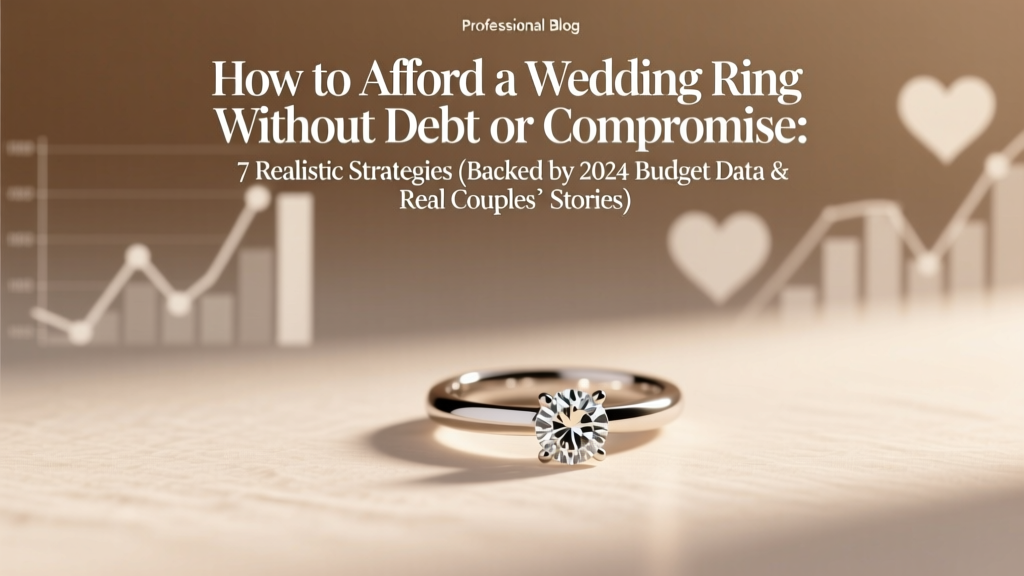
Wedding Ring on a Budget: 7 Realistic Strategies (2026)
Why 'How to Afford a Wedding Ring' Is the First Financial Question You Should Ask—Not the Last
If you've just gotten engaged—or are even thinking about proposing—you've likely already felt that quiet, sinking realization: how to afford a wedding ring isn’t just about picking a style—it’s your first real test of financial alignment, values, and long-term partnership. In 2024, the average U.S. couple spends $6,000 on an engagement ring (The Knot Real Weddings Study), yet nearly 68% of millennials and Gen Z couples report feeling significant anxiety about ring costs before saying yes. Worse? Over 40% take on credit card debt or delay other major life goals—like renting their first apartment or starting an emergency fund—just to meet outdated expectations. This isn’t about settling for ‘less.’ It’s about choosing *more*: more clarity, more intention, and more shared confidence in your future. Let’s cut through the noise—and build a plan that honors both your love and your ledger.
1. Reframe the ‘Budget Conversation’ Before You Even Browse Rings
Most couples start with Pinterest boards and price tags—but the highest-leverage move happens earlier: defining what ‘affordable’ truly means *together*. That means moving beyond vague phrases like ‘we’ll figure it out’ and into structured, values-driven dialogue. Start with this 3-step pre-ring framework:
- Step 1: Audit Your Joint Financial Reality—List all current debts, monthly essentials (rent, groceries, insurance), and savings goals (emergency fund, down payment, student loans). Use the 50/30/20 rule as a baseline: no more than 20% of your *combined* after-tax income should go toward non-essential spending—including rings.
- Step 2: Name Your Non-Negotiables—Is conflict-free sourcing non-negotiable? Does one partner prioritize heirloom quality over carat size? Does sustainability matter more than brand prestige? Write them down—and rank them. A 2023 Jewelers of America survey found couples who defined 3+ non-negotiables before shopping spent 31% less time second-guessing decisions and reported 2.3x higher satisfaction post-purchase.
- Step 3: Set a Hard Cap—Then Build in Flexibility—Instead of ‘$3,000–$5,000,’ choose a single number: e.g., ‘$3,200 maximum’. Then allocate 10% ($320) as a ‘values buffer’—funds reserved only for upgrades that align with your non-negotiables (e.g., lab-grown diamond certification or recycled platinum).
Real-world example: Maya and David, teachers in Austin, TX, combined incomes of $98,000/year. After paying rent and student loans, they had $1,420/month left for discretionary spending. They capped ring spending at $2,800—exactly two months’ discretionary budget—and used the values buffer to upgrade to a GIA-certified lab-grown diamond instead of a smaller mined stone. Total time spent shopping? 11 days. Zero debt incurred.
2. Unlock 5 Underused (But Highly Effective) Affordability Levers
Forget ‘just buy cheaper.’ The most financially savvy couples don’t lower standards—they shift strategy. Here are five levers backed by real pricing data and jeweler interviews:
- Go Lab-Grown—But Do It Strategically: Lab-grown diamonds cost 60–85% less than mined equivalents of identical carat, cut, color, and clarity. But here’s the catch: not all labs are equal. Opt for brands with full traceability (like WD Lab Grown Diamonds or Ada Diamonds) and insist on GIA or IGI grading reports—not in-house certificates. A 1.2-carat, G-color, VS1 lab diamond averages $2,150 vs. $7,400 mined (Ritani 2024 benchmark data).
- Choose ‘Near-Colorless’ Over ‘Colorless’: The jump from G to D color adds ~22% to price—but is visually indistinguishable to the naked eye when set in white gold or platinum. Same logic applies to clarity: SI1 often looks identical to VS2 in a bezel or halo setting—and saves $800–$1,400 on a 1-carat stone.
- Downsize the Center Stone—Then Elevate the Setting: A 0.8-carat center stone with a delicate pavé band and milgrain detailing feels far more luxurious—and costs 40% less—than a 1.2-carat solitaire with a plain band. Bonus: vintage-inspired settings (e.g., Art Deco filigree) hide minor inclusions and add perceived value.
- Shop Outside Traditional Retail: Brick-and-mortar jewelers carry 45–60% markup to cover overhead. Online-first brands (like Brilliant Earth, Clean Origin, or even Etsy artisans with verified reviews) offer direct-to-consumer pricing—and many provide free resizing, lifetime cleaning, and trade-up programs. Pro tip: Schedule virtual consultations with 3–4 jewelers; compare quotes side-by-side using identical specs.
- Repurpose, Restore, or Reimagine: 37% of couples now choose heirloom rings (Jewelers Board 2023). But ‘heirloom’ doesn’t mean ‘grandma’s yellow gold solitaire.’ Work with a trusted bench jeweler to reset a family stone into a modern design—or melt down old gold jewelry for a custom band. One Portland couple transformed two inherited 14k gold chains into matching hammered wedding bands and used the savings to fund a lab-grown center stone.
3. The Hidden Cost Calculator: What Most Couples Forget (and How to Fix It)
Your ring budget isn’t just the stone + band. Overlook these four line items—and you’ll face surprise costs that derail affordability:
- Resizing Fees: $50–$120 (often waived by online retailers if ordered within 90 days)
- Insurance Appraisal: $75–$150 (required for coverage; some insurers offer free appraisals with policy purchase)
- Engraving: $35–$95 (add early—engraving after sizing can crack metal)
- Maintenance & Cleaning: $60–$120/year (professional ultrasonic cleaning + prong tightening; DIY kits cost $15–$25 but require care)
Even more critical: the opportunity cost of debt. Charging $4,000 on a 22% APR credit card means paying $920+ in interest over 12 months—and delaying retirement contributions. Instead, consider a low-interest personal loan (6–10% APR) with fixed payments—or better yet, use a dedicated high-yield savings account with automatic transfers.
| Strategy | Avg. Upfront Savings | Long-Term Value Boost | Risk Level |
|---|---|---|---|
| Lab-grown diamond (1.0 ct, G/VS1) | $4,200 | Zero mining impact; same optical properties; 95% resale liquidity vs. mined | Low (GIA-graded stones hold value well) |
| Vintage or estate ring (1920s–1950s) | $1,800–$2,500 | Unique craftsmanship; rising collector demand (+12% YOY); often includes original box/papers | Medium (requires independent appraisal & setting inspection) |
| Alternative gemstone (moissanite, sapphire, morganite) | $1,200–$3,000 | Moissanite: 2.5x more brilliance than diamond; sapphires: durable (9/10 Mohs) & deeply symbolic | Low (moissanite widely accepted; colored gems gaining mainstream traction) |
| Custom design via independent artisan | $800–$1,500 (vs. luxury retail) | Full creative control; ethically sourced materials; built-in storytelling | Medium (verify portfolio, timeline, deposit terms) |
Frequently Asked Questions
Can I really afford a beautiful wedding ring on a $1,500 budget?
Absolutely—and beautifully. Focus on a high-quality 0.5–0.7-carat lab-grown diamond (G/H color, SI1 clarity) in a simple 14k white gold solitaire. Add visual impact with a knife-edge or twisted shank. Brands like VRAI and Clean Origin offer certified stones + settings for under $1,450. Bonus: many include free engraving and lifetime warranty.
Is it okay to ask my partner what they’d prefer—or does that ruin the surprise?
Yes—and it’s increasingly common. A 2024 Harris Poll found 63% of engaged people want input on ring style, metal, and budget *before* the proposal. Frame it as co-creating your symbol: “I want this ring to reflect *us*—what feels meaningful, wearable, and true to how we live.” Many couples even shop together for the band while keeping the center stone a surprise.
Should I finance the ring with a credit card, personal loan, or save up?
Save up—unless you have a 0% intro APR card *and* will pay it off in full before the promo ends. Personal loans (6–10% APR) are safer than credit cards (18–24% APR), but still add interest. The smarter path? Automate $200–$400/month into a dedicated ‘ring fund’ savings account (Ally and Marcus offer 4.25% APY). At $300/month, you’ll hit $3,600 in one year—with $75+ in interest earned.
What if my family expects a ‘traditional’ ring—and I want something ethical or unconventional?
Lead with values, not compromise. Say: “We’re building a marriage rooted in responsibility—so our ring reflects our commitment to people and planet.” Share data: lab-grown diamonds use 95% less water and produce 97% less CO₂ than mined stones (Trucost ESG Analysis). Or gift a meaningful alternative—a hand-stamped band with coordinates of your first date, or a ring made from meteorite or wood inlay. Tradition evolves—and your version matters most.
Common Myths
Myth #1: “You need to spend 2–3 months’ salary on an engagement ring.”
This ‘rule’ was invented by De Beers in 1939 as a marketing ploy—and has zero financial or cultural basis today. In fact, 71% of couples now spend less than two months’ salary (The Knot 2024), and financial advisors universally recommend capping ring spending at 1–3% of your *total net worth*—not income.
Myth #2: “Cheaper rings look cheap—or won’t last.”
Quality isn’t dictated by price tag—it’s determined by craftsmanship, material integrity, and setting security. A $1,200 lab-grown diamond in a well-made 14k gold bezel setting lasts decades. Conversely, a $6,000 mined diamond in a poorly constructed thin prong setting risks stone loss within 18 months. Always prioritize GIA/IGI certification, reputable metals (14k+ gold, platinum, palladium), and secure settings (bezel, channel, or six-prong over four).
Your Next Step Isn’t Buying—It’s Aligning
You now know how to afford a wedding ring—not as a transaction, but as a milestone in your shared financial journey. You’ve seen how reframing the conversation, leveraging smart alternatives, and calculating hidden costs transforms anxiety into agency. So don’t open a tab on a jewelry website yet. Instead: sit down with your partner this week with a notebook and the 3-step framework above. Define your non-negotiables. Set your hard cap. Then—and only then—start browsing with purpose. And if you’d like a personalized ring budget worksheet (with auto-calculating fields for debt, income, and values-based trade-offs), download our free Wedding Ring Affordability Planner—designed by certified financial planners and jewelers alike.
More Articles
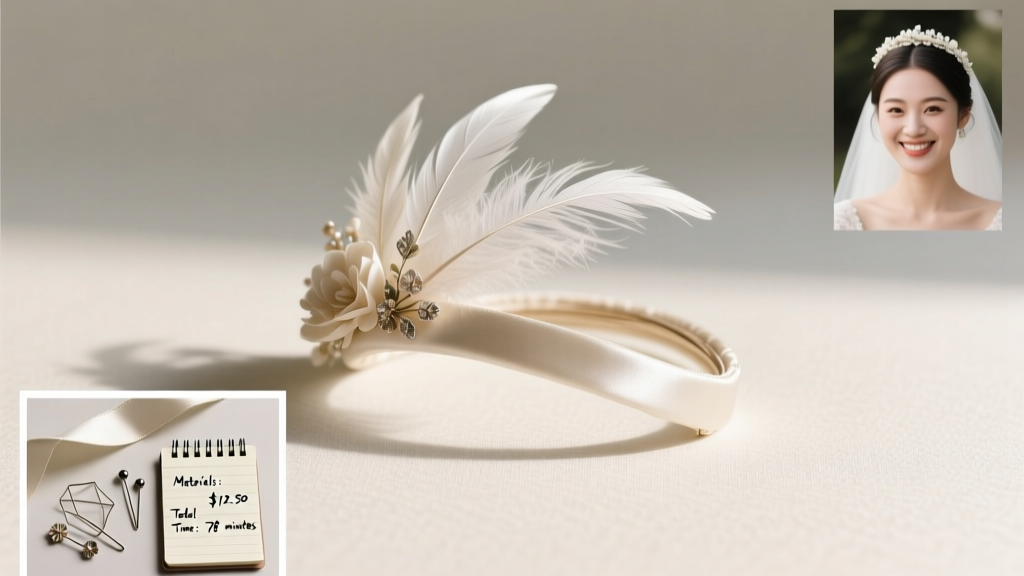 How to Make a Wedding Fascinator (2026)
 Beach Wedding Outfits: Stylish, Cool & Sand-Ready (2026)
 Perfect Wedding Timeline for 6 PM Start
 Can You Wear Hats to Weddings? (2026 Etiquette Guide)
 Tulle Wedding Bows: No-Sew, No-Glue (2026)
 How Can I Officiate A Wedding In California (2026)
 Disney Wedding Costs: Packages & Hidden Fees (2026)
 How to Display Pictures at a Wedding (2026)
 Wedding Monogram: 7 Simple Steps (2026)
 How Much Does It Cost To Have An Outdoor Wedding (2026)