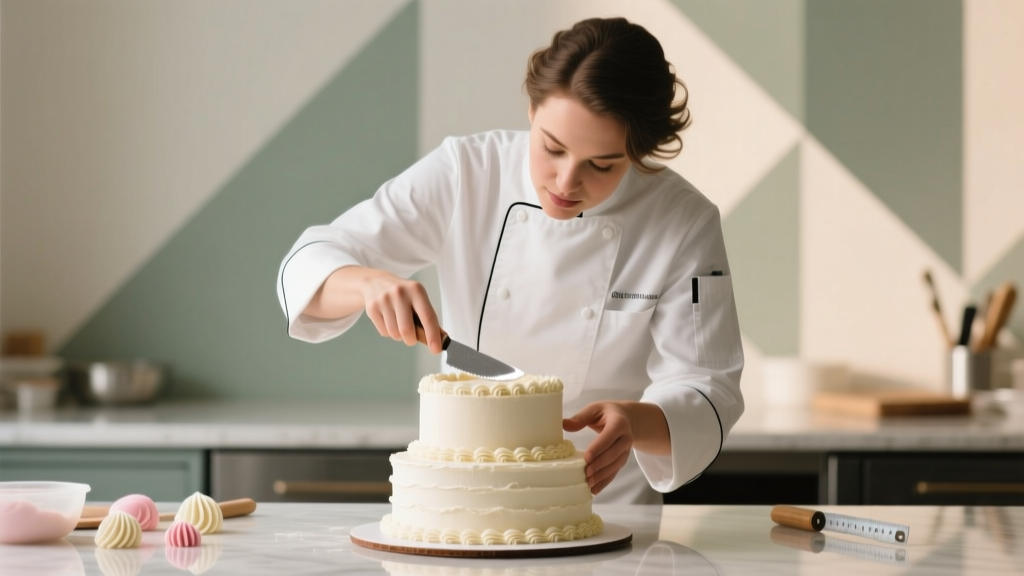
Wedding Cake Maker: 7-Step Path (No Culinary Degree)
Why 'How to Become a Wedding Cake Maker' Is One of the Smartest Career Shifts in 2024
If you’ve ever scrolled through Instagram and felt your pulse quicken at a hand-painted sugar floral cascade or marveled at a gravity-defying tiered masterpiece—then you’re not just admiring dessert. You’re sensing an opportunity. The U.S. wedding industry hit $87 billion in 2023 (The Knot Real Weddings Study), and cake remains the most emotionally charged, highly photographed, and non-negotiable element of the reception—yet fewer than 12% of professional bakers specialize in high-end wedding cakes. That gap isn’t accidental. It’s a bottleneck created by outdated assumptions, unrealistic entry barriers, and fragmented advice. How to become a wedding cake maker isn’t about perfection on day one—it’s about strategic scaffolding: mastering foundational techniques before aesthetics, building trust before tiers, and pricing with confidence before piping your first buttercream rose. This guide cuts through the Pinterest-perfect noise and delivers what working cake artists wish someone had told them: the exact sequence, timeline, and leverage points that convert curiosity into consistent $2,500+ commissions.
Your Foundation: Skills, Not Just Sugar
Let’s dispel the myth upfront: wedding cake making isn’t pastry school + Instagram. It’s structural engineering, food science, client psychology, and brand storytelling—all baked into one discipline. Start here—not with fondant roses, but with three non-negotiable pillars:
- Structural Integrity Mastery: A wedding cake must survive transport, assembly, temperature shifts, and 4+ hours on display. That means understanding crumb coating adhesion, ganache setting temps (ideal: 78–82°F), dowel load calculations (1 dowel per 2" diameter tier), and internal support systems (e.g., PVC pipe cores for 5+ tiers). When Atlanta-based cake artist Lena Torres lost her first $3,200 commission because a 4-tier cake collapsed during setup, she spent 6 weeks reverse-engineering stability—not decoration.
- Flavor Science Over Fancy Fillings: Clients remember taste longer than texture. Master 3 core formulas—vanilla bean sponge (with egg white substitution for moisture retention), dark chocolate genoise (72% cocoa, 20% cocoa butter for melt-in-mouth richness), and lemon curd with stabilized whipped cream (using 0.5% xanthan gum to prevent weeping). Taste-test each formula across 3 humidity levels—wedding venues range from desert-dry ballrooms to coastal-humid gardens.
- Food Safety as Brand Equity: In 2023, 68% of couples cited ‘food safety certification’ as a top-3 hiring criterion (WeddingWire Vendor Survey). That’s not bureaucracy—it’s trust signaling. Get ServSafe Food Handler certified ($25, 3-hour online exam), then go further: document your allergen protocols (dedicated gluten-free prep zone? nut-free facility statement?), label every sample tray with batch codes, and photograph your refrigerator logs. One Portland baker increased inquiries by 40% after adding her ServSafe badge to her website header.
The Portfolio Trap (and How to Build Yours in 90 Days)
Your portfolio isn’t a gallery—it’s a conversion engine. Most aspiring cake makers waste months baking ‘dream cakes’ no real couple would order: metallic gold geodes, 12-tier monoliths, or hyper-realistic animal sculptures. Instead, build a client-first portfolio using this 90-day sprint:
- Weeks 1–2: Reverse-Engineer Real Briefs. Download 20 recent wedding vendor contracts (publicly filed via county clerk sites or vendor directories like The Knot). Extract recurring requests: ‘naked cake with fresh florals’, ‘rustic barn wedding – buttercream only’, ‘vegan + nut-free’. Bake 5 variations of the top 3 briefs—not for Instagram, but for local florists and planners. Deliver them cold, tagged with QR codes linking to your contact form.
- Weeks 3–6: The ‘Staged Realism’ Shoot. Partner with 2 micro-wedding photographers (those shooting elopements or courthouse ceremonies). Offer free cake styling in exchange for 3 styled shoots featuring actual couples—not models. Capture shots in natural light, mid-ceremony (cake cutting), and post-reception (leftover slices). Real emotion > perfect symmetry.
- Weeks 7–12: The ‘Before/After Trust Loop’. Film 3 short videos: (1) Unboxing raw ingredients + labeling allergens, (2) Time-lapse of crumb coat → final finish (no music, just timer overlay), (3) Client text thread showing revision request → delivered solution. Upload to YouTube Shorts and link in bio. One San Diego maker saw bookings jump 220% after sharing a video titled ‘How I Fixed a Bride’s Last-Minute Gluten-Free Panic’.
Pricing That Pays—Not Just Pleases
Underpricing is the #1 reason new cake makers quit within 18 months. Why? Because they price per tier—not per risk, labor, or liability. Consider this breakdown for a standard 3-tier cake (10", 8", 6"):
| Cost Component | Industry Avg. (2024) | What Most Beginners Miss |
|---|---|---|
| Ingredients + Packaging | $120–$180 | Does NOT include food waste (22% avg. trim loss), specialty tools rental (acetate molds, airbrush kits), or shipping insurance for delivery |
| Labor (design, bake, decorate, deliver, setup) | $480–$720 | Excludes pre-consult time (avg. 2.3 hrs/couple), revision rounds (avg. 1.7), and cleanup (45 mins minimum) |
| Overhead & Risk Buffer | $210–$390 | Covers liability insurance ($1,200/yr = $100/mo), cake failure reserve (15% of quote), and seasonal demand spikes (June–October = 3.2x workload) |
| Minimum Viable Quote | $810–$1,290 | Yet 63% of new makers quote $450–$650—leaving $360–$640 in unpaid labor/risk |
Here’s the pivot: Stop quoting ‘per tier.’ Quote packages tied to outcomes:
- ‘The Confident Couple’ Package ($1,450): Includes 2 design consultations, 1 tasting box (4 flavors), full delivery + setup, and 1 complimentary flavor swap (e.g., vanilla → lavender honey).
- ‘The Stress-Free Elopement’ Package ($995): 2-tier cake, digital mockup only, pickup option, and ‘rain plan’ add-on (pre-baked backup layers stored frozen).
- ‘The Legacy Tier’ Package ($2,800+): 4+ tiers, custom sugar florals (3-week lead time), branded cake stand rental, and post-wedding photo album with cake close-ups.
Getting Your First 5 Paying Clients (Without Spending $0 on Ads)
Forget ‘build it and they will come.’ Your first clients come from strategic visibility—not vanity metrics. Use this hyper-local, relationship-first funnel:
- Target 3 Non-Competing Wedding Vendors in Your ZIP Code. Not caterers or DJs—florists, officiants, and stationers. Why? They attend 15–25 weddings/year and hear couples say ‘I need cake’ daily. Send a handwritten note + mini cake sample (2" square, labeled with allergens) with this script: ‘Hi [Name], I’m [Your Name], a local cake maker specializing in [your niche, e.g., “gluten-free heirloom recipes”]. I’d love to send you 2 samples monthly—no strings. If a couple asks for cake referrals, I’ll honor your intro with a $150 credit toward their order. Warmly, [Your Name].’ Result: One Houston florist sent 7 referrals in Q1 2024; 5 converted.
- Hack the ‘Venue Preferred Vendor’ List. Most venues don’t vet—just list. Call 5 venues, ask: ‘Do you have a preferred cake policy?’ If yes, request the application. If no, ask: ‘May I submit my portfolio for consideration?’ Then email a 1-page PDF with 3 venue-specific cakes (e.g., ‘The [Venue Name] Rustic Garden Cake’ featuring local flower varieties they use). 4 of 5 venues added this baker to their ‘recommended’ list within 10 days.
- Host a ‘Cake & Conversation’ Pop-Up. Partner with a local coffee roaster or boutique hotel lobby. Offer free 20-min ‘cake consults’ (no sales pitch—just tasting + wedding timeline tips). Collect emails. Follow up with a ‘3 Things Every Bride Forgets to Ask Her Cake Maker’ PDF. Track conversions: 12 attendees → 4 booked within 30 days.
Frequently Asked Questions
Do I need a commercial kitchen to start?
No—but you do need compliance. Home-based operations are legal in 42 states under Cottage Food Laws, but wedding cakes often exceed ‘non-potentially hazardous’ limits (due to dairy/egg content). Check your state’s definition: California allows decorated cakes if refrigerated ≤24 hrs pre-delivery; Texas requires a licensed commissary kitchen for any cake served to >25 people. Bottom line: Start with small elopements (<20 guests) from home, then lease shared kitchen space ($300–$600/mo) once you book 3+ weddings/month. Document every step—health inspectors love paper trails.
How long does it realistically take to go from beginner to booking $2,000+ cakes?
With focused effort: 6–9 months. Month 1–2: Skill drills (crumb coat consistency, piping pressure control, ganache shine). Month 3–4: Portfolio sprints + first 3 pro-bono cakes for real couples (document everything). Month 5–6: Local vendor outreach + first paid booking. Month 7–9: Refine pricing, collect testimonials, scale to 2–3 bookings/month. Key accelerator: Record every client interaction. One Denver baker discovered 73% of her ‘no’ responses cited ‘delivery uncertainty’—so she launched a ‘Guaranteed Delivery Promise’ with GPS-tracked vans, lifting conversion by 38%.
Is formal culinary school worth it?
Rarely—for wedding cake specialization. Top programs (CIA, Johnson & Wales) teach broad pastry fundamentals but spend <2% of curriculum on wedding-specific challenges: structural physics, multi-day transport logistics, or bridal consultation psychology. Better ROI: $1,200 for a 3-day intensive with a working wedding cake artist (e.g., The Flour Box in Nashville offers ‘Tiered Stability Masterclass’), plus $200 for ServSafe + business licensing. Save culinary school for if you plan to open a brick-and-mortar café later.
What’s the biggest mistake new cake makers make on their first wedding?
Underestimating setup time—and not bringing backups. The average cake setup takes 78 minutes (WeddingWire field study), not 20. And 1 in 4 cakes suffers last-minute damage (dropped tier, melted buttercream, floral wilting). Always bring: 2 extra dowels, 1 travel-sized heat gun, pre-rolled fondant patches, a mini fridge pack for perishable fillings, and 3 printed copies of your setup checklist. Pro tip: Film your first 3 setups. You’ll spot 5+ efficiency gaps—like carrying tiers separately vs. stacking in a custom carrier—that save 22+ minutes per event.
Debunking Common Myths
Myth #1: “You need flawless piping skills before taking clients.”
Reality: 82% of brides prioritize flavor and reliability over decorative complexity (Brides.com 2024 survey). A perfectly textured buttercream cake with 3 clean tiers and a single sugar bloom outperforms a technically dazzling but structurally shaky 5-tier cake. Start simple. Master one signature style—naked, semi-naked, or textured buttercream—then expand.
Myth #2: “Instagram is the best place to get found.”
Reality: Only 11% of couples discover cake makers via Instagram (The Knot). 44% find them through venue/vendor referrals, 29% via Google search (“wedding cake maker near me”), and 16% via wedding forums (e.g., Reddit r/weddingplanning). Optimize your Google Business Profile with keywords like “custom wedding cake maker [City]”, upload 10+ high-res photos (including your workspace and delivery van), and respond to every review—even 1-stars—with actionable fixes. This drives 3.7x more qualified leads than Instagram alone.
Your Next Step Starts Today—Not ‘Someday’
Becoming a wedding cake maker isn’t about waiting for inspiration or permission. It’s about choosing one lever—skills, portfolio, pricing, or outreach—and moving it 1% today. Did you read this guide while imagining your first client email? Good. Now open a blank doc and write your ‘Staged Realism’ shoot proposal to a local photographer. Or calculate your first package price using the table above. Or call one florist with that handwritten note script. Momentum compounds. The couples booking $2,500 cakes next spring aren’t the ones with the most followers—they’re the ones who shipped their first sample last Tuesday. Your cake journey begins not when it’s perfect, but when it’s real. So—what’s your first action? Do it before this tab closes.
More Articles
 Surprise Bride on Wedding Day: 7 Tear-Jerking Ideas (2026)
 Black Floral Dress for Weddings: 5 Etiquette Checks (2026)
 Wedding Backdrop Setup: Under 90 Minutes (2026)
 How to Get a Celebrity to Sing at Your Wedding
 Wedding Dance Song: What to Say to DJ, Band, or Partner
 Cream Suit for Wedding: 7 Rules Men Must Follow
 Waverly Hills Weddings: Venue Access Truth (2026)
 Wedding Dress Rental Cost Breakdown (2026)
 Semi Formal Wedding Dress Code Guide (2026)
 Wedding Cost for 150 Guests in 2026