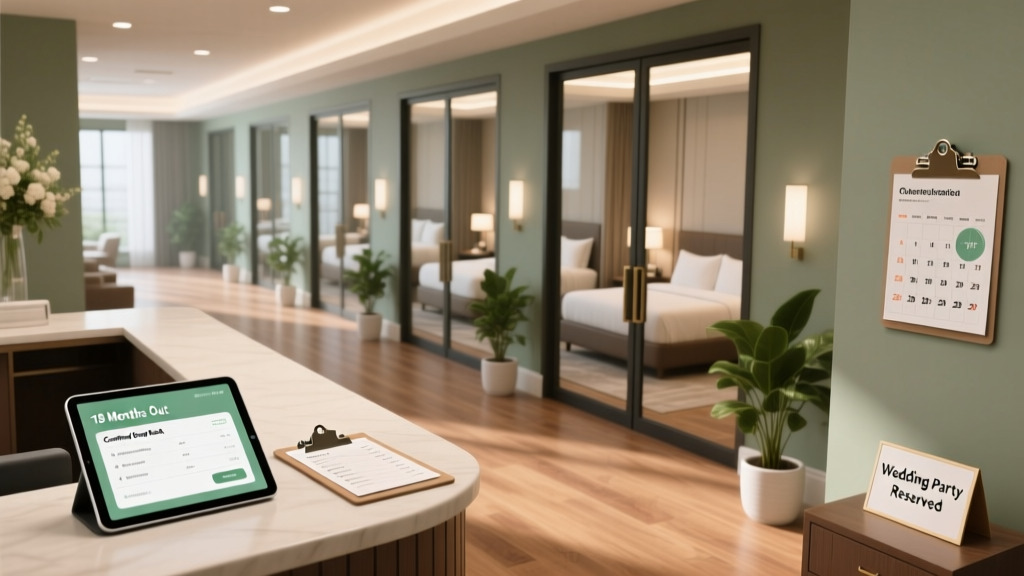
Wedding Hotel Block Booking: 7 Must-Do Steps (2026)
Why Getting Your Wedding Hotel Block Right Changes Everything
If you’ve ever scrolled through 47 guest text threads asking, ‘Wait—where am I staying?’ or watched your RSVP count drop because your cousin couldn’t find a room at the ‘discounted rate,’ you already know: how to book a wedding hotel block isn’t just logistics—it’s guest experience, budget control, and peace of mind rolled into one high-stakes reservation. In fact, 68% of couples who skip formal hotel block planning report at least one major guest accommodation crisis (The Knot 2023 Real Weddings Study), and venues now routinely require proof of a confirmed block before finalizing your date. This isn’t about convenience—it’s about protecting your celebration from avoidable friction.
Your Block Is a Contract, Not a Suggestion—Here’s What That Really Means
Most couples assume ‘booking a hotel block’ means calling the front desk and saying, ‘We need 20 rooms.’ But that’s like signing a lease without reading the fine print. A true wedding hotel block is a negotiated agreement with enforceable terms—and it starts long before your save-the-date goes out. Let’s break down what actually happens behind the scenes.
First: hotels don’t ‘hold’ rooms for free. They allocate inventory based on your group’s projected value—not your wedding size. That means if your estimated spend per room night falls below their threshold (often $150–$220/night, depending on location and season), they’ll treat your block as low priority—even if you’re paying full rate. Second: the ‘guarantee date’ (typically 30–60 days pre-wedding) is non-negotiable. Miss it, and every unbooked room gets released—and often resold at a premium. Third: attrition clauses penalize you for unfilled rooms—but savvy couples negotiate ‘room pickup minimums’ instead, which only charge for rooms *actually used*, not reserved.
Real example: Sarah & Diego booked their Napa Valley wedding at The Meritage Resort 14 months out. Their planner secured a 25-room block with a 10-room minimum guarantee and no attrition fee—because they committed to hosting their rehearsal dinner onsite ($4,200 F&B spend). Without that leverage, the hotel would’ve required a 20-room guarantee and $1,800 penalty per unfilled room.
The 7-Step Booking Framework (With Timing Benchmarks)
Forget vague advice like ‘start early.’ Here’s exactly when and how to act—with deadlines baked in:
- Month 12–10 pre-wedding: Identify 3–5 target hotels within 15 minutes of your venue. Prioritize properties with dedicated group sales managers (not front desk staff) and verify they offer wedding-specific packages (e.g., complimentary suite upgrades, welcome amenities).
- Month 9: Request proposals. Demand line-item breakdowns—not just ‘$189/night.’ Ask for: base room rate, resort fees, tax, parking costs, Wi-Fi charges, and cancellation policies per room type.
- Month 8: Negotiate. Push for: free room blocks for vendors (photographer, DJ, officiant), flexible check-in/out times, and ‘no-show protection’ (if guests book but cancel late, the hotel waives rebooking fees).
- Month 7: Sign the contract—but only after legal review. Highlight these 4 clauses: attrition language, force majeure coverage (for weather or health emergencies), room release timeline, and commission structure (some hotels pay planners 10%; others charge couples a ‘group booking fee’).
- Month 6: Launch your block. Share a personalized link (not just the hotel phone number) with clear instructions: ‘Book by [date] to lock in the group rate. Rooms release daily after [date]—even if your name isn’t on the reservation.’
- Month 3: Send a ‘block status update’ email: ‘72% of rooms are booked—12 remain at the group rate! After [date], rates increase by 35%.’ Include a screenshot of real-time availability (most hotels provide this via GroupLink or similar portals).
- Month 1: Confirm pickup numbers with the hotel. Submit your final list of reserved rooms—including names, check-in dates, and special requests (cribs, rollaways, ADA rooms). Verify all reservations show the group code and discounted rate.
Negotiation Scripts That Actually Work (Not Just ‘Can You Do Better?’)
Hotels hear ‘can you lower the rate?’ dozens of times daily. What moves the needle? Specificity, leverage, and reciprocity. Try these proven phrases:
- For rate flexibility: ‘We’re committing to 30 room nights across Friday–Sunday and hosting our welcome dinner here. Can we lock in the $199 rate for all three nights, plus waived resort fees for the first 20 bookings?’
- For vendor rooms: ‘Our photographer and florist will be on-site 12+ hours each day. Would you waive one standard room for each, in exchange for featuring your property in their social media posts (with credit)?’
- For attrition relief: ‘Given our guest list includes 42% out-of-town attendees with complex travel schedules, can we shift to a ‘soft guarantee’—where penalties only apply to rooms held past the release date, not unfilled ones?’
Bonus tactic: Ask for a ‘rate match guarantee.’ One couple in Charleston secured this clause: if a lower public rate appears within 72 hours of booking, the hotel matches it retroactively—and credits the difference to their wedding account.
Hotel Block Comparison Table: What to Track & Why
| Metric | What to Document | Why It Matters | Red Flag Threshold |
|---|---|---|---|
| Room Release Timeline | Exact date rooms revert to general inventory | Guests booking late hit higher rates or no availability | Release before 30 days pre-wedding |
| Attrition Penalty | Fee per unfilled room + calculation method | Can cost $500–$1,200/room; often buried in addendums | Penalty > 80% of room rate or applies before guarantee date |
| Vendor Comps | Number of free rooms + eligibility rules | Vendors need rest; paying for their lodging cuts into your budget | Zero free rooms offered, or requires $10k+ F&B spend |
| Group Code Validity | Start/end dates for discounted rate access | Guests booking outside this window pay full price | Window < 90 days pre-wedding OR expires before ceremony |
| Wi-Fi & Parking | Included? Cost per night? Daily cap? | Hidden fees add $30–$65/room/night—easily $1,000+ total | Charges > $15/night for either service |
Frequently Asked Questions
Do I need a wedding planner to book a hotel block?
No—but it’s strongly advised if you’re booking at a luxury property, destination venue, or during peak season (June–October). Planners have established relationships with group sales managers, know which clauses to fight for (like attrition waivers), and handle all correspondence. That said, DIY is viable: 41% of couples book blocks independently (WeddingWire 2024 Survey). Key tools: use GroupLink or HotelPlanner for real-time tracking, and always request a written proposal—not verbal promises.
What if my guests book outside the block?
They absolutely can—and many will. But here’s the catch: unless they use your group code, they won’t get the negotiated rate, welcome amenities, or coordinated check-in. Worse, their bookings don’t count toward your guarantee. Pro tip: share a simple script: ‘Use our group code [CODE] to get $45 off/night + complimentary breakfast. Book directly on [hotel website link]—third-party sites (Booking.com, Expedia) won’t honor the discount.’ Also, ask the hotel to flag your group code in their PMS so front desk staff can proactively offer upgrades to block guests.
How many rooms should I block?
Base it on your guest list—not assumptions. Rule of thumb: block rooms for 60–70% of out-of-town guests. Example: 120 guests, 85 from out of state = ~60 rooms. But adjust for reality: families with kids often need 2 rooms; older guests may prefer single occupancy. Always over-block by 10–15% (so 66–69 rooms) to absorb no-shows and last-minute additions. Never block more than 85% of your guest count—that’s where attrition risk spikes.
Can I change the block size after signing?
Yes—but only before the guarantee date (and often with a fee). Most contracts allow one adjustment 60–90 days pre-wedding. To maximize flexibility: negotiate ‘step-down guarantees’ (e.g., 25 rooms by Day 90, 20 by Day 60, 15 by Day 30). Also, ask for ‘early release’ rights: if you fill 90% of the block by Month 4, can you reduce the guarantee without penalty? One Atlanta couple did this—and saved $2,100 in attrition fees.
What happens if the hotel overbooks our block?
It’s rare—but it happens. Legally, the hotel must ‘walk’ guests (relocate them to a comparable property, cover transport, and compensate). Your contract should specify this remedy. In 2023, a Chicago couple received $1,200 cash + free weekend stay after their hotel double-booked 8 rooms. Always document everything: take screenshots of your block confirmation email, note the group manager’s name, and keep call logs. If issues arise, escalate to the GM—not the sales rep.
Debunking 2 Common Myths
- Myth #1: “The venue recommends a hotel, so it’s automatically the best deal.” Reality: Venues often receive referral fees (5–15% of room revenue) for steering couples to partner hotels. Those commissions rarely translate to better rates or terms for you. Always compare at least two non-venue-recommended options—even if it’s a 20-minute drive farther.
- Myth #2: “If I book early, I don’t need to worry about the block later.” Reality: Early booking locks in availability—but not performance. Without active promotion (email reminders, WhatsApp updates, deadline urgency), 30–50% of allocated rooms go unbooked. One study found couples who sent three targeted block updates saw 2.3x higher pickup rates than those who sent one.
Your Next Step Starts Today—No Matter Where You Are in Planning
You don’t need a finalized guest list or signed venue contract to begin. Right now, open a blank doc and write down: (1) your top 3 hotel criteria (e.g., shuttle service, pool access, pet-friendly), (2) your realistic out-of-town guest count, and (3) your absolute latest date for requesting proposals. Then—within 48 hours—email one hotel’s group sales team with this subject line: ‘Wedding Block Inquiry: [Your Date] – [Your City].’ Attach nothing. Just ask for their group proposal template and timeline. That single email triggers the entire process. And if you’d like our free Hotel Block Negotiation Playbook (with editable contract clause tracker and guest email templates), grab it at [link]—no email required.
More Articles
 Print Wedding Programs: 7 Trusted Options (2026)
 Do I Need a DJ for My Wedding? (2026)
 Hem Satin Wedding Dress: Snag-Free, Stress-Free (2026)
 7th Wedding Anniversary Gifts: Copper & Modern Ideas
 When to Get Marriage License: State Deadlines (2026)
 How Much to Tip Caterer Wedding Buffet (2026)
 Best Places to Order Wedding Dress Online (2026)
 Wedding Date Format Guide: Rules & Checklist (2026)
 What Is a Wedding Consultant? (2026)
 Marriage License Before Wedding: Rules & Deadlines