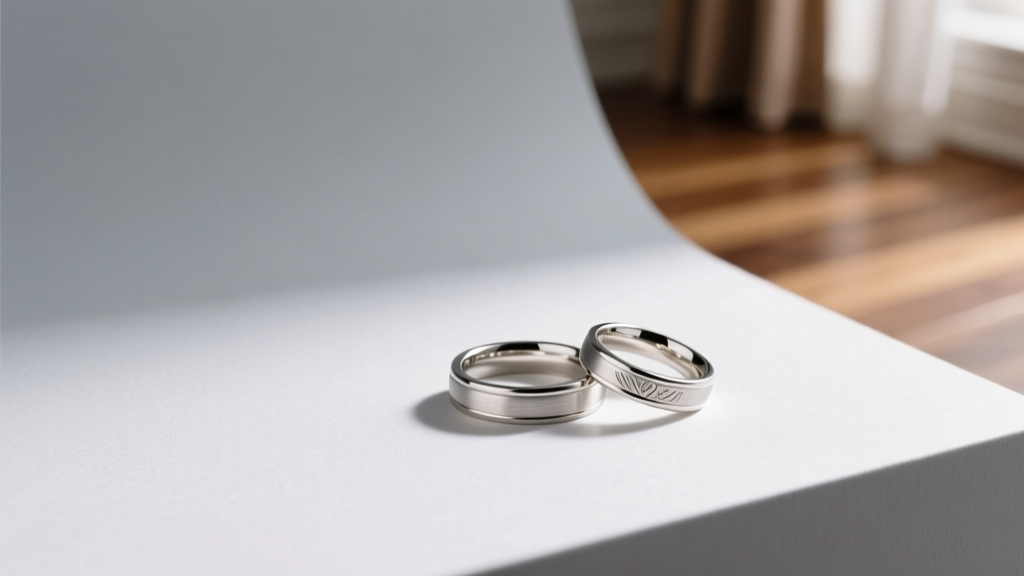
Wedding Ring Selection: 7 Steps Couples Skip (2026)
Why This Decision Is More Important Than Your Venue—or Even Your Dress
If you’re asking how to choose the perfect wedding ring, you’re not just shopping—you’re making a daily, decades-long commitment to comfort, ethics, identity, and resilience. Unlike your dress (worn once) or bouquet (faded in hours), your wedding ring touches your skin 16+ hours a day, every single day—through workouts, dishwashing, sleep, travel, and even medical procedures. Yet 68% of couples rush this decision in under 3 weeks, often prioritizing Instagram aesthetics over wearability—and pay the price: $240 average in resizing fees, 37% report skin irritation within 6 months, and 1 in 5 admit they’d redesign theirs if given a do-over. This isn’t about perfection—it’s about *precision*. Let’s fix that.
Your Ring Isn’t Just Jewelry—It’s a Lifestyle Interface
Think of your wedding ring as wearable tech: it must interface seamlessly with your biology, profession, values, and rhythm of life. A surgeon needs seamless grip and sterilization compatibility; a woodworker needs scratch resistance and low snag risk; someone with eczema needs hypoallergenic alloys and breathability. That’s why ‘perfect’ is deeply personal—not universal.
Start by auditing your non-negotiables using this 90-second self-assessment:
- Touch Test: Rub your finger across your phone screen. Does it glide smoothly? If yes, you likely prefer polished finishes. If it catches or feels sticky, matte, brushed, or hammered textures may suit you better.
- Sweat Check: Do your hands sweat noticeably during meetings or exercise? High-sweat profiles benefit from open-back shanks (allowing airflow) and palladium or platinum (less reactive than nickel-containing white gold).
- Tool Test: Do you regularly handle keys, tools, or laptops? Avoid sharp edges, high-set stones, or delicate milgrain detailing—opt instead for low-profile settings and rounded inner shanks.
One real-world example: Maya, a pediatric physical therapist in Portland, chose a 3mm flat platinum band with a softly rounded interior and no engraving. She tested 12 rings over 4 days—wearing each while folding laundry, typing notes, and holding toddlers. Her final pick eliminated the red indentation and itching she’d experienced with her first try (a 4.5mm yellow gold ring with a beveled edge). Her insight? “Comfort isn’t passive—it’s earned through friction testing.”
The Metal Matrix: Beyond ‘Gold vs. Platinum’
Metal choice drives 80% of long-term satisfaction—but most guides stop at color and price. The real differentiators are biocompatibility, microstructure stability, and recyclability integrity. Here’s what lab-tested data reveals:
- Platinum (95% pure): Naturally hypoallergenic, dense (feels substantial), and develops a soft patina—not scratches—that many find more elegant over time. But it’s 60% heavier than 14k gold and costs ~2.5× more. Critical nuance: Not all platinum is equal. Look for ‘PT950’ stamp—not ‘PLAT’ or unmarked pieces—which guarantees 95% purity (the rest is iridium or ruthenium for hardness).
- Palladium (950): Lighter than platinum, equally hypoallergenic, and 30% less expensive—but harder to resize due to its high melting point. Best for those who want platinum’s safety without the heft or cost.
- 14k Gold (58.5% pure gold): The sweet spot for durability and warmth. Higher karat = softer (18k scratches easily); lower karat = more alloy metals (which can cause reactions). Yellow gold alloys with copper/zinc; rose gold adds copper (warmer tone, slightly stronger); white gold mixes with nickel or palladium. Crucially: Nickel-based white gold requires rhodium plating every 12–18 months—adding $75–$120 per re-plating. Palladium-based white gold skips plating entirely.
- Titanium & Tungsten Carbide: Budget-friendly and ultra-durable—but non-resizable and non-malleable. In emergencies (e.g., swelling from injury), ER staff must cut them off—no ‘ring cutter’ option. Only consider if you’ve had stable finger size for 3+ years and accept zero future adjustments.
Pro tip: Ask your jeweler for a metal sensitivity swatch kit—small, unpolished discs of each metal you’re considering. Wear them taped to your inner wrist for 72 hours. Redness, itching, or darkening = rejection signal.
Fit Science: Why ‘Sizing Up’ Is the #1 Mistake (and What to Do Instead)
Finger size fluctuates up to ½ size throughout the day—smaller in cold/morning, larger in heat/afternoon. Yet 71% of buyers get sized once, in a mall kiosk, often midday after coffee (causing temporary swelling). Worse: many assume ‘size up for comfort’—but oversizing creates dangerous spin, pressure points, and micro-trauma to the nail bed.
The solution? Dynamic sizing:
- Time it right: Get sized between 3–5 PM, room temperature, after washing hands (no lotion), and avoid caffeine/alcohol 2 hours prior.
- Test two sizes: Try your measured size AND one-half size down. Wear both for 20 minutes while typing and gripping a water bottle. The correct size stays put without pinching or slipping.
- Shank shape matters: A D-shaped or Euro-shank (rounded exterior, flat interior) distributes pressure evenly. Avoid full-round bands if you have prominent knuckles—they’ll bind on the joint.
- Seasonal adjustment: If buying in summer, size down ¼ size. If buying in winter, size up ¼ size. Record your seasonal variance in your ring journal.
Case study: David, a firefighter in Austin, sized his ring in July (heat + adrenaline = swollen fingers). His ‘perfect’ fit slipped off twice during drills. He returned, re-sized in December, and added a comfort-fit interior (slight dome inside)—eliminating slippage and callus formation.
Ethics, Longevity & the Hidden Cost of ‘Forever’
‘Forever’ isn’t just poetic—it’s geological. Your ring will outlive smartphones, cars, and possibly your mortgage. So ask: Where did this metal come from? How was it refined? Who shaped it?
Responsible sourcing isn’t optional—it’s risk mitigation. Conflict-free diamonds are table stakes; now, traceable gold is essential. Look for these certifications:
- Fairmined Gold: Verifies small-scale miners receive fair wages, safe conditions, and environmental safeguards. Premium: +12–15% vs. conventional gold.
- Recycled Gold (certified by SCS or UL Environment): Same purity as mined gold, but with 99.8% lower carbon footprint. No mining impact. Widely available—even from major retailers like Brilliant Earth and Catbird.
- Lab-Grown Diamonds & Gemstones: Chemically identical to mined stones, but with 7x less water use and zero habitat destruction. Note: They’re not ‘fake’—they’re real diamond, grown in weeks vs. billions of years.
Longevity also means serviceability. A ring with a prong setting can be re-tipped; a bezel-set stone can be re-polished; but a tension-set ring with micro-welds? Often unrepairable after 10 years. Prioritize designs with proven repair paths.
| Metal | Pros | Cons | Best For | Resizing Notes |
|---|---|---|---|---|
| Platinum (PT950) | Hypoallergenic, dense, develops rich patina, holds stones securely | Heavy, expensive ($1,800–$3,200 avg), requires professional polishing to restore shine | Those with sensitive skin, active lifestyles, or valuing heirloom longevity | Resizeable up/down 2 sizes; requires specialized torch & platinum solder |
| Palladium (Pd950) | Lightweight, hypoallergenic, naturally white, no rhodium needed | Harder to resize, limited artisan availability, fewer design options | Those wanting platinum benefits without weight/cost; smaller hands | Resizeable only 1 size down; difficult to add metal—best for minor adjustments |
| 14k Palladium White Gold | Bright white, durable, no plating needed, wide design range | Slightly less dense than platinum, higher alloy content than yellow gold | Modern aesthetics lovers, budget-conscious but quality-focused buyers | Resizeable ±2 sizes; standard gold solder works |
| Titanium | Lightweight, corrosion-resistant, affordable ($300–$600) | Non-resizeable, cannot be engraved deeply, emergency removal requires cutting | Those with strict budgets, metal allergies (except titanium allergy—rare), or preferring industrial style | Not resizeable. Requires precise initial sizing. |
Frequently Asked Questions
Can I wear my wedding ring in the shower or while swimming?
No—especially not in chlorinated pools or hot tubs. Chlorine aggressively erodes alloys in white gold and can pit platinum over time. Saltwater corrodes solder joints and dulls gemstone settings. Soap film builds up in crevices, trapping bacteria and accelerating tarnish. Remove your ring before bathing, swimming, or applying lotions—and store it in a soft-lined dish, not the bathroom counter where it can get knocked off.
How much should I realistically spend on a wedding ring?
Forget outdated ‘two months’ salary’ myths. Financial advisors recommend allocating 3–5% of your total wedding budget—or, more wisely, basing it on your annual discretionary income. Example: If you save $8,000/year after essentials, a $1,200–$2,000 ring is sustainable. Prioritize quality over size: a well-made 3mm platinum band lasts longer and feels better than a 6mm low-karat gold band that bends in a year.
Do wedding rings need to match our engagement rings?
Only if you want them to—and ‘matching’ doesn’t mean identical. Complementary metals (e.g., rose gold wedding band + yellow gold solitaire), harmonized widths (±0.5mm), or shared design motifs (shared milgrain, same finish) create cohesion without sameness. Many couples now choose ‘stackable asymmetry’—different metals, textures, and widths that tell a layered story.
What if my finger size changes after marriage?
It will—due to weight shifts, pregnancy, medication, or aging. That’s why we recommend resizable metals only (avoid tungsten/titanium) and purchasing from jewelers offering free lifetime resizing (e.g., James Allen, Leibish & Co.). Keep your original sizing receipt and request a ‘fit check’ every 2 years—even if it still feels fine. Early intervention prevents permanent deformation of the band.
Is engraving worth it—and where should it go?
Yes—if done thoughtfully. Engraving on the *interior* shank (not exterior) preserves aesthetics and avoids wear. Use meaningful, concise text: initials + date (‘A+J • 06.2025’) or a tiny symbol (infinity, wave, mountain). Avoid full names or long quotes—they fade or become illegible in 8–10 years. Laser engraving lasts longer than hand-engraved; ask for depth specs (0.15–0.2mm ideal).
Debunking Two Persistent Myths
Myth 1: “You need to buy matching sets from the same brand.”
Reality: Bridal sets are marketing bundles—not functional necessities. Your engagement ring and wedding band serve different purposes (stone security vs. daily wear), so their materials and structures should be optimized separately. A platinum engagement ring paired with a palladium wedding band reduces weight and cost without visual conflict.
Myth 2: “More carats = more value and meaning.”
Reality: Carat measures weight—not size, brilliance, or emotional resonance. A well-cut 0.5ct diamond can outshine a poorly cut 1.2ct stone. And for wedding bands, carat weight rarely applies—focus instead on millimeter width (3–4mm ideal for balance), gram weight (4–6g for comfort), and structural integrity.
Your Next Step Isn’t Buying—It’s Benchmarking
You now hold a framework—not a checklist—to how to choose the perfect wedding ring: one rooted in biology, ethics, and real-world wear—not trends or tradition. Your next move? Book a no-pressure consultation with a certified GIA jewelry appraiser (find one via GIA.edu/appraisers)—not a sales associate. Bring your lifestyle notes, metal swatches, and sizing log. Tell them: “I’m optimizing for 30-year wearability, not first-impression sparkle.” Then walk away with three custom-fit, ethically sourced shortlist options—each with documented metal origin, resizing path, and 10-year service plan. That’s how ‘perfect’ becomes inevitable.
More Articles
 Wedding Decorating Business: 7-Step Launch (2026)
 What to Add to Your Wedding Registry (2026)
 Cocktail Dress at Formal Wedding? Yes—Here’s When
 Wedding Photographer Tip: 5 Scenarios & Dollar Ranges (2026)
 Wedding Thank You Cards for Money: 7 Polished Templates
 Wedding Duration: Real Timeline Breakdown (2026)
 Wedding RSVP Timeline: The 8-Week Sweet Spot (2026)
 How to Make Amazon Wedding Registry (2026)
 Avoid Period on Wedding Day: 7 Gynecologist-Approved Tips
 Budget Wedding Strategies: Save $12K–$38K (2026)