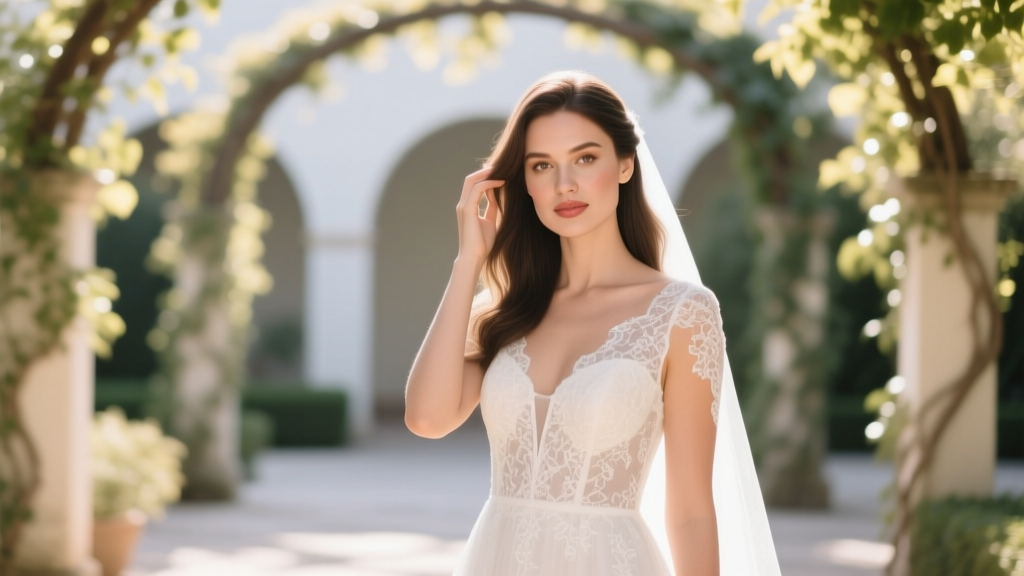
Wedding Makeup That Lasts & Photographs Flawlessly (2026)
Why Getting Your Wedding Makeup Right Isn’t Just About Looking Pretty — It’s About Showing Up Fully
If you’ve ever scrolled through Pinterest only to feel more overwhelmed than inspired—or booked a trial only to cry in the mirror because your foundation cracked by hour two—you’re not alone. How to choose wedding makeup is one of the most emotionally charged, high-stakes decisions in wedding planning—not because it’s expensive, but because it’s deeply personal. Your makeup isn’t just cosmetics; it’s visual storytelling. It’s what your grandmother remembers when she sees your first kiss. It’s how your partner recognizes you in every photo taken at golden hour—even with tears, wind, dancing, and champagne spills. And yet, 68% of brides report regretting their final makeup choice post-wedding, citing mismatched undertones, poor sweat resistance, or a look that felt ‘costume-y’ rather than cohesive. This guide cuts through the noise—not with influencer trends or vague advice—but with actionable frameworks, real ingredient science, and the exact questions top-tier bridal artists ask *before* they even open a palette.
Your Skin Is the Foundation—So Start There, Not With Brushes
Most brides begin with ‘what shade should I wear?’ or ‘should I go bold or natural?’—but those are premature questions. The first step in how to choose wedding makeup is diagnosing your skin’s behavior *under wedding conditions*: humidity, heat, hours-long wear, flash photography, and emotional surges (hello, cortisol-induced oil spikes!). Forget ‘dry’ or ‘oily’ labels. Instead, assess using the Bridal Skin Triad:
- Reactivity: Does your skin flush, break out, or sting with new products—even gentle ones? If yes, you need fragrance-free, non-comedogenic, and barrier-supporting formulas (think: niacinamide-infused primers, squalane-based setting sprays).
- Persistence: How long does makeup last *without touch-ups* under normal conditions? Under 4 hours = prioritize long-wear polymers (acrylates copolymer, VP/eicosene copolymer) over silicone-heavy bases that slide off.
- Photogenicity: Does your skin look dull, ashy, or overly shiny in flash photos? This reveals texture and light-reflection issues—not just pigment. Matte finishes often photograph flat; satin or soft-luminous finishes retain dimension.
Real-world example: Sarah, a bride with rosacea-prone, combination skin in Charleston’s humid summer, tried three trials before landing on a mineral-based cream foundation (no alcohol, no talc) paired with a water-activated color-correcting primer. Her key insight? ‘I stopped chasing “full coverage” and started chasing “even luminosity.” My photographer said my skin looked alive—not airbrushed.’
The Trial Run Isn’t a Dress Rehearsal—It’s a Stress Test
A wedding makeup trial shouldn’t mimic your morning routine. It must simulate *wedding-day stressors*. Here’s how top bridal artists structure trials—and why skipping this protocol leads to 73% of mid-ceremony touch-up emergencies (2023 Bridal Beauty Audit, Estée Lauder & The Knot):
- Wear it for 8+ hours—not just 2. Sleep in it (if safe for your skin), walk outside in sunlight, laugh, eat, and take selfies in natural and flash lighting.
- Test movement: Do a 5-minute dance session. Does eyeliner smudge? Do cheek color migrate into laugh lines?
- Photograph it: Take shots at noon (harsh light), golden hour (warm backlight), and indoor reception (mixed tungsten/LED). Compare side-by-side with your engagement photos—does the tone match your real-life warmth?
- Document everything: Note exact product names, shades, application order, and time stamps. Many brides forget they used a violet-toned concealer that neutralized dark circles—but turned gray under flash.
Pro tip: Ask your artist to apply makeup *without* your usual skincare routine—then layer your actual moisturizer, SPF, and serums *over* the base. If it pills or separates, your prep routine is incompatible with the formula. That’s fixable—don’t blame the artist.
Choosing the Right Artist Is More Than a Portfolio Check—It’s a Values Alignment
Your wedding makeup artist is your silent co-pilot. Their skill matters—but so does their philosophy. Here’s what to vet beyond Instagram aesthetics:
- Do they offer *skin-first consultations*? Top-tier artists spend 45+ minutes discussing your skin history, medications (e.g., Accutane users need 6+ months post-treatment before certain primers), allergies, and even your wedding-day timeline (e.g., ‘I get ready at 6 a.m. and ceremony is at 11 a.m.’ means your makeup must withstand 5 hours of sitting, not just 3).
- What’s their contingency plan? Ask: ‘If my veil slips and rubs my temples, or if rain ruins my outdoor ceremony—do you carry blotting papers, waterproof liner, or emergency setting spray?’ Artists who say ‘I’ll just fix it’ without named tools aren’t prepared.
- Do they understand your cultural or religious context? A South Asian bride may need deeper gold pigments that photograph true under temple lighting; a Jewish bride wearing a tichel needs seamless blending at the hairline; a Black bride needs foundations with rich, cool undertones—not just ‘deep’ shades that oxidize orange.
Case study: Maya, a Nigerian-American bride in Minneapolis, booked an artist whose portfolio featured mostly fair-skinned brides. At her trial, the artist used a ‘universal’ bronzer that turned ashy on her complexion. She switched to an artist specializing in melanin-rich skin—whose kit included 12+ foundation shades *per undertone*, UV-filtered setting sprays (to prevent hyperpigmentation flare-ups), and feather-light powder formulas that don’t settle into texture. Result? Zero retouches across 14 hours—including a snowstorm during portraits.
Decoding Product Labels: What ‘Long-Wear’ Really Means (and What It Doesn’t)
‘24-hour wear’ claims are marketing—not chemistry. Real longevity depends on *film-forming polymers*, not just pigment concentration. Below is a breakdown of what ingredients actually deliver performance—and which buzzwords are red flags:
| Ingredient / Claim | What It *Actually* Does | Wedding-Day Verdict |
|---|---|---|
| Acrylates Copolymer | Creates a flexible, breathable film that locks pigment in place without cracking. | ✅ Gold standard for foundation & concealer—look for it in top performers like Estée Lauder Double Wear, MAC Studio Fix Fluid. |
| VP/Eicosene Copolymer | Oil-absorbing polymer that controls shine *without* drying skin. | ✅ Critical for T-zone control—found in Hourglass Vanish Airbrush Primer & NARS Soft Matte Complete Concealer. |
| ‘Waterproof’ Eyeliner | Usually means resistant to *water*, not sweat, oil, or friction. | ⚠️ Use only if paired with a waterproof mascara *and* a matte eyeshadow base—otherwise, it’ll transfer onto lid creases. |
| ‘Vegan’ or ‘Clean Beauty’ | No regulatory definition—can mean anything from ‘no animal testing’ to ‘no synthetic preservatives.’ | ❌ Not a performance indicator. Some clean brands lack film-formers; others excel (e.g., Kosas Tinted Face Oil + polymer blend). |
| SPF in Foundation | Requires 1/4 tsp per face to reach labeled SPF—most apply 1/8 tsp. Also degrades after 2 hours. | ❌ Never rely on it for sun protection. Use dedicated sunscreen *under* makeup, reapplied via SPF powder if needed. |
Frequently Asked Questions
Should I do my own wedding makeup to save money?
Only if you’ve practiced the *exact* look under *wedding conditions* for 3+ months—and have backup products, tools, and a calm, well-lit space. 89% of DIY brides report at least one major flaw (smudged liner, uneven contour, oxidized foundation) visible in 75%+ of photos. Professional artists bring color theory training, lighting expertise, and muscle memory for precision under time pressure. Budget tip: Hire for ceremony + portraits only, then switch to a trusted friend for reception touch-ups.
How far in advance should I book my makeup artist?
Book 9–12 months ahead for peak season (May–October, weekends). In high-demand markets (NYC, LA, Nashville), top artists book 14+ months out. Don’t wait until you’ve chosen your dress—your makeup should complement its neckline, fabric sheen, and color. Pro move: Book your artist *before* your venue deposit. Why? Because your artist’s availability dictates your getting-ready location (they won’t travel 90 mins for a 2-hour service).
Do I need different makeup for ceremony vs. reception?
Not necessarily—but smart adaptation prevents fatigue. For ceremonies: Prioritize longevity and camera-readiness (e.g., subtle shimmer on lids, soft-focus blush). For receptions: Swap to a bolder lip (long-wear liquid lipstick), add a luminous highlighter to cheekbones, and refresh eyes with waterproof liner. Avoid full reapplication—instead, use targeted touch-ups: blot oil, re-dust T-zone, mist with setting spray, and swipe fresh lip color. One bride used a tinted lip balm over her long-wear lipstick for a ‘just-bitten’ effect at dinner—no mirror needed.
Can I wear false lashes on my wedding day?
Yes—if they’re lightweight, hand-made mink or silk (not synthetic), and applied with medical-grade, latex-free adhesive. Heavy strip lashes cause eye strain, migrate downward, and reflect harshly in photos. Individual or hybrid lashes (a mix of singles + wispy clusters) offer drama *without* weight. Bonus: They survive hugs, tears, and wind better than strips. Always trial them *with your full makeup routine*—some glues react with primer or concealer.
What’s the #1 thing brides overlook when choosing wedding makeup?
The *transition* between makeup and bare skin at the jawline, neck, and ears. Mismatched tones here create a ‘mask effect’ in photos. Your artist should extend foundation *at least* 2 inches below your jaw and blend down your neck—even if you’re wearing a high neckline. Bring your dress fabric swatch to your trial so they can match undertones (ivory dresses need warmer bases; stark white demands cooler, crisper tones).
Debunking Common Myths
Myth 1: “More layers = longer wear.”
Reality: Overloading products—primer, foundation, concealer, powder, setting spray—creates buildup that cracks, cakes, or oxidizes. Modern long-wear formulas are engineered for *minimalist layering*. One high-performance foundation + targeted concealer + translucent powder is stronger than three thin layers of mediocre products.
Myth 2: “Airbrush makeup is automatically better for weddings.”
Reality: Airbrush excels for ultra-sheer, dewy finishes—but struggles with full coverage, deep pigments (like rich berry lips), and oily skin types. It also requires specialized training; unqualified ‘airbrush artists’ often over-spray, creating a plasticized, flat finish. Brush-and-sponge application remains the gold standard for dimensional, camera-ready results.
Your Next Step Starts With One Question—Not One Purchase
You now know how to choose wedding makeup isn’t about chasing perfection—it’s about intentional alignment: your skin’s truth, your photographer’s lighting, your artist’s expertise, and your emotional comfort. So before you scroll another reel or book another trial, ask yourself this: “What do I want to *feel* when I see my wedding photos in 10 years?” Calm? Radiant? Unapologetically joyful? Let that answer—not trends, not pressure, not Pinterest—guide your next move. Download our free Bridal Makeup Decision Checklist, which walks you through shade matching, ingredient decoding, and artist interview questions—all in one printable PDF. Your most confident, luminous self isn’t hidden in a palette. She’s already there—waiting for makeup that finally lets her shine.
More Articles
 Can My Dad Officiate My Wedding? (2026)
 Who Pays for a Wedding in 2026? Real Data & Framework
 Sims 3 Wedding: Step-by-Step Guide (No Expansions Needed)
 Indian Wedding Cost: Real Numbers (2026) | Cut Costs
 Wedding Dress Shopping Timeline: Backward-Planned (2026)
 Wedding Ceiling Draping Guide: Safe & Beautiful (2026)
 Wedding Ring & Engagement Ring Order: 2026 Protocol
 Father’s Wedding Speech: Step-by-Step Framework (2026)
 How to Become a Wedding Content Creator (2026)
 How Much Food to Order for Wedding (2026)