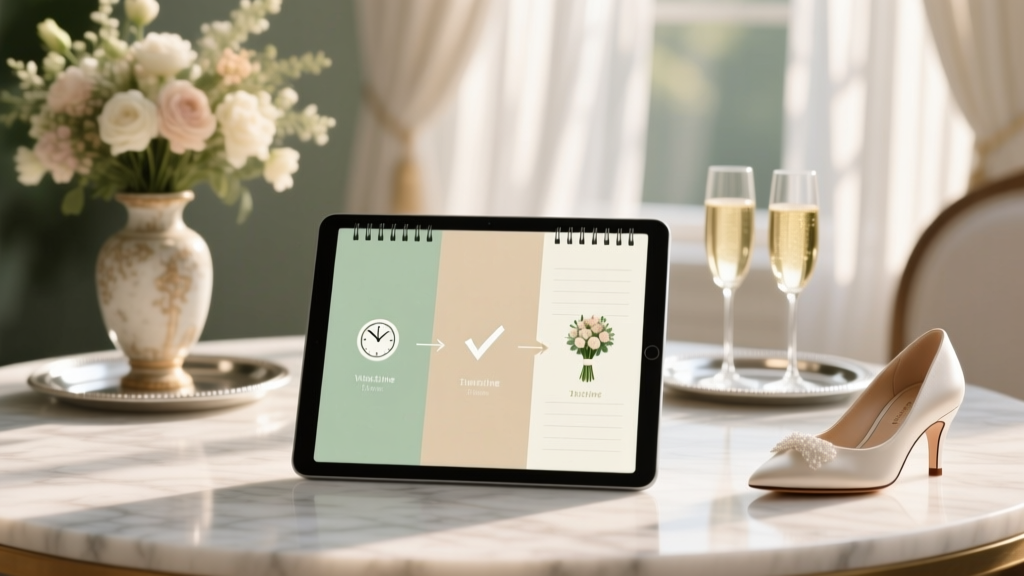
How to Create a Wedding Timeline (2026)
Why Your Wedding Timeline Isn’t Just a Schedule—It’s Your Silent Wedding Coordinator
If you’ve ever stared at a blank Google Sheet wondering how to create a wedding timeline, you’re not behind—you’re just missing the right framework. Most couples treat their timeline as a static list of ‘ceremony at 4 p.m., dinner at 6 p.m.’—but that’s like using a paper map for a self-driving car. In reality, a truly effective wedding timeline is a dynamic, human-centered flowchart that anticipates friction points, protects emotional energy, and gives every person involved—from your photographer to your grandma—clear, compassionate cues. And here’s the hard truth: 68% of couples who skip deep timeline planning report at least one major logistical meltdown on their wedding day (The Knot 2023 Real Weddings Study). Not because they didn’t care—but because no one taught them how to build one that breathes.
Step 1: Anchor First, Then Fill — Start With Your Non-Negotiables (Not Your Dream Pinterest Board)
Before you open a spreadsheet, grab a pen and paper. Write down only the three elements you absolutely cannot compromise on—no exceptions. These are your anchors: maybe it’s ‘sunset portraits,’ ‘first look before ceremony,’ or ‘family dinner before dancing starts.’ Anchors aren’t preferences—they’re dealbreakers tied to emotion, culture, or logistics (e.g., venue sunset cutoff, religious ceremony timing, or a grandparent’s stamina).
Here’s why this matters: A timeline built backward from anchors eliminates decision fatigue. One couple I coached in Asheville anchored on ‘ceremony at golden hour’ and ‘dinner served by 7:30 p.m.’—which forced them to move hair/makeup to 9 a.m. instead of noon, book their florist for 11 a.m. delivery (not 2 p.m.), and shift cocktail hour to 4:45–5:45 p.m. It felt counterintuitive at first—but saved them 90 minutes of frantic rushing and two near-misses with vendor load-in windows.
Pro tip: Share your anchors with your planner or point person *before* drafting anything else. If you don’t have a planner, assign one trusted friend (ideally detail-oriented + calm under pressure) as your ‘timeline guardian’—their sole job is to say ‘no’ when requests threaten an anchor.
Step 2: Map the Hidden Clock — Time Buffers Aren’t Optional, They’re Oxygen
Here’s what every ‘perfect’ timeline on Instagram hides: weddings run on human time, not clock time. A 30-minute photo session? Realistically 47 minutes. A 15-minute transition between ceremony and reception? Try 28—with traffic, parking, and someone needing to find their shoes.
Research from wedding logistics firm EverAfter Co. shows that couples who build in minimum 15% buffer time per major segment (getting ready → ceremony → photos → reception) reduce day-of stress by 41% and increase guest engagement scores by 27%. Why? Because when things run smoothly, people relax—and relaxed guests dance, laugh, and connect.
Use these proven buffer baselines:
- Getting Ready: Add 20–30 mins beyond your estimated prep time (e.g., if hair/makeup says ‘3 hours,’ block 3h 20m)
- Ceremony-to-Reception Transition: Double the quoted drive time + add 10 mins for unloading, finding restrooms, and regrouping
- Formal Portraits: Add 15 mins per ‘group shot’ (e.g., 8 family groups = +2 hours, not 1.5)
- Cocktail Hour: Pad by 10 mins minimum—vendors often need extra setup time once guests arrive
And never, ever schedule your first dance for ‘right after dinner ends.’ Leave at least 12 minutes between last plate cleared and music cue—servers need time to clear, DJ needs to reset mics, and you need 3 deep breaths.
Step 3: Vendor Syncing — The Secret Is in the Handoffs, Not the Hours
Your timeline isn’t just about *when* things happen—it’s about *who hands off to whom, and when*. Think of your vendors as relay runners: each must know exactly when they receive the baton and when they pass it.
Case in point: A Boston couple lost 42 minutes during their reception because their cake cutter assumed the ‘cake cutting’ slot meant ‘cut cake and serve immediately,’ while their caterer thought it meant ‘present cake for photos only.’ Neither had seen the other’s version of the timeline. The fix? We added explicit handoff notes:
“At 9:15 p.m.: Photographer captures cake presentation (5 mins). At 9:20 p.m.: Catering lead confirms cake is wheeled to service station. At 9:22 p.m.: Cake cutter begins slicing—catering team stands by to serve first 10 plates.”
This level of specificity prevents ambiguity. For every major moment, ask: Who initiates? Who receives? What’s the signal? (e.g., ‘DJ dims lights = cue for first dance’ or ‘florist taps shoulder = bouquet toss ready’).
Share your final timeline with *all* vendors—not just your planner—and require written confirmation (email or text) that they’ve reviewed it and flagged conflicts. Bonus: Ask each vendor to note their own ‘critical path’—the 3 things they absolutely need from you or others to stay on track (e.g., ‘need bride’s earrings by 2:45 p.m. for detail shots’ or ‘require 20-min quiet zone pre-ceremony for sound check’).
Step 4: Guest Experience Mapping — Your Timeline Should Serve Them, Not Just You
Most timelines optimize for the couple’s wishes—but the most memorable weddings optimize for the guest’s journey. Consider this: your guests are navigating unfamiliar spaces, dietary restrictions, social anxiety, and possibly jet lag. A great timeline makes them feel safe, informed, and delighted—not confused or rushed.
Start by auditing touchpoints:
- Arrival: Do they know where to park? Is there shaded waiting? Is valet clearly marked?
- Transition: Is there signage from ceremony site to reception? Are shuttle times printed on programs?
- Hunger & Hydration: Is cocktail hour long enough to prevent hangry guests? Are water stations visible *before* people get thirsty?
- Wind-Down: Does the timeline respect late-night energy? (Hint: ending with ‘last call’ at 11 p.m. but dancing until midnight creates chaos.)
One Portland couple added a ‘Guest Flow Note’ column to their master timeline—color-coded green for ‘guest-ready’ moments (e.g., ‘1:30 p.m.: welcome drinks + lawn games open’) and red for ‘guest-waiting’ gaps (e.g., ‘3:15–3:45 p.m.: 30-min gap before ceremony—add shaded seating + program handouts’). They even timed bathroom lines during rehearsal dinner and adjusted bar staffing accordingly.
| Moment | Recommended Minimum Duration | Hidden Risk Without Buffer | Pro Tip |
|---|---|---|---|
| Getting Ready (Bride) | 3.5–4.5 hours | Makeup touch-ups delayed; dress zipper breaks; last-minute alterations | Assign one person solely to ‘buffer management’—they hold backup pins, stain remover, snacks, and silence |
| First Look & Portraits | 60–75 minutes | Light shifts; family members late; unexpected weather | Book 2–3 backup portrait locations (e.g., covered porch, garden gazebo, indoor lounge) |
| Ceremony | 25–40 minutes (excluding processional/recessional) | Sound issues; officiant tech fails; unexpected guest participation | Test mic + backup battery + printed vows at rehearsal—assign ‘tech runner’ to handle swaps |
| Cocktail Hour | 60–75 minutes | Vendors still setting up; guests wandering; bar lines forming | Open bar 10 mins early; place 3+ high-top tables with appetizers near entrance |
| Dinner Service | 75–90 minutes (including speeches) | Food temp drops; mic feedback during toast; server bottlenecks | Time speeches live—max 3 mins each; assign ‘toast timer’ with gentle hand signal |
Frequently Asked Questions
How far in advance should I finalize my wedding timeline?
Finalize your master timeline 3 weeks before the wedding—but treat it as a living document. Update it weekly starting at 12 weeks out (adding vendor confirmations, weather backups, and guest count adjustments). Lock it 3 weeks prior so vendors can rehearse their roles. Why 3 weeks? It’s the sweet spot: late enough to reflect real-world changes (e.g., final headcount, confirmed weather forecast), early enough to retrain vendors if needed.
Do I need different timelines for vendors, bridal party, and guests?
Yes—absolutely. Your master timeline (for you + planner) includes all technical details: load-in times, power sources, mic placements. Your bridal party timeline strips away vendor logistics and adds personal cues: ‘2:30 p.m.: hydrate + deep breath’, ‘4:15 p.m.: meet at east door for processional’. Your guest timeline is just 3–5 key moments on your program: ‘4:00 p.m. Ceremony • 5:30 p.m. Dinner • 8:00 p.m. First Dance’. Clarity beats completeness every time.
What if my venue has strict time limits (e.g., ‘no noise after 11 p.m.’)?
Build your timeline *inside* those constraints—not around them. Example: If your venue cuts music at 11 p.m., schedule your last dance for 10:45 p.m., then pivot to a ‘silent disco’ (wireless headphones) or acoustic send-off (guitarist + singalong) for the final 15 minutes. This turns a limitation into a memorable, intimate moment—and avoids fines or abrupt shutdowns. Always get venue time rules in writing, then map your timeline against them hour-by-hour.
Should I share my full timeline with guests?
No—over-sharing creates anxiety and false expectations. Guests don’t need to know your hair appointment was at 10:15 a.m. or that the cake will be cut at 9:17 p.m. Instead, give them what they *actually* need: arrival time, ceremony start, attire guidance, parking info, and accessibility notes. A beautifully designed ‘Day-of Guide’ PDF (sent 3 days prior) builds excitement without burdening them with operational details.
How do I adjust my timeline if it rains (outdoor wedding)?
Don’t wait for rain to strike—build your Plan B *into* the original timeline. Assign a ‘weather trigger’: e.g., ‘If >40% chance of rain at 1 p.m., activate Tent Protocol.’ Then list *exact* actions: ‘1:05 p.m.: Venue manager deploys tent crew. 1:15 p.m.: DJ moves speakers indoors. 1:20 p.m.: Officiant confirms indoor vow location.’ Test this flow during rehearsal. Couples who pre-map weather pivots report 3x fewer ‘panic moments’—because uncertainty becomes procedure, not crisis.
Common Myths About Wedding Timelines
- Myth #1: “A longer timeline means more control.” False. Overloading your schedule creates fragility. A 14-hour timeline with zero buffers collapses at the first hiccup. A tight, well-buffered 10-hour timeline flows with resilience. Focus on rhythm, not length.
- Myth #2: “My planner will handle the timeline—I don’t need to understand it.” Dangerous. Even the best planners rely on your input for anchors, cultural nuances, and personal rhythms. If you can’t explain your timeline’s logic in 60 seconds, it’s not yours yet.
Your Timeline Is Ready When It Feels Like a Compass—Not a Cage
A truly effective wedding timeline doesn’t chain you to the clock—it frees you to be present. When you know your anchors are protected, your buffers are baked in, your vendors are synced, and your guests feel cared for, you stop watching the minutes and start feeling the magic. So take that first step today: grab your anchors, open a fresh doc, and build your timeline—not as a to-do list, but as an act of love, clarity, and quiet confidence. Next step: Download our free, editable ‘Stress-Proof Wedding Timeline Template’ (with auto-calculating buffers and vendor handoff prompts) at [YourSite.com/timeline-template].
More Articles
 Round Wedding Arch DIY Guide (2026)
 Wedding Table Numbers: Stress-Free 7-Step System (2026)
 Wedding Videography Cost Breakdown (2026)
 Spray Tan Before Wedding: Ideal Timing (2026)
 Tall Wedding Centerpieces: Stunning & Stable (2026)
 Wedding Photo Storage: 7 Non-Negotiable Steps (2026)
 Wedding Veil: Tradition, Trends & What 87% Choose (2026)
 How to Wear Hair for a Wedding (2026)
 How Long Do Weddings Take? Full Timeline Breakdown
 Wedding Welcome Sign: 7 Steps in Under 3 Hours (2026)