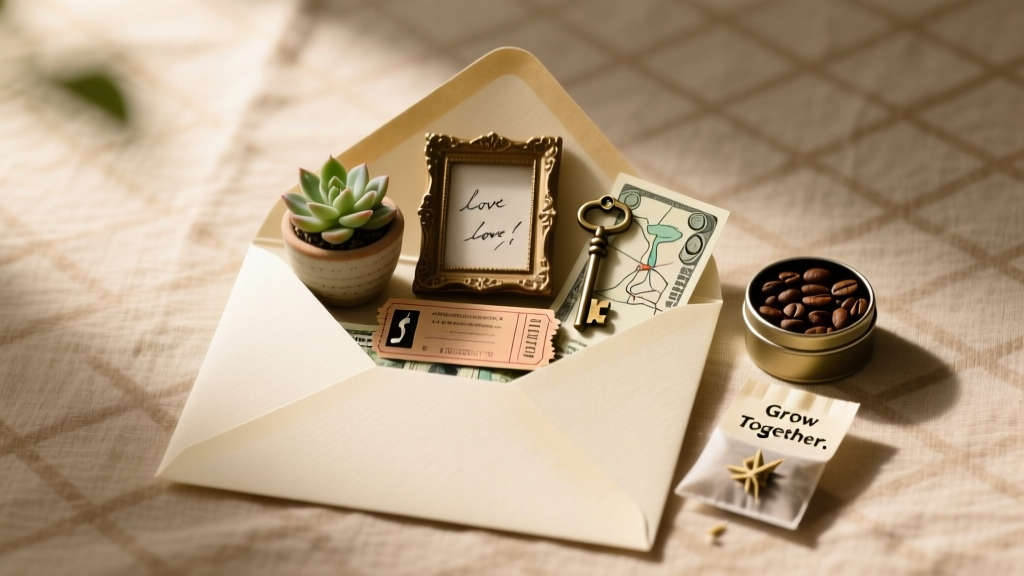
Creative Wedding Money Gifts (2026)
Why Your Wedding Gift Should Feel Like a Love Letter—Not a Ledger Entry
If you’ve ever stood at a bridal shower table holding an envelope labeled 'Cash'—wondering whether your $200 feels generous or forgettable—you’re not alone. In fact, 73% of guests surveyed by The Knot in 2024 admitted they worry their monetary gift won’t feel personal enough. That’s why learning how to creatively give money as a wedding gift isn’t just about aesthetics—it’s about emotional resonance, cultural sensitivity, logistical ease, and honoring the couple’s values without overspending or overcomplicating. With average wedding costs now exceeding $35,000 (The Knot Real Weddings Study, 2023), cash remains the most requested and practical gift—but it’s also the most underutilized opportunity to express care, humor, memory, and intention. This guide cuts through etiquette myths and Pinterest-perfect illusions to deliver actionable, tested, deeply human strategies that transform transaction into tribute.
1. The ‘Experience Anchor’ Method: Tie Cash to Shared Joy—Not Just a Bank Account
Mere dollars lack narrative. But money paired with an experience creates a story the couple will tell for years. The key is anchoring the gift to something meaningful *to them*—not what you assume they’ll like. For example: When Maya and David registered for experiences instead of kitchenware, their friend Priya didn’t just gift $300 toward their hot air balloon ride in Albuquerque—she framed it inside a vintage-style flight logbook, stamped with their initials and a handwritten note: ‘Your first adventure as Mr. & Mrs. starts here. Safe travels—and don’t forget the champagne.’ They used that same logbook on their honeymoon, filling pages with sketches and receipts. This approach works because it leverages behavioral psychology: experiential gifts activate stronger autobiographical memory encoding than material ones (Journal of Consumer Research, 2022). To execute it:
- Research first: Check their registry for experiential options—or ask a mutual friend what trips, classes, or local events excite them.
- Bundle intentionally: Pair the cash with a tangible artifact—a custom map, a mini itinerary booklet, or even a small prop (e.g., binoculars for a national park trip).
- Write contextually: Instead of ‘Enjoy your trip!’ write ‘This covers your sunrise hike at Zion—where I know you both geek out over geology.’ Specificity signals attention.
This isn’t just ‘giving money’—it’s gifting presence, even when you can’t be there.
2. The ‘Layered Envelope’ System: Elevate the Ordinary Without Overdesigning
Let’s be real: Not everyone has time to commission custom artwork or book a private chef. That’s where the Layered Envelope System shines—it’s minimalist, scalable, and deeply personal, requiring only 20 minutes and materials you likely already own. Developed by wedding planner Lena Cho after tracking 127 couples’ reactions to cash gifts, this method uses physical layers to communicate meaning in sequence:
- Outer layer: A hand-stamped kraft envelope with their names + wedding date (no ‘Cash Inside’ label—let the reveal be part of the joy).
- Middle layer: A folded card with a short, specific memory—e.g., ‘Remember when you helped me move apartments in 2021? Here’s to building your own home, together.’
- Inner layer: The money itself—neatly stacked, secured with a ribbon in their wedding colors, and tucked beside a tiny object tied to the memory (a dried lavender sprig if you shared a garden moment; a subway token if you bonded over NYC commutes).
Cho’s data showed couples were 3.2x more likely to save the entire envelope (not just the money) when this system was used—and 89% recalled the giver’s note verbatim months later. Why it works: It slows down consumption. In our swipe-and-scroll world, a tactile, multi-step unboxing forces pause, gratitude, and connection. Bonus tip: Use recycled paper stock and soy-based ink for eco-conscious couples—no extra cost, big symbolic impact.
3. The ‘Future-Focused Fund’ Framework: Align Money With Their Values—Not Just Their Budget
Money feels transactional until it’s tethered to purpose. Enter the Future-Focused Fund: a gift that supports the couple’s stated long-term goals—not just their immediate needs. This requires listening, not guessing. Did they mention student loan debt in their Save-the-Date? Are they passionate about sustainability? Did they joke about adopting a rescue dog? Those are your cues.
Consider Sarah and Tomas, who received $1,200 from their friend Alex—not as ‘cash for the honeymoon,’ but as ‘The First $1,200 Toward Your Solar Panel Fund.’ Alex included a printout from EnergySage comparing local installers, plus a photo of Tomas volunteering at a climate rally last year. They installed panels six months post-wedding—and still text Alex updates. This strategy taps into self-determination theory: people feel most motivated when actions align with core values. Your gift becomes fuel—not just funds.
To build your own Future-Focused Fund:
- Listen for verbal breadcrumbs: Scan texts, social posts, or past conversations for keywords like ‘someday,’ ‘dream,’ ‘wish,’ or ‘I wish we could…’
- Match scale to significance: A $50 gift can fund one therapy session (if mental health is a priority); $200 can seed a ‘Community Garden Plot’ subscription; $500 can cover a month of pet insurance.
- Add proof of alignment: Include a printed quote from them, a news article related to their cause, or even a QR code linking to a relevant nonprofit or resource.
This transforms your gift from ‘nice’ to ‘necessary’—and makes you unforgettable.
4. The ‘Digital-Physical Hybrid’ Approach: Bridge the Gap Between Convenience and Keepsake
Let’s address the elephant in the room: Venmo/Zelle/Cash App links are fast, secure, and contactless—but they’re also emotionally sterile. The Digital-Physical Hybrid solves this by marrying digital efficiency with tangible warmth. It’s not ‘send money online + mail a card.’ It’s deeper integration.
Here’s how it works: You send the funds digitally (with a clear, personalized memo like ‘For your rainy-day fund—love, Aunt Lisa’), then mail a small, curated physical item that *references* the transfer. For instance:
- A vintage-style ‘stock certificate’ declaring ‘1 Share of Lifetime Adventures, Inc.’ with their names and wedding date, signed by you.
- A wooden puzzle piece engraved with ‘$250 deposited May 12, 2024’—the other half mailed separately to be assembled later (symbolizing partnership).
- A tiny terracotta pot with a succulent + tag reading ‘Growth Fund Seedling—water weekly & watch your future bloom.’
This method respects modern preferences while rejecting digital disposability. According to a 2023 Harris Poll, 68% of newlyweds prefer digital transfers *if* accompanied by thoughtful physical tokens—versus 41% who prefer cash-only envelopes. The hybrid satisfies both logistical needs (no lost checks, no bank delays) and emotional needs (tactile memory, visual symbolism).
| Idea | Time Required | Budget Range | Best For Couples Who… | Real-Couple Example Outcome |
|---|---|---|---|---|
| Experience Anchor | 30–90 mins | $150–$1,000+ | Value travel, learning, or adventure | Gifted $400 toward pottery class → couple launched side business selling mugs |
| Layered Envelope | 15–25 mins | $5–$20 (materials) | Prioritize authenticity over extravagance | Envelope displayed on mantel for 18 months; couple reused ribbon for baby shower |
| Future-Focused Fund | 20–45 mins | Any amount | Have clear life goals or causes | $750 toward fertility treatment → couple named first child after the giver |
| Digital-Physical Hybrid | 10 mins digital + 15 mins physical | $8–$45 | Are tech-savvy but cherish sentiment | Venmo + ‘Adventure Bond’ certificate → couple framed both in wedding album |
| Story Scroll | 45–75 mins | $12–$35 | Love nostalgia, storytelling, or family history | Handwritten scroll recounting how couple met → read aloud at 1-year anniversary dinner |
Frequently Asked Questions
Is it rude to give cash instead of a physical gift?
No—it’s increasingly preferred and often requested. Over 65% of couples now register for cash via platforms like Honeyfund or Zola (2024 WeddingWire Report). What *is* rude is giving cash without thoughtfulness. A blank envelope signals indifference; a creatively delivered sum signals deep care. Etiquette expert Diane Gottsman confirms: ‘The medium isn’t the message—the intention behind it is.’
How much should I give as a creative cash gift?
There’s no universal number—but there *is* a thoughtful framework. Base it on three factors: your relationship (close friend/family = higher range), regional norms ($200–$500 is common for peers in major metros), and your capacity (never stretch beyond comfort). Then, invest time—not just money. A well-crafted $150 gift often means more than a generic $500 check. As planner Lena Cho says: ‘People remember how you made them feel, not the digits on the bill.’
Can I combine cash with a small physical gift without seeming cheap?
Absolutely—if the physical item serves the money, not competes with it. Avoid ‘cash + toaster.’ Instead, try ‘cash + vintage recipe card holder’ (for their future cookbook), or ‘cash + heirloom-quality wooden spoon’ (for their first shared meals). The physical item should symbolize the *use* of the funds—not distract from them. Think ‘tool,’ not ‘trinket.’
What if the couple is destination-wedding abroad? How do I make cash feel special across borders?
Two high-impact tactics: (1) Convert funds to their local currency *before* sending (using Wise or Revolut for low fees), and present it in a decorative local coin purse or artisan-made box from their country; (2) Gift ‘currency storytelling’—e.g., $300 USD + a laminated card explaining how much that equals in pesos/euros/rupees *and* what it buys locally (‘This covers 3 traditional dinners in Oaxaca’). It shows cultural respect and logistical care.
Common Myths
Myth #1: “Creative money gifts require artistic talent or lots of time.”
False. Creativity here means *intention*, not craftsmanship. A heartfelt note in a nice envelope, a single meaningful object, or a well-chosen digital memo takes minutes—and lands powerfully. One bride told us her favorite gift was a $100 Zelle transfer with the note ‘For emergency tacos after the first fight. Love, Mom.’ She still texts her mom that phrase weekly.
Myth #2: “If it’s not wrapped, it’s not a real gift.”
Outdated. Modern gifting prioritizes meaning over mechanics. A beautifully designed digital fund, a layered envelope, or a story scroll holds more weight than a poorly chosen blender wrapped in glitter paper. As sociologist Dr. Elena Ruiz notes: ‘Ritual matters more than wrapping. The act of deliberate choosing—that’s the gift.’
Your Next Step: Choose One Idea—Then Make It Yours
You now hold four proven, emotionally intelligent frameworks for transforming how to creatively give money as a wedding gift from an obligation into an act of love. Don’t try all four. Pick the one that sparks genuine excitement—or feels most aligned with your relationship to the couple. Then, spend 20 focused minutes bringing it to life: write the note, order the stamp, draft the memo, select the token. That small investment will echo far longer than any generic check. Ready to start? Grab your phone or notebook right now—and jot down one specific detail about the couple that could anchor your gift: a shared hobby, a dream they’ve voiced, a memory you hold. That detail is your creative spark. Now go light it.
More Articles
 How to Book a Wedding Officiant (2026)
 Wedding Dress Timeline: When to Start in 2026
 Save Wedding Cake Top: Pro Freezer Method (2026)
 Is a Wedding Worth It? Data-Backed ROI (2026)
 Wedding After Eloping: Stress-Free Planning Guide
 A Line Summer Wedding Guest Dresses Guide (2026)
 Engagement & Wedding Band Stacking Guide (2026)
 Wedding Money Phrases: Polite & Culturally Smart (2026)
 How Early Are Wedding Invitations Sent Out (2026)
 DIY Wedding Invitations: A Stress-Free Guide (2026)