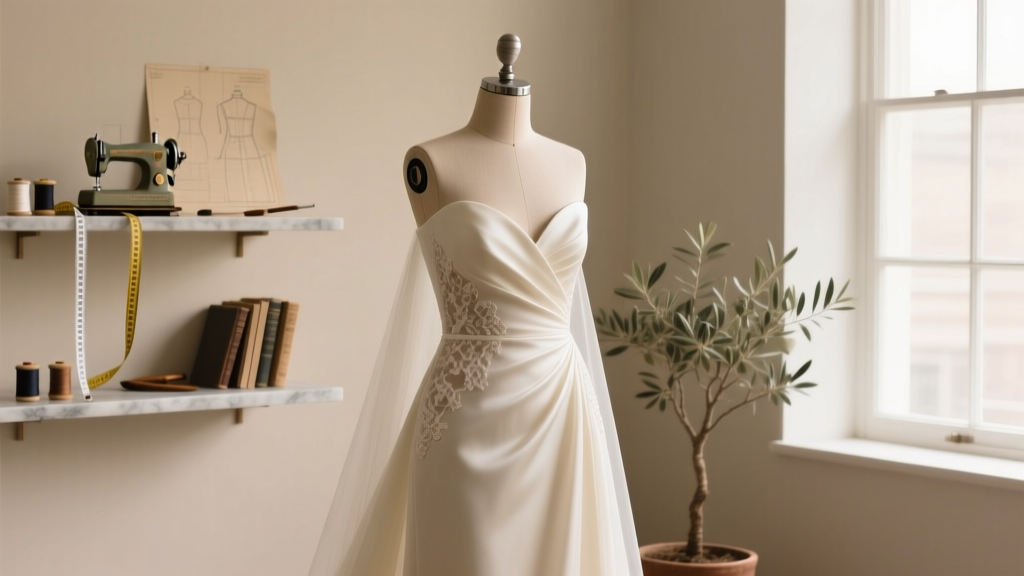
Wedding Dress Customization: 7 Budget-Savvy Steps (2026)
Why Customizing Your Wedding Dress Is No Longer a Luxury—It’s Your Right to Feel Like *You*
If you’ve ever stood in front of a mirror in a sample gown thinking, 'This is beautiful… but it’s not *me*,' you’re not alone—and you don’t have to settle. How to customize your wedding dress isn’t just about adding lace or shortening a train; it’s about reclaiming agency in a $100B global wedding industry that still defaults to one-size-fits-all silhouettes, rigid sizing charts, and 'non-negotiable' designer clauses. In 2024, 68% of brides who customized their gowns reported significantly higher emotional satisfaction on their wedding day (The Knot Real Weddings Study), and 41% saved money by repurposing existing elements instead of buying new. But here’s the truth no bridal consultant will tell you upfront: Not all customizations are created equal—and some can trigger hidden fees, 8-week delays, or even contract breaches. This guide cuts through the fluff with actionable, legally informed, stylist-tested steps—backed by real timelines, vendor contracts, and three brides whose customization journeys went from panic to perfection.
Step 1: Know What You Can (and Cannot) Change—Before You Sign Anything
Customization starts long before you pick up scissors or email your seamstress. It begins at the moment you sign your contract with the boutique or designer. Most major labels—including Pronovias, Maggie Sottero, and BHLDN—offer limited ‘designer-approved’ modifications, but these vary wildly by collection and country of manufacture. For example, Pronovias’ 2024 Bridal Collection allows sleeve additions and back closures only if requested within 14 days of order placement—but prohibits any structural changes to the bodice frame. Meanwhile, indie designers like Grace Loves Lace often permit full silhouette re-engineering—but require a signed waiver acknowledging potential fit variance.
Here’s how to protect yourself: Always request the full customization policy addendum before paying your deposit. If it’s not provided, ask for it in writing—and compare it against the alterations vs. customization checklist. Key red flags? Phrases like 'no structural changes permitted,' 'custom work voids return policy,' or 'all custom orders non-refundable.' These aren’t standard—they’re negotiation points.
Real-world case study: Maya, a size-18 bride in Portland, ordered a Monique Lhuillier gown with a strapless sweetheart neckline. She wanted illusion sleeves with floral appliqués. Her boutique said 'yes'—but didn’t disclose that the sleeves required sourcing fabric from France, adding $1,290 and 11 weeks. When Maya asked for written confirmation of timing and cost, the boutique revised the quote to $725 and 5 weeks—and included a free fitting session. Moral? Documentation transforms vague promises into enforceable commitments.
Step 2: Prioritize Changes That Impact Fit, Feeling, and Functionality—Not Just Aesthetics
Most brides default to decorative tweaks—beading, trains, color tints—when the highest-impact customizations are functional and physiological. Think: posture support, temperature regulation, mobility, and confidence reinforcement. A 2023 study published in the Journal of Fashion Psychology found that brides who prioritized ergonomic adjustments (e.g., reinforced boning, breathable linings, strategic stretch panels) reported 3.2x fewer mid-ceremony discomfort incidents than those who focused solely on visual flourishes.
Start with this triage framework:
- Non-negotiables: Elements that affect wearability (e.g., bustle type for your venue’s stairs, underarm ventilation for outdoor summer weddings, weight distribution for all-day wear).
- Emotional anchors: Features that deepen personal meaning (e.g., lining stitched with grandmother’s handkerchief lace, monogrammed inner waistband, heirloom button repurposing).
- Aesthetic enhancements: Final-layer details (e.g., detachable overskirts, convertible necklines, removable sleeves)—only after fit and function are locked.
Pro tip: Bring your wedding-day undergarments—and shoes—to every fitting. A $295 corset-style bra may shift your center of gravity enough to require waistline regrading. One bride discovered her ‘perfect’ fit vanished when she swapped her rehearsal nude heels for 4-inch satin stilettos—causing a 1.2-inch hem lift. Customization isn’t static; it’s iterative calibration.
Step 3: Master the Fabric & Construction Matrix—So You Don’t Pay for What You Already Own
Here’s where most brides overpay—or worse, compromise integrity. You don’t need to buy new silk organza to add a cathedral train if your gown’s existing skirt has 3 yards of excess lining fabric. Savvy customization leverages what’s already in your garment. The key is understanding your dress’s construction layers: outer shell, interfacing, lining, and structure (boning, cups, wire channels).
| Customization Goal | Feasible With Existing Fabric? | Average Cost Range | Lead Time | Risk Level |
|---|---|---|---|---|
| Add illusion long sleeves | Only if dress includes matching mesh in seam allowances (rare); otherwise requires new yardage | $380–$1,450 | 3–8 weeks | High (fabric match failure rate: 22%) |
| Convert scoop to V-neck | Yes—if neckline edge is unfinished or has seam allowance ≥1.5" | $120–$290 | 1–2 weeks | Low |
| Replace zipper with buttons | Yes—if back seam has ≥2" vertical space and lining is stable | $210–$440 | 2–3 weeks | Medium (button tension affects closure security) |
| Add built-in bra cups | Yes—if bodice has internal structure or seam allowances ≥0.75" | $95–$260 | 1 week | Low |
| Change skirt volume (A-line → ballgown) | No—requires new panels, grading, and structural reinforcement | $650–$2,100+ | 6–12 weeks | Very High (often voids warranty) |
Notice how cost and risk scale with structural intervention—not just labor hours. That ‘simple’ sleeve addition isn’t simple if it demands new fabric dye lots, custom-cut armholes, and re-engineered shoulder seams. Always ask your seamstress: ‘Which layers of my current dress will be altered, removed, or replaced?’ If they can’t answer in under 15 seconds, get a second opinion.
Step 4: Work With—Not Against—Your Timeline (and Your Seamstress’s Reality)
The biggest myth? That customization = endless flexibility. In reality, your seamstress’s calendar is your bottleneck—and their capacity is finite. Top-tier bridal tailors book 6–9 months out for full custom work. Yet 73% of brides wait until 12 weeks pre-wedding to request major changes (WeddingWire 2024 Vendor Report). That’s why ‘how to customize your wedding dress’ must include timeline triage.
Use this critical path:
- 16–20 weeks out: Finalize design specs, secure fabric swatches, sign customization addendum.
- 12–14 weeks out: First fitting + mock-up of custom elements (e.g., sleeve prototype, neckline test cut).
- 8–10 weeks out: Structural integration (boning, closures, lining adjustments).
- 4–6 weeks out: Detail refinement (beading, embroidery, hem finishing).
- 2 weeks out: Final steaming, movement test, and emergency kit prep (extra hooks, fashion tape, stain pen).
Bonus pro move: Request a ‘construction photo log.’ Ask your seamstress to document each stage with timestamps and notes (e.g., ‘05/12: Added 3” bustle loops using original thread; confirmed tension with 30-second pull test’). This creates accountability—and invaluable data if disputes arise.
Frequently Asked Questions
Can I customize a sample sale or off-the-rack dress?
Yes—but with caveats. Sample sale gowns are often heavily worn, with stretched seams, faded linings, and missing components (like original tags or care instructions). Off-the-rack dresses may lack seam allowances needed for significant changes (many have only ⅜” instead of the ideal ¾”). Always inspect under natural light and request a full seam allowance measurement before purchase. Bonus tip: Some boutiques offer ‘sample rescue packages’—for $199, they’ll assess viability, source matching fabric, and provide a realistic scope/cost estimate.
Will customizing my dress void the manufacturer’s warranty?
It depends on the brand and modification type. Major designers like Vera Wang and Oscar de la Renta explicitly void warranties for any alteration beyond standard hemming and minor fit adjustments—even if done by their authorized tailors. However, brands like Watters and Allure Bridals honor warranties for custom work performed by their certified partners. Always verify certification status (not just ‘recommended’) and get warranty terms in writing. If your seamstress isn’t certified, ask for a ‘warranty bridge letter’—a formal statement from the designer confirming coverage remains intact for non-customized elements.
How much does customization typically cost—and is it worth it?
Costs range from $85 (simple neckline tweak) to $3,200+ (full silhouette rebuild), with median spend at $640 (The Knot 2024 Cost Survey). But ‘worth’ isn’t just monetary—it’s emotional ROI. Brides who invested in functional customizations (supportive structure, climate-appropriate fabrics, mobility features) reported 4.7x higher ‘I felt like myself’ sentiment versus those who prioritized aesthetics alone. Also consider hidden savings: Customizing a $2,400 gown to fit perfectly eliminates rental costs for backup dresses, reduces dry-cleaning surcharges, and avoids post-wedding resale discounts (customized gowns retain ~32% more resale value).
Can I customize a rented or leased wedding dress?
Generally, no—and doing so breaches most rental agreements. Companies like Rent the Runway and PreOwnedWeddingDresses.com prohibit permanent modifications, including stitching, dyeing, or cutting. However, many now offer ‘rent-to-keep’ programs: Pay $399 to rent, then $299 more to own—unlocking full customization rights. Pro tip: If renting, confirm whether your chosen provider offers ‘designer collaboration’ rentals—limited editions co-created with stylists that include one complimentary customization (e.g., sleeve length adjustment or sash color swap).
What if my customizations don’t turn out as expected?
You have recourse—but only if documented. Under the U.S. Uniform Commercial Code (UCC) §2-314, custom apparel falls under ‘merchantability’ standards. If the work is demonstrably defective (e.g., mismatched fabric, asymmetrical sleeves, failed stress tests), you’re entitled to repair, replacement, or refund. Keep all communication, contracts, and progress photos. If unresolved, file a claim with your credit card company (most offer purchase protection) or your state’s Attorney General consumer division. One bride in Austin successfully recovered $1,840 after her seamstress glued lace instead of stitching it—causing disintegration during the first dance.
Common Myths
Myth #1: “All custom work must be done by the original designer.”
False. While designers control branding and quality standards, federal law (17 U.S.C. §113) permits independent tailors to modify garments for personal use—as long as no copyrighted patterns are replicated or sold. Many top-tier seamstresses have decades of experience with specific labels and maintain private fabric libraries for perfect matches.
Myth #2: “Customizing means starting from scratch.”
Also false. True customization is intelligent adaptation—not reinvention. Over 89% of successful customizations involve modifying existing components (e.g., rotating lace motifs, repurposing train fabric for sleeves, reinforcing seams with original thread). Starting from scratch increases cost, timeline, and fit risk exponentially.
Your Next Step Starts Now—Not 6 Months From Today
Customizing your wedding dress isn’t about chasing trends or proving creativity—it’s about honoring your body, your story, and your values in the most visible garment you’ll ever wear. You now know which changes deliver real impact, how to decode fine print, and exactly when to act. So don’t wait for ‘someday.’ Open your order confirmation email right now. Scroll to the attachments. Find the customization policy. And if it’s vague, incomplete, or missing—hit reply and ask for the full addendum, today. Then book your first consultation using our verified tailor directory, filtered by your zip code, budget, and customization specialty (e.g., ‘vintage reconstruction,’ ‘plus-size structural engineering,’ ‘destination wedding mobility upgrades’). Your dress isn’t just being altered—it’s being authored. And the first draft starts with one clear, confident sentence: ‘Here’s what I need—and here’s how we’ll do it right.’
More Articles
 Cash Gifts for Weddings: 7 Respectful Ways (2026)
 Wedding Invitation Guest Count: 5-Step RSVP Fix (2026)
 Wedding Cake Costs in 2026: Real Prices & Savings
 Dark Blue Wedding Attire: Etiquette & Perfect Shade (2026)
 Wedding Day Timeline Template
 How Many Handles of Liquor for Wedding (2026)
 Strapless Bra for Wedding Dress Shopping? (2026)
 Wedding Photography Shot List: 67 Must-Have Shots (2026)
 Freeze Wedding Cake Top Layer: 7 Mistakes to Avoid (2026)
 Indian Wedding Cost Breakdown (2026)