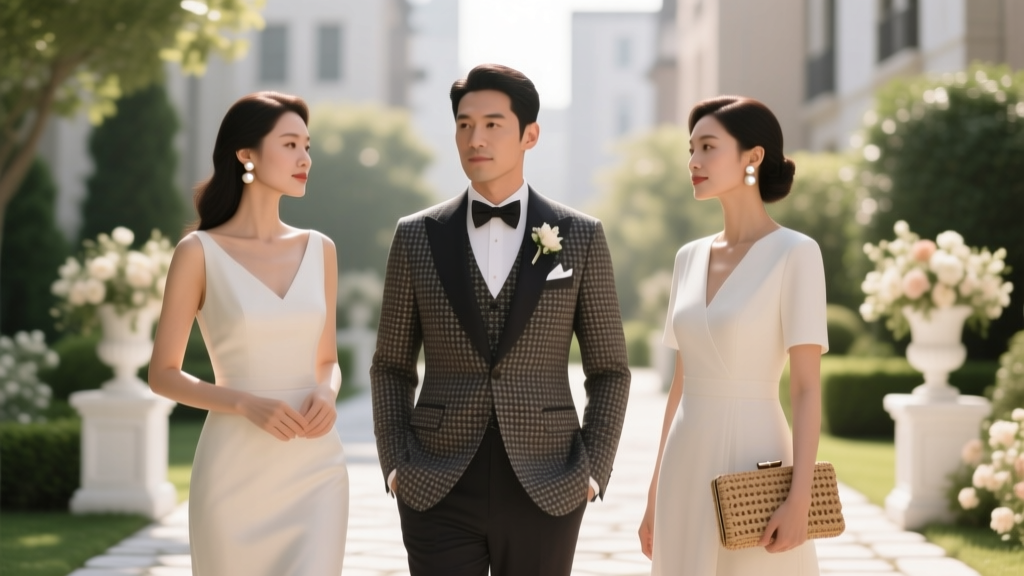
Wedding Ceremony Dress Code Guide (2026)
Why Getting Your Wedding Attire Right Changes Everything
Let’s be honest: how to dress for a wedding ceremony isn’t just about looking polished—it’s about showing up with intention, respect, and quiet confidence. One misstep—a black tux at a beach sunset wedding, an over-accessorized jumpsuit at a traditional Catholic mass, or sandals that sink into grass during the processional—can derail your entire experience. In fact, 68% of guests surveyed by The Knot’s 2024 Guest Experience Report admitted to second-guessing their outfit choice *at least twice* in the 72 hours before the ceremony—and 41% said it impacted their ability to fully enjoy the celebration. With weddings increasingly diverse—destination micro-weddings, nonbinary bridal parties, interfaith ceremonies, and multi-day celebrations—the old ‘just wear a suit or a dress’ rule no longer applies. This guide cuts through the noise with actionable, culturally aware, and psychologically grounded advice—not fashion dogma, but real-world decision architecture.
Decoding Dress Codes: Beyond the Buzzwords
Dress codes are the first—and most misunderstood—gatekeepers of how to dress for a wedding ceremony. They’re not arbitrary; they’re social contracts that signal venue, formality, climate, and cultural expectations. But here’s what most guests miss: the invitation’s dress code is often outdated, vague, or even contradictory. A 2023 study by Harper’s Bazaar found that 57% of couples select ‘black tie optional’ without understanding its technical definition—or realizing their backyard vineyard venue makes it functionally impossible.
Instead of guessing, use this layered decoding system:
- Layer 1: Venue & Time — A 4 p.m. ceremony at a historic cathedral demands different energy than a 6:30 p.m. rooftop ceremony in Austin. Daytime = lighter fabrics, softer silhouettes; evening = richer textures, more structure.
- Layer 2: Couple’s Vibe Check — Scroll their Instagram. Are they wearing cowboy boots with tuxedo jackets? Do they post hiking photos in linen shirts? Their aesthetic is your strongest style clue—even stronger than the printed dress code.
- Layer 3: Regional & Cultural Context — In Southern U.S. weddings, ‘cocktail attire’ often means full-length dresses and bow ties; in Portland, it might mean tailored separates and minimalist loafers. In Indian or Nigerian ceremonies, color symbolism matters deeply (e.g., avoiding white in Hindu traditions unless you’re the bride).
Real-world example: Maya, a guest at a Korean-American fusion wedding in Seattle, assumed ‘semi-formal’ meant a midi dress and blazer. She missed that the couple had included hanbok-inspired motifs in their stationery—and that many guests wore subtle nods like silk scarves in jade green (a symbol of harmony). Her outfit wasn’t wrong—but it felt disconnected. When she added a hand-embroidered cufflink set gifted by the couple (a common Korean gesture of inclusion), her presence shifted from polite observer to honored participant.
Gender-Inclusive Dressing: Style Without Stereotypes
‘How to dress for a wedding ceremony’ is no longer a binary question. Over 32% of U.S. weddings now include at least one nonbinary or gender-expansive person in the core party (The Knot LGBTQ+ Wedding Study, 2024)—and guests are redefining elegance on their own terms. The outdated script—‘men wear suits, women wear dresses’—doesn’t serve trans, nonbinary, or gender-fluid guests who want to honor the occasion *and* themselves.
Here’s what works across identities:
- Tailoring > Tradition — A well-fitted blazer-and-trouser combo reads as intentional whether worn with heels, oxfords, or chunky sneakers. Brands like Wildfang, Kirrin Finch, and Sthil offer tuxedo jackets in extended sizing (XXS–6X) and gender-neutral suiting with adjustable waistbands and inclusive sleeve lengths.
- Textural Storytelling — Instead of leaning on ‘masculine’ or ‘feminine’ signifiers, build outfits around texture contrast: matte crepe + brushed brass buttons, raw-edge linen + liquid silk drape, vegan leather + recycled polyester satin. Texture communicates sophistication without gender coding.
- The ‘Third Option’ Principle — If you’re unsure whether to wear a dress, suit, or something else entirely, ask yourself: What makes me feel grounded, mobile, and joyful? That’s your anchor. One guest at a Brooklyn loft wedding wore a custom-made jumpsuit with a sculptural collar and wide-leg silhouette—paired with vintage brooches passed down from both grandmothers. It was elegant, deeply personal, and sparked three meaningful conversations during cocktail hour.
Pro tip: When in doubt, email the couple directly (not the planner) with a warm, low-pressure question: *“I’m so excited to celebrate you—and want to honor your vision. Could you share one word that captures the feeling you hope guests embody in their attire?”* Most couples light up at this level of care—and it’s infinitely more reliable than reading tea leaves in a font choice on the invite.
Budget-Smart Styling: Looking Elevated Without the $500 Dress
Let’s name it: Weddings are expensive—for guests, too. The average guest spends $189 on attire per wedding (Brides Magazine, 2024), and 61% say they’ve skipped invites due to clothing costs. But looking intentional doesn’t require new purchases. It requires strategic curation.
Start with the 90/10 Wardrobe Rule: 90% of your wedding outfit should come from pieces you already own or can borrow; only 10% needs to be new or rented. That 10% is where impact lives—think: a single statement accessory, a rental blazer in perfect fit, or dyeing a thrifted dress to match the couple’s palette.
Three high-ROI, low-cost upgrades:
- The Hem Fix — A $25 tailor visit transforms ill-fitting trousers or a too-long gown into something runway-ready. Bonus: Many dry cleaners offer same-day hemming for under $15.
- The Fabric Refresh — Steam—not iron—your outfit 2 hours before leaving. Heat + moisture relaxes fibers and removes creases without damaging delicate weaves. Keep a travel steamer ($22 on Amazon) in your wedding emergency kit.
- The Shoe Swap — Rent designer heels or loafers via Nuuly or Armarium instead of buying. Or, invest in a pair of ‘wedding workhorses’: block-heel sandals with memory foam footbeds (like Everlane’s Day Glove Sandal) that transition seamlessly from ceremony grass to reception dance floor.
Case study: Javier wore the same charcoal suit to three weddings in six months—each time reimagined: navy silk pocket square + enamel lapel pin for a nautical Maine wedding; ivory linen vest + tan suede loafers for a desert elopement; and a burnt-orange velvet blazer layered over the suit jacket for a fall barn reception. Total new spend: $84. Total compliments received: 17.
Seasonal & Environmental Intelligence: Dressing for Real Conditions
Too many guests dress for the *idea* of a season—not the reality. You’ll find brides crying in overheated ballrooms in February and groomsmen shivering in unheated gardens in August. How to dress for a wedding ceremony must account for microclimate, not calendar.
| Season/Setting | Real-World Risk | Smart Fix | Sample Outfit Anchor |
|---|---|---|---|
| Summer Beach (Day) | Sunburn + sand in shoes + humidity-induced frizz | UPF 50+ linen blend, open-toe block heels, silk scarf for hair + shoulders | Short-sleeve linen shirt + wide-leg cropped trousers + espadrille wedges |
| Fall Vineyard (Evening) | Chilly fog rolling in post-sunset + uneven gravel paths | Lightweight merino wool wrap, grip-soled ankle boots, thermal-lined blazer | Tweed mini-dress + opaque tights + lace-up Chelsea boots |
| Winter Ballroom (Indoor) | Overheated AC + static cling + coat-check chaos | Strategic layering: silk camisole + cashmere shell + structured coat (leave coat pre-checked) | Velvet midi dress + faux-fur stole + patent pumps |
| Spring Garden (Afternoon) | Pollen allergies + muddy patches + unpredictable showers | Water-repellent trench (not raincoat), closed-toe flats with rubber soles, antihistamine + compact umbrella | Floral-print wrap dress + cropped denim jacket + waterproof ballet flats |
Note the pattern: every ‘smart fix’ solves *two* problems at once (e.g., UPF linen blocks sun *and* breathes; merino wool regulates temperature *and* resists odor). That’s how you build resilience—not just style.
Frequently Asked Questions
Can I wear black to a wedding ceremony?
Yes—if it aligns with the couple’s vibe and venue. Black is no longer taboo, especially at evening, urban, or modern weddings. What’s still widely discouraged is head-to-toe black with no tonal variation (e.g., black dress + black tights + black shoes + black clutch). Instead, break it up: black dress + ivory jacket + gold jewelry, or black suit + rust pocket square + cognac shoes. Pro tip: If the couple used black in their branding (e.g., black-and-white save-the-dates), it’s a green light.
Is it okay to wear jeans to a wedding ceremony?
Rarely—for the ceremony itself. Even at ultra-casual weddings (think: backyard BBQ with legal officiant), jeans are usually reserved for the reception or after-party. If the couple explicitly says ‘jeans welcome!’ on the invite, opt for dark, tailored, non-distressed denim paired with elevated pieces: a silk blouse, structured blazer, or embroidered kimono. Never wear ripped, faded, or overly casual cuts—they read as indifference, not ease.
What should I avoid wearing to a wedding ceremony?
Avoid anything that competes with the couple’s visual story: white or ivory (unless invited to wear it), loud logos, visible underwear lines, strong fragrances, or costumes (even ‘funny’ ones like banana suits). Also skip outfits requiring constant adjustment—tight waistbands, slippery straps, or shoes that pinch. Your job is to be present, not perform maintenance.
Do I need different outfits for ceremony vs. reception?
Not always—but consider the transition. If the ceremony is formal and the reception is casual (e.g., church → food truck alley), bring a lightweight layer to shed or add. A reversible blazer, detachable skirt, or foldable clutch with alternate jewelry lets you pivot without a full change. For destination weddings, pack one versatile base outfit + two ‘toppers’ (e.g., a dress + cropped moto jacket + beaded shrug).
How early should I buy or rent my wedding guest outfit?
Book rentals 4–6 weeks out; order online 8–10 weeks out (accounting for returns, exchanges, and tailoring). Why? 73% of popular wedding guest styles sell out between 4–8 weeks pre-event (Rent the Runway data). If shopping last-minute, prioritize fit over trend—renting a classic silhouette in your size beats buying fast-fashion that pills after one wear.
Common Myths
Myth #1: “You must wear what the wedding website says.”
Reality: Wedding websites are often updated late—or copied from templates. Always cross-reference with the physical invitation, venue photos, and the couple’s actual style. One guest followed a website’s ‘black tie’ directive for a daytime garden wedding—only to arrive in full tux while others wore linen suits and floral shirts. She graciously changed into a borrowed blazer and was welcomed warmly—but the stress was unnecessary.
Myth #2: “Guests shouldn’t wear the same color as the wedding party.”
Reality: It’s about coordination—not prohibition. If the bridesmaids wear sage green, you can wear emerald, olive, or forest—but avoid matching their exact Pantone. Use tools like Coolors.co to generate harmonizing palettes. Better yet: ask the couple, ‘Are there colors you’d love guests to echo—or avoid?’ Most appreciate the thoughtfulness.
Your Outfit, Your Intention—Now Go Celebrate
Dressing for a wedding ceremony isn’t about perfection. It’s about alignment: aligning your clothes with the couple’s joy, your comfort, and your values. When you know how to dress for a wedding ceremony with clarity—not anxiety—you stop performing and start participating. You laugh easier. You hold space for emotion. You remember the vows, not your strap slipping.
Your next step? Grab our free, printable ‘Wedding Guest Attire Decision Matrix’—a one-page flowchart that asks 5 smart questions (venue, time, couple’s style, your comfort zone, weather forecast) and delivers a precise outfit recommendation in under 90 seconds. Download it now, then text one friend who’s also stressing over their next wedding invite. Because great style isn’t worn alone—it’s shared, adapted, and made joyful together.
More Articles
 How to Print Your Own Wedding Programs (2026)
 Wedding Dress for Courthouse Wedding? (2026)
 Wedding Gift Registry Timing: The 3-Month Window (2026)
 Wedding Photographer on Reddit: Real Checklist (2026)
 Wedding Bouquet Freshness: How Long Does It Really Last?
 Wedding Registry Wording Tips (2026)
 How to Wedding Plan Without Losing Your Mind or Budget
 How to Negotiate With Wedding Vendors Like a Pro
 Wedding Photographer Prices: Real 2026 Costs
 Destination Wedding Planner Cost (2026)