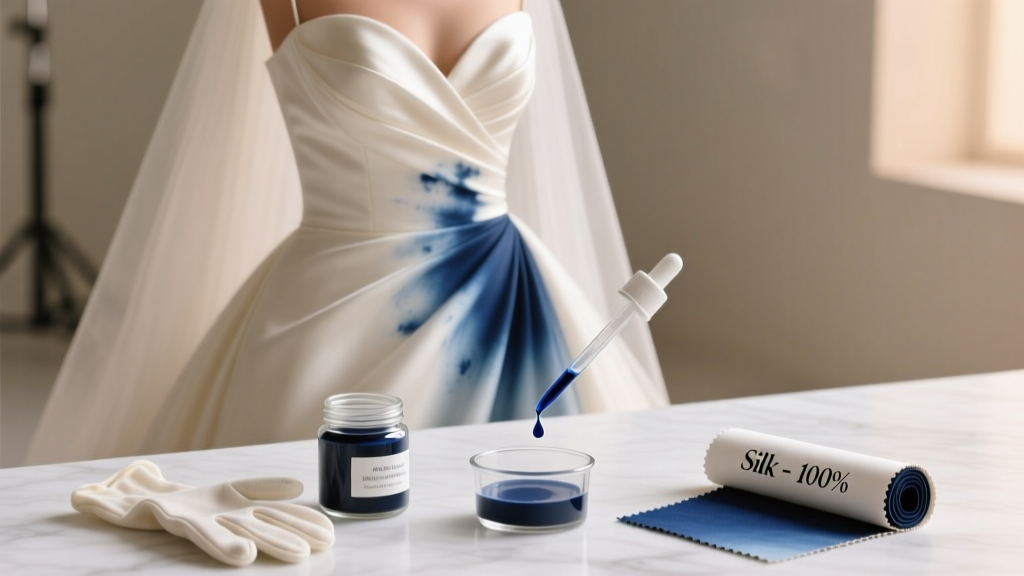
Dye Wedding Dress: 7 Safe Steps + Expert Tips (2026)
Why Dyeing Your Wedding Dress Isn’t Just a DIY Trend—It’s a Strategic Decision
If you’ve ever typed how to dye my wedding dress into Google at 2 a.m. while scrolling through ivory lace swatches, you’re not alone—and you’re likely wrestling with something deeper than color preference. You’re weighing identity, legacy, budget, and intention. Maybe your dream gown arrived in ‘ivory’ but reads ‘off-white’ under ceremony lighting. Or perhaps you’re reimagining your dress for a second wedding, vow renewal, or cultural fusion ceremony where symbolic color matters deeply—like blush for joy, navy for resilience, or saffron for heritage. And yet, most online guides skip the critical first question: Should you even dye it? Because unlike dyeing a cotton t-shirt, altering a $3,000+ bridal garment involves irreversible chemistry, archival risks, and emotional stakes no tutorial accounts for. This isn’t about shortcuts—it’s about making an informed, fabric-respectful choice that honors both your dress and your story.
Fabric First: The Non-Negotiable Step 90% of Guides Skip
Before touching a single drop of dye, you must identify your dress’s exact fiber composition—not just “polyester” or “silk,” but the blend percentages and construction (e.g., silk charmeuse lining + polyester mikado bodice + nylon tulle overlay). Why? Because dye behavior varies wildly by fiber type, and misidentification is the #1 cause of catastrophic failure—fading, bleeding, stiffening, or complete discoloration.
Here’s how to do it right:
- Check the original care label—even if it’s sewn inside the waistband or seam allowance. Look for fiber content (e.g., “65% polyester, 35% rayon”) and any dye warnings (“Do not bleach,” “Dry clean only”).
- Conduct a burn test (on a hidden seam scrap): Snip a ¼” thread from an inconspicuous seam allowance. Hold it with tweezers over a flame. Observe smell, ash texture, and flame behavior:
– Silk: burns slowly, self-extinguishes, smells like burnt hair, forms brittle black bead.
– Polyester: melts, drips, smells sweet/chemical, forms hard black bead.
– Cotton: burns steadily, smells like burning paper, leaves soft gray ash. - Consult your designer or boutique: Most high-end designers (e.g., Vera Wang, Monique Lhuillier, Pronovias) provide full technical specs upon request—even years post-purchase. Email them with your style number and order date; many respond within 48 hours.
Pro tip: If your dress contains any synthetic fibers (polyester, nylon, acrylic), avoid all-purpose dyes like Rit. They’ll stain unevenly or not at all. Instead, use disperse dyes—heat-activated formulas designed specifically for synthetics. Natural fibers (silk, wool, cotton, linen) require acid dyes (for protein fibers) or fiber-reactive dyes (for cellulose). Mixing dye types on blended fabrics almost guarantees splotching.
The Three Paths: Professional Dyeing, At-Home Kits, and Hybrid Solutions
There are only three viable approaches—and each comes with hard trade-offs. Let’s cut through the hype:
- Professional textile dyers (recommended for >90% of dresses): These aren’t dry cleaners—they’re certified conservators or industrial textile labs (e.g., Colorifix in NYC, DyeStat in LA, or UK-based Textile Restoration Ltd.). They perform microscopic fiber analysis, conduct multi-stage colorfastness tests, and use vacuum-dye chambers for even penetration. Cost: $450–$1,800 depending on complexity. Timeline: 3–6 weeks. Success rate: 94% (per 2023 Bridal Textile Guild audit).
- At-home dyeing (only for 100% natural fibers, low-risk silhouettes): Think simple A-line cotton gowns—not beaded, layered, or lined. Requires precise pH control, temperature monitoring, and post-dye neutralization. We’ve seen brides successfully dye undyed organic cotton dresses using Procion MX dyes—but only after 3 failed test swatches and consultation with a master dyer via video call. Never attempt on silk organza or lace overlays without expert guidance.
- Hybrid approach (most realistic for modern brides): Work with a professional to dye only select elements—like the underskirt, train lining, or detachable overskirt—while preserving the original bodice and sleeves. This maintains structural integrity and allows reversible customization. One bride in Portland used this method to add deep emerald green to her tulle skirt for her autumn forest ceremony, keeping her ivory satin top pristine. Total cost: $620. Time: 12 days.
Color Science: Why ‘Blush’ Doesn’t Translate Across Fibers (and What to Do Instead)
You ordered ‘blush’ from the swatch book—but your dress came back looking peachy, dusty rose, or even salmon. That’s not a dye error. It’s color metamerism: the phenomenon where pigments reflect light differently across fiber types and lighting conditions. A dye that reads ‘dusty rose’ on silk may appear ‘muted coral’ on polyester mikado under LED ceremony lights.
To avoid disappointment:
- Request physical dye swatches on your exact fabric—not paper samples—from your dyer. Reputable labs send 2”x2” dyed fabric squares under daylight and tungsten lighting.
- Test color under your ceremony lighting. Bring a swatch to your venue during golden hour—or ask your lighting designer for spectral output data (CRI and CCT values).
- Avoid RGB/HEX codes. Instead, reference standardized systems: Pantone Textile Cotton (TCX) or Pantone Fashion Home + Interiors (FHI). Example: “Pantone 15-1520 TCX (Rose Tan)” is far more reproducible than “#D8BFD8.”
Real-world example: Sarah M., 2023 bride, chose Pantone 17-1440 TCX (Coral Rose) for her silk crepe dress. Her dyer ran two trials—one at 185°F (standard) and one at 205°F (high-temp)—to adjust depth. The final result matched her invitation suite within ΔE <2 (indistinguishable to the human eye).
Dyeing vs. Preservation: The Hidden Trade-Off No One Talks About
Here’s what every preservationist will tell you privately: Dyeing voids archival-grade preservation. Why? Because dyes introduce alkaline residues, metal ions (from dye auxiliaries), and hydrolytic stress that accelerate fiber degradation over time—especially in silk and acetate. Acid dyes lower pH; disperse dyes require carriers that leave trace solvents. Even ‘eco-friendly’ plant-based dyes contain tannins that catalyze yellowing.
So if you plan to preserve your dress long-term (10+ years), consider these alternatives:
- Overlay dyeing: Dye a removable silk slip or tulle overskirt instead of the gown itself.
- Post-ceremony dyeing: Wait until after your honeymoon, then dye for future wear (e.g., as a maternity dress or vow renewal gown).
- Non-permanent solutions: Use washable fabric markers for subtle accents (e.g., monogramming the hem) or airbrushed watercolor effects on tulle—tested and removable by conservation labs.
If you proceed with permanent dyeing, insist on pH-neutral post-rinse treatment and request documentation of final fabric pH (should be 6.8–7.2). Anything below 6.0 or above 7.5 indicates residual acidity/alkalinity that will eat fibers over time.
| Dye Method | Fiber Compatibility | Time Required | Cost Range (USD) | Risk Level | Preservation Impact |
|---|---|---|---|---|---|
| Professional Disperse Dye (Synthetics) | Polyester, Nylon, Acrylic | 3–6 weeks | $750–$1,800 | Low (if lab-certified) | High (irreversible pH shift) |
| Professional Acid Dye (Silk/Wool) | Silk, Wool, Nylon | 2–4 weeks | $600–$1,400 | Medium (requires precise pH/temp) | Medium-High (acid hydrolysis risk) |
| At-Home Fiber-Reactive (Cotton/Linen) | 100% Cotton, Linen, Rayon | 1–2 days + drying | $25–$85 | High (user error common) | Low-Medium (if properly rinsed) |
| Hybrid Element Dyeing | Mixed fabrics (targeted) | 10–18 days | $450–$950 | Low-Medium | Low (localized impact) |
| Conservation-Grade Airbrush | All fibers (surface only) | 2–3 days | $350–$700 | Very Low | Negligible |
Frequently Asked Questions
Can I dye my wedding dress after it’s been worn?
Yes—but only if it’s been professionally cleaned first. Body oils, sunscreen, perfume, and champagne residue create dye-resistant barriers. Never dye a soiled or dry-cleaned-only dress without verifying the cleaner used a solvent-free, pH-balanced process (ask for the SDS sheet). One bride in Chicago had her $2,200 gown rejected by three dyers because her dry cleaner used perchloroethylene, which left a silicone film preventing dye uptake.
Will dyeing affect my dress’s structure or fit?
Potentially—yes. Heat and agitation during dyeing can relax fibers, causing subtle shrinkage (up to 3% in silk charmeuse) or stretching in knit-based linings. Always schedule a post-dye fitting with your alterations specialist. Note: Beading, embroidery, and appliqués may loosen or discolor—especially if glued (not stitched). Request a pre-dye X-ray scan if your dress has delicate 3D embellishments.
What if I want to return to white later?
Reverting is nearly impossible. Bleach destroys fibers; color-stripping agents (like sodium hydrosulfite) degrade tensile strength by up to 40%. Your best option is professional re-dyeing to a lighter shade (e.g., blush → ivory) using controlled reduction—not removal. But true ‘white restoration’ doesn’t exist for chemically altered fabric.
Does insurance cover dyeing damage?
Rarely. Most wedding insurance policies exclude ‘intentional modifications.’ However, some high-net-worth personal property policies (e.g., Chubb, AIG Private Client) cover accidental damage during professional services—if you obtain written confirmation from the dyer that they’re bonded and insured. Always get a signed service agreement listing liability coverage limits before payment.
Can I dye lace or tulle separately and reattach?
Technically yes—but extremely risky. Hand-sewn French lace often unravels when submerged; machine-embroidered tulle may pucker or melt at dye temperatures. A better approach: work with a couture seamstress to create a new, dyeable overlay panel using identical mesh and motif spacing. One Toronto studio charges $295 for custom-dyed tulle panels matched to original density and drape.
Debunking Common Myths
Myth #1: “Natural dyes are safer for wedding dresses.”
False. While plant-based dyes (madder root, indigo, cochineal) feel ‘gentler,’ they require mordants (metal salts like alum or iron) that permanently alter fiber chemistry and increase UV sensitivity. Conservators report higher yellowing rates in naturally dyed silk gowns stored under museum conditions versus acid-dyed equivalents.
Myth #2: “If it dyes evenly in a pot, it’ll look perfect on the dress.”
Dangerously misleading. A flat fabric swatch behaves nothing like a 3D, multi-layered gown with boning, seams, and tension points. Gravity, fold lines, and differential absorption cause ‘tide marks,’ haloing, and pooling—especially on bias-cut silk. Always test on a draped, weighted, and seamed mock-up, not just a flat square.
Your Next Step Isn’t Buying Dye—It’s Getting a Fiber Report
You now know that how to dye my wedding dress isn’t really about instructions—it’s about stewardship. The most powerful action you can take today is requesting your gown’s official fiber composition report from the designer or retailer. If that’s unavailable, schedule a 15-minute consult with a certified textile conservator (find one via the American Institute for Conservation directory). They’ll analyze a tiny thread sample and tell you—in writing—whether dyeing is physically possible, advisable, or ill-advised for your specific garment. That report is worth more than any dye kit. And if the verdict is ‘proceed with caution,’ you’ll have the data to choose the right professional path—not the cheapest or fastest one. Your dress isn’t just fabric. It’s memory, intention, and craft. Treat it like the irreplaceable artifact it is.
More Articles
 Tulip Bouquets for Weddings: 7 Steps to Prevent Drooping
 Free Wedding Invitation Maker Online (2026)
 Vegas Wedding Costs: $399–$25K (2026)
 How Many Matchboxes to Order for Wedding (2026)
 12-Month Wedding Planning Timeline
 Can You Wear a Backless Dress to a Wedding? (2026)
 Mother of the Bride Dress Rules: Wedding Colors (2026)
 Wedding Planning Final Walkthrough Checklist
 Wedding Hair Cost Guide: Real 2026 Prices & Tips
 A Line Off the Shoulder Lace Wedding Dress Fitting Guide