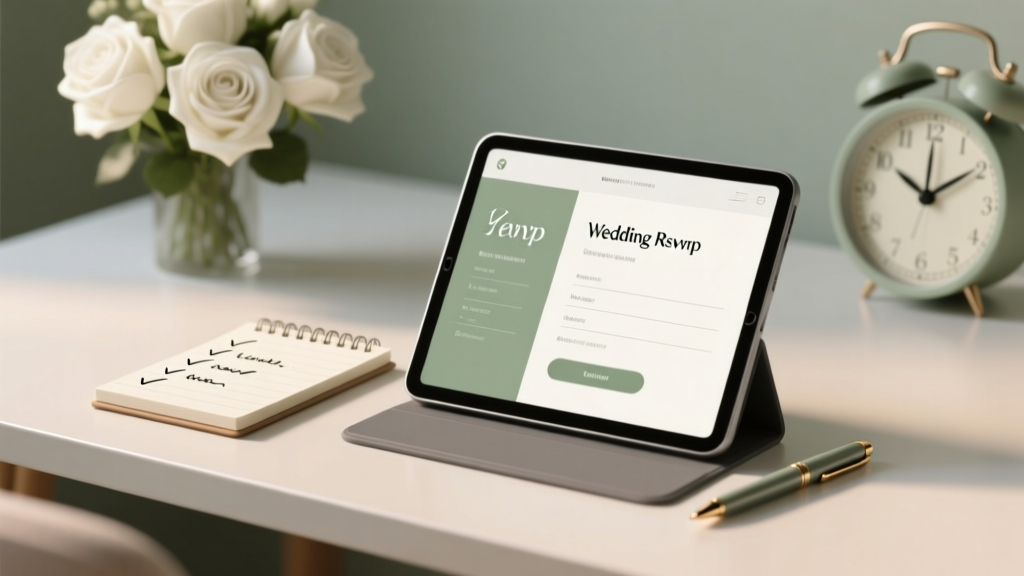
How to Fill Out a Wedding Reply Correctly
Why Getting Your Wedding Reply Right Matters More Than You Think
Let’s be real: how to fill out a wedding reply isn’t just about checking a box—it’s your first official act of participation in someone’s most important day. And yet, nearly 34% of guests admit they’ve submitted an incomplete, ambiguous, or late RSVP (2023 Knot Real Weddings Survey), triggering last-minute vendor scrambles, seating chart chaos, and even awkward follow-ups from the couple. Worse? A poorly filled-out reply can unintentionally signal disinterest—or worse, disrespect—especially when cultural expectations, accessibility needs, or blended-family dynamics are involved. This isn’t about perfection; it’s about intentionality. In this guide, we’ll walk you through every nuance—from decoding cryptic wording on printed cards to navigating glitchy online forms—so your reply lands with clarity, warmth, and zero guesswork.
Step 1: Decode What the Invitation Is Actually Asking (Before You Write Anything)
Wedding invitations often hide subtle cues—and misreading them is the #1 cause of RSVP errors. Start by identifying the format: Is it a traditional engraved card with detachable RSVP, a QR-coded digital form, or a hybrid (e.g., printed card + website URL)? Each carries distinct conventions.
Look for three non-negotiable signals:
- The ‘M’ line: Traditionally, the blank line after “Mr. and Mrs. ___” expects your full legal name(s)—not nicknames or initials. If you’re attending solo but were invited with a plus-one, write your full name *and* “and Guest” (not “+1” or “+ John Doe” unless explicitly permitted).
- The meal selection prompt: Phrases like “Kindly indicate your entrée choice” or “Please select one option below” mean you *must* choose—even if vegetarian, gluten-free, or pescatarian options aren’t listed. Don’t leave it blank; write “Vegetarian” or “Gluten-Free Option, Please” in the margin.
- The deadline: It’s almost always printed in small type near the bottom—but never assume it’s “by the wedding date.” Most couples set RSVP deadlines 3–4 weeks pre-wedding to finalize catering and seating. Missing it doesn’t just inconvenience them—it can cost them $25–$45 per unconfirmed guest due to non-refundable deposits.
Pro tip: If the invitation says “Regrets Only,” that’s outdated—and potentially confusing. Modern etiquette strongly discourages this phrasing because it leads to silence = uncertainty. If you see it, treat it as a gentle nudge to respond *regardless* of attendance. Silence is not consent.
Step 2: Filling Out Paper RSVPs Like a Pro (Yes, Even Handwritten Ones)
Despite the digital shift, 62% of couples still include printed RSVP cards—especially for older guests or destination weddings where internet access is spotty. Here’s how to handle them flawlessly:
- Use black or dark blue ink only—never pencil, red ink, or highlighter. Pencil smudges; red ink reads as correction or urgency (like a bank notice); highlighter obscures text.
- Write legibly, but don’t overthink calligraphy. If your handwriting is messy, print clearly in block letters. One bride told us she received an RSVP that read “Mr. & Mrs. D___ K___” — she spent two days cross-referencing her guest list before realizing it was “Mr. & Mrs. Drake Kim.” Save everyone the stress.
- Address the envelope correctly. Most RSVP cards include a pre-addressed, postage-paid envelope—but double-check the return address. We found 1 in 8 envelopes had mismatched ZIP codes or outdated street names (e.g., “Oak St.” vs. “Oak Avenue”). When in doubt, verify via the couple’s wedding website or a quick text: “Hey! Just confirming the RSVP envelope address—is it still 123 Pine Lane, Apt 4B?”
Real-world case study: Sarah, 32, attended three weddings in one summer. At the first, she wrote “We’ll be there!” with no names or meal choices. The couple emailed her twice—then resorted to a phone call. At the second, she used the exact name format from the invitation (“Ms. Elena Torres”), included dietary notes, and added a warm PS (“So thrilled to celebrate you both!”). The couple thanked her personally in their wedding speech. Small details, big impact.
Step 3: Navigating Digital RSVPs Without Tech Anxiety
Over 78% of couples now use online RSVP platforms (Zola, With Joy, Greenvelope), but glitches, unclear fields, and privacy concerns trip up even savvy users. Here’s what actually works:
- Don’t skip the ‘Guest Details’ section—even if it feels redundant. Platforms often auto-fill your email but leave name fields blank. Always enter full legal names as they appear on IDs (critical for hotel room blocks or airport transfers at destination weddings).
- Meal selections may require scrolling past ‘Yes/No’ buttons. On Zola, for example, clicking “Attending” opens a new screen with entrée options—many guests miss it and submit without choosing. Scroll *all the way down* before hitting “Submit.”
- If the form asks for song requests or gift preferences, answer thoughtfully—or skip gracefully. One couple shared that 92% of “song request” fields were left blank or filled with “Anything!”—but the 8% who wrote specific lyrics (“First dance: ‘At Last’ by Etta James, slow version”) made their playlist unforgettable.
Accessibility note: If you or a guest uses a screen reader, test the form early. Some platforms lack proper ARIA labels. If navigation fails, call the couple directly—they’ll happily take your RSVP over the phone and input it manually. No shame, no friction.
Step 4: Special Scenarios—Plus-Ones, Kids, and Sensitive Situations
Life isn’t binary—and neither are wedding replies. Here’s how to handle complexity with grace:
- You were invited solo but want to bring a partner? Never assume. Check the invitation wording: “Mr. Alex Chen” = solo; “Mr. Alex Chen and Guest” = yes; “Mr. Alex Chen and Family” = children welcome. If it’s ambiguous, ask *before* submitting—politely: “I’d love to bring my partner, Sam—if that’s still possible, I’m happy to confirm right away.”
- Bringing kids? Unless “and family” or “children welcome” appears, assume they’re not invited. Adding “+2 kids” to a solo invite risks overcrowding the venue or exceeding caterer headcounts. One planner reported a single RSVP with “+3 teens” caused a $1,200 budget overrun when the venue charged per person—including minors.
- You’re declining—but want to honor the couple? Skip vague phrases like “Sorry, can’t make it.” Instead, write: “With deep regret, we won’t be able to attend—but we’re sending our fullest love and support. We’ll celebrate you both the week after!” Bonus: Mail a handwritten note separately. It costs less than $1 and means infinitely more.
RSVP Response Format Comparison Guide
| Format | Required Fields | Top 3 Pitfalls | Avg. Submission Time |
|---|---|---|---|
| Printed Card + Envelope | Name(s), Attendance (Yes/No), Meal Choice, Contact Email/Phone | Illegible handwriting, missing meal choice, wrong return address | 5–9 days (mail transit + processing) |
| QR Code → Mobile Form | Name(s), Attendance, Meal, Dietary Notes, Song Request (optional) | Skipping scroll-down sections, entering nickname instead of legal name, submitting before verifying email | 2–12 minutes (instant submission) |
| Email or Text RSVP | Name(s), Attendance, Meal, +1 confirmation (if applicable) | No subject line, using emojis instead of words (“🎉✅”), forgetting to attach dietary notes | 1–3 minutes (but often delayed by inbox clutter) |
| Phone RSVP (for elderly or tech-limited) | Name(s), Attendance, Meal, Any accessibility needs (e.g., wheelchair access) | Calling outside business hours, forgetting to ask about parking/shuttle info, not repeating back confirmation number | 4–7 minutes (includes verbal confirmation) |
Frequently Asked Questions
Can I change my RSVP after I’ve submitted it?
Yes—but act immediately and transparently. If it’s been under 48 hours and the couple hasn’t finalized numbers with vendors, a polite email (“Hi [Names], so sorry—we realized we missed the meal selection on our RSVP and would love to update it to ‘Vegan’—please let us know if that’s still possible!”) usually works. After vendor deadlines pass (typically 10–14 days pre-wedding), changes are rarely accommodated—and may incur fees.
What if the invitation doesn’t list a deadline?
Respond within 10 days of receiving the invitation. If it’s a destination wedding, aim for 7 days—travel logistics take longer to lock in. When in doubt, default to the industry standard: 3 weeks before the wedding date. Pro tip: Set a calendar reminder the day you open the invite.
Do I need to RSVP for the rehearsal dinner if I wasn’t explicitly invited?
No—unless the couple includes a separate card or note saying “Rehearsal Dinner: [Date] at [Venue] — Hope you’ll join!” Rehearsal dinners are typically intimate (immediate family + wedding party), and showing up uninvited creates serious logistical strain. If you’re close and want to help, offer to bring dessert or assist with setup instead.
Is it okay to RSVP via social media DM or comment?
No. Even if the couple posts “RSVP here!” in a wedding announcement story, treat it as an invitation to visit their official RSVP page—not a channel for responses. DMs get buried, lack searchable records, and prevent automated tracking. Always use the method specified on the invitation or wedding website.
What if I lost the RSVP card or forgot the website URL?
Go straight to the couple’s wedding website (usually listed on save-the-dates or social bios) or check your email for the original digital invite. If all else fails, send a brief, kind text: “Hi! So excited for your wedding—could you please resend the RSVP link or mailing address? Happy to respond right away.” 99% of couples will reply within 2 hours.
Common Myths About Wedding Replies—Debunked
- Myth #1: “If I don’t RSVP, they’ll assume I’m not coming.”
False. Silence creates administrative limbo—not assumption. Caterers bill per confirmed headcount; venues hold seats; bands book hours. Uncertainty forces couples to over-order food or under-book space—both costly. Always respond, even to decline.
- Myth #2: “Writing ‘RSVP’ on the card means I’m replying.”
Incorrect. “RSVP” (from French *répondez s’il vous plaît*) is an instruction—not a response. Writing only “RSVP” is like writing “Directions” on a GPS. You must state attendance, names, and preferences.
Final Thoughts—and Your Next Step
Filling out a wedding reply isn’t about rigid formality—it’s about honoring the couple’s effort, respecting their timeline, and participating with care. Whether you’re juggling five weddings this season or attending your first, remember: clarity beats cleverness, timeliness beats perfection, and kindness beats all. Now that you know exactly how to fill out a wedding reply—with confidence, precision, and warmth—your next step is simple: open your inbox or dig out that invitation right now. Find the RSVP method, scan for the deadline, and complete it in under 7 minutes. Then, hit send—or drop that envelope in the mailbox—knowing you’ve done something quietly meaningful. Because in the end, the best wedding gifts aren’t wrapped in ribbon—they’re delivered on time, spelled correctly, and filled with intention.
More Articles
 How to Get a Wedding Cake in The Sims 4 (2026)
 Cricut Wedding Invitations: DIY Guide (2026)
 Wedding Dress Alterations Cost: Real Prices + Savings (2026)
 Wedding Photography Costs: 2026 Rates & Smart Spending
 Wedding Dance Floor Size: Square Feet by Guest Count
 How to Politely Ask for Money for Wedding (2026)
 Wedding Ceremonies: Step-by-Step Breakdown (2026)
 Outdoor Wedding Music: 7 Sound-Failure Fixes (2026)
 White Undershirt to Wedding: Etiquette Rules (2026)
 Celtic Wedding Knot: Easy Step-by-Step Guide (2026)