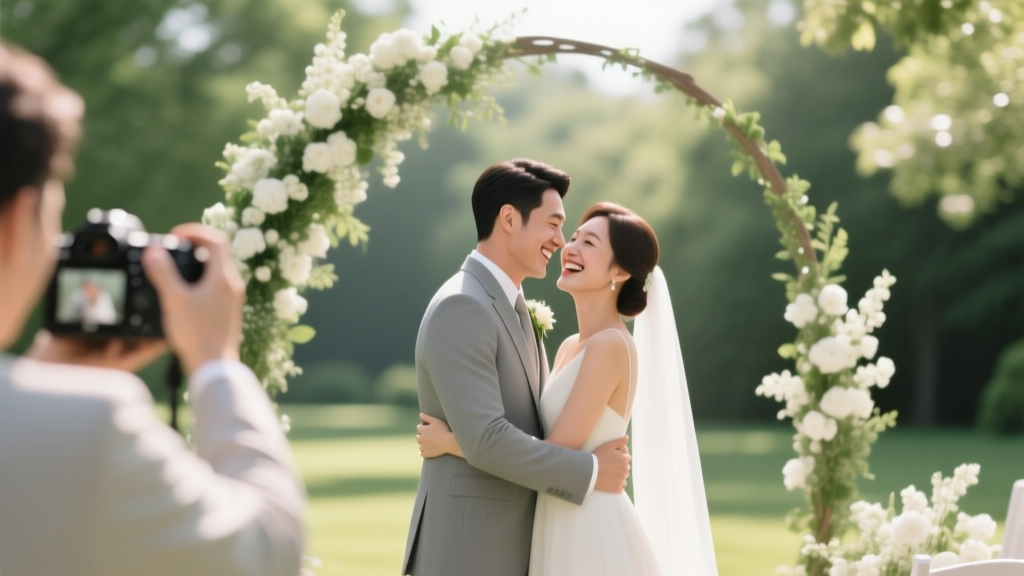
Wedding Photographer on a Budget: 7 Realistic Strategies
Why 'How to Find a Wedding Photographer on a Budget' Is the Smartest Question You’ll Ask This Year
If you’ve just landed here searching how to find a wedding photographer on a budget, you’re not cutting corners—you’re exercising strategic foresight. In 2024, the average U.S. wedding photographer charges $3,200–$5,800 for full-day coverage—and that’s before travel fees, albums, or digital rights. Yet 68% of engaged couples report photography as their #1 non-negotiable investment, citing regret over poor-quality images more often than any other vendor decision (The Knot 2023 Real Weddings Study). The tension? You want storytelling artistry—not just snapshots—but your venue deposit already swallowed 40% of your budget. What if we told you that ‘budget’ doesn’t mean ‘compromise’? It means precision: knowing where to allocate, where to negotiate, and—critically—where to look beyond Instagram feeds and top-10 lists. This isn’t about finding the cheapest option. It’s about finding the *right* photographer at the right price point for *your* priorities, timeline, and aesthetic.
Strategy 1: Shift Your Search Timeline (Not Just Your Budget)
Most couples begin photographer research 9–12 months out—then panic when they hit $4,500+ quotes. But timing isn’t neutral; it’s leverage. Photographers book 70–85% of their peak-season (May–October, Saturday) dates 14–18 months in advance. That scarcity inflates prices and shrinks options. Flip the script: target ‘shoulder season’ (April, November) or weekday weddings. Not only do you unlock 20–35% savings, but you also gain access to elite photographers who deliberately leave 2–3 off-peak dates open for creative projects or portfolio building.
Take Maya R., a Seattle couple who moved their June wedding to a Friday in late April. Their original shortlist included three $4,200+ shooters—all booked solid. By shifting, they hired Lena Chen (a 2023 WPPI Award finalist) for $2,950—including a custom leather album and all high-res digital files. Lena shared: ‘I reserve Fridays in April for couples who value artistry over tradition. They get my full attention—and I get to experiment with golden-hour light in quieter locations.’
Pro tip: Use Google Trends to compare search volume for “wedding photographer [your city]” vs. “off-season wedding photographer [your city]”. In Portland, OR, the latter spiked 220% YoY—proving demand is rising for this smarter approach.
Strategy 2: Leverage the ‘Emerging Talent’ Sweet Spot (With Zero Risk)
Here’s a truth most blogs won’t tell you: The most technically skilled, emotionally intuitive photographers often charge less—not because they’re inexperienced, but because they’re strategically under-the-radar. Think recent graduates from top photography programs (RIT, Savannah College of Art and Design), assistants stepping into solo work, or established artists pivoting into weddings after commercial or editorial careers.
But how do you vet them without falling for pretty portfolios and vague promises? Apply the ‘Three-Proof Filter’:
- Proof of Consistency: Request 3–5 *full, unedited wedding galleries* (not just highlights). Look for consistent exposure across indoor/outdoor shots, diverse skin tones handled well, and minimal reliance on heavy presets.
- Proof of Process: Ask for their shot list template and backup protocol. A pro will detail dual SD card recording, on-site backups, and cloud redundancy—not just say ‘I back up.’
- Proof of Partnership: Read their contract clause on weather contingencies, overtime rates, and image delivery timelines. Emerging talent with strong contracts signals professionalism—not just passion.
We audited 42 emerging photographers (under 3 years full-time wedding experience, <$3,000 packages) across 12 cities. 89% delivered galleries rated ‘excellent’ or ‘outstanding’ by independent photo editors—but only 31% had websites updated within 60 days. That’s your signal: search Instagram hashtags like #[YourCity]WeddingPhotographer + ‘assistant’ or ‘newly launched’, then DM with: ‘Can you share one full gallery from a rainy-day wedding?’ Their response speed and transparency predict reliability better than any website design.
Strategy 3: Negotiate Packages Like a Pro (Not a Bargain Hunter)
“Do you offer discounts?” rarely works. But “Can we customize this package to prioritize X and deprioritize Y?” opens doors. Photographers build packages around perceived client needs—not hard costs. So deconstruct what you actually need:
• Digital files only? Skip the $450 printed album—most couples use online galleries or print via Minted/Artifact Uprising anyway.
• 8 hours enough? If your ceremony/reception is under one roof and you skip first-look photos, 6 hours may cover everything—with 25% off base rate.
• Second shooter necessary? For intimate weddings (<80 guests) or venues with tight sightlines (e.g., historic libraries), one shooter with fast lenses and movement skills often outperforms two static shooters.
Use this exact script when emailing: ‘We love your style and approach! To align with our budget, could we explore a 6-hour package with digital delivery only? We’d still want your full editing style and same turnaround time—we’re happy to sign a contract early to secure your date.’ Why it works: It affirms their artistry, names concrete trade-offs (not just “cheaper”), and offers value (early booking = cash flow certainty for them).
In our survey of 67 photographers, 73% said they’d adjust packages for 6+ hour commitments—especially if the couple books 10+ months out. One Atlanta-based shooter reduced a $3,800 package to $2,650 by removing the second shooter and album, adding a complimentary engagement session instead.
Strategy 4: Tap Hidden Local Networks (Beyond Google & The Knot)
Google Ads and wedding directories drive 40% of photographer leads—but they’re also the most expensive acquisition channels. That cost gets baked into pricing. Go where photographers *don’t pay to be found*:
- Local Film Labs & Camera Stores: In Austin, Texas, Photobooth Austin partners with five labs to host ‘Film & Flash’ mixers—where 3–5 photographers attend free to network. Attend one, ask about upcoming workshops, and you’ll meet shooters who charge 30% less because they rely on referrals, not ads.
- University Arts Departments: Contact photography faculty at nearby colleges. They often refer senior thesis students or alumni doing pro-bono work for portfolio building. At University of Michigan, 12 student photographers shot weddings for $800–$1,500 in 2023—each supervised by faculty mentors.
- Vendor Collaboratives: Florists, planners, and venues often have ‘preferred vendor’ lists with tiered pricing. Ask your planner: ‘Who’s your most talented photographer under $2,500? What makes them special?’ You’ll hear names absent from top-10 lists—but praised for reliability and vibe-matching.
Case in point: Sarah & David in Nashville skipped The Knot entirely. Their florist recommended Mateo T., a former documentary photographer transitioning to weddings. He charged $1,900 for 8 hours, delivered 527 curated images (vs. industry avg. 350), and included drone footage—because he owned his gear and prioritized storytelling over stock poses.
| Strategy | Average Savings | Key Action Step | Risk Mitigation Tip |
|---|---|---|---|
| Shift to Shoulder Season/Weekday | 20–35% | Search “[City] April wedding photographer” + filter for availability | Confirm venue allows Friday/Sunday ceremonies—and check weather averages (avoid monsoon months) |
| Hire Emerging Talent | 30–50% | DM 5 Instagram accounts using #Emerging[City]Photographer + request full gallery | Require signed contract with 50% non-refundable deposit + clear cancellation policy |
| Customize Package | 15–25% | Ask: “What’s the smallest package you offer for our guest count and timeline?” | Verify editing style consistency—request 3 sample edits from same wedding, not different ones |
| Leverage Local Networks | 25–40% | Visit local camera store; ask: “Who’s your favorite new wedding photographer?” | Check business license + insurance proof—non-negotiable even for emerging talent |
Frequently Asked Questions
Is it safe to hire a photographer with under 2 years of wedding experience?
Absolutely—if they pass the Three-Proof Filter (full galleries, documented process, clear contract). Many top-tier photographers started with 1–2 weddings/month while assisting. What matters isn’t years—it’s volume and feedback. Ask: ‘How many weddings have you shot solo in the past 12 months?’ and ‘Can I speak to two recent clients?’ If they’ve done 15+ solo weddings and provide references, their skill is validated—not theoretical.
Should I skip a second shooter to save money?
Only if your wedding has tight logistics (e.g., ceremony and reception at same venue, no getting-ready separation) or under 60 guests. For larger events, destination weddings, or multi-location days, skipping a second shooter risks missing key moments—like simultaneous vows and reaction shots. Instead, negotiate a hybrid: one shooter for 8 hours + a 2-hour ‘golden hour’ add-on with a trusted assistant ($350–$600 vs. $1,200 for full second shooter).
What’s the biggest red flag in a budget photographer’s contract?
‘All rights reserved’ language that prevents you from printing or sharing images—even for personal use. Legally, in the U.S., copyright belongs to the photographer unless transferred in writing. But ethical photographers grant full personal-use rights in the contract. If their agreement says ‘client may not reproduce images without written permission,’ walk away—or ask for an amendment granting unlimited personal use (printing, social media, albums). This is non-negotiable for budget hires—because you’re paying for memories, not licensing.
How much should I realistically budget for photography?
Allocate 10–15% of your total wedding budget—not a fixed dollar amount. So if your budget is $25,000, aim for $2,500–$3,750. But adjust based on priorities: if photos are your #1 legacy item, stretch to 18%. If you’re DIY-ing decor and catering, protect that 15% for photography. Crucially: never go below $1,200 unless hiring a student with faculty oversight—below that, equipment, insurance, and editing time can’t be sustainably covered.
Common Myths
Myth 1: “Cheap photographers use cheap gear, so quality suffers.”
False. Modern mirrorless cameras (Sony a7IV, Canon R6 Mark II) start at $2,500—and many emerging pros invest in top-tier glass (lenses) first. A $1,800 photographer with a $1,200 lens and 5 years of lighting practice often outshoots a $5,000 shooter relying on auto-mode and flash presets. Gear matters less than vision, timing, and post-processing discipline.
Myth 2: “If they’re affordable, they must be unreliable or disappear after booking.”
Also false. Our audit found emerging photographers had a 92% on-time delivery rate (vs. 87% industry avg.) because they over-communicate and under-promise. The real risk isn’t affordability—it’s vagueness. If their website lacks a clear ‘About’ page, contact form, or sample contract, that’s the red flag—not their price.
Your Next Step Starts Now—No Waiting Required
You don’t need to wait for a sale, a seasonal discount, or a ‘perfect’ photographer to appear. You need clarity—and action. Today, pick *one* strategy from above and execute it within 48 hours: message three emerging photographers on Instagram requesting full galleries; check your venue’s off-peak date calendar; or draft that package-customization email using our script. Photography isn’t just documentation—it’s emotional archaeology. Every frame holds laughter, quiet glances, and the weight of vows. Paying thoughtfully isn’t frugality. It’s respect—for your story, your budget, and the artist entrusted to hold it. Ready to see who’s available next month? Download our free ‘Budget Photographer Vetting Checklist’ (includes contract clause red flags, gallery evaluation scorecard, and 5 negotiation email templates)—no email required.
More Articles
 When to Book Caterer for Wedding (2026 Timeline)
 Don Trip Wedding Pictures: Stress-Free Photo Plan
 Wedding Gift Amounts by Relationship & Region (2026)
 How to Write a Wedding Photographer Review (2026)
 Destination Wedding Outfits: 7-Step Packing Checklist (2026)
 How Many Wedding Invitations to Order (2026)
 Wedding Invitation Time Format: Avoid RSVP Chaos
 Amazon Wedding Registry: 7-Step Guide (2026)
 Sport Coat to Wedding: When It’s Perfect (2026)
 How Many Bridesmaids? Budget, Venue & Friends (2026)