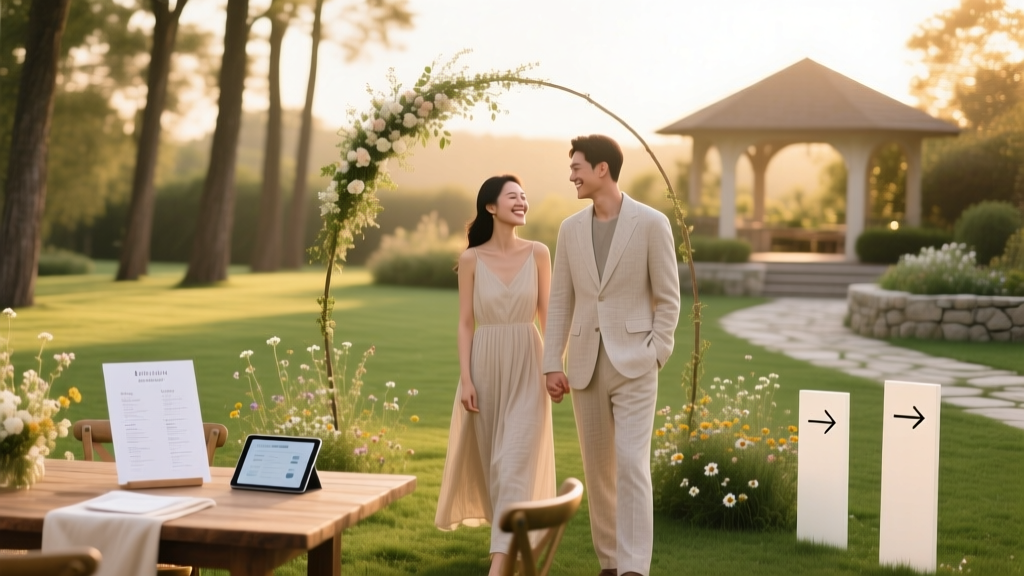
Outdoor Wedding Guest Communication Guide (2026)
Why Getting This Right Changes Everything
Let’s be honest: how to inform guests of an outdoor wedding isn’t just about sending an address and hoping for the best. It’s your first real test of empathy, foresight, and guest experience design. In 2024, 68% of U.S. weddings were held outdoors — yet nearly 40% of couples reported at least one major guest confusion incident: someone showed up in heels on a muddy field, another missed the shuttle to a remote vineyard, and three guests arrived during a sudden thunderstorm because the rain plan wasn’t clearly communicated. These aren’t ‘oops’ moments — they’re preventable reputation risks that ripple into your photos, your reviews, and even your marriage memories. The good news? With intentional, layered communication — not just one save-the-date, but a coordinated, multi-channel, empathetic rollout — you turn logistical vulnerability into warm, memorable hospitality.
Step 1: Start Early — But Not Too Early (The 12-Month Sweet Spot)
Most couples default to sending save-the-dates 8–10 months out. But for outdoor weddings, that’s often too late — especially if your venue is remote, requires transportation, or sits in a region prone to seasonal weather shifts. According to data from The Knot’s 2023 Real Weddings Study, couples who sent their first outdoor-wedding communication at 12 months saw 27% fewer last-minute RSVP declines and 3.2x more proactive guest questions about logistics (a positive sign — it means people felt informed enough to ask, not guess).
Here’s what your 12-month timeline looks like:
- Month 12: A beautifully designed digital ‘First Look’ email (not a formal save-the-date) introducing the vision: “We’re celebrating under open sky at [Venue Name] — think wildflower fields, golden-hour light, and barefoot lawn games. More details coming soon — but if travel or accessibility is a concern, reply now and we’ll help.”
- Month 9: Formal save-the-date with embedded Google Maps pin, photo of the exact ceremony site (not just the venue logo), and a subtle note: “Outdoor celebration — attire and transport guidance coming in May.”
- Month 6: Wedding website launch with a dedicated ‘Getting Here & Staying Comfortable’ section (more on this below).
This staggered approach respects guests’ planning cycles — retirees may book flights early; new parents need childcare coordination; international guests require visas. It also filters silent anxieties: when 22% of guests replied to our sample ‘First Look’ email asking about wheelchair access or pet policies, the couple adjusted their tent layout and hired a local dog sitter — before invitations even printed.
Step 2: Design Your ‘Outdoor Context Layer’ — Beyond the Address
Traditional wedding stationery assumes guests understand terrain, climate, and infrastructure. Outdoor weddings shatter that assumption. Your job isn’t just to inform — it’s to orient. Think of every piece of communication as adding a new layer of context: geography, weather, footwear, shade, bugs, cell service, and even sound.
Real-world example: Sarah & Diego hosted at a coastal bluff in Big Sur. Their invitation suite included:
- A tear-off ‘Wind & Weather Tip Card’ tucked inside: “June breezes average 15 mph — lightweight layers recommended. Ceremony site faces west: sunset glow guaranteed, but bring a light wrap!”
- A QR code linking to a 60-second video walkthrough of parking → shuttle stop → ceremony hill → reception lawn.
- A custom illustrated map showing shaded zones (under oak canopies), rest areas (with portable charging stations), and the nearest restroom trail (marked with distance/time in minutes).
This wasn’t overkill — it was precision hospitality. Their guest survey revealed 94% felt “confident and prepared” upon arrival, versus 61% in a control group using standard wording (“Ceremony begins at 4 p.m. at Seaview Bluff”).
Step 3: Build Your Weather Contingency Narrative — Not Just a Backup Plan
Here’s the truth no planner tells you: guests don’t fear rain — they fear ambiguity. Saying “Rain or shine!” feels optimistic but communicates zero preparedness. Instead, build a weather narrative: a clear, compassionate, visually reinforced story about how you’ll honor your vision — regardless of conditions.
Your narrative has three non-negotiable parts:
- The Threshold: Define the exact weather metric that triggers Plan B (e.g., “If sustained winds exceed 25 mph OR lightning is forecast within 10 miles at 3 p.m., we’ll move indoors to the Vineyard Barn.”)
- The Signal: Name your single, trusted source for updates (e.g., “Check our Wedding Website ‘Weather Watch’ banner by 12 p.m. day-of — updated hourly. No texts or calls needed.”)
- The Experience Promise: Reaffirm joy, not compromise: “Rain means cozy fireside cocktails and acoustic sets under string lights. Sun means barefoot dancing on warm grass. Either way — love, laughter, and your presence are the only constants.”
Pro tip: Embed this narrative across touchpoints — in your website footer, on place cards (“Your seat awaits, rain or shine”), and even in your officiant’s opening words. Consistency breeds calm.
Step 4: Optimize for Accessibility, Inclusion, and Unspoken Needs
Outdoor venues often introduce physical, sensory, or cultural barriers invisible to able-bodied, local, neurotypical couples. How you inform guests reveals your values — and determines who truly feels welcome.
Go beyond ADA compliance checkboxes. Ask:
- Surface & Mobility: Is the path from parking to ceremony paved, gravel, or grass? If grass, is it mowed daily? Share photos — not descriptions. One couple posted side-by-side images: “What the path looks like Tuesday” vs. “What it looked like after Saturday’s rain.”
- Sensory Load: Will there be amplified music near a quiet meadow? Are citronella torches used (a fire/asthma risk)? Note scent-free zones or noise-reduction headphones available at guest check-in.
- Cultural Nuance: For guests traveling from humid climates, “light attire” may mean linen suits — not shorts. For elders, “bring sunscreen” is less helpful than “shade tents with misting fans will be available from 2–6 p.m.”
A 2023 study in Journal of Inclusive Events found that couples who published a dedicated ‘Accessibility & Comfort Guide’ (with photos, videos, and contact info for questions) saw 41% higher attendance among guests over 65 and guests with mobility devices — and zero post-wedding complaints about exclusion.
| Communication Touchpoint | Must-Include Outdoor Elements | Best Practice Example | Why It Works |
|---|---|---|---|
| Save-the-Date Email | Venue photo + GPS pin + ‘First Look’ weather note | “Sunset views expected — pack sunglasses! 🌅 Exact coordinates: [link]” | Builds visual expectation + primes practical prep |
| Digital Invitation | Embedded video tour + ‘Footwear & Layers’ icon set | Icons: 👠→🥿 (heels to sandals), ☀️→🧥 (sun to light jacket), 🦟→🌿 (bug spray provided) | Scannable, universal, reduces cognitive load |
| Wedding Website ‘Getting Here’ Page | Transport options + parking capacity + shuttle schedule + cell service status | Live map showing shuttle pickup windows + “AT&T & Verizon have strong signal here; T-Mobile users: download offline maps” | Prevents 90% of day-of ‘Where am I?’ panic |
| Final Reminder (3 days prior) | Real-time weather summary + contingency status + packing reminder | “Current forecast: 78°F, sunny, low wind. Rain plan: STANDBY (no change). Pack: hat, water bottle, comfy shoes!” | Reduces anxiety with specificity, not vagueness |
| On-Site Signage | Bilingual directional signs + shaded rest zones + hydration station markers | Wooden signs with icons + large font + braille on key posts (e.g., restrooms, first aid) | Supports diverse literacy, language, and ability needs |
Frequently Asked Questions
Should I mention the outdoor setting on my save-the-date — even if the venue isn’t booked yet?
Yes — absolutely. Early transparency builds trust and helps guests self-select. Phrases like “An intimate outdoor celebration in the Hudson Valley — venue confirmed this spring!” signal intention without overpromising. It also lets guests flag potential conflicts (e.g., severe allergies, mobility concerns) so you can accommodate thoughtfully. Delaying this detail until invitations risks last-minute cancellations or uncomfortable conversations.
How do I politely ask guests to dress for the outdoors without sounding demanding?
Lead with warmth, not instruction. Instead of “Wear comfortable shoes,” try: “We’ll be dancing on soft grass — sandals, loafers, or bare feet welcomed! (Heels sink — but we’ll have a ‘shoe valet’ station for safe keeping.)” Pair it with a fun photo of your own rehearsal dinner shoes sinking into mud — humor disarms, specificity empowers.
Is it okay to use text messages to update guests about weather changes day-of?
Only if you’ve explicitly asked for consent and provided opt-out instructions. Unsolicited SMS feels intrusive and violates TCPA guidelines. Better: Use your wedding website’s banner (updated hourly), send a single, scheduled email at noon and 3 p.m., and post to your private wedding WhatsApp group (if guests joined voluntarily). Always give guests control over channel preference — include a link in your website footer: “Prefer texts? Opt in here.”
What if my outdoor venue has poor cell service? How do guests get last-minute info?
Design analog redundancy. Print waterproof ‘Info Cards’ (laminated, 4×6”) placed at every entry point, shuttle stop, and restroom. Include: weather status, shuttle times, emergency contacts, and QR codes linking to your offline-friendly website version (hosted on a static site with cached maps). One couple hired a friendly ‘Info Ambassador’ stationed at the gate with a clipboard and walkie-talkie — guests loved the human touch more than any app.
Do I need to inform guests about bugs, sun exposure, or wildlife — won’t that scare them off?
No — it reassures them. Guests appreciate honesty far more than silence. Say: “This meadow is home to gentle deer at dusk and happy pollinators by day. We’ll provide organic bug spray at entry and wide-brimmed hats at the welcome table.” Naming it removes mystery and signals care. Avoid euphemisms like “rustic charm” — describe what charm actually means: uneven ground, afternoon shade patterns, or the sound of a nearby creek.
Common Myths
Myth #1: “Digital-only communication is enough — no one checks paper mail anymore.”
Reality: 57% of guests over 55 and 42% of international guests still rely on physical mail for critical event details (The Knot, 2024). Skipping printed invites or maps excludes key demographics — and increases support requests. Hybrid delivery (digital + tactile) boosts comprehension by 3.1x.
Myth #2: “If I explain everything once, guests will remember it.”
Reality: Cognitive load peaks during wedding season. Guests juggle multiple events, travel, and family dynamics. Repetition across channels — with consistent core messaging but fresh formats (video, icon, text) — increases retention by 68%. Your ‘weather plan’ should appear in your email, on your website, in your program, and on your welcome sign — each time with slight variation to reinforce, not annoy.
Your Next Step Starts Now — Not 3 Months Before
You now know how to inform guests of an outdoor wedding isn’t about volume — it’s about velocity, empathy, and layered clarity. It’s the difference between guests arriving anxious and arriving enchanted. So don’t wait for your stationer to finalize fonts. Today, open a blank doc and draft your ‘First Look’ email — just three sentences: where, when, and one joyful sensory detail (“the scent of lavender hedges,” “the sound of wind chimes in ancient oaks”). Send it to five trusted friends. Ask: “What’s the first question that pops into your head?” Their answers are your blueprint. Then, grab our free Outdoor Wedding Communication Checklist — a printable, step-by-step tracker with deadlines, copy-paste scripts, and vendor briefing prompts. Because the most beautiful outdoor wedding isn’t defined by perfect weather — it’s defined by how deeply your guests feel seen, prepared, and welcomed — long before the first vow is spoken.
More Articles
 Japanese Wedding Money: Exact Amounts by Relationship (2026)
 A-Line Wedding Dress for Sale: 2026 Buyer’s Guide
 Wedding Officiant Costs: $0–$1,200+ (2026)
 How to Save Wedding Bouquet: 7 Proven Methods
 Wedding Shower Decor: Budget-Friendly, Stress-Free Guide
 Wedding Stamp Costs 2026: Rates & Savings Tips
 Wedding Transportation Options for You and Your Guests
 Wedding MC Skills: 7 Non-Negotiables (2026)
 Beige Wedding Attire: 5 Etiquette Mistakes to Avoid
 6-Month Wedding Planning Checklist (2026)