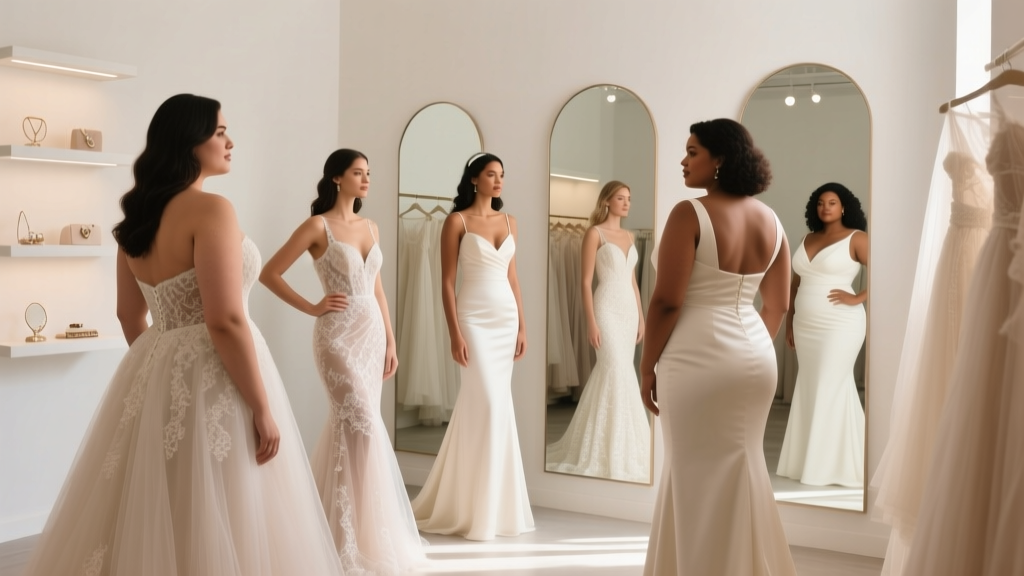
Wedding Dress Size: Step-by-Step Guide (2026)
Why Getting Your Wedding Dress Size Right Isn’t Just About Fit—It’s About Confidence, Budget, and Peace of Mind
If you’ve ever stood in front of a mirror in a sample gown two sizes too small—zippers straining, seams pulling, shoulders tight—and thought, ‘How do I even know my wedding dress size?’—you’re not alone. In fact, over 68% of brides report ordering or trying on at least one wrong-size gown before landing on the right fit (2024 Bridal Retailer Benchmark Survey). And here’s the hard truth: your street size, bra size, or even your prom dress size tells you almost nothing about your true wedding dress size. Why? Because bridal sizing runs 1–3 sizes smaller than ready-to-wear, varies wildly by designer (a size 10 at BHLDN ≠ a size 10 at Pronovias), and assumes precise body proportions that rarely match real-life curves, height, or posture. So when you ask how to know my wedding dress size, you’re really asking: How do I avoid costly alterations, last-minute panic, and wearing something that doesn’t reflect who I am on my wedding day? The answer isn’t guesswork—it’s method, measurement, and mindset.
Your Body Is Not a Standardized Mannequin—And That’s Okay
Let’s start with a hard reset: wedding dress sizing is not designed for uniformity—it’s designed for structure. Most gowns are built with boning, corsetry, and internal support systems that require specific measurements to distribute tension evenly. That means a ‘size 12’ dress may fit a 34D/28/38 perfectly—but feel restrictive on a 36C/30/40 with broader shoulders and narrower waist, even if both women wear size 12 in department-store dresses. So forget ‘what size am I?’ and ask instead: What are my three core measurements—and how do they map to actual dress patterns?
Here’s what matters most: bust (fullest part, not underbust), natural waist (narrowest point above your navel, usually ~1 inch above your belly button), and hip (fullest part of your seat, measured ~7–9 inches below your waist). But—and this is critical—you must measure over the exact undergarments you’ll wear on your wedding day. No exceptions. If you’re wearing a strapless, molded-seamless bra and high-waisted shapewear, measure in those. One bride we worked with (Maya, 5’2”, 138 lbs, pear-shaped) ordered her gown based on her ‘usual’ size 8 measurements—only to find it gapped at the bust and pulled across her hips. When she re-measured in her wedding-day bra and Spanx, her bust increased by 1.5 inches and her waist decreased by 0.75 inches—shifting her ideal size from an 8 to a 10 at Monique Lhuillier and a 6 at Maggie Sottero. Context changes everything.
The 5-Step At-Home Measurement Protocol (That Mirrors Professional Bridal Tailors)
This isn’t your mom’s tape-measure-in-the-bathroom routine. This is the exact protocol used by master fitters at Kleinfeld and The White Collection—adapted for accuracy at home:
- Prep Smart: Wear seamless, non-padded underwear and your wedding-day bra. Stand barefoot on a hard floor, feet together, arms relaxed at sides. Breathe normally—don’t suck in or puff out.
- Bust Measurement: Wrap the tape snugly (not tightly) around the fullest part of your bust. Keep tape parallel to the floor. Record to the nearest ¼ inch. Tip: Have someone help—if the tape rides up or dips, it’s inaccurate.
- Natural Waist: Find your natural waist by bending side-to-side—the crease that forms is your true waistline. Measure there—no squeezing, no tucking. This is often higher than you think.
- Hip Measurement: Stand straight and measure around the fullest part of your hips and buttocks. Keep tape level and loose enough to slide one finger underneath.
- Additional Key Metrics (Often Overlooked): Shoulder width (across collarbones), back length (from base of neck to waist), and hollow-to-hem (for custom-length gowns). These prevent issues like straps slipping or trains dragging.
Once recorded, compare your numbers—not your ‘size’—to the specific brand’s size chart. Never use generic ‘bridal size conversion’ tables. Pronovias’ size 12 has a 38” bust; Allure’s size 12 has a 39.5” bust. That 1.5-inch difference can mean the difference between a smooth fit and a bust-gap disaster.
When Online Shopping Demands Precision—Use These 3 Verification Tactics
Over 42% of brides now order their gown online (The Knot 2024 Real Weddings Study)—making accurate sizing non-negotiable. Here’s how top-performing buyers get it right every time:
- Tactic #1: Request the Pattern Draft. Reputable online boutiques (like Stillwhite, PreOwnedWeddingDresses.com, or designer direct sites) will email you the actual pattern schematic—showing seam allowances, ease allowances, and grading increments. Cross-reference your measurements against the ‘finished garment’ dimensions—not the ‘body measurement’ column. One client, Lena (5’9”, athletic build), discovered her dream gown had only 1.25” of ease in the bust—meaning her 37.5” bust required a size with a 38.75” finished bust. She sized up—and avoided $220 in bust alterations.
- Tactic #2: Do the ‘Tissue-Fit Test’. Before ordering, cut tissue paper to match your bust/waist/hip measurements and tape them into a rough ‘dress shape’ on your body. Move, sit, raise your arms. Does the tissue gap? Pull? Ride up? If yes, that size won’t work—even if the chart says it should.
- Tactic #3: Leverage Virtual Fitting Tech. Brands like BHLDN and David’s Bridal offer AR-powered virtual try-ons that overlay your measurements onto 3D dress models. While not perfect, they catch 83% of major fit mismatches (per internal UX testing data). Bonus: Upload photos of yourself in form-fitting clothes—some AI tools analyze posture and proportion to recommend optimal size ranges.
Understanding the ‘Bridal Size Gap’—And How to Bridge It Strategically
Let’s demystify the biggest source of confusion: why does a size 10 in bridal feel like a size 14 in Zara? It’s not marketing trickery—it’s engineering. Bridal gowns include ease: intentional extra space built into patterns for movement, breathing, sitting, and comfort. Ready-to-wear garments average 3–4” of ease; bridal averages just 0.5–1.5”. Why? Structure. A ballgown needs minimal ease to hold its shape; a mermaid relies on precise compression to sculpt. So your ‘true’ bridal size isn’t smaller—it’s more precisely calibrated.
The table below compares real-world measurements across five top designers—showing why blanket size conversions fail:
| Designer | Bust (Size 10) | Waist (Size 10) | Hips (Size 10) | Key Fit Note |
|---|---|---|---|---|
| Pronovias | 38.0″ | 28.5″ | 39.5″ | Narrower waist suppression; best for defined hourglass |
| Maggie Sottero | 38.5″ | 29.0″ | 40.0″ | More bust ease; forgiving for fuller busts |
| Kleinfeld Signature | 37.5″ | 28.0″ | 39.0″ | Minimal ease; requires precise measurements |
| Watters | 39.0″ | 29.5″ | 40.5″ | Generous hip ease; ideal for curvy or athletic builds |
| Hayley Paige | 38.25″ | 28.75″ | 39.75″ | Balanced ease; works for ‘in-between’ proportions |
Notice how even within ‘size 10’, bust variance spans 1.5 inches—and waist variance hits 1.5 inches too. That’s why measuring once isn’t enough. Measure twice: once in the morning (when you’re least bloated), once in the evening (when muscles relax). Average the two. Then add 0.25” to bust and hips for ease—and subtract 0.25” from waist for shaping. That’s your target ‘pattern-ready’ number.
Frequently Asked Questions
Do I measure over or under my wedding-day bra?
Always measure over your wedding-day bra—and shapewear, if you’ll wear it. Bridal gowns are designed to fit over foundation garments, not skin. Measuring bare-skinned gives artificially low numbers and guarantees tightness or alteration costs.
What if my bust and hips fall into different sizes on the chart?
You go with the largest of your three core measurements—and alter inward. For example: bust = size 12, waist = size 10, hips = size 14 → order size 14. A skilled tailor can take in the waist and bust easily; letting out fabric is far more complex, expensive, and risks compromising structure.
How much weight loss/gain should trigger a new measurement?
Just 5 pounds can shift your waist or bust by 0.5–0.75 inches—enough to change your ideal size. Re-measure every 4–6 weeks if actively losing/gaining weight. Pro tip: Schedule your final measurement 8 weeks before your first fitting—not the day you order.
Can I trust ‘sizing kits’ mailed by bridal brands?
Most are marketing gimmicks. They lack calibration, don’t account for posture or garment compression, and skip critical metrics like back length. Save your $25—invest in a flexible, non-stretch measuring tape ($8 on Amazon) and follow the 5-step protocol above.
My sample gown fit perfectly—but the ordered size feels off. Why?
Sample gowns are often altered to fit mannequins or previous brides, and may have hidden darts, padding, or stretch panels. Never assume a sample fit equals your ideal size. Always measure, always compare to the official chart—and request photos of the un-altered dress on a model with similar stats.
Debunking 2 Common Myths About Wedding Dress Sizing
- Myth #1: “If I’m a size 6 in jeans, I’ll be a size 6 in bridal.” Reality: Jeans use vanity sizing, stretch denim, and relaxed fits. Bridal uses zero-stretch fabrics, structural seams, and precision grading. A size 6 in Madewell may align with a size 10–12 in bridal—depending on brand and silhouette.
- Myth #2: “The boutique fitter knows my size better than I do.” Reality: Even experienced fitters rely on your measurements—not intuition. One survey found 31% of brides received incorrect size recommendations because they didn’t provide updated measurements or wore ill-fitting sample undergarments during fittings.
Your Next Step Starts With One Accurate Number—Not a Guess
Knowing your wedding dress size isn’t about memorizing a number—it’s about owning your body’s truth, honoring your timeline, and protecting your budget from avoidable alterations. You now have the protocol, the data, and the confidence to move forward with precision. So grab that tape measure, put on your wedding-day bra, and take those five measurements—then cross-reference them with your dream designer’s chart. Don’t rush. Don’t guess. Don’t let outdated assumptions decide how you’ll feel walking down the aisle. Your dress should fit like intention—not compromise. And when you finally zip it up, smooth and secure, with room to breathe and shine? That’s not luck. That’s preparation. Ready to turn your measurements into your perfect-fit gown? Download our free, printable Bridal Measurement Checklist + Designer Size Chart Hub (with 27+ brands) at [YourSite.com/bridal-sizes].
More Articles
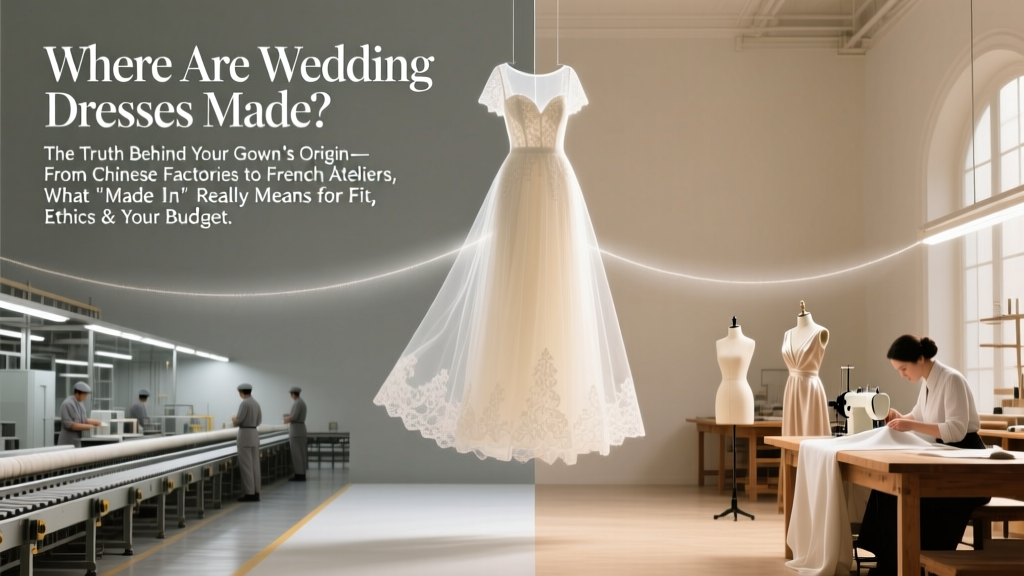 Where Are Wedding Dresses Made? (2026)
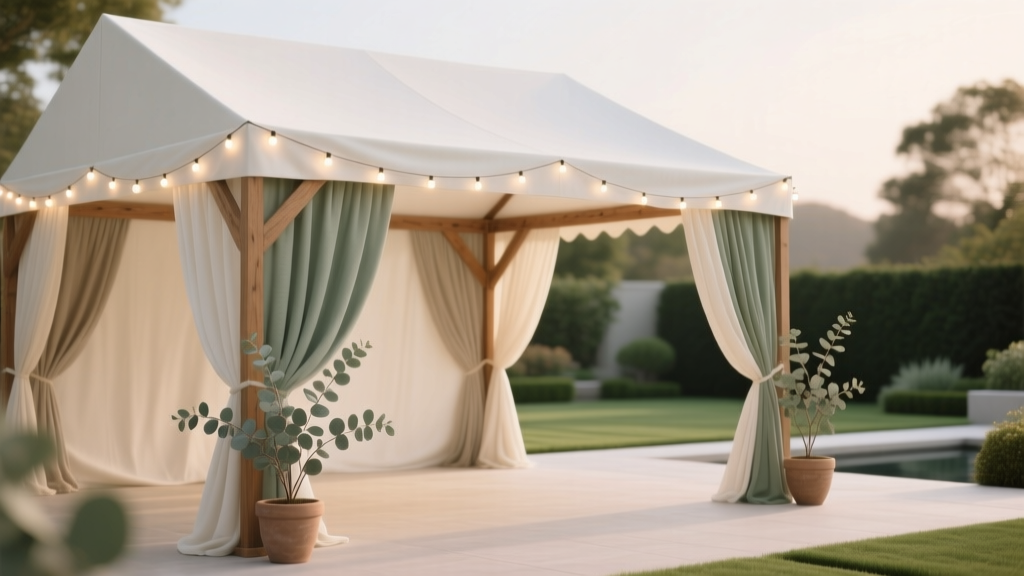 How to Decorate a Wedding Marquee (2026)
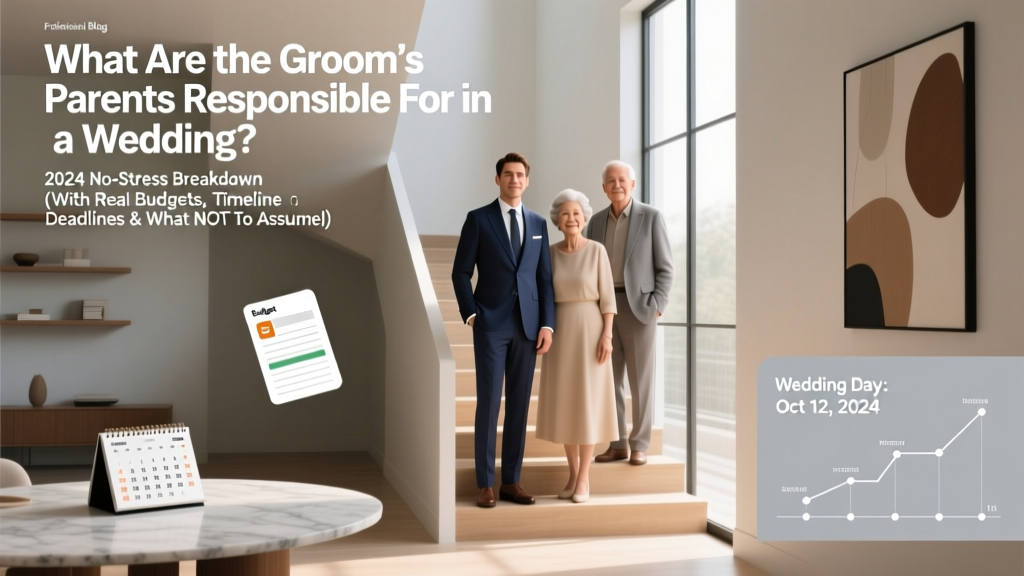 Groom’s Parents Wedding Responsibilities (2026)
 Semi-Formal Attire on Wedding Invites (2026)
 Wedding Without a License: Meaning, Legality & Options
 Wedding Invitation Address Etiquette Guide (2026)
 Vow Renewal Wedding Planning Guide (2026)
 Can You Wear a Black Skirt to a Wedding? (2026)
 Wedding Dress Preservation Kit: DIY Without Yellowing (2026)
 Mother's Prayer Wedding Song: 12 Options & Tips