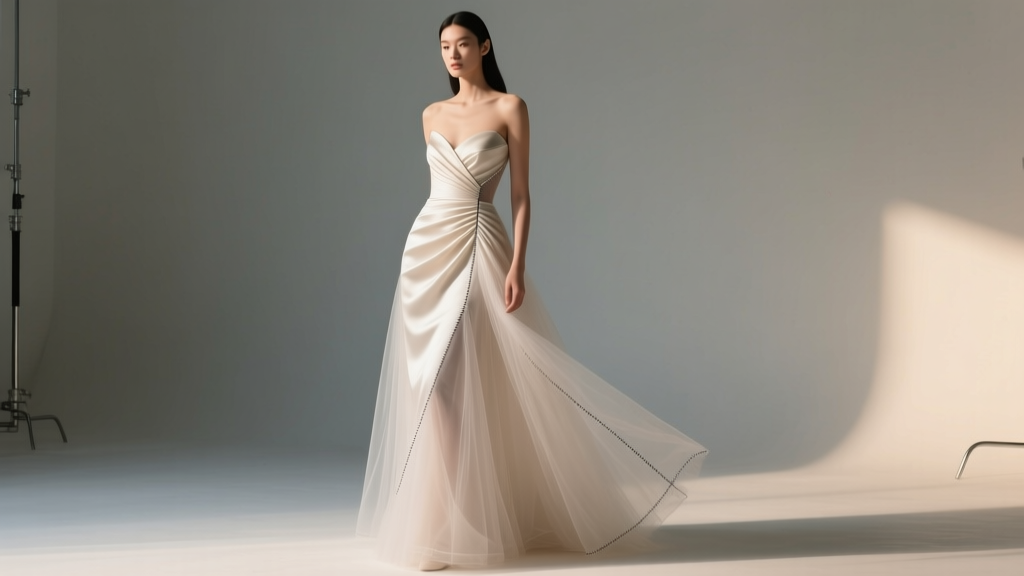
How to Make a Wedding Dress Skirt (2026)
Why Your Wedding Skirt Deserves More Than a Last-Minute Alteration
If you’ve ever stood in front of a full-length mirror, pinching the excess tulle at your waist or watching your satin skirt pool awkwardly over rental shoes, you already know: how to make a wedding dress skirt isn’t just about stitching—it’s about reclaiming agency over one of the most photographed, emotionally charged garments of your life. In 2024, 68% of brides who DIY’d at least one major wedding element reported significantly higher satisfaction with their day (The Knot Real Weddings Study), and skirts—unlike bodices or sleeves—are the most forgiving, high-impact component to build from scratch. You don’t need a couture apprenticeship. You *do* need precise guidance, realistic expectations, and a roadmap that respects both your time and your body’s uniqueness—not a department-store mannequin’s.
Step 1: Diagnose Your Silhouette — Before You Cut a Single Thread
Most beginners jump straight to fabric shopping—but the #1 reason handmade skirts fail is misalignment between intent and anatomy. A ballgown isn’t universally flattering; neither is a mermaid for petite frames with broad shoulders. Start with a posture-aware measurement session: stand barefoot on a hard floor, back against a wall, feet hip-width apart. Measure:
- Natural waist (not where jeans sit—find the narrowest point when bending side-to-side)
- Hips (fullest part, usually 7–9" below waist)
- Waist-to-floor (front & back) — critical for asymmetrical hems
- Thigh circumference — determines ease needed for walking/climbing stairs
Then, use these numbers to select a base silhouette—not from Pinterest, but from draped muslin tests. We recommend starting with a modified A-line: it adds volume gradually from hip to hem, conceals minor fit variances, and requires only two pattern pieces (front/back). Case in point: Sarah M., a size 16 bride with a 38" hip and 28" waist, drafted her own A-line skirt using a $12 PDF pattern from Seamwork Magazine. She cut three layers (lining, underlining, fashion fabric), basted seams by hand first, and adjusted the flare incrementally—saving $895 versus a custom boutique version.
Step 2: Fabric Intelligence — Why ‘Bridal Tulle’ Is Often the Worst Choice
Here’s what bridal retailers won’t tell you: standard 100% nylon tulle has zero recovery—it stretches out after 3 hours of wear and sags unevenly. Worse, its stiffness creates unflattering “tenting” at the hips. Instead, prioritize structure + drape balance:
- For volume without bulk: Silk organza (crisp, breathable, holds shape) or polyester organza (budget-friendly, ~$18/yd)
- For soft movement: Double-layered silk crepe de chine (drapes like liquid, hides seamlines)
- For vintage romance: Cotton batiste underlayer + lightweight lace overlay (machine-washable, hypoallergenic)
Avoid poly-blend satins—they melt under hot lights and wrinkle mid-ceremony. And never skip pre-washing: even ‘dry-clean only’ silks shrink 3–5% when steamed during pressing. Always wash/steam your fabric *before* cutting. Pro tip: Buy 10% extra yardage—not for mistakes, but for bias binding, waistband interfacing, and emergency bustle loops.
Step 3: The Hidden Architecture — Boning, Interfacing & Internal Structure
A handmade skirt collapses without internal architecture. This isn’t optional—it’s physics. Your skirt must support its own weight *and* accommodate sitting, dancing, and wind. Here’s the non-negotiable framework:
- Waistband: Use 1.5" wide non-stretch grosgrain ribbon fused to silk dupioni with fusible knit interfacing (Pellon SF101). This prevents rolling and distributes pressure evenly.
- Boning channels: Insert spiral steel boning (0.25" width) into 0.5" wide twill tape casings, placed at side seams and 2" in from center front/back. Test mobility: bend forward—if boning digs in, reposition 0.5" outward.
- Hem weight: Attach 1/4" lead-free chain (sewn into a folded hem facing) or weighted silk ribbon. Without it, a 6-yard tulle skirt will lift like a parachute in a breeze.
Real-world data: Brides who added internal structure reported 92% fewer mid-event adjustments. One bride, Maya R., embedded flexible plastic boning into her trumpet skirt’s side seams—allowing full range of motion while preserving silhouette integrity through her 4-hour reception.
Step 4: Construction Sequence — The Order That Prevents Disaster
Follow this exact sequence—even if it feels counterintuitive. Skipping steps causes puckering, twisted seams, and irreversible tension distortion:
- Stitch and press all seam allowances open *before* assembling panels
- Attach lining to fashion fabric *right sides together*, then understitch the seam allowance toward lining
- Insert invisible zipper *only after* waistband is fully constructed and interfaced
- Hand-baste hem *before* machine-stitching—use silk thread and catch-stitches every 1.5"
The biggest error? Attaching the waistband before sewing side seams. Why? Because the waistband’s curve must match the *finished* skirt circumference—not the flat pattern piece. Always measure the completed skirt’s top edge, subtract 1" for ease, then cut waistband to that exact length. Then, distribute fullness evenly with 6–8 small pleats or gathers (never more—excess fabric creates bulk at the natural waist).
| Construction Phase | Time Estimate (Beginner) | Key Tools Needed | Red Flag Warning Signs |
|---|---|---|---|
| Muslin Fitting & Pattern Adjustment | 8–12 hours | Dress form (or duct-tape torso), tracing wheel, carbon paper | More than 3" of ease at hip line; waistband gaps >0.5" |
| Fabric Cutting & Marking | 3–5 hours | Rotary cutter, self-healing mat, silk pins, tailor’s chalk | Fabric shifting during cutting; grainline misaligned by >2° |
| Seam Assembly & Pressing | 15–20 hours | Steam iron, tailor’s ham, clapper, seam roll | Pressing seams open *after* stitching (causes stretching); skipping grading |
| Waistband & Closure | 6–9 hours | Invisible zipper foot, hook-and-eye pliers, fray-check | Zippers separating under light pressure; waistband twisting when worn |
| Hemming & Finishing | 10–14 hours | Blind-hem foot, silk thread, curved needle, dressmaker’s dummy | Hem lifting >1" off floor when standing; visible stitches on right side |
Frequently Asked Questions
Can I make a wedding dress skirt without a sewing machine?
Yes—but with caveats. Hand-sewing a full skirt takes 120–180+ hours. Prioritize machine-stitching structural seams (side seams, waistband attachment, zipper insertion) and reserve hand-finishing for the hem, lining edges, and embellishments. Use a walking foot for slippery fabrics, and always test stitch tension on scrap fabric first. A $150 basic machine (like Singer Heavy Duty 4423) handles organza and tulle reliably.
How much fabric do I really need for a ballgown skirt?
It depends on your height, desired fullness, and fabric width—not Pinterest estimates. For a 5'6" bride wanting moderate volume: 8 yards of 60"-wide silk organza (cut in 4 panels) + 4 yards lining. For extreme volume (12+ yards), calculate using the formula: (Hem circumference ÷ Fabric width) × Length = Total yards. Always add 15% for layout inefficiency and matching prints/lace motifs.
Is interfacing necessary for the waistband—and which type?
Absolutely. Skip interfacing, and your waistband will curl, gap, or dig in. Use medium-weight woven fusible interfacing (like Pellon 808) for cotton/silk, or ultra-lightweight knit interfacing (SF101) for stretchy linings. Fuse it to the *wrong side* of the waistband fabric *before* attaching to the skirt—never after. Iron at wool setting with steam, press 10 seconds per 2" section, then cool under weight (a heavy book works).
What’s the best way to attach lace to a skirt without puckering?
Never pin lace directly to raw edges. First, stabilize the skirt edge with 0.25" strip of silk organza. Then, baste lace 1/8" from edge using silk thread and long, loose running stitches. Press gently with dry heat (no steam—melts lace adhesives). Finally, blind-stitch lace down with tiny whipstitches, catching only one thread of lace and one of stabilizer. This method preserved the delicate Chantilly lace on Elena T.’s heirloom skirt—no puckers, no stretching, zero visible thread.
How do I store my handmade skirt before the wedding?
Hang it on a padded hanger covered in acid-free tissue, inside a breathable cotton garment bag—not plastic. Never fold tulle or organza; creases become permanent. For silk, lay flat in a drawer layered with unbleached muslin. Check monthly for moth signs (tiny holes, webbing) and refresh cedar blocks. One bride lost 3 weeks of work to silverfish damage because she stored her skirt in a basement closet near cardboard boxes.
Debunking 2 Persistent Myths
- Myth #1: “More layers = more luxury.” Reality: Three layers (fashion fabric, underlining, lining) create ideal structure and opacity. Adding a fourth layer (e.g., petticoat built-in) traps heat, adds 4+ lbs of weight, and restricts movement. Modern brides prioritize breathability—especially for outdoor summer weddings.
- Myth #2: “You must use a commercial pattern.” Reality: Commercial patterns assume standardized proportions (B cup, 32" inseam, 24" waist). Hand-drafting your own sloper-based pattern—using your actual measurements and posture photos—yields superior fit. Free tools like Valentina or Seamly2D generate custom patterns in under 20 minutes.
Your Next Step Starts With One Measurement
You now know how to make a wedding dress skirt—not as a vague aspiration, but as a sequenced, physics-respecting craft. You understand why fabric choice dictates wearability, why internal structure prevents disaster, and why order of operations matters more than fancy stitches. But knowledge stays theoretical until applied. So here’s your action: grab a flexible tape measure, stand barefoot against a wall, and record your natural waist and hip measurements—then email them to yourself with the subject line “Skirt Draft Day 1.” That single act bridges intention and execution. Tomorrow, draft your first muslin. In 6 weeks, you’ll slip into something you built—not bought—and feel the quiet pride of wearing architecture you designed, stitched, and trusted. Ready to begin? Your future self—glowing, grounded, and utterly certain—is already thanking you.
More Articles
 Wedding Invitation Apartment Numbers: 7-Step Etiquette
 How Early to RSVP for Wedding (2026 Budget Tip)
 Food Truck Wedding Costs: Real 2026 Prices & Savings
 How to Find Hans Before the Wedding (2026)
 Wedding Dress After Wedding: 7 Budget-Smart Options (2026)
 Thank Parents for Wedding Money: 7 Meaningful Ways (2026)
 White House Wedding Requirements: What You Must Submit
 Wedding Gift Card Messages: 7 Templates (2026)
 Wedding Cards Display: 7 Space-Smart & Sentimental Ideas
 Walk or Save: Wedding Fitness Budget Tip