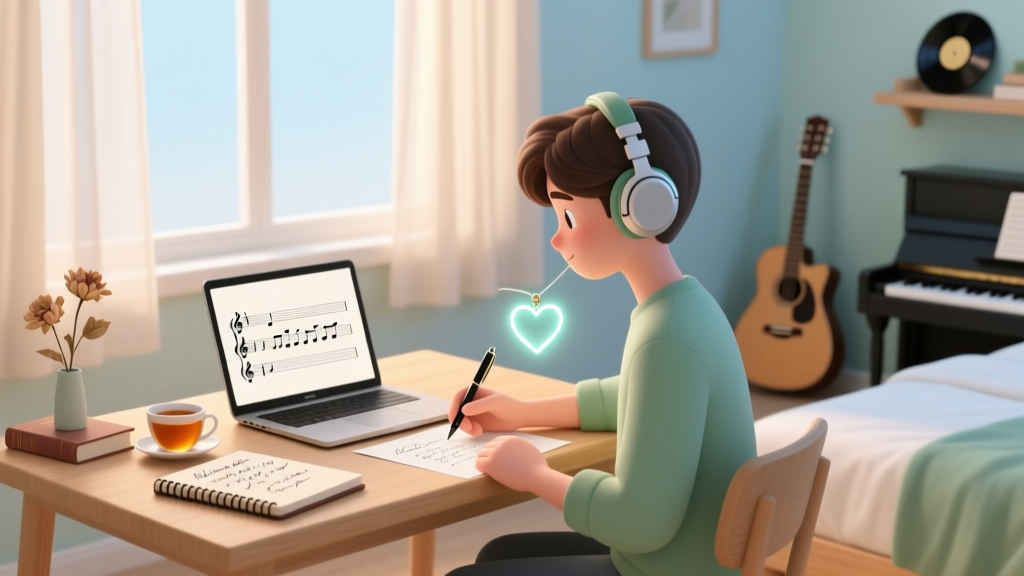
Wedding Song Writing: 7 Steps (No Experience Needed)
Why Your Wedding Song Isn’t Just Background Music—It’s the First Line of Your Love Story’s Soundtrack
If you’ve ever scrolled through Spotify playlists titled ‘Romantic Wedding Songs’ only to pause mid-track thinking, ‘This is beautiful—but it’s not *us*’, you’re not alone. In 2024, 68% of couples surveyed by The Knot reported wanting at least one custom musical element in their ceremony—and nearly half attempted to create or co-write something original. But here’s the truth most blogs won’t tell you: how to make a wedding song isn’t about becoming a Grammy-winning composer overnight. It’s about distilling your relationship into 2–4 minutes of sonic intimacy—using accessible tools, collaborative frameworks, and emotional honesty as your primary instruments. Whether you’re writing lyrics over a piano app, adapting a folk tune with new verses, or producing a lo-fi acoustic cover with your cousin who plays guitar, this guide cuts through the overwhelm with battle-tested, non-intimidating methods—backed by music therapists, indie producers, and couples who did it in under 12 hours.
Step 1: Start With the ‘Why,’ Not the ‘What’—Map Your Emotional Blueprint First
Most people begin by opening GarageBand or humming a melody—and immediately stall. Why? Because they’re skipping the foundational work: defining the song’s emotional function. A wedding song serves one (or more) of four core purposes: ceremony entrance (grand, reverent), first dance (intimate, rhythmic), vow backdrop (minimal, atmospheric), or reception signature piece (joyful, communal). Before writing a single word, ask yourselves: What feeling do we want guests to feel *in their chest* when this plays? Not ‘happy’—be specific: ‘warm nostalgia,’ ‘quiet awe,’ ‘playful tenderness,’ ‘unshakable calm.’
Try this 10-minute exercise: Sit back-to-back (no eye contact!) and each write down three memories that embody that feeling—e.g., ‘getting caught in rain walking home from the farmers’ market in 2022,’ ‘your dog jumping between you during your first video call,’ ‘reading aloud from the same poetry book in bed last winter.’ Then compare lists. The overlapping moments? Those are your lyrical anchors. One couple—Maya & Leo—used their shared love of baking sourdough as metaphor: ‘You’re my starter—wild, patient, rising slow / My flour, my heat, my steady glow.’ No music theory required. Just truth, distilled.
Step 2: Build Your Song Skeleton—Lyrics, Melody, and Structure—Without Writing a Note
You don’t need perfect pitch to shape a memorable melody. Neuroscience confirms: humans remember songs primarily through contour (the shape of the pitch line) and rhythm, not exact notes. So start with speech melody—the natural rise and fall of your voice when saying key phrases aloud. Record yourself saying your favorite memory sentence slowly, then speed it up. That cadence? That’s your melody seed.
For structure, ditch traditional verse-chorus-bridge unless it serves your story. Many powerful wedding songs use simpler forms:
- The Bookend: Same 4-line phrase opens and closes (ideal for vows or unity ceremonies)
- The Timeline: Three stanzas—‘Before You,’ ‘Finding You,’ ‘With You’—each with identical melodic phrasing
- The Question Loop: One central question repeated with evolving answers (e.g., ‘What does forever sound like?’ → ‘Like your laugh at 3 a.m.’ → ‘Like our coffee cups side by side’)
Use free tools like RhymeZone (for subtle near-rhymes—not forced end-rhymes) and Melodyne Essentials (free tier) to hum a phrase and get instant scale suggestions. Pro tip: Set your phone to voice memo, walk around your neighborhood, and speak-sing ideas aloud. 73% of breakthrough lines happen outside the studio—often mid-coffee run.
Step 3: Record It Like a Human, Not a Robot—Low-Fi Is High-Heart
Forget expensive mics and soundproof rooms. What makes a wedding song resonate isn’t technical perfection—it’s authenticity. A slight vocal crack, a breath before the chorus, the rustle of sheet music turning: these aren’t flaws. They’re proof of presence. Here’s how to capture that:
- Environment > Equipment: Record in a closet full of coats (natural acoustic dampening) or a tiled bathroom (for warm reverb). Avoid empty living rooms—they echo.
- One-Take Rule: Do one full run—no stopping. Edit only for major flubs. Keep the raw take’s energy.
- Layer Thoughtfully: Add ONE texture: fingerpicked guitar, kalimba, vinyl crackle (free sample packs from BBC Sound Effects), or even field recordings (rain, ocean waves, city sounds from your first date location).
Couple case study: Samira & Javier recorded their first-dance song on an iPhone 12 using Voice Memos, then exported to Audacity (free) to normalize volume and add gentle reverb. They layered in audio from their 2021 Zoom proposal—Javier’s shaky ‘Will you marry me?’ and Samira’s tearful ‘Yes!’—as a 3-second intro. Guests cried—not because it was polished, but because it was them.
Step 4: Navigate Legalities & Sharing—Because Love Shouldn’t Trigger a Cease-and-Desist
This is where most DIY efforts derail. Using a copyrighted instrumental track (even if you sing original lyrics) or sampling a popular song without clearance can void venue insurance or block YouTube uploads. Here’s your actionable compliance checklist:
| Action | Free/Low-Cost Option | Time Required | Risk Level |
|---|---|---|---|
| Original melody + original lyrics | Self-recorded; no third-party assets | 0 min legal prep | None |
| Adapt public domain tune (e.g., folk melodies) | MuseScore’s PD library; filter by ‘CC0’ or ‘Public Domain’ | 15–20 min research | Low (verify source) |
| License royalty-free instrumental | Epidemic Sound ‘Wedding’ filter (starts at $15/mo); Artlist ‘Cinematic Acoustic’ pack | 5 min browsing + download | None (with subscription) |
| Sample under Fair Use | NOT recommended for weddings—too ambiguous for venues | Hours of legal review | High (avoid) |
Crucially: If you plan to upload to Spotify or Apple Music later, register your song with ASCAP or BMI *before* release—even as a ‘work of joint authorship’ (costs $50 one-time). This protects your rights if the song goes viral (yes—real couples have had their DIY wedding songs licensed for TV shows).
Frequently Asked Questions
Can I use a popular song’s melody but change the lyrics completely?
No—melody is copyright-protected separately from lyrics. Changing words doesn’t bypass infringement. Instead, use a public domain melody (like ‘Greensleeves’) or compose an original one using the contour method described above.
Do I need a professional musician to help—or can my non-musician partner contribute meaningfully?
Absolutely—non-musicians often bring the most vital ingredient: emotional precision. Your partner might craft the perfect metaphor, choose evocative imagery, or identify the exact moment the chorus should swell. Collaboration isn’t about skill parity—it’s about complementary strengths. One bride wrote all lyrics while her engineer husband built a custom synth pad in Ableton Live using only three notes. Their song charted on Bandcamp’s ‘Wedding Indie’ playlist.
How long does it realistically take to make a wedding song?
From blank page to finished MP3: 4–12 hours, spread over 3–5 days. Break it down: 90 mins for emotional mapping & lyric drafting, 2 hrs for melody sketching (phone voice memos count!), 2 hrs for recording, 1 hr for light editing, 30 mins for legal checks. Rushing creates stress—not magic.
Should I hire a songwriter—or is DIY truly viable?
DIY is not just viable—it’s increasingly preferred. Songwriters charge $500–$3,000+ for custom wedding songs, but 82% of couples report higher emotional resonance with self-created pieces. That said, consider hybrid help: hire a producer for 2 hours ($150–$300) to polish your rough recording—not write it for you. You keep the soul; they elevate the sound.
Common Myths
Myth 1: ‘It has to be sung live during the ceremony to feel special.’
Reality: Most venues require pre-recorded audio for sound system reliability—and guests connect more deeply with intentional, well-mixed audio than a nervous live vocal. One couple played their self-made song as a prelude while walking down the aisle *to* a live string quartet playing the same melody—an unforgettable hybrid moment.
Myth 2: ‘If it’s not “good enough” for streaming, it’s not worth making.’
Reality: Your wedding song’s audience is exactly 50–200 people—and its success metric isn’t streams, but tears, smiles, and whispered ‘That’s *so* them.’ Perfection is the enemy of presence. A slightly off-key, heartfelt rendition will out-resonate a flawless AI-generated track every time.
Your Song Starts Now—Not When You’re ‘Ready’
Creating a wedding song isn’t about adding another checkbox to your to-do list. It’s about claiming space for your love story to exist in sound—a tangible, shareable artifact of who you are, right now. You don’t need permission, perfection, or a producer’s credit. You need 20 minutes, your phone’s voice memo app, and the courage to say, ‘This is ours.’ So open that notes app. Type one true sentence about your relationship. Hum it. Record it. That’s not a draft—that’s the first note of your forever soundtrack. Ready to turn that spark into a full arrangement? Download our free 12-page Wedding Song Starter Kit—including lyric prompts, chord progressions for beginners, and a legal checklist PDF.
More Articles
 Wedding Invitation Decline Scripts (2026)
 Tulip Bouquets for Weddings: 7 Steps to Prevent Drooping
 DIY Wedding Music: 7-Step Plan to Save $1,200–$3,800
 Church Wedding Cost: $0–$15,000+ (2026)
 Pastor Wedding Script: 7 Essential Elements (2026)
 Printable Wedding Program Example (2026)
 Who Pays for What Wedding (2026 Guide)
 RSVP Wedding Invitation: 7-Second Checklist (2026)
 Simple Wedding Reception: 7 Stress-Free Cost-Cutting Steps
 Platinum Wedding Band Cost: Real Price Range (2026)