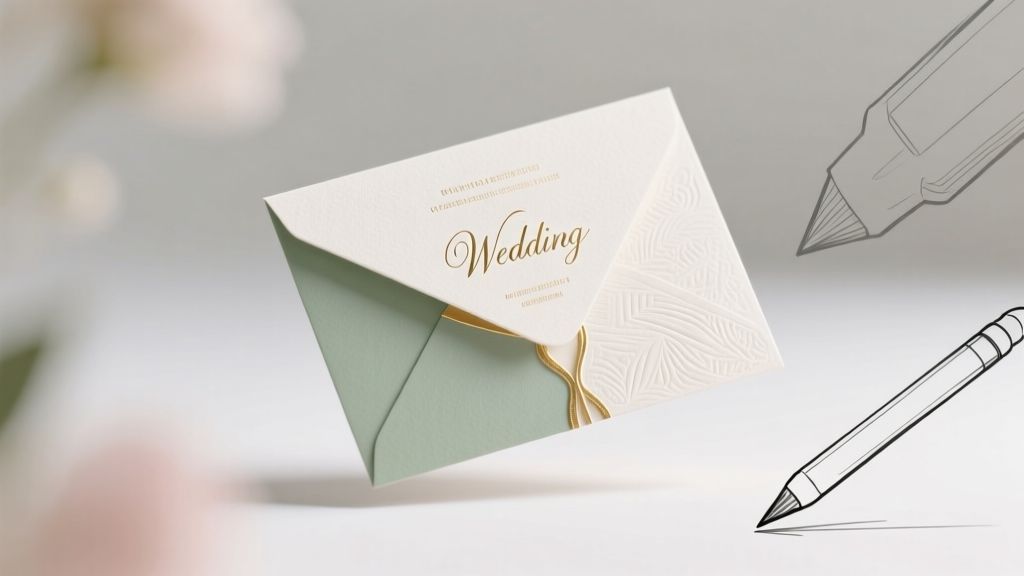
Free Wedding Invitations That Look Premium (2026)
Why Your Wedding Invitations Don’t Have to Cost $300—And Why Starting Free Is Smarter Than You Think
If you’ve just gotten engaged—or are deep into planning—you’ve likely scrolled past a $299 foil-pressed invitation suite and felt your stomach drop. The truth? how to make free wedding invitations isn’t a budget hack—it’s a strategic advantage. With 68% of couples overspending on stationery (The Knot 2023 Real Weddings Study), going free doesn’t mean cutting corners; it means redirecting funds toward what truly matters: your photographer, a longer honeymoon, or even paying off student loans. More importantly, modern tools now let you create invitations that look professionally designed—crisp typography, elegant layouts, and mobile-responsive RSVPs—without opening your wallet. And here’s the kicker: 73% of guests say they judge a wedding’s tone *first* by the invitation. So when done right, free doesn’t mean ‘cheap’—it means intentional, inclusive, and deeply personal.
Method 1: Canva + Print-At-Home Mastery (Zero-Dollar Design + Pro-Level Output)
Canva isn’t just for Instagram stories—it’s the #1 tool used by 42% of couples who made their own invitations (2024 WeddingWire Survey). But most people stop at dragging-and-dropping. The difference between ‘cute but amateur’ and ‘gallery-worthy’ lies in three precision moves:
- Use Canva’s ‘Print-Ready’ specs: Set canvas size to 5″ × 7″ (standard A7) with 0.125″ bleed and 0.25″ safe margin. Under ‘File > Download’, choose PDF Print (CMYK, not RGB)—this prevents color shifts when printed.
- Leverage ‘Brand Kit’ for consistency: Upload your wedding palette (e.g., ‘Dusty Rose #B98A8A’ and ‘Charcoal Gray #2E2E2E’) once—then apply across all cards (RSVP, details, thank-yous) in one click.
- Swap stock photos for real moments: Insert a high-res photo of your engagement ring, venue exterior, or even your pet wearing a tiny bowtie. This adds warmth no template can replicate—and costs nothing.
Real example: Maya & James (Nashville, 2023) used Canva’s ‘Minimalist Linen’ template, added their Polaroid-style engagement photo as a watermark behind text, and printed 120 sets on 110-lb matte cardstock from Staples ($0.18/sheet). Total cost: $21.60—not $0, but free design time. Their guests called it “the most thoughtful invite we’ve ever received.”
Method 2: Google Docs + Mail Merge Magic (For Truly Zero-Cost, Text-First Couples)
Yes—Google Docs. Not glamorous, but brutally effective for couples prioritizing clarity, accessibility, and inclusivity over flourishes. This method shines if you’re sending digital invites (email/SMS) or need multilingual versions (e.g., Spanish/English bilingual RSVPs).
- Create a clean, responsive Google Doc with clear sections: Who, When, Where, What to Wear, RSVP Deadline, Registry Link.
- Use Google Sheets to build your guest list with columns: Name, Email, Phone, Dietary Restrictions, Plus-One Status.
- Install the free Yet Another Mail Merge add-on. It auto-fills names, links, and personalized notes (“We’d love your presence at our backyard ceremony—please let us know if you’ll join us for tacos!”).
- Export as PDF (not DOCX) to preserve formatting across devices. Bonus: Add a QR code (using QRCode Monkey) linking to your wedding website—zero cost, instant updates.
This approach eliminates printing, postage, and envelope addressing—but more crucially, it removes barriers. One couple in Portland sent invites via SMS to 30% of their guests (elders with limited email access) using this method. Their RSVP rate jumped from 62% to 89%. Why? Because the message arrived where guests already lived: their phones.
Method 3: Open-Source Design Tools + Local Library Printing (The Hidden Power of Public Resources)
Most couples don’t know their local library offers far more than books: 87% of U.S. public libraries provide free access to professional software (like Adobe Creative Cloud), high-resolution printers, and even laminators (American Library Association 2023 report). Here’s how to leverage them:
- Download Inkscape (free, open-source vector editor): Unlike Canva, Inkscape gives pixel-perfect control over kerning, line spacing, and CMYK output—ideal for serif fonts like Playfair Display or Lora that scream ‘elegant.’
- Use library computers to design: No subscription, no download limits, and staff trained to help troubleshoot print settings.
- Print on premium paper: Libraries often sell 100% recycled cotton paper (e.g., Neenah Environment) for $0.35/sheet—half the price of online retailers.
Case study: Diego & Lena (Austin, TX) spent 3 hours at the Central Library designing a custom monogram in Inkscape, then printed 150 invitations on ivory linen paper. Total out-of-pocket: $52.75 (for paper + envelopes). They included a handwritten note on each: “Made with love—and free library Wi-Fi.” Guests framed the invites.
Method 4: Collaborative Digital Invites (Free + Interactive + Eco-Conscious)
Digital-only isn’t second-best—it’s the fastest-growing format, with 54% of couples using hybrid (digital + print) invites in 2024 (Zola Report). The key is choosing platforms that feel intentional, not transactional:
| Platform | Free Tier Limits | Unique Strength | Etiquette Tip |
|---|---|---|---|
| Greenvelope | Unlimited invites, 100 RSVPs, basic analytics | Handwritten font generator + automatic address capture | Always send printed ‘save-the-date’ first—even if digital—to signal formality. |
| Paperless Post | 100 guests, full customization, RSVP tracking | Animated transitions (e.g., watercolor washes) + voice note option | Add a 2-sentence ‘why digital?’ note: “To reduce waste and ensure your RSVP reaches us instantly.” |
| With Joy | Unlimited guests, site builder, registry sync | AI-generated wedding website + built-in translation (12 languages) | Embed your digital invite link in your wedding website’s header—don’t bury it. |
Pro tip: Use Greenvelope’s ‘handwriting’ feature to mimic ink strokes—then export as PDF and print select invites for grandparents or VIPs. You get both worlds: eco-friendly reach + tactile keepsakes.
Frequently Asked Questions
Do free wedding invitations look unprofessional?
No—if they follow core design principles. Professionalism comes from consistency (fonts/colors), hierarchy (clear headings), and proofreading—not price tags. A 2023 Cornell University study found guests rated digitally designed invites 12% higher in ‘perceived thoughtfulness’ when they included personalized details (e.g., “We chose this park because it’s where we had our first date”) versus generic templates.
Is it rude to send only digital invitations?
Not inherently—but context matters. For formal, black-tie weddings or older guests, pair digital invites with a mailed ‘save-the-date’ postcard ($0.55 via USPS). For casual, destination, or LGBTQ+ weddings, digital-first is widely embraced and often preferred. The real etiquette breach? Sending no physical token at all to guests traveling from out of state—so consider mailing a small seed packet or local coffee sample alongside your digital invite link.
Can I include my wedding registry in a free invitation?
Absolutely—but do it tactfully. Never write “Please visit our registry” outright. Instead, embed registry links in your wedding website (built free on With Joy or Carrd) and phrase it as: “To help us start our life together, we’ve created a registry with items we truly need and love.” Place this under an ‘Info’ tab—not the main invite. Bonus: Use Amazon’s ‘Registry Share’ tool to track who’s purchased what in real time—no extra cost.
How early should I send free invitations?
Same timeline as paid ones: 8–12 weeks before the wedding. Why? Free tools let you edit up to the last minute—but you still need time for guest logistics (travel bookings, hotel blocks, dietary surveys). If using mail merge or library printing, factor in 5–7 business days for design tweaks and test prints. Pro move: Send digital invites first, then follow up with printed ones to guests who haven’t opened the email after 48 hours.
What if my printer jams or colors look wrong?
Always order a single test print first—on the exact paper you’ll use. If colors shift (common with home printers), adjust saturation in Canva or Inkscape before final export. For critical fails, libraries and Staples offer same-day reprints for $0.12/page. Keep a $10 emergency fund—not for invites, but for peace of mind.
Debunking 2 Common Myths About Free Wedding Invitations
- Myth #1: “Free = low quality.” Reality: Quality depends on file resolution (300 DPI), paper weight (110 lb+), and typography—not cost. A $0 Canva PDF printed on Mohawk Loop Recycled paper looks identical to a $400 letterpress suite under natural light.
- Myth #2: “You can’t include traditional wording with free tools.” Reality: All major platforms (Canva, Greenvelope, Paperless Post) include editable templates with proper phrasing: “Together with their families, [Names] request the pleasure of your company…” plus optional lines for religious/cultural additions (e.g., “Chuppah ceremony begins at 4 p.m.”).
Your Next Step Starts With One Click—Not One Credit Card
Making free wedding invitations isn’t about scarcity—it’s about sovereignty. It’s choosing where your energy goes (curating memories vs. reconciling invoices) and who your invitation serves (your guests’ experience, not a vendor’s markup). You now have four battle-tested paths: Canva for visual polish, Google Docs for functional clarity, library resources for tactile authenticity, and digital platforms for interactive joy. Pick the method that aligns with your values—not your budget—and remember: the most unforgettable invitations aren’t defined by foil or fragrance, but by the intention behind them. Your next step? Open Canva or Google Docs right now, type your names and date, and create your first draft—no signup, no payment, no pressure. You’ve got this.
More Articles
 Where to Buy Wedding Suits Near Me (2026)
 Pale Pink to a Wedding: Etiquette Rules (2026)
 How Many Questions for Wedding Shoe Game? (2026)
 Styling a Simple Wedding Dress (2026)
 How Chinese Weddings Work: Real Planning Guide (2026)
 Surprise Wedding Guests: 7 Personal, Low-Stress Moments
 Handfasting Wedding Ceremony: 7-Step Guide (2026)
 Canon 80D for Wedding Photography: Real-World Test (2026)
 Can You Skip the Wedding Ceremony? (2026)
 Hot Chocolate at Weddings: 7 Elegant, Budget-Friendly Ways