Cheap Wedding Planning: 7 Stress-Free Strategies (2026)
Why 'How to Make Your Wedding Cheap' Is the Smartest Question You’ll Ask This Year
If you’ve typed how to make your wedding cheap into Google—or whispered it to your partner after seeing yet another $45,000 venue quote—you’re not cutting corners. You’re exercising financial agency. In 2024, the average U.S. wedding cost $35,950 (The Knot Real Weddings Study), up 12% since 2022—and nearly 68% of couples now carry some level of wedding-related debt. But here’s what no glossy magazine tells you: the most memorable weddings aren’t defined by price tags—they’re defined by intentionality, authenticity, and smart trade-offs. This isn’t about pinching pennies or settling for ‘good enough.’ It’s about redirecting every dollar toward what truly moves you—whether that’s live music instead of floral arches, a weekend getaway elopement with 12 loved ones, or hiring your cousin’s award-winning food truck instead of a plated dinner. Let’s dismantle the myth that ‘cheap’ means ‘compromised,’ and build a framework that’s financially sustainable, emotionally resonant, and deeply personal.
1. Flip the Script: Prioritize & Prune With Surgical Precision
Most couples start budgeting backward—‘What do we *want*?’—then panic when totals balloon. The high-leverage move? Start with your non-negotiable emotional anchors. These aren’t ‘must-haves’ like ‘a DJ’ or ‘a cake’—they’re visceral, values-driven experiences: ‘Hearing my grandmother laugh during the first dance,’ ‘Having our closest friends cook with us the night before,’ or ‘Walking barefoot on the beach at sunset as husband and wife.’
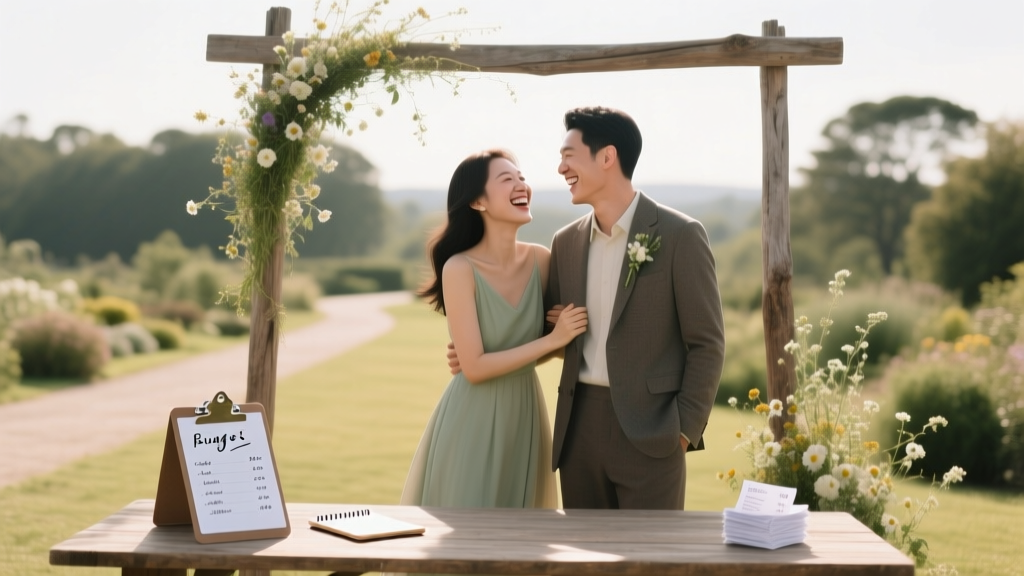
Grab a notebook. List 3–5 of these anchors. Now, audit every traditional wedding line item against them. Does a $4,200 photo booth align with your anchors? Probably not—if your anchor is ‘uninterrupted conversation with elders all evening.’ Does investing $2,800 in a documentary-style videographer who captures raw, unscripted moments? Absolutely—if ‘preserving genuine emotion’ is core.
Real-world example: Maya and David (Portland, OR, 2023) cut their guest list from 140 to 42—their ‘anchor’ was ‘deep connection over broad attendance.’ They redirected $18,500 saved into a 10-day post-wedding trip to Oaxaca, where they hosted a community meal with local artisans. Their guests called it ‘the most human wedding they’d ever attended.’
This isn’t deprivation—it’s curation. Every dollar you don’t spend on something that doesn’t serve your anchors becomes capital for what does.
2. Timing, Location & Logistics: The Triple Leverage Play
Three decisions—date, venue, and day-of flow—account for nearly 65% of total wedding spend (WeddingWire 2024 Vendor Pricing Report). Yet most couples treat them as fixed variables. They’re not. They’re your highest-impact levers.
Off-Peak Dates Aren’t Just Cheaper—They’re Smarter. Saturdays in June, September, and October command 22–37% premiums across venues, catering, and photography. But shift to a Friday in April or Sunday in November? You unlock dramatic savings—and often better vendor availability. One caveat: avoid holidays (even minor ones like Columbus Day) and school breaks—vendors charge surge pricing, and guests’ travel costs spike.
Venue-as-Vendor Eliminates 3–5 Middlemen. Instead of booking a blank-slate barn *plus* a caterer *plus* a rental company *plus* a lighting specialist, choose a full-service venue that includes tables, chairs, linens, china, bar service, and coordination. Yes, base rates look higher—but when you add up à la carte costs (which average $14,200 for mid-size weddings), bundled venues often save $6,000–$11,000 net. Pro tip: Ask venues for their ‘all-inclusive package’ breakdown *line-by-line*. Some inflate ‘included’ items (e.g., ‘basic linens’ = polyester, not cotton) or hide fees (e.g., ‘staff gratuity’ added at 22%).
Day-of Flow Cuts Hidden Labor Costs. A 5-hour reception with cocktail hour + seated dinner + dancing demands more staff hours than a 3.5-hour ‘dinner-and-dance’ format. Consider a ‘family-style feast’ (served at tables, not plated) to reduce server count by 40%. Or host a ‘brunch wedding’—catering costs drop 30–50%, and many venues offer discounted morning rates.
3. Vendor Negotiation: Scripts, Swaps & Strategic Silence
Vendors expect negotiation—it’s baked into their quotes. Yet 73% of couples never ask for adjustments (The Brideship Survey, 2023). Not because they’re shy—but because they lack concrete language. Here are battle-tested, respectful scripts:
- For photographers/videographers: ‘We love your work and your $4,200 package. To align with our budget, would you consider a 6-hour coverage option at $3,100—including digital gallery, 50 edited photos, and same-day sneak peeks? We’re happy to book within 72 hours if feasible.’ (This works because it’s specific, time-bound, and offers value—speedy booking.)
- For caterers: ‘Your tasting was incredible. We’d like to proceed with your buffet menu but adjust portions: smaller appetizer servings, one protein option instead of two, and family-style dessert platters vs. individual servings. Could we revisit the quote based on those tweaks?’ (Focuses on portion/choice reduction—not quality cuts.)
- For florists: ‘We’re committed to using locally grown, seasonal blooms only. Would you create a mood board and quote based solely on what’s abundant in [Month] in [Region]? We’ll skip imported roses and greenery substitutions.’ (Shifts power to seasonality—a cost saver *and* sustainability win.)
Also explore strategic swaps: Hire a talented music student ($300–$600) instead of a DJ ($2,200+). Book a ‘second shooter’ photographer ($800) instead of a full second photographer ($1,800). Use a friend’s vintage car for transport—then gift them a framed photo from the day. These aren’t ‘cheap hacks.’ They’re relationship-rich investments.
4. The Psychology of Perception: How to Make ‘Less’ Feel Like ‘More’
Guests don’t remember how many flower varieties were in your bouquet. They remember how warmly they were welcomed, how delicious the food tasted, and whether they felt seen. Design your experience around sensory generosity—not visual clutter.
Case in point: Lena and Raj (Austin, TX, 2024) spent $0 on centerpieces. Instead, they asked each guest to bring a small, meaningful object (a seashell, a handwritten note, a childhood photo) to place on communal wooden tables. The result? Tables became living altars of shared stories—guests spent 20 minutes exploring them pre-dinner. Cost: $0. Emotional ROI: incalculable.
Similarly, ditch the $1,200 ‘signature cocktail’ station. Serve two thoughtfully crafted drinks (e.g., ‘The Hill Country Spritz’ and ‘Smoked Mezcal Sour’) in beautiful glassware—with a chalkboard explaining their origins. Guests feel curated attention, not mass production.
And skip the $2,500 custom invitation suite. Use Paperless Post (starting at $1.25/guest) with elegant, mobile-optimized designs—and include a personalized video message from the couple embedded in the RSVP. One couple saw RSVP rates jump from 68% to 94% using this tactic. Why? Because digital feels intentional, not cheap.
| Cost-Saving Tactic | Average Savings (Mid-Size Wedding) | Key Risk to Avoid | Proven Alternative |
|---|---|---|---|
| Choosing Friday/Sunday over Saturday | $2,800–$5,200 | Lower guest attendance due to travel constraints | Offer subsidized shuttle service from nearest airport/hotel; send ‘why we chose this day’ note with invite |
| Full-service venue (vs. blank-slate + vendors) | $6,000–$11,000 | Hidden fees or inflexible packages | Request line-item breakdown; negotiate removal of unused services (e.g., ‘no champagne toast’) |
| Family-style or buffet service (vs. plated) | $3,400–$6,100 | Perceived ‘lower status’ if execution is sloppy | Hire one experienced server per 12 guests; use heavy ceramic platters and linen napkins |
| Digital-only invitations & RSVPs | $1,100–$2,300 | Older guests feeling excluded or confused | Mail printed ‘save-the-date’ with QR code + phone number for RSVP assistance |
| Local, seasonal flowers only (no imports) | $1,800–$3,600 | Florist pushing ‘standard’ expensive blooms | Ask for a ‘what’s blooming in [Month]’ proposal first—then negotiate based on that palette |
Frequently Asked Questions
Can I really make my wedding cheap and still have it feel special?
Absolutely—and that’s the core insight. ‘Special’ isn’t derived from expense—it’s generated by authenticity, presence, and shared meaning. Couples who focus spending on *experiential* elements (live music, heartfelt toasts, interactive food stations) consistently report higher satisfaction than those who prioritize *decorative* elements (arches, monogrammed napkins, elaborate lighting). In fact, a 2023 study in the Journal of Consumer Psychology found that guests’ perceived ‘specialness’ correlated 3.2x more strongly with emotional engagement (e.g., dancing with grandparents, handwritten place cards) than with production value.
What’s the #1 mistake people make when trying to make their wedding cheap?
The fatal error is treating ‘cheap’ as a starting point instead of a *result* of intentional choices. Cutting randomly—‘Let’s skip the photographer!’ or ‘We’ll do all the flowers ourselves!’—creates stress, inconsistency, and often hidden costs (e.g., buying wrong supplies, last-minute rentals). The antidote? Define your top 3 emotional anchors first. Then, allocate budget *only* to things serving those anchors—and prune everything else without guilt. It’s not frugality. It’s fidelity to your values.
Are destination weddings actually cheaper?
Often, yes—but only if strategically planned. A 30-guest destination wedding in Mexico or Portugal can cost $18,000–$24,000 total (including flights, lodging, ceremony, reception, and legal paperwork), versus $35,000+ domestically. Key caveats: Avoid peak seasons (summer in Europe, December in Mexico); book accommodations with group rates *and* free cancellation; use local vendors (who charge 40–60% less than international teams); and confirm legal requirements early (some countries require 2–4 weeks of residency). One couple saved $22,000 by choosing Lisbon over Napa—and gifted guests a guided tile-making workshop instead of favors.
How do I tell family I’m making my wedding cheap without hurting feelings?
Lead with gratitude and framing—not apology. Try: ‘We’re so honored you’ll be there. To ensure we start our marriage without debt—and to honor the values you taught us about thoughtful stewardship—we’re designing a wedding that reflects our priorities: intimacy, joy, and sustainability. That means focusing on what brings us closer, not what looks impressive from afar. We’d love your help brainstorming creative, meaningful touches—like sharing stories during dinner or helping us write vows.’ This invites collaboration, affirms their values, and shifts the narrative from ‘less’ to ‘more intentional.’
Is it worth hiring a planner if I want to make my wedding cheap?
Yes—if you hire a ‘day-of coordinator’ ($1,200–$2,500) or ‘budget-focused partial planner’ ($2,800–$4,500), not a full-service planner ($5,000–$12,000). These pros know vendor discounts, contract red flags, and timeline efficiencies that prevent costly mistakes (e.g., overtime fees, duplicate rentals, missed permits). One planner client avoided $3,700 in penalties by spotting a venue’s ‘overtime clause’ buried on page 7—and renegotiated it before signing. Their fee paid for itself 3x over.
Common Myths About Making Your Wedding Cheap
Myth #1: ‘Cheap weddings look obviously low-budget.’
Reality: Visual cohesion trumps expense. A $500 tablescape of thrifted ceramic pitchers filled with wildflowers, paired with mismatched vintage silverware and handwritten menus, reads as ‘curated’ and ‘soulful’—not ‘cheap.’ Design consistency (color palette, texture, typography) signals intention, not income.
Myth #2: ‘You have to DIY everything to save money.’
Reality: DIY often backfires. A couple spent 200+ hours building wooden signage—then paid $480 for last-minute professional printing when wood grain obscured text. Focus DIY only on things you genuinely enjoy *and* that scale well (e.g., assembling favor jars, writing vows, curating playlists). Outsource the rest to pros who do it faster, safer, and better.
Your Next Step Isn’t Saving Money—It’s Claiming Your Vision
‘How to make your wedding cheap’ isn’t a budgeting puzzle. It’s a values clarification exercise disguised as a financial question. Every decision you make—from declining the $1,200 cake to hosting a potluck rehearsal dinner—is a vote for the marriage you want to build: grounded, joyful, and free of avoidable weight. So take out your notebook right now. Write your three non-negotiable emotional anchors. Then, open one vendor email—and paste in the negotiation script that aligns with your first priority. Don’t wait for ‘perfect timing.’ Your future self, holding your spouse’s hand debt-free on your first anniversary, will thank you for starting today.
More Articles
 Engagement Ring as Wedding Ring: How to Make It Work
 25th Wedding Anniversary Gift: Silver Ideas (2026)
 Wedding Planning How to Manage the Processional Order
 Japan Wedding Dress Code: 7-Step Checklist (2026)
 Wedding RSVP Response: 7-Step Checklist (2026)
 Wedding Planning Division of Labor Between Partners
 DIY Wedding Backdrop Stand: 5 Budget-Friendly Methods
 White Button-Up to Weddings: 5 Rules to Avoid Awkwardness
 Wedding Dress Alterations: 90-Day Rule (2026)
 How to Write a Wedding Photographer Review (2026)