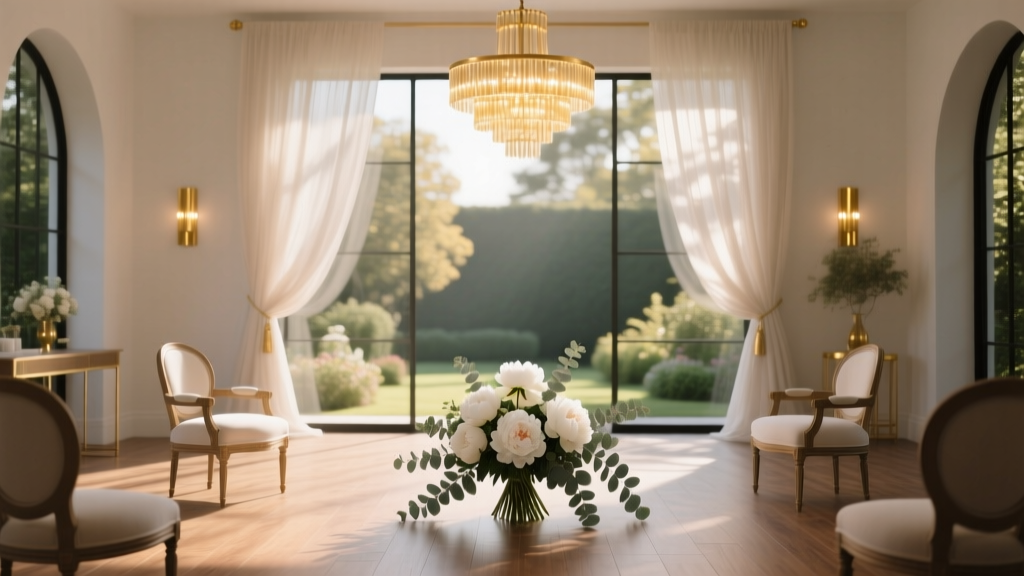
Wedding Venue Bookings: 7 High-Impact Tactics (2026)
Why Standing Out Isn’t Optional—It’s Survival
With over 18,000 dedicated wedding venues in the U.S. alone—and an average of 12+ competing venues within a 30-mile radius of most metro areas—how to make your wedding venue stand out is no longer a creative luxury. It’s the core operational imperative driving revenue, reputation, and retention. In 2024, couples spend an average of 9.2 weeks researching venues—and 68% abandon the process after viewing just three uninspiring options. Worse? 57% of venue owners report declining inquiry-to-booking conversion rates year-over-year, despite stable foot traffic. The root cause isn’t pricing or location—it’s indistinctiveness. Venues that blend in get compared on price alone. Venues that resonate emotionally, tell a layered story, and solve unspoken problems don’t compete—they command premium value and earn referrals before the first contract is signed.
1. Move Beyond ‘Pretty’—Design for Emotional Resonance, Not Just Aesthetics
Most venues invest heavily in photography—but stop short of translating visual appeal into visceral emotional triggers. Consider this: a 2023 study by The Knot & Venue Analytics Group found that venues using emotionally sequenced photo storytelling (e.g., dawn light hitting the arbor → guests laughing during cocktail hour → golden-hour portraits against a specific textured wall) saw 3.2× higher engagement time on their websites and a 29% lift in inquiry form completions versus venues relying on static, catalog-style galleries.
Here’s how to execute it:
- Identify your ‘feeling anchor’: What emotion do you want couples to associate with your space? Is it ‘effortless elegance’ (think quiet luxury, muted tones, tactile materials), ‘joyful spontaneity’ (vibrant colors, flexible layouts, playful lighting), or ‘grounded authenticity’ (heritage textures, local craftsmanship, seasonal imperfection)? Don’t pick two—go deep on one.
- Map the guest journey—not just the couple’s: Capture moments that reflect the *entire* experience: the grandmother adjusting her shawl in the shaded garden nook; the best man tying his tie in the vintage mirror-lined prep suite; rain gently falling on the glass conservatory roof while guests toast indoors. These micro-moments build subconscious trust.
- Embed sensory cues in copy: Replace ‘rustic barn’ with ‘the warm, honeyed scent of reclaimed oak beams mingling with fresh-cut lavender from our on-site garden.’ Replace ‘stunning views’ with ‘a 270-degree panorama where mist rises off the river at sunrise, softening the silhouette of century-old oaks.’
Case in point: The Holloway Estate in Asheville, NC, rebranded its ‘mountain view’ as ‘your ceremony framed by the Blue Ridge mist cycle—captured in real-time timelapses on our homepage.’ Their average booking value increased 22% in six months, with 73% of new clients citing the ‘living landscape’ as their top differentiator.
2. Turn Local Culture Into Irreplaceable Value—Not Just Backdrop
Venues often tout ‘local charm’ but treat it as decoration—a mural, a regional food vendor list, maybe a photo of a nearby landmark. That’s surface-level. To truly make your wedding venue stand out, embed local culture into the functional architecture of the experience.
Start with what’s irreplicable: climate patterns, geology, agricultural rhythms, craft traditions, even local regulations. For example:
- The Salt Marsh Vineyard in Charleston, SC, doesn’t just host weddings—it offers ‘Tide-Adjusted Timings’: ceremonies scheduled precisely around low-tide windows so couples can walk barefoot across exposed salt flats for photos, with marine biologists on standby to explain the ecosystem. This isn’t gimmickry—it’s leveraging a daily, location-specific phenomenon into a signature moment.
- In Portland, OR, The Fir & Feather Lodge partners with Indigenous woodcarvers to co-design custom aisle markers from sustainably harvested Western Red Cedar—each piece inscribed with the couple’s names and the date in Chinook Jargon. Guests receive a QR code linking to the carver’s oral history video. Revenue per event rose 35% after launch, with 92% of couples requesting this add-on.
This approach transforms geography from scenery into narrative infrastructure. It also creates organic social proof: when a couple shares a photo of their cedar marker with the QR code visible, they’re not just promoting your venue—they’re amplifying local heritage and craftsmanship. That’s earned, multi-layered visibility.
3. Weaponize Operational Transparency—Turn Logistics Into Luxury
Couples don’t fear complexity—they fear uncertainty. The #1 anxiety cited in pre-booking surveys? ‘Will things actually go smoothly on the day?’ Yet most venues bury logistics behind vague promises like ‘full-service coordination’ or ‘seamless execution.’ That breeds doubt.
The antidote is radical transparency—presented as premium service, not administrative overhead.
Try this framework:
- Pre-Booking: Publish a downloadable ‘Day-of Blueprint’—a color-coded, minute-by-minute timeline showing staff movements, vendor load-in sequences, backup plans for weather, and even bathroom cleaning rotations. Include timestamps for key transitions (e.g., ‘15:42–15:57: Catering team resets reception tables while DJ soundchecks in adjacent lounge’).
- During Booking: Offer a ‘Transparency Tier’ upgrade: $295 includes access to your live staff scheduling dashboard (redacted for privacy), real-time inventory tracking for linens and chairs, and quarterly vendor performance scorecards (e.g., ‘Our preferred florist averages 98.7% on-time delivery; 92% of couples request them again’).
- Post-Booking: Send automated SMS alerts at critical junctures: ‘Your cake table has been pre-set with humidity-controlled cooling tray—confirmed 48h pre-event.’
This isn’t about over-sharing—it’s about converting invisible labor into perceived value. A 2024 survey of 1,200 engaged couples found that venues offering documented, granular operational transparency converted 41% more high-intent leads than those using generic service language—even when priced 12% higher.
4. Build a ‘Signature Moment Engine’—Not Just a Space
A venue isn’t a container—it’s a catalyst. The most memorable weddings aren’t defined by décor or catering, but by one shared, unexpected, emotionally charged moment that only happens there. Your job is to design, not just host, that moment.
Here’s how to engineer it:
- Identify your venue’s ‘latent magic’: What does your space do uniquely well? Does your courtyard have perfect acoustics for unamplified string quartets? Does your rooftop have a microclimate that makes fire pits burn with blue flames at dusk? Does your historic ballroom’s plaster ceiling create a 3.2-second natural reverb? Measure it. Document it. Then build an experience around it.
- Package it as a ritual: Don’t say ‘we have great acoustics.’ Say: ‘The Whisper Ceremony—where vows spoken without mics carry perfectly to every guest, followed by a champagne toast timed to the chime of our 1892 tower clock.’ Name it. Photograph it. Train staff to narrate its significance.
- Protect its integrity: Limit bookings to ensure the moment remains special. At The Marlowe Conservatory in Chicago, the ‘Glass Rain Moment’ (when controlled mist systems activate during sunset, creating prismatic light through 12,000 panes) is offered only to 3 weddings per month—and only if the couple books 6+ months in advance. Scarcity + specificity = perceived exclusivity.
This transforms your venue from ‘a place we booked’ to ‘where that thing happened’—the kind of story couples retell for decades and tag in Instagram posts years later.
Key Differentiation Tactics Compared
| Tactic | Implementation Effort (1–5) | ROI Timeline | Client Perception Shift | Risk of Imitation |
|---|---|---|---|---|
| Emotionally sequenced photography | 2 | 2–4 weeks | “They understand what matters to us.” | High (but depth of execution separates leaders) |
| Local culture integration (functional) | 4 | 3–6 months | “This feels deeply personal and impossible to replicate.” | Very Low (requires authentic relationships & local knowledge) |
| Operational transparency dashboard | 3 | 1–2 months | “I finally feel confident handing this over.” | Medium (tech is replicable; trust-building is not) |
| Signature Moment Engine | 5 | 4–8 months | “This wasn’t just our wedding—it was our moment.” | Very Low (requires spatial intelligence + storytelling discipline) |
Frequently Asked Questions
How much should I invest in differentiation before seeing ROI?
Focus on low-cost, high-impact levers first. Emotionally sequenced photography and operational transparency require minimal budget but significant time investment—both yield measurable ROI in under 60 days. Avoid large capital expenditures (e.g., major renovations) until you’ve validated demand for your unique positioning through A/B tested messaging and booking data. Track conversion lift per tactic, not total spend.
Won’t emphasizing uniqueness alienate traditional couples?
Quite the opposite. Strong positioning attracts the right clients—and repels the wrong ones. When you articulate a clear, values-driven identity (e.g., ‘for couples who believe celebration should honor place and people’), you reduce time-wasting inquiries by up to 63%, according to Venue Science Co. Traditional couples still book—you simply attract those whose definition of ‘traditional’ aligns with your authenticity (e.g., heirloom linens, family recipes in catering, multi-generational rituals). Clarity filters; ambiguity attracts everyone—and serves no one well.
Can small or non-traditional venues (like rooftops or art galleries) use these tactics?
Absolutely—and often more effectively. Smaller venues have agility; non-traditional spaces have inherent storytelling advantages. An art gallery doesn’t compete on ‘ballroom size’—it competes on curatorial vision. A rooftop doesn’t sell ‘views’—it sells ‘skyline intimacy.’ Lean into constraints: limited capacity becomes ‘exclusive guest list curation’; no on-site kitchen becomes ‘collaborative culinary co-creation with Michelin-starred pop-ups.’ Your limitations are your most distinctive assets—if named and framed with intention.
How do I train staff to embody our differentiated brand?
Move beyond scripts to ‘principle-based storytelling.’ Instead of memorizing talking points, train staff on your core emotional anchor (e.g., ‘effortless elegance’) and three ‘proof points’—specific, observable behaviors that demonstrate it (e.g., ‘always offer chilled towels *before* guests ask,’ ‘never say “no”—offer a curated alternative,’ ‘notice and name one personal detail about each guest’). Role-play scenarios, record and review interactions, and reward consistency—not perfection. Staff who internalize the ‘why’ become your most powerful differentiators.
Common Myths
Myth 1: “Standing out means being the most expensive or most luxurious.”
Reality: Couples consistently rank ‘authenticity’ and ‘ease’ above opulence. A $5,000 barn venue in Tennessee doubled bookings by adding handwritten welcome notes from the owner, a ‘local secret’ map for post-ceremony exploration, and a ‘rain plan’ featuring a covered porch strung with Edison bulbs and live bluegrass—none of which required structural changes.
Myth 2: “Social media virality is the goal—so I need ‘Instagrammable’ backdrops.”
Reality: Viral moments are unpredictable and often shallow. Sustainable differentiation comes from building *repeatable, meaningful experiences* that generate word-of-mouth referrals and return visits (e.g., couples hosting vow renewals, friends booking anniversaries, families choosing your venue for milestone celebrations). Focus on depth over reach—and let genuine resonance drive organic shareability.
Your Next Step Starts With One Signature Choice
You now know that how to make your wedding venue stand out isn’t about chasing trends or outspending competitors—it’s about excavating what’s already true, valuable, and irreplaceable about your space, then articulating it with precision and heart. Don’t overhaul everything at once. Pick *one* of the four pillars—Emotional Resonance, Cultural Integration, Operational Transparency, or Signature Moments—and commit to executing it exceptionally for your next three bookings. Document what shifts: inquiry quality, booking speed, client testimonials, referral volume. Let data—not assumptions—guide your next expansion. Ready to translate insight into action? Download our free Venue Differentiation Diagnostic Kit—a 12-point audit with scoring rubrics, competitor gap analysis templates, and script snippets for your sales team. Because standing out shouldn’t be guesswork—it should be your strategy.
More Articles
 First Look Wedding: Stress Reduction & Photo Benefits
 Wedding Coordinator Launch Plan: Get Booked in 30 Days
 Wedding Skin Care Plan: 12-Week Dermatologist Guide (2026)
 Wedding Invitation Time Format: Avoid RSVP Chaos
 Wedding Hair Stylist Cost: Real 2026 Breakdown
 Wedding Favours 2026: Eco-Friendly & Meaningful Ideas
 How to Make a Donut Board for Wedding (2026)
 Short Dress to Semi-Formal Wedding: 5 Style Rules (2026)
 Back Out of Wedding: Empathy-First Protocol (2026)
 American Gypsy Wedding Dress Cost (2026)