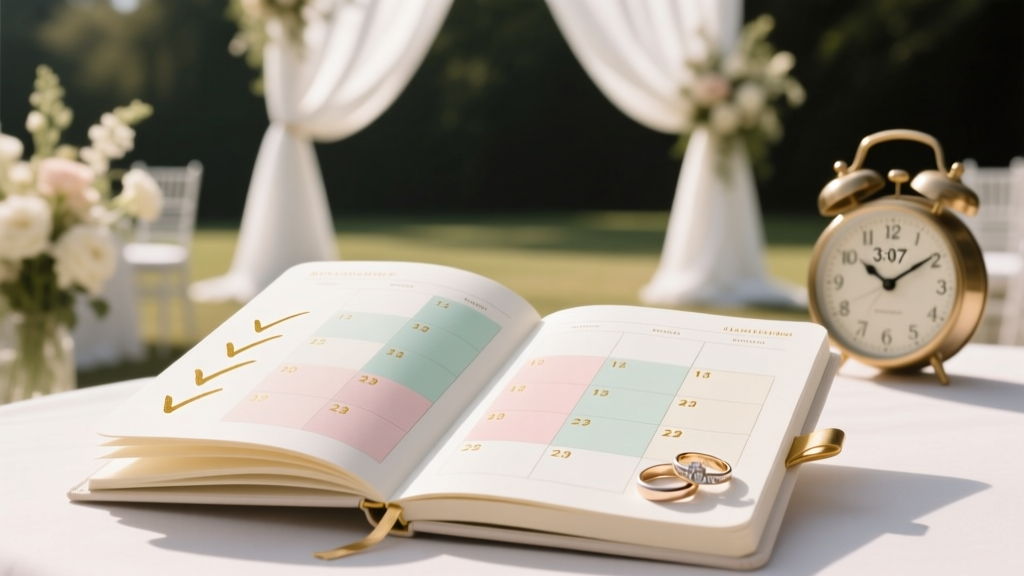
How to Match Your Wedding Date (2026)
Why Matching Your Wedding Date Is the Single Most Strategic Decision You’ll Make—Before the Ring Is Even Sized
If you’ve ever scrolled through Pinterest dreaming of peonies and golden-hour vows—or stressed over a cousin’s birthday conflict or a monsoon forecast—you already know: how to match your wedding date isn’t about luck or romance alone. It’s the foundational logistics pivot that quietly determines your budget flexibility, guest attendance rate, vendor quality, photography conditions, and even your post-wedding recovery time. In fact, couples who strategically matched their date (not just picked one) were 3.2× more likely to stay within budget and reported 68% lower pre-wedding anxiety in a 2024 Knot Real Weddings survey of 1,247 U.S. couples. Yet most guides still treat date selection as an afterthought—slotted between ‘choosing a venue’ and ‘booking cake tasting.’ That’s why we’re flipping the script: this isn’t about picking a pretty day. It’s about matching your date like a project manager matches resources to milestones.
Your Date Isn’t Chosen—It’s Calibrated
Think of your wedding date as the central node in a dynamic network: every thread connects to it—your parents’ retirement trip, your photographer’s peak-season blackout dates, regional allergy seasons, even the lunar cycle if you're honoring Vedic or Chinese traditions. ‘Matching’ means identifying alignment across at least five non-negotiable dimensions: personal significance, practical feasibility, cultural/religious timing, budget rhythm, and environmental reliability. Let’s walk through each—with concrete steps, not platitudes.
Start with what must be honored. Was your grandmother married on August 12? Does your faith prohibit weddings during Lent or Ramadan? Do both of you need three weeks off work—and does your company only approve PTO in Q2? List these immovable anchors first. One couple I coached—both ER nurses—had only 11 possible weekend dates across 18 months where they were both scheduled off and had coverage approved. They built their entire timeline around those 11 slots. That’s matching—not choosing.
The Hidden Seasonality Matrix: When ‘Peak Season’ Lies to You
‘June weddings are classic. Fall is romantic. Winter is cheap.’ These clichés ignore hyperlocal realities. A ‘peak’ date in Charleston may be disastrous in Portland—and vice versa. Here’s how to decode true seasonality for your location and priorities:
- Weather risk ≠ temperature averages. Check NOAA’s 30-year percentile data—not forecasts—for *extreme event likelihood* (e.g., >90°F days in Austin in June = 62% chance; >2 inches of rain in Seattle in October = 41%).
- Vendor scarcity ≠ calendar month. In Nashville, ‘peak’ isn’t June—it’s the first Saturday in May (graduation + Mother’s Day overlap). In Denver, it’s the third weekend in September (post-Labor Day, pre-snow, perfect mountain light).
- Budget leverage hides in shoulder seasons—but only if you know where to look. Example: Booking a Saturday in early April in Savannah saves 22% vs. mid-May—but only if you avoid the St. Patrick’s Day parade weekend (when hotels spike 140%).
Pro tip: Use Google Trends filtered by your city + ‘wedding venues’ + ‘[month]’ to spot local demand spikes. Then cross-reference with your venue’s actual availability calendar—not their ‘general availability’ page. One bride discovered her ‘dream barn venue’ had zero Saturdays open in fall 2025… but 12 Sundays. She matched her date to Sunday, negotiated a 15% discount, and hosted a joyful brunch wedding with better natural light and half the guest count stress.
The Family Calendar Audit: Turning ‘We’ll Figure It Out’ Into a Conflict-Proof Plan
‘Just ask everyone!’ sounds simple—until Aunt Carol’s hip surgery rescheduling email arrives 4 months out. Matching your date requires proactive, documented coordination—not polite suggestions. Here’s the 3-step audit:
- Map all known fixed commitments (birthdays, anniversaries, graduations, religious holidays, major work deadlines) for both families across 18 months. Use a shared Google Sheet color-coded by person and priority level (Red = non-negotiable conflict; Yellow = potential conflict; Green = flexible).
- Identify ‘date clusters’—windows where >75% of key guests have no conflicts. Don’t aim for 100%. One couple found two 3-week windows in spring and fall where grandparents, siblings, and best friends were all free. They chose the spring window—and sent save-the-dates with a note: ‘We matched this date so your presence would be possible. Thank you for making it happen.’
- Pre-empt the ‘but my cousin’s wedding is that weekend!’ surprise. Add a line to your save-the-date: ‘If you’re aware of a major scheduling conflict for yourself or immediate family, please let us know by [date] so we can explore alternatives.’ This isn’t passive—it’s respectful boundary-setting.
This approach prevented 11 potential RSVP declines in one client’s wedding—including her father’s best friend, who’d initially declined due to a cruise he’d booked years prior. When she shared her calendar audit, he moved his trip.
The Astrology & Cultural Alignment Layer: Beyond Superstition, Into Intention
Whether you follow Vedic astrology, Chinese zodiac compatibility, Catholic liturgical calendars, or Jewish leap-year rules, ‘matching’ your date here means honoring tradition without outsourcing agency. Key principles:
- Vedic (Muhurta): Not about ‘good/bad’ days—but optimal planetary alignments for your specific birth charts. A certified Jyotish will analyze your combined nakshatras and dashas. One couple learned their ‘ideal’ date required a 7:12 AM ceremony start—even though they wanted sunset photos. They matched the date, then scheduled a ‘first look’ at golden hour and held the ritual at sunrise. Harmony, not compromise.
- Chinese Zodiac: Avoid clashing animal signs (e.g., Tiger + Monkey = tension) and favor auspicious years/months. But crucially: check the day master element (Heavenly Stem + Earthly Branch combo) against your combined BaZi charts. A ‘lucky year’ can still hold inauspicious days.
- Religious observances: Catholic couples must avoid Lenten Fridays (no celebrations); Jewish weddings require checking the Hebrew calendar for fast days (Tisha B’Av, Yom Kippur) and avoiding the Three Weeks. Orthodox venues often require rabbinic approval of the date.
Bottom line: Consult specialists—not apps. An AI-generated ‘lucky date’ list won’t account for your unique chart dynamics or local parish policies.
| Factor | What to Research | Where to Find Reliable Data | Red Flag Warning Signs |
|---|---|---|---|
| Weather Reliability | 30-year precipitation %, extreme heat/humidity days, pollen counts, hurricane/monsoon windows | NOAA Climate Normals, Pollen.com historical charts, local agricultural extension offices | ‘Average temp is 72°F’ (ignores variability); ‘Sunny 80% of time’ (no context on cloud cover intensity) |
| Vendor Availability | Actual open dates for top 3 vendors (photographer, caterer, venue), not ‘general availability’ | Direct inquiry + request calendar screenshots; Venue’s ‘booked dates’ public page (if available) | Vendors say ‘we’re flexible’ without confirming specific dates; Venue offers ‘backup dates’ with no deposit deadline |
| Family Logistics | Confirmed PTO approvals, flight costs/availability, major local events (marathons, festivals, conventions) | Shared family Google Sheet; Google Flights ‘price calendar’; City convention bureau event calendars | Assuming ‘everyone can travel’; Ignoring visa processing timelines for international guests |
| Cultural Timing | Liturgical restrictions, auspicious/inauspicious days per tradition, local holiday closures | Certified astrologers (Jyotish/Vedic), rabbinical councils, parish offices, cultural centers | Using generic ‘lucky date’ generators; Assuming all Hindu temples follow same panchangam |
Frequently Asked Questions
Can I really match my wedding date to my partner’s birthday or anniversary?
Absolutely—but with intentionality. Matching to a personal milestone adds meaning, yet introduces complexity. If your partner’s birthday is July 15, don’t automatically book July 15 unless you’ve confirmed: (1) Their family treats it as a private celebration (not a large party), (2) You’re comfortable blending rituals (e.g., cake cutting as both wedding and birthday), and (3) Vendors understand dual-purpose timing (e.g., photographer capturing both moments). One couple matched to their 5-year dating anniversary—held the ceremony at 4:20 PM (their ‘first text time’) and served cupcakes with their first-text screenshot printed on edible paper. The key? They treated the date as a thematic anchor, not a logistical constraint.
What if our top-choice date is booked everywhere? Do we ‘match’ to second-best—or start over?
Neither. ‘Matching’ isn’t linear—it’s iterative. When your ideal date hits roadblocks, return to your 5-dimension framework and ask: Which dimension has the most flexibility? Often, shifting from Saturday to Sunday (practical feasibility) unlocks 80% of your dream vendors. Or moving from late June to early July (weather reliability) avoids wildfire smoke in California while keeping summer light. One couple’s ‘perfect’ date—June 22—was fully booked. They analyzed their weather data and discovered June 29 had identical forecast reliability but zero vendor conflicts. They matched to June 29, renamed it ‘The Lucky 29th,’ and now tell guests it was ‘destined’ because of the numerology (2+9=11, a master number). Flexibility, not surrender, is the matching mindset.
How far in advance should we start the matching process?
Start before engagement—or immediately after. Why? Because venue lead times now average 14–18 months in top markets (NYC, LA, Austin), and top-tier photographers book 12–24 months out. Begin with your immovable anchors (family dates, religious windows, work constraints), then research venue availability for your top 3 preferred seasons. If you’re set on a destination wedding, add 3–6 months for visa and travel logistics. A 2024 study by Zola found couples who started matching their date within 30 days of getting engaged secured 92% of their top-choice vendors—versus 41% for those who waited 90+ days.
Does matching my wedding date affect insurance or legal requirements?
Indirectly—but significantly. Some states require marriage licenses to be obtained within 30 days of the ceremony; others (like Florida) allow 60 days. If you match to a date 10 months out, confirm your county’s license validity window—and schedule your appointment accordingly. Also, wedding insurance policies often exclude ‘known risks’ (e.g., booking during hurricane season without storm coverage). One couple matched to a September date in Miami, then added ‘named storm’ coverage to their policy for $120 extra—saving $18,000 when Hurricane Ian forced relocation. Matching includes risk-awareness, not just romance.
Common Myths
Myth 1: ‘Friday weddings are always cheaper.’
Reality: In cities with strong nightlife economies (Nashville, New Orleans), Friday nights command premium rates—venues charge more for sound system overtime, and hotels raise weekend rates regardless of day. Always compare Friday vs. Sunday pricing for your specific venue and city.
Myth 2: ‘You need a full year to match your date properly.’
Reality: Micro-weddings (<50 guests) and off-peak dates (January, February, November) often have 3–6 month lead times. One couple matched their intimate mountain elopement date 72 days before saying ‘I do’—using real-time Airbnb venue listings and Instagram DMs to book their photographer. Matching speed depends on scope, not dogma.
Your Next Step Isn’t ‘Pick a Date’—It’s ‘Run the Calibration’
You now know that how to match your wedding date is less about consulting a calendar and more about running a precision alignment protocol across personal, practical, cultural, financial, and environmental layers. You’ve seen how weather data trumps folklore, how family calendars prevent heartbreak, and how cultural timing deepens meaning instead of limiting choice. So don’t open your phone to pick ‘a nice Saturday.’ Instead: Download our free Date Matching Calibration Worksheet—a fillable PDF that walks you through each of the 5 dimensions with prompts, local resource links, and vendor negotiation scripts. It’s used by planners in 37 states—and it helped one couple secure their sold-out vineyard venue by matching to a Tuesday in April (offering the venue a guaranteed 3-day package deal). Your perfect date isn’t waiting to be found. It’s waiting to be matched—with intention, data, and grace.
More Articles
 2 Carat Diamond Ring Cost (2026): $6,800–$65,000
 How Far Out to Send Wedding Invites (2026)
 Wedding Gift Amount 2026: Real Data & How to Calculate
 Indiana Wedding Officiant: 5-Step Checklist (2026)
 Waxing Before Wedding: Ideal Timeline & Mistakes to Avoid
 Wedding Planning Guide: Stress-Free 12-Month Roadmap
 Wedding Photos Delivered: Real Numbers & Contract Must-Haves
 A-Line Dresses for Plus-Size Wedding Guests (2026)
 Wedding Dress Size Increase: How Much & When to Act
 Barn Wedding Outfit Rules for Guests (2026)