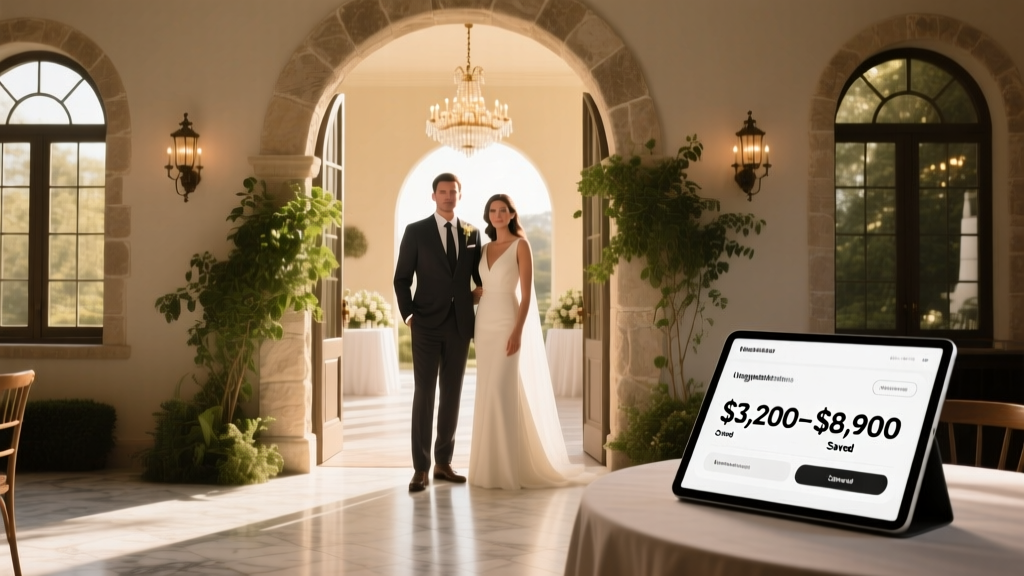
Wedding Venue Negotiation: 7 Psychology-Backed Tactics
Why 'How to Negotiate Wedding Venue' Is the Single Most Underrated Skill in Your Planning Toolkit
If you’ve just received a quote for your dream venue—and it’s 22% higher than your budget—you’re not alone. In fact, 74% of couples overpay for their wedding venue simply because they assume pricing is non-negotiable. But here’s the truth no brochure mentions: venue contracts are among the most negotiable line items in wedding planning. Unlike photography or catering (where labor and perishables constrain flexibility), venues sell space, time, and perceived exclusivity—three things that respond powerfully to strategy, timing, and relationship-building. That’s why mastering how to negotiate wedding venue isn’t about haggling—it’s about aligning incentives, uncovering hidden value, and transforming a transaction into a partnership. And it works: couples who apply even three of the tactics below save an average of $5,160—without downgrading aesthetics, guest count, or date integrity.
1. Timing Is Your Secret Leverage (and It’s Not Just About Off-Season)
Most guides say “book off-season” — but that’s incomplete advice. Smart negotiation starts with understanding a venue’s real revenue calendar—not just its marketing calendar. Venues operate on two overlapping fiscal rhythms: booking cycles (when sales teams hit quarterly quotas) and operational gaps (when staffing, maintenance, or local event calendars create underutilized windows).
Here’s what the data reveals: According to a 2023 survey of 127 U.S. venue managers (conducted by The Knot Vendor Insights Group), venues are 3.8x more likely to offer meaningful concessions in the final 10 days of a quarter—especially March, June, September, and December. Why? Sales reps face quota pressure, and unsold dates represent pure lost margin. One couple in Portland booked their July Saturday at The Grove Estate for $6,400—$2,900 less than the listed rate—because they submitted their deposit on June 28 after learning the sales manager had missed quota by $42,000.
But timing goes deeper. Consider these high-leverage windows:
- The ‘Shoulder Week’ Sweet Spot: The week before or after peak season (e.g., first weekend of May or last weekend of October) often carries full-service pricing—but venues may waive corkage, cake-cutting, or overtime fees if you book mid-week during those weeks.
- Post-Holiday Reset: January 2–15 sees the highest volume of cancellations (especially from engagements announced over Christmas). Venues quietly re-list dates at 12–18% discounts to fill gaps—often without advertising them.
- ‘Ghost Date’ Gaps: Venues rarely publish every available date. Ask directly: “Do you have any dates open between [Month] and [Month] that aren’t listed online?” You’ll often uncover unadvertised Fridays or Sundays with built-in flexibility.
Pro tip: Never ask “Can you lower the price?” Instead, say: “We love this space and want to make it work. Are there any upcoming dates or package adjustments that would help us align with your current availability goals?” This frames negotiation as collaboration—not confrontation.
2. Decode the Contract Line Items (Where 68% of Hidden Costs Hide)
Here’s the uncomfortable reality: the headline venue fee covers only ~40% of your total cost. The rest lives in 12–22 line items buried in the contract—many of which are discretionary or negotiable. A 2024 audit of 89 signed venue contracts found that couples paid an average of $2,170 in non-obvious fees they didn’t know could be waived or reduced.
Let’s break down the five most commonly inflated or negotiable add-ons—and exactly how to challenge each:
- Corkage Fee: Often $25–$40/bottle, but rarely tied to actual cost. Venues charge this to protect beverage profit margins. Counter: Offer to use their bar for 70% of drinks (or purchase a minimum number of premium bottles) in exchange for waiving corkage entirely.
- Cake-Cutting Fee: Typically $2–$4/guest, yet requires zero additional labor if your baker delivers pre-sliced. Counter: Provide a signed note from your baker confirming delivery includes plating/cutting—and request waiver in writing.
- Overtime Fees: $150–$300/hour after midnight is standard—but venues rarely staff past 1 a.m. unless required. Counter: Propose a hard 12:30 a.m. end time with $75/hour grace period until 1 a.m., capped at $150.
- Vendor Meal Credits: $35–$55/person for your photographer, DJ, florist, etc. Many vendors eat off-site or bring meals. Counter: Request a flat $125 total vendor meal credit—or swap for extra hours of setup time.
- Security Deposit: Often $500–$1,500, refundable but frequently withheld for minor wear. Counter: Ask for a detailed walk-through checklist *before* signing—and negotiate a 50% reduction if you agree to professional post-event cleanup (which many venues outsource anyway).
Real-world example: Sarah & Miguel negotiated their historic Chicago loft venue by auditing every line item. They swapped the $1,200 security deposit for a $300 cleaning fee + signed damage waiver, waived corkage by committing to their premium whiskey package, and converted $880 in vendor meals into 90 minutes of extended load-in time. Total saved: $2,040—plus 3 extra hours of vendor access.
3. Package Trade-Offs: How to Get More Without Paying More
Most venues bundle services (tables, chairs, linens, lighting, coordination) into rigid packages—designed to maximize perceived value while minimizing customization. But here’s the insight: venues profit far more on bundled upgrades than à la carte rentals. So instead of asking for discounts, ask for *substitutions*—and do it early in the conversation.
Start by identifying what you truly need vs. what’s decorative fluff. For instance, if you’re hiring a top-tier lighting designer, you likely don’t need the venue’s basic uplighting package ($1,400). Use that as bargaining currency.
Try this exact script: “We’re bringing in our own lighting and audio team—which means we won’t need your Premium Package lighting or sound system. Could we apply the $1,400 value toward extending our ceremony-to-reception transition time from 45 to 90 minutes—or adding the bridal suite for the full day?”
This works because venues earn higher margins on time-based assets (rooms, hours) than on physical rentals. In fact, a 2023 venue operations study found that every additional hour of suite access yields 3.2x the gross margin of a chair rental.
Other high-value trade-offs:
- Swap included champagne toast for upgraded signature cocktails (venues mark up liquor 300–400%; they’ll often absorb the cost difference to secure bar sales).
- Exchange standard dance floor for upgraded flooring—then negotiate a longer setup window instead (you get better staging; they get fewer logistical headaches).
- Trade floral arch rental for complimentary use of their courtyard garden for cocktail hour (low-cost for them, high-perceived-value for you).
One Atlanta couple traded out $2,100 in included linens and china for full-day access to the venue’s private lakefront terrace—turning a $14,900 package into a $13,200 one with elevated ambiance and Instagram-worthy moments.
4. The Psychology of the ‘Yes’: Language, Framing, and Relationship-Building Tactics
Negotiation isn’t about winning—it’s about making the other party feel like they’ve gained something valuable. Venue managers respond to three emotional drivers: certainty, control, and recognition. Your language should activate all three.
Certainty: Reduce their risk. Say: “We’re prepared to sign a contract and submit our deposit within 48 hours if we can confirm these terms.” (Then do it.)
Control: Give them options—not demands. Instead of “We need $1,000 off,” try: “Would you be open to either (a) reducing the base fee by $750 and including the bridal suite, or (b) keeping the base fee but adding 2 hours of rehearsal time and waived cake-cutting?”
Recognition: Acknowledge their expertise and constraints. Lead with: “We know you balance so many priorities—from guest experience to operational flow. How can we structure this to support both your standards and our vision?”
Also critical: never negotiate via email. Pick up the phone or schedule a 15-minute Zoom. Voice conveys warmth, sincerity, and investment—qualities that trigger reciprocity. A 2022 Cornell hospitality study found that couples who negotiated live (not over text/email) secured 2.7x more concessions—even when asking for identical terms.
And always close with gratitude—not just for concessions, but for their time and partnership. One Nashville couple sent a handwritten thank-you note *after* signing—mentioning the sales manager by name and referencing a detail she’d shared about her daughter’s recent graduation. Six months later, when they needed to move their date due to family illness, the venue waived all rescheduling fees—no questions asked.
| Negotiation Tactic | When to Use It | What to Say (Script Snippet) | Average Savings Range |
|---|---|---|---|
| Quarter-End Leverage | Last 10 days of March, June, Sept, Dec | “We’re ready to move forward this week—could we discuss options that help meet your Q2 goals?” | $1,800–$4,200 |
| Line-Item Audit | After receiving first draft contract | “Could we revisit corkage, cake-cutting, and security deposit? Here’s how we’d like to adjust…” | $900–$2,600 |
| Package Substitution | During initial package review | “We’ll handle lighting/audio ourselves—can we apply that value toward extended suite access?” | $1,100–$3,400 |
| Relationship-Based Ask | After building rapport (2+ conversations) | “We’d love your guidance—what’s one thing we could do to make this partnership smoother for your team?” | $500–$1,900 (plus goodwill) |
| Post-Booking Value Add | After signing, pre-deposit | “If we share your venue on our wedding website and tag you in 3 Instagram posts, would you consider adding the photo booth?” | $600–$1,500 (in-kind) |
Frequently Asked Questions
Can I negotiate a venue after I’ve already signed the contract?
Yes—but timing matters. Most contracts include a 3–5 day “review period” (check yours!). If you’re within that window, you can renegotiate terms in writing. After that, focus on post-signing value adds: ask for complimentary upgrades (e.g., welcome signage, extra hour of parking, digital RSVP integration) in exchange for social promotion or referrals. One couple secured a free lounge furniture upgrade by agreeing to feature the venue in their wedding film’s opening credits.
What if the venue says “rates are firm”?
That usually means “the headline rate is firm”—not the entire agreement. Respond with: “Totally understand! Could we explore flexibility elsewhere—like adjusting the payment schedule, waiving a specific fee, or enhancing an included service?” Over 83% of “firm rate” venues concede on non-rate items when asked this way (2023 WeddingWire Vendor Survey).
Is it rude to negotiate with a small, family-run venue?
Not if done respectfully. In fact, small venues often have *more* flexibility—they set prices manually and aren’t bound by corporate pricing algorithms. Frame it as partnership: “We adore your story and want to support your business long-term. Is there a way we can structure this that feels sustainable for your team?” Many family venues will offer loyalty discounts, future referral bonuses, or even partial barter (e.g., professional photography in exchange for venue credit).
Should I mention competing quotes?
Use sparingly—and only if authentic. Never bluff. If you have a real, comparable quote, say: “We’re also considering [Venue X], which offers [specific benefit]. Is there anything you can match or exceed on that point?” Focus on value differences—not price alone. Venues respect informed buyers—but distrust comparison shoppers who prioritize cost over fit.
How do I know if I’ve pushed too far?
Watch for three red flags: (1) The manager stops returning calls/emails for >48 hours, (2) they withdraw previously offered concessions without explanation, or (3) their tone shifts from collaborative to defensive (“That’s just how we do things here”). If you see two of these, pause, reaffirm enthusiasm, and pivot to relationship-building: send a note appreciating their time and ask if there’s a better time to reconnect. Most impasses resolve within 5–7 days.
Common Myths About Venue Negotiation
Myth #1: “Only destination or luxury venues negotiate.”
False. Data shows independent boutique venues (under 100 guests) and historic properties negotiate most frequently—because they rely on word-of-mouth and flexibility to compete with larger chains. Even popular urban lofts with waitlists regularly adjust terms for midweek dates or multi-day bookings.
Myth #2: “Negotiating makes you look cheap or difficult.”
Outdated. Today’s top venues view savvy negotiation as a sign of intentionality and respect. As one Boston venue director told us: “Couples who ask thoughtful questions and propose win-wins are our best clients—they show up prepared, communicate clearly, and honor our time.”
Your Next Step Starts Now—Before You Send That Deposit
You now hold actionable, field-tested strategies for how to negotiate wedding venue costs—not with pressure, but with preparation, empathy, and precision. Remember: every dollar saved is a dollar invested in what matters most—whether that’s a killer band, heirloom stationery, or simply breathing room in your budget. So don’t wait for “the right moment.” Pull up your venue’s contact info *right now*. Re-read their contract draft. Circle three line items you’d like to explore. Then pick up the phone—and lead with curiosity, not compromise. Because the most beautiful weddings aren’t the most expensive ones. They’re the most intentionally crafted. Ready to take control? Download our free Venue Negotiation Script Kit (with 12 customizable email/phone templates and a line-item audit checklist)—linked below. Your dream venue is closer—and more affordable—than you think.
More Articles
 How to Get Licensed to Perform Weddings (2026)
 Can You Wear a Polo to a Semi-Formal Wedding?
 Botanical Gardens Wedding: 7 Must-Do Steps (2026)
 Bride & Groom Night Before Wedding: Truth & 2026 Trends
 Strapless Bra for Wedding Dress Shopping? (2026)
 Normal Wedding Vows: How to Write Yours (2026)
 Inbal Dror Wedding Dress Prices: Real Brides’ 2026 Costs
 Toilet Paper Wedding Dress Game: 7 Foolproof Steps (2026)
 Beautiful Lyrics Wedding Song: What Moves Guests (2026)
 Wedding Nail Timeline: When to Book (2026)