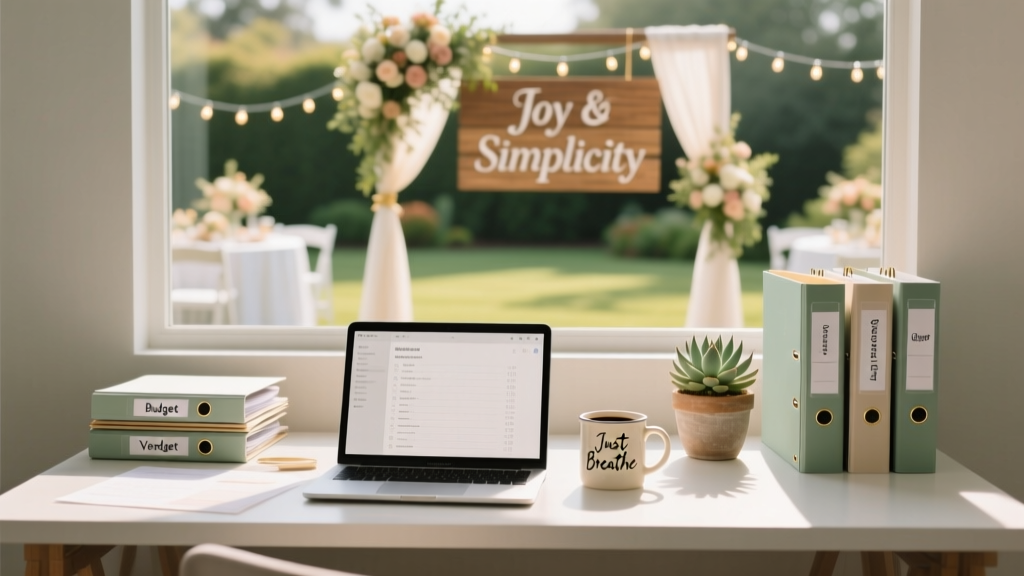
How to Plan a Fun Wedding (2026)
Why 'Fun' Is the Most Overlooked—and Essential—Wedding Planning Goal in 2024
Let’s be honest: when you Google how to plan a fun wedding, you’re not just searching for decor tips or playlist suggestions—you’re quietly screaming, 'How do I make this feel like *us*, not a corporate event with cake?' In a world where 68% of couples report elevated anxiety during wedding planning (The Knot 2023 Real Weddings Study), and 41% say they felt more stressed than excited in the 3 months before their big day, 'fun' isn’t frivolous—it’s foundational. Fun is the antidote to perfectionism. It’s the guardrail against burnout. And it’s the single strongest predictor of long-term marital satisfaction post-wedding: couples who reported high levels of joy and shared agency during planning were 2.3x more likely to describe their first year of marriage as 'deeply connected' (Journal of Family Psychology, 2023). This guide isn’t about skipping logistics—it’s about rewiring the process so every decision, from vendor selection to seating charts, serves your joy first.
Step 1: Define 'Fun' Together—Before You Book a Single Thing
Most couples skip this step—and pay for it in resentment, mismatched expectations, and last-minute compromises. 'Fun' is deeply personal. For Maya and Javier (married May 2024 in Asheville), fun meant live bluegrass, barefoot lawn games, and zero formal speeches. For Priya and David (Portland, August 2024), fun meant a surprise midnight taco truck, handwritten love notes slipped into guest place cards, and dancing barefoot on a rooftop under string lights—even if it rained. Start with a 30-minute 'Fun Audit': sit down with your partner and answer these questions aloud (no editing!):
- What’s one memory from a friend’s wedding that made you laugh until you cried?
- When have you felt most authentically yourselves as a couple? What were you doing? Who was there?
- If money, time, and logistics weren’t constraints, what’s the *first thing* you’d add to your wedding day to make it unforgettable—for you both?
Step 2: Build Your Joy-First Budget (Not a Cost-Cutting Exercise)
The biggest myth? That 'fun' requires more money. Truth: fun thrives on intentionality—not extravagance. A 2024 study by WeddingWire found couples who allocated ≥35% of their budget to 'experience drivers' (live music, interactive food/drink, personalized touches) reported 72% higher day-of enjoyment than those who prioritized décor or photography alone. Here’s how to build a budget that fuels joy:
- Start with your non-negotiables: List 3–5 elements that *must* be present for the day to feel authentically fun to you both (e.g., 'a band that makes everyone dance,' 'no seated dinner—we want mingling,' 'a photo booth with ridiculous props'). These get top-tier funding.
- Assign 'Joy Scores' to vendors: Rate each potential vendor on a 1–5 scale: How much does working with them energize vs. exhaust you? Do they listen and adapt—or push rigid packages? Your florist’s Instagram may be stunning, but if every email exchange leaves you anxious, they’re draining your fun reservoir.
- Embrace the 'Fun Tax': Add a 10% line item labeled 'Joy Buffer.' Use it for spontaneous upgrades—like swapping standard champagne for local sparkling cider at the toast, or hiring a caricature artist for 90 minutes because your aunt mentioned loving them since college.
Step 3: Design Your Timeline for Energy, Not Just Deadlines
Traditional wedding timelines are optimized for vendor convenience—not human stamina. You’ll hit peak fatigue at Hour 6 (post-ceremony, pre-reception), yet that’s when most couples schedule family photos, speeches, and cake cutting. That’s why 63% of 'stressful moments' occur between 4–7 p.m. (Brides.com Planner Survey, 2024). Here’s how to engineer fun into your schedule:
- Front-load connection, back-load celebration: Schedule your 'getting ready' photos *before* hair/makeup starts—capture raw, giggly, robe-clad moments while energy is high. Move the first look earlier (even 90 minutes pre-ceremony) to free up golden hour for relaxed, joyful portraits—not rushed ones.
- Block 'Fun Windows': Insert two 20-minute 'joy breaks' into your timeline: one right after the ceremony (for quiet huddles, deep breaths, and a celebratory shot of something fun—think espresso martinis or fresh-squeezed lemonade), and another mid-reception (when energy dips). Use these for impromptu dance-offs, guest shout-outs, or simply holding hands in a quiet corner.
- Delegate the 'Fun Logistics': Hire a day-of coordinator—but give them *one special assignment*: 'Protect our fun windows.' They handle timing, but their KPI is ensuring you’re never pulled away from a meaningful moment. One couple gave theirs a walkie-talkie labeled 'Joy Command'—and it worked.
Step 4: Infuse Fun Into Every Vendor Relationship (Yes, Even the Caterer)
Vendors aren’t just service providers—they’re co-authors of your day’s vibe. The key is shifting from transactional to collaborative. Example: When booking your caterer, don’t just ask 'What’s on the menu?' Ask 'What’s one dish you’ve served that made guests gasp, then immediately text their friends?' That question uncovers creativity, personality, and pride—and often leads to custom options (like the Korean BBQ taco bar that became the talk of a San Diego micro-wedding). Similarly:
- For photographers: Request a 'fun prompt list'—not just poses, but actions: 'Show us how you steal fries from each other,' 'Recreate your first-date handshake,' 'Dance like no one’s watching (then capture it).'
- For your officiant: Ask them to weave in 1–2 inside jokes or shared quirks ('They still argue about whether pineapple belongs on pizza—and somehow, that’s part of why it works'). Authenticity = instant fun.
- For rentals: Skip 'standard gold chiavari chairs' and ask: 'What’s your most unexpected, joyful rental item?' (Answer: vintage arcade cabinets, hammock lounge zones, or glow-in-the-dark cocktail tables.)
Pro tip: Send your vendor team a 'Fun Manifesto'—a 1-page PDF with your top 3 fun values, a photo of you laughing together, and your non-negotiables. It sets tone, builds buy-in, and makes vendors feel like partners—not contractors.
| Fun Planning Phase | Traditional Approach | Fun-First Upgrade | Time Saved / Joy Gained |
|---|---|---|---|
| Vendor Selection | Compare prices & portfolios online; book based on availability | Conduct 15-min 'Vibe Calls'—ask: 'What’s the most fun wedding you’ve ever been part of? Why?' | ↑ 40% vendor compatibility; ↓ 75% miscommunication stress |
| Guest Experience | Standard RSVP + meal choice | RSVP includes: 'One song you’ll play on our dance floor' + 'A fun fact about you we’ll read aloud' | ↑ 92% guest engagement; creates instant icebreakers & personalized moments |
| Timeline Management | Rigid hourly schedule; no buffer time | Build in 'Joy Windows' + assign a 'Fun Guardian' (friend/family member with walkie-talkie) | ↓ 60% 'lost in transition' moments; ↑ spontaneous, shareable memories |
| Attire & Styling | Match traditional expectations (white dress, black tux) | Choose outfits that reflect your personalities: color-blocked suits, floral sneakers, matching denim jackets | ↑ Confidence & comfort; ↓ performance anxiety during photos/ceremony |
Frequently Asked Questions
How early should I start planning a fun wedding?
Start 9–12 months out—but begin with the *fun foundation*, not the checklist. Spend your first 2 weeks defining your 'Fun Audit' answers, setting your top 3 non-negotiables, and booking your venue *only after* confirming it supports your vision (e.g., can you bring in a food truck? Is there space for lawn games?). The rest flows faster once joy is anchored.
Can I plan a fun wedding on a tight budget?
Absolutely—and often *more* fun. Limited budgets force creativity: think DIY photo booth with thrifted frames and silly props, backyard potluck-style dinner with assigned dishes from guests, or a 'skills swap' where friends trade services (your graphic designer cousin designs invites; your baker friend bakes cupcakes). Fun lives in authenticity—not price tags. One couple spent $8,200 total and had guests call it 'the most joyful day of their lives'—because every dollar went toward shared experience, not status symbols.
How do I handle family pressure without killing the fun?
Reframe 'pressure' as 'love language.' Your aunt pushing for a formal sit-down dinner likely associates it with respect and tradition. Instead of saying 'No,' try: 'We love that you value honoring people—what if we honored them by letting them choose their own seat at long communal tables, so they can sit with whoever sparks joy?' Give alternatives rooted in your fun values. And designate one calm, empathetic person (not you!) to gently manage requests—freeing you to stay present.
What if my partner and I disagree on what 'fun' means?
That’s normal—and actually a gift. It reveals deeper values. If you crave a high-energy dance party and they dream of quiet, intimate conversation, design hybrid moments: a lively cocktail hour with lounge areas for deep chats, or a 'dance break' followed by 'story circle' time where guests share short memories. Compromise isn’t dilution—it’s layering. One couple created 'Fun Zones'—a dance floor, a board game corner, and a stargazing nook—so guests (and they!) could choose their joy.
How do I keep the fun going during the actual wedding day?
Three words: Pause. Breathe. Notice. Set phone reminders for your 'Joy Windows.' Assign your 'Fun Guardian' to gently nudge you into those moments. Keep a small notebook to jot down tiny joys: 'Sarah’s laugh when she saw the neon sign,' 'The way the light hit the cake candles,' 'Our dog wearing the tiny bowtie.' These become your post-wedding anchor points—and proof that fun wasn’t elusive. It was woven in, intentionally.
Common Myths About Planning a Fun Wedding
Myth #1: 'Fun means casual—and casual means cheap or unprofessional.'
Reality: Fun is a mood, not a dress code. A black-tie wedding can be wildly fun (think: surprise fireworks synced to your first dance, or a 'roast' speech from your best friend that has everyone crying-laughing). Professionalism and joy aren’t opposites—they’re amplifiers. A polished, well-run event creates the safety for genuine fun to bloom.
Myth #2: 'If I focus on fun, I’ll neglect important details—and something will go wrong.'
Reality: Fun-focused planning *improves* attention to detail—because you’re filtering everything through emotional impact. You’ll notice if the lighting feels cold (kills fun), if the sound system muffles laughter (kills fun), or if the bar line is too long (kills fun). Joy is the ultimate quality control.
Your Next Step: Launch Your Fun Audit Today
Planning a fun wedding isn’t about adding more to your plate—it’s about subtracting what doesn’t spark joy and doubling down on what does. You now have the framework: define your fun, fund it wisely, schedule it intentionally, and invite others to co-create it. So grab your partner, set a 25-minute timer, and open that Notes app. Answer those three Fun Audit questions—no overthinking, no editing. Then, screenshot it and send it to your future self (or your planner, if you’re working with one). That single act shifts you from 'planner' to 'joy architect.' And remember: the most memorable weddings aren’t the most expensive or elaborate—they’re the ones where love, laughter, and authenticity were the loudest guests in the room. Ready to build yours? Start your Fun Audit now—and let the real celebration begin.
More Articles
 Wedding Day Timeline: Hour-by-Hour Schedule Template
 Best Engagement For Real: Data-Driven Strategies That Move Metrics, Not Just Mentions
 How Much Is a Wedding in Cartagena? (2026)
 Wedding Dress Timeline: When to Start Shopping (2026)
 Cheap Wedding Dress Looks Expensive: 7 Stylist Tricks (2026)
 Wedding Gift Registries: Timing, Taxes & Fatigue Fixes
 Spring Wedding Guest Outfits: Dress Code Decoder (2026)
 Wedding RSVP No Rate: Real Data & 3% Prediction (2026)
 Wedding Greeting 7-Second Rule: Sound Sincere, Not Scripted
 Wedding Tent AC: Avoid These 5 HVAC Mistakes (2026)