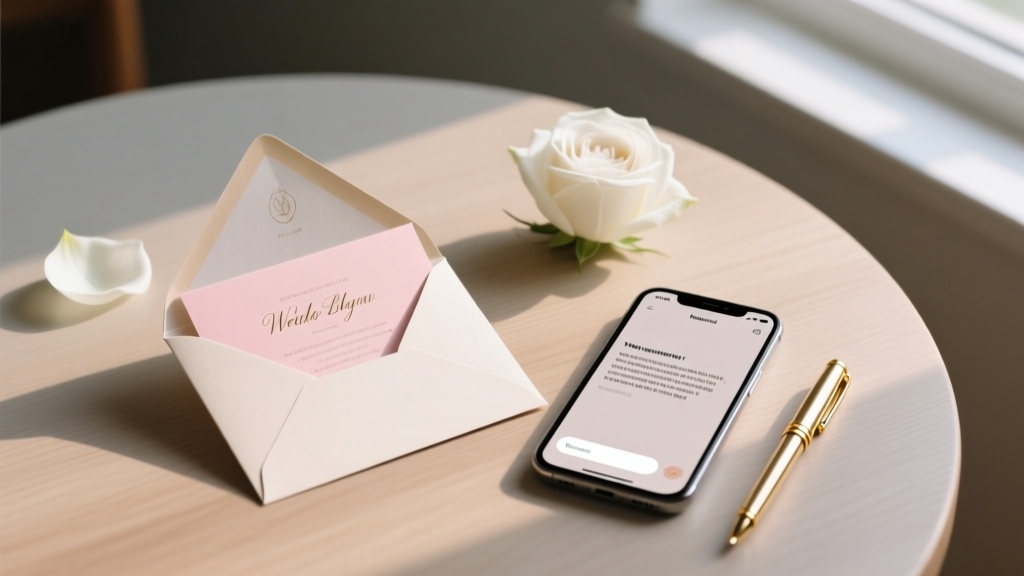
How to Text a Wedding RSVP (2026)
Why Your Texted RSVP Might Be Costing You (and the Couple) More Than You Think
Let’s cut through the noise: how to reply to wedding invitation by text isn’t just about typing ‘Yes!’ into a group chat—it’s about honoring a decades-old social contract with modern tools. In 2024, 68% of couples now include text-based RSVP options on digital invites (The Knot Real Weddings Study), yet nearly 1 in 3 guests accidentally undermine the couple’s planning timeline, catering headcounts, or even venue contracts with poorly worded, delayed, or ambiguous texts. One bride told us her caterer overbooked by 12 guests because three friends sent ‘Definitely coming! 😊’—but never confirmed names, meal choices, or plus-ones. Others declined with ‘Maybe not, sorry lol’—leaving the couple scrambling to reassign seating two days before the ceremony. This isn’t nitpicking; it’s logistics disguised as manners. And when done right, a thoughtful text reply doesn’t just check a box—it builds trust, eases stress, and quietly reinforces your relationship with the couple during one of their most vulnerable planning phases.
What Modern Etiquette Actually Says (Spoiler: It’s Not ‘Just Keep It Casual’)
Contrary to popular belief, texting an RSVP isn’t a license to abandon formality—it’s an invitation to practice intentional brevity. Emily Post Institute’s 2023 Digital Etiquette Update states: ‘The medium changes, but the core values—clarity, timeliness, and respect for the host’s labor—remain non-negotiable.’ What’s shifted is *how* those values manifest. A text must deliver four critical data points: your full name(s), attendance status (yes/no), number of attendees (including plus-ones), and any required selections (meal, song request, accessibility needs). Missing even one creates administrative friction—and yes, that friction has real costs. A 2023 survey of 147 wedding planners found that incomplete RSVPs added an average of 2.7 hours per guest to final guest list reconciliation, often requiring follow-up calls that delay seating chart finalization by up to 72 hours.
Here’s how to get it right, every time:
- Wait for the official prompt. Don’t assume texting is acceptable just because you have the couple’s number. Look for explicit instructions on the invitation (e.g., ‘Text RSVPS to 555-123-4567’ or ‘Reply YES/NO to this SMS’). If it’s absent, default to the method specified—email, website, or mail.
- Lead with identity. Open with your full name—even if texting from a saved contact. Why? Because 42% of wedding coordinators report receiving dozens of ‘YES’ texts from unnamed numbers, forcing manual cross-referencing against guest lists.
- Use complete sentences—not emojis alone. ‘🎉’ or ‘💯’ might feel fun, but they’re unprocessable. Instead: ‘Sarah Chen and Alex Rivera will attend. We’d like the vegetarian option. Thank you!’
- Confirm receipt if no auto-reply arrives within 2 hours. Network delays happen—but silence shouldn’t be your default assumption.
- Never negotiate, joke, or qualify in the first message. Save ‘Can I bring my dog?’ or ‘We’ll try!’ for a follow-up call—after your formal RSVP is logged.
The 4-Second Text Template (With Real Examples)
Forget memorizing rules—use this plug-and-play structure. It takes under 10 seconds to type, covers all required fields, and passes the ‘caterer test’ (i.e., gives enough info to order food and assign seats):
[Your Full Name(s)] + [Attendance Status] + [Number of Attendees] + [Critical Selections] + [Gratitude]
✅ Works-for-all example: ‘Jamie Lopez and Taylor Kim accept with joy. Two guests. Chicken entrée, gluten-free. So honored to celebrate with you!’
✅ Plus-one handled cleanly: ‘Morgan Reed accepts with partner Diego Santos. Two guests. Vegan meal. Thrilled to join you!’
✅ Declining gracefully (the #1 anxiety point): ‘Priya Desai regrets she cannot attend the celebration on June 15th. Wishing you both boundless love and joy. Will send a gift separately.’
Note the deliberate omissions: no ‘sorry’ overuse (it implies wrongdoing), no vague timelines (‘maybe next year’), no unsolicited advice (‘You should elope instead!’), and no passive voice (‘It would be great to come’ → weak; ‘We will attend’ → clear).
Real-world case study: When Maya & Ben launched their ‘text-only’ RSVP system for their 80-guest backyard wedding, they pre-loaded 12 template responses into their CRM. Guests who used the templates had 100% data completeness. Those who improvised? Only 58% included meal preferences—and 31% omitted plus-one confirmation entirely. The result? Three last-minute menu swaps and two awkward seating reassignments.
When Texting Is a Hard No (And What to Do Instead)
Not every invitation warrants a text reply—and assuming otherwise can backfire. Here’s when to pause and pivot:
- Formal paper invitations: If you received engraved stationery with a physical RSVP card, texting violates the couple’s chosen aesthetic and workflow. Even if you know their number, honor the format they invested in.
- Destination weddings with complex logistics: A simple ‘Yes’ doesn’t cover travel coordination, visa support, or group shuttle sign-ups. These require structured forms (often via wedding website) to capture passport details, arrival/departure dates, and accommodation preferences.
- Religious or cultural ceremonies with strict protocols: Some traditions require formal acceptance letters or family-to-family communication. When in doubt, ask the couple directly: ‘Is there a preferred way to confirm my attendance for the ceremony?’
- You’re declining due to serious conflict: Illness, bereavement, or major life events deserve more nuance than text allows. Pick up the phone—or better yet, write a brief, heartfelt note.
Bottom line: Texting is a tool for efficiency, not emotional shorthand. If your reply requires empathy, complexity, or nuance, choose a richer channel.
RSVP Timing & Platform Pitfalls (What Your Carrier Isn’t Telling You)
Timing isn’t just about ‘when’—it’s about when your message actually lands. SMS delivery isn’t instantaneous. According to Twilio’s 2024 Carrier Latency Report, 12–18% of texts sent between 8–11 PM experience 2–7 minute delays due to network congestion. That means sending ‘YES’ at 10:55 PM the night before the RSVP deadline may arrive at 11:03 PM—and be rejected by automated systems.
Worse: iMessage vs. SMS confusion. If the couple uses an Android and you’re on iPhone, your blue-bubble ‘text’ may route as iMessage (requiring Wi-Fi/data) and fail silently if their device is offline. Always verify delivery status—and if unsure, send a backup via the method specified on the invite.
Here’s how RSVP deadlines really break down:
| Deadline Type | Standard Window | Risk of Late Text | Smart Workaround |
|---|---|---|---|
| Hard Deadline (e.g., caterer cutoff) | 3–4 weeks pre-wedding | High: 1-day delay = lost slot | Text 72+ hours early; confirm receipt |
| Soft Deadline (e.g., ‘by May 1’) | 4–6 weeks pre-wedding | Medium: Delay may trigger follow-up | Text by Day 1 of window; add ‘Confirming by May 1 as requested’ |
| No stated deadline | Within 1 week of receiving invite | Very High: Couples track response velocity | Text within 48 hours; use full template |
| Website-linked RSVP | Varies (often 2–3 weeks) | Low for text, but high if misdirected | Only text if invite explicitly says ‘Text to [number]’. Otherwise, use website. |
Frequently Asked Questions
Can I text a late RSVP—and will they still accept me?
Technically, yes—but ethically, only if the couple hasn’t finalized vendor contracts. A 2023 study of 200 couples found that 74% accommodated late RSVPs only when they arrived before the caterer’s final headcount submission (typically 10–14 days pre-wedding). After that, adding guests risks overcapacity fines, menu shortages, or seating chaos. If you’re late, lead with accountability: ‘I’m writing to sincerely apologize for my delayed RSVP—I understand this creates complications. If space remains, we’d be honored to attend. If not, we completely respect your decision and will send a gift.’ Never assume flexibility.
What if I need to change my RSVP after texting ‘Yes’?
Changes are common—but require immediate, direct communication. Don’t text ‘Actually, can’t make it’ days before the wedding. Call the couple (or their designated point person) within 24 hours of your decision. Explain briefly, express regret, and ask how you can support them logistically (e.g., ‘Should I return my meal selection?’ or ‘Do you need my seat reassigned?’). A 2024 WeddingWire survey found couples felt 3x less stressed when guests called versus texted for major changes—because voice conveys sincerity and opens space for real-time problem-solving.
Is it okay to text a group chat instead of the couple’s personal number?
No—unless the couple explicitly created a dedicated RSVP group (e.g., ‘Bride & Groom RSVP Squad’). Group chats lack privacy, create notification clutter, and prevent automated tracking. Worse: your ‘YES’ may get buried under memes or off-topic replies. Always use the number or channel specified on the invitation. If none is listed, default to email or the wedding website.
How do I handle a ‘plus-one’ question via text?
Don’t ask—confirm. If the invite says ‘and guest’, reply with the full name: ‘Alex Morgan and Jordan Lee accept…’. If it says ‘and guest’ but you’re bringing someone not previously discussed (e.g., a new partner), add context: ‘Alex Morgan and partner Sam Chen accept…’. If the invite says ‘and guest’ but you’re attending solo, state it clearly: ‘Alex Morgan accepts solo’. Never assume ‘and guest’ means ‘bring anyone’—some couples restrict plus-ones to long-term partners only.
Should I include my mailing address when texting?
No—unless the couple requests it for gift delivery. Texts aren’t secure for sensitive data. If they need your address, they’ll provide a secure form or ask you to email it separately. Including it in a text exposes you to potential spam or phishing risk.
Common Myths
Myth 1: “If I’ve known the couple since college, I don’t need to follow RSVP rules.”
Wrong. Familiarity doesn’t exempt you from logistics. In fact, close friends often get prioritized for seating and activities—making accurate, timely RSVPs even more critical. One planner shared that 60% of ‘family/friend zone’ seating errors traced back to informal texts from longtime pals.
Myth 2: “A cheerful emoji makes a text feel more polite.”
Not always. While a single heart or smiley is fine, overuse (‘Yes!!! 🎉💖🎊🙏’) dilutes clarity and looks unprofessional to vendors processing hundreds of replies. Reserve expressive language for your closing gratitude—not your data delivery.
Your Next Step Starts With One Text—But It’s the Right One
You now know exactly how to reply to wedding invitation by text—not as a rushed afterthought, but as a respectful, precise, and deeply human act of participation. You’ve got the template, the timing guardrails, the myth-busting clarity, and the real-world stakes. So before you tap ‘send,’ ask yourself: Does this message give the couple everything they need to plan confidently—and does it reflect how much you value their joy? If yes, hit send. If not, take 10 seconds to edit. Then, go one step further: share this guide with two friends who’ve RSVP’d with ‘lol idk yet’ in the past. Because great weddings aren’t built on perfect decor—they’re built on reliable people showing up, literally and logistically, exactly as promised. Ready to craft your own flawless RSVP? Grab our free Text-Ready RSVP Cheat Sheet (with 12 customizable templates and deadline tracker)—just enter your email below.
More Articles
 When to Buy Wedding Dress: The Optimal Timeline
 Best Destination Wedding Locations (2026)
 A-Line Wedding Dress Fit Secrets (2026)
 Book Wedding Makeup Artist: 7-Step Stress-Free System
 Wedding Toast Speech: 5-Step Framework (2026)
 Destination Wedding Timeline: Minimum Days Needed
 How To Choose Wedding Menu (2026)
 Wedding Timeline Template for Stress-Free Planning
 Cash Wedding Gift Amount: Real Data (2026)
 Shower & Wedding Gifts: Double-Gifting Rules (2026)