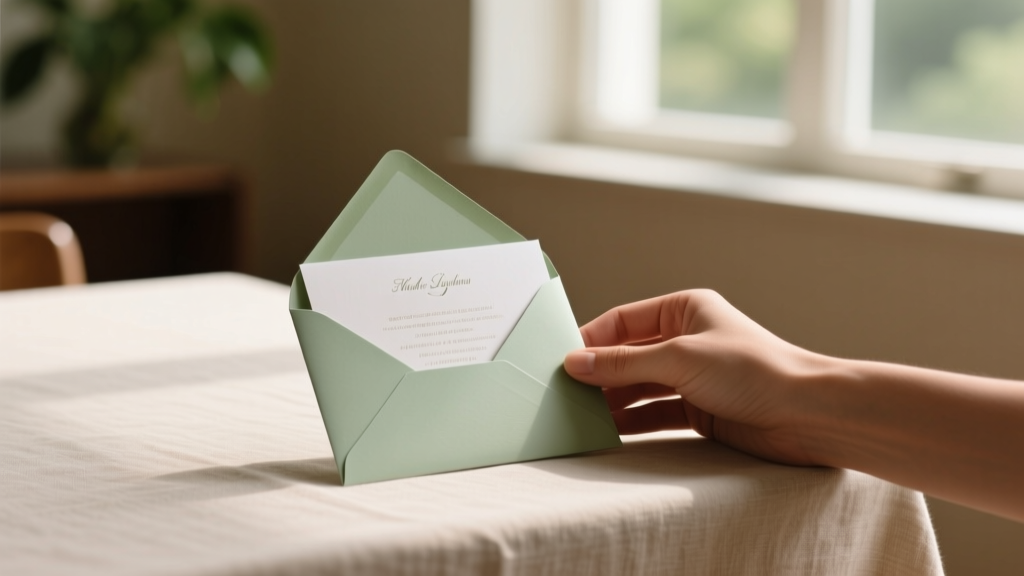
RSVP No to a Wedding Gracefully: A 2026 Guide
Why Saying 'No' to a Wedding Invitation Is Harder Than It Should Be
Let’s be real: how to rsvp no to a wedding is one of the most emotionally loaded micro-decisions modern adults face. You’re not just declining an event—you’re navigating loyalty, guilt, family dynamics, financial strain, mental health boundaries, and unspoken social contracts. In fact, a 2023 Knot Real Weddings Study found that 68% of guests who declined weddings reported feeling anxious about their response—and 41% delayed replying past the RSVP deadline due to fear of offending the couple. Yet, declining thoughtfully isn’t rude; it’s responsible. And when done with empathy, clarity, and timing, saying 'no' can actually strengthen trust—not erode it. This guide cuts through outdated etiquette myths and gives you actionable, psychologically grounded strategies to decline with grace, authenticity, and zero apology for your limits.
The 4 Pillars of a Respectful 'No'
Declining isn’t binary—it’s relational. The most effective 'no' rests on four non-negotiable pillars: timeliness, clarity, authenticity without oversharing, and relationship preservation. Skip any one, and you risk miscommunication, resentment, or unintended emotional labor for the couple.
Consider Maya, a graphic designer in Portland, who was invited to her college roommate’s destination wedding in Santorini. She loved the couple—but couldn’t afford $3,200+ for flights, lodging, and attire, nor take unpaid time off during her startup’s funding round. Her first instinct? Ghost the RSVP card and send a vague Instagram comment weeks later. Instead, she used the framework below—and received a heartfelt thank-you text: *'We totally get it—and we’re so glad you told us early so we could adjust our headcount and budget.'*
That outcome wasn’t luck. It was strategy.
When & How to Deliver Your 'No' (With Exact Wording)
Timing matters more than tone. According to wedding planners surveyed by the Association of Bridal Consultants, 72% of couples say receiving a 'no' 4–6 weeks before the RSVP deadline is significantly less stressful than a last-minute decline—or silence. Why? It gives them time to reassign seats, adjust catering, and update their guest list without panic.
Here’s your decision timeline:
- Within 48 hours of receiving the invite: Acknowledge receipt (e.g., 'So honored to be invited! We’ll confirm by [date]')—this sets expectations and buys you breathing room.
- By Day 7: Decide. If you know you can’t attend, don’t wait. Delaying fuels anxiety—for you and them.
- At least 10 days before the RSVP deadline: Submit your formal 'no'. For digital RSVPs, use the official platform. For paper, mail it with tracking.
Wording that works—every time:
"We’re absolutely thrilled you’re getting married—and we’ve spent time reflecting on our ability to be fully present for your celebration. After careful consideration, we won’t be able to attend, but we’re sending all our love and support. Please let us know if there’s a meaningful way we can celebrate you both in advance or after the wedding."
This script works because it:
- Leads with warmth (not apology)
- Names the decision as intentional (“spent time reflecting”)
- Uses “won’t be able to attend” instead of “can’t” (avoids sounding like a limitation)
- Offers forward-looking connection (“celebrate you both in advance or after”)
- Leaves the door open for their preference—not yours.
Avoid these phrases—even if well-intentioned:
❌ "Sorry we can’t make it" (apologizing implies wrongdoing)
❌ "We’d love to come, but…" (creates false hope)
❌ "Life is crazy right now" (vague, unprofessional, invites probing)
Handling Pushback—Without Backtracking
Yes—some couples (or their parents) will respond with surprise, disappointment, or even gentle pressure: *"Are you sure? We really hoped you’d be there!"* This isn’t rejection—it’s human emotion. But your boundary holds.
Here’s how to respond—with kindness and firmness:
- If they ask for details: "We’ve weighed this carefully and know our presence wouldn’t serve either of us well right now. We’re committed to honoring this decision—and cheering you on wholeheartedly from afar."
- If they suggest alternatives: "That’s so thoughtful—but we’ve already confirmed our plans and capacity. What would mean the most to us is celebrating your marriage in a way that feels joyful and low-pressure for everyone."
- If guilt-tripping surfaces: Pause. Breathe. Then: "I hear how much this day means to you—and that’s why I wanted to tell you clearly and kindly, so you have full confidence in your numbers. My 'no' comes from deep respect for your celebration—not distance from you."
Note: If the couple responds with anger or contempt, that’s about their expectations—not your worthiness. Healthy relationships honor boundaries. One bride told us, *"When my best friend declined my wedding due to burnout recovery, I cried—but then realized: if she couldn’t show up authentically, her presence would’ve been performative. Her honesty gave me permission to do the same with my own limits."*
Your RSVP 'No' Toolkit: Methods, Mistakes & Modern Nuances
Not all declines are created equal. Your delivery method impacts perception—and practicality.
| Method | Best For | Risk Factor | Pro Tip |
|---|---|---|---|
| Official digital RSVP portal | Most weddings (especially post-2020) | Low—automatically logs your response | Select “Unable to attend” + add brief personal note in optional field (max 2 sentences) |
| Handwritten card + stamp | Traditional, formal, or older-generation couples | Medium—delayed delivery or lost mail | Use USPS Tracking Mail; write legibly; include your full name and address for their records |
| Personal email (to couple only) | Close friends, small weddings, or when portal fails | Medium—can feel informal if not worded intentionally | Subject line: “RSVP Confirmation – [Your Name]”; keep body identical to script above; avoid CC’ing parents unless invited |
| Phone call | Immediate family or when relationship requires vocal warmth | High—risk of emotional escalation or misinterpretation | Script ahead: “Hi [Name], I’m calling to lovingly confirm my RSVP—I won’t be able to attend, but here’s why…” Keep it under 90 seconds |
| Text message | Only for urgent, last-minute changes (e.g., sudden illness) | Very high—feels dismissive for major life events | Never use for initial decline. Only acceptable for: “So sorry—we just got emergency news and need to withdraw. Sending love.” |
💡 Modern nuance: Destination weddings, hybrid ceremonies, and ‘micro-wedding’ invites often carry implicit expectations. If the couple asks for travel funds, accommodation help, or multi-day attendance, your 'no' isn’t just about showing up—it’s about consent to participate in their logistical ecosystem. Declining those terms isn’t selfish; it’s self-awareness.
Frequently Asked Questions
Can I RSVP 'no' after the deadline?
Technically yes—but ethically, no. Caterers, venues, and transportation vendors finalize counts 7–14 days pre-wedding. A late 'no' forces couples to absorb costs (e.g., $45–$95 per unused plated meal) or scramble to fill seats. If an emergency arises after the deadline, call immediately, explain briefly (“medical issue”), and offer to cover your meal cost if possible. Transparency > silence.
Do I still need to send a gift if I decline?
Yes—if you’re close to the couple. Etiquette hasn’t changed: a wedding gift acknowledges the milestone, not your attendance. Budget-friendly options include a heartfelt letter + $25–$50 contribution to their honeymoon fund, a meaningful book (e.g., *The Seven Principles for Making Marriage Work*), or a locally sourced artisan item. Skip the gift only if you’re estranged or financially unable—and even then, send a warm, handwritten note.
What if I’m invited with a plus-one but my date can’t go?
You decide: attend solo or decline entirely. Never bring an uninvited guest. If you choose to go alone, RSVP “Yes” for one person—and clarify in your note: “Thrilled to celebrate you both—and honored to attend solo!” If attending solo feels unsustainable (e.g., you’d be the only single guest at a couples-heavy event), it’s wiser to decline gracefully than endure discomfort.
Should I explain my reason for declining?
Briefly—yes, but strategically. Share just enough to validate your decision without inviting debate. “Work conflict,” “prior family commitment,” or “health reasons” are complete, respectful answers. Avoid over-explaining medical details, financial stress, or relationship critiques. Remember: your reason is valid whether shared or not.
Is it okay to decline a wedding but attend the rehearsal dinner or after-party?
No—unless explicitly invited to those events separately. Rehearsal dinners are intimate, curated gatherings (often just wedding party + immediate family). Showing up uninvited breaches trust and strains logistics. If you truly want to connect, ask: “Would it be welcome if I joined for a coffee before or after your big day?” Let them decide.
Common Myths About Declining a Wedding
Myth #1: “Saying no means you don’t care.”
False. Caring deeply means honoring your capacity—and theirs. A half-present guest drains energy from the couple more than an absent one. True care is reliability: showing up in ways you *can*, consistently.
Myth #2: “You must give a detailed reason—or it’s rude.”
Also false. “We won’t be able to attend” is complete, kind, and sufficient. Over-sharing invites scrutiny, pity, or unsolicited advice. Your privacy is part of your dignity.
Final Thoughts: Your 'No' Is a Gift—Not a Failure
Learning how to rsvp no to a wedding isn’t about mastering etiquette—it’s about practicing radical self-honesty in a world that conflates busyness with value and attendance with love. Every time you decline with clarity and care, you model healthy boundaries for others. You free the couple from guessing games. And you protect your own emotional bandwidth—the very resource that lets you show up fully for the people and moments that matter most.
Your next step? Open your inbox or mailbox right now. Find that wedding invitation. Set a 10-minute timer. Draft your response using the script above. Hit send—or stamp it—before the clock ends. That small act of courage? It’s where respect begins.
More Articles
 Champagne Wedding Attire: 5 Etiquette Rules (2026)
 Wedding Invitation Checklist: 7-Step Guide (2026)
 Florida Beach Wedding Planning: 9-Month Roadmap (2026)
 How to Plan a Wedding Reception With Multiple Speeches
 Sell Vintage Wedding Dress: 7 Options Ranked (2026)
 Wedding Video Length: Ideal Runtime for Impact & Sharing
 Bridal Shower Timing: The Sweet Spot (2026)
 How to Plan a Wedding With a Unique Ceremony Arch
 Wedding Decor Costs: What 1,247 Couples Really Spent
 Wedding Gift Amounts in 2026: Real-World Rules