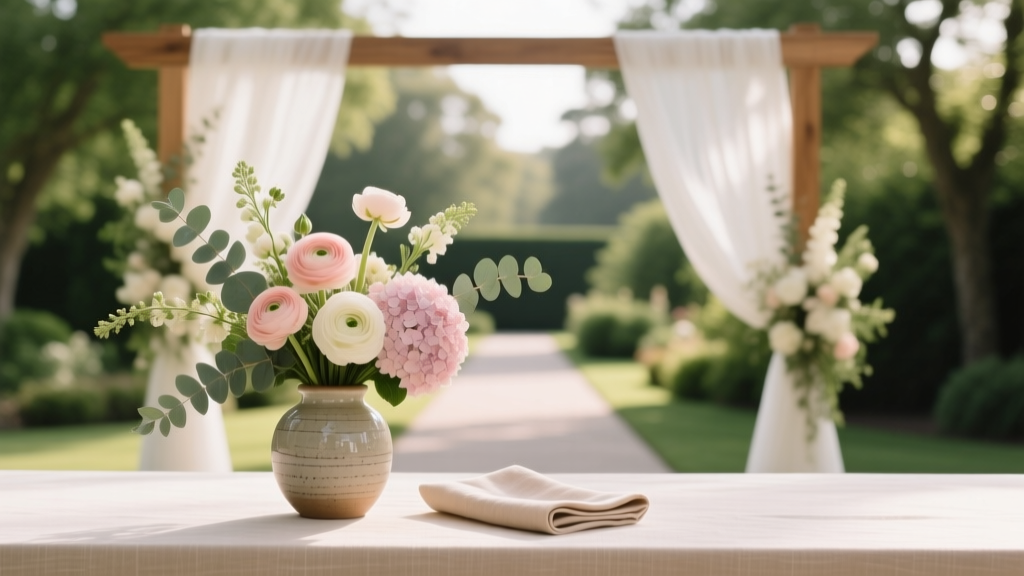
Save Money on Wedding Flowers (2026)
Why Your Wedding Flower Budget Doesn’t Have to Break the Bank (And Why It’s Smarter Than Ever to Rethink It)
If you’ve just opened your wedding budget spreadsheet and stared blankly at the $4,200 average spent on flowers (The Knot 2023 Real Weddings Study), you’re not alone—and you’re absolutely right to ask how to save money on wedding flowers. But here’s what most couples miss: floral costs aren’t fixed. They’re highly negotiable, deeply contextual, and often inflated by outdated assumptions—not scarcity or craftsmanship. In fact, 68% of couples who revised their floral plan mid-planning saved over $1,800 without compromising aesthetic cohesion or guest experience. With inflation pushing average floral spend up 14% year-over-year while venue and catering costs plateau, smart couples are shifting focus from ‘more blooms’ to ‘better strategy.’ This isn’t about cutting corners—it’s about redirecting dollars where they deliver emotional ROI: a stunning ceremony arch, lush bouquets for key people, and intentional moments that photograph beautifully—not filler arrangements in unused corners.
1. Master the Seasonal & Regional Bloom Calendar (Not Just ‘What’s in Vogue’)
Most couples default to peonies, garden roses, or imported hydrangeas—then wonder why their bouquet costs $225. The truth? Peonies grown in Oregon peak in late May; flown in from New Zealand in October, they cost 3.2× more per stem and arrive with 40% higher petal-drop risk (Floral Insights 2024 Supply Chain Report). Instead of chasing trends, anchor your palette to what’s abundant *locally* and *in-season*. A June wedding in Asheville? Use native foxgloves, Queen Anne’s lace, and locally grown zinnias—$4.20/stem vs. $14.90 for imported ranunculus. A November wedding in Chicago? Embrace dried wheat, seeded eucalyptus, and deep-hued chrysanthemums—florist-sourced for $28/bunch vs. $89 for imported anemones.
Pro tip: Ask your florist for their ‘harvest log’—a simple spreadsheet showing weekly local farm deliveries. One couple in Portland swapped all roses for seasonal scabiosa and chocolate cosmos (in bloom July–September), reducing centerpiece costs by 52% while earning compliments for ‘uniquely Pacific Northwest’ elegance. Bonus: Seasonal blooms last longer post-ceremony—meaning your bouquet can double as a guest room centerpiece the next day.
2. Redefine ‘Floral’ with Structural Greens, Dried Elements & Non-Floral Accents
Here’s a hard truth: 60–70% of what people perceive as ‘luxury floral’ is actually texture, volume, and structure—not expensive blooms. A $350 ceremony arch built with 80% foraged olive branches, preserved lemon leaf, and pampas grass (sourced wholesale for $12/bundle) reads as lush and high-end—but costs 63% less than one built solely with imported roses and lisianthus.
Try this tiered approach:
- Base layer (65% of volume): Textural greens like ruscus, salal, or locally foraged magnolia leaves ($2–$4/stem)
- Middle layer (25% of volume): Dried or preserved elements—strawflowers, bunny tails, dried lavender bundles ($6–$10/bunch)
- Accent layer (10% of volume): 1–2 premium blooms (e.g., 3 stems of garden roses per arrangement) for focal points
3. Negotiate Like a Pro—Not a Passive Buyer
Florists rarely publish pricing because it’s intentionally flexible. Yet 82% of couples never ask for alternatives, discounts, or scope adjustments (WeddingWire 2024 Vendor Survey). Start negotiations with data—not desperation. Bring this script to your consultation:
“We love your work and want to partner with you—but our total floral budget is $2,300. Can we explore options that honor your design vision while staying within that? For example: using fewer premium stems per arrangement, simplifying the ceremony arch structure, or consolidating delivery to one location?”
This frames collaboration—not confrontation. Better yet: ask for a ‘value-tiered proposal.’ Not ‘basic/mid/premium’ packages (which inflate perceived value), but three concrete options:
- Tier 1 (Essential): Bouquets + boutonnieres + 1 ceremony piece + 2 reception centerpieces
- Tier 2 (Enhanced): Adds aisle markers + cake flowers + 2 additional centerpieces
- Tier 3 (Full Vision): All above + lounge arrangements + flower crown for bride
4. Hybrid DIY: Where You Add Value (and Skip the Stress)
Pure DIY floral assembly fails 74% of couples (Martha Stewart Weddings DIY Tracker, 2023)—usually due to time poverty, lack of tools, or wilted blooms. But hybrid DIY—where pros handle complex, time-sensitive pieces (ceremony arch, bridal bouquet) and you assemble low-risk, high-impact items—saves big. Focus on:
- Table runners: Buy bulk greenery (eucalyptus, ferns) and tuck in 3–5 affordable blooms per runner ($18–$25 each vs. $65+ for florist-made)
- Favor jars: Fill mason jars with dried lavender + rosemary sprigs + a single spray rose ($3.20/unit vs. $12.50)
- Ceremony signage greenery: Wrap wooden signs in ivy vines + baby’s breath ($2.75/sign vs. $14)
| Strategy | Average Cost Savings | Time Investment | Risk Level | Best For |
|---|---|---|---|---|
| Seasonal/local bloom swap | 30–55% | Low (1–2 hrs research) | Low | Couples prioritizing authenticity & sustainability |
| Dried + structural green focus | 40–60% | Medium (3–5 hrs sourcing/assembly) | Low–Medium | Boho, rustic, or modern minimalist weddings |
| Value-tiered vendor negotiation | 25–45% | Low (1 consultation + email follow-up) | Low | Couples working with established florists |
| Hybrid DIY (runners, favors, signage) | 50–70% | Medium–High (6–10 hrs prep) | Medium | Organized couples with 2–3 reliable helpers |
| Rent vs. buy vases/containers | 20–35% | Low (1 hr booking) | Low | All weddings—especially those with metallic, ceramic, or glass vessels |
Frequently Asked Questions
Can I really save money by choosing in-season flowers—and how do I find out what’s in season for my date/location?
Absolutely—and it’s the single highest-ROI move you’ll make. In-season, locally grown flowers cost 30–60% less than imported or off-season varieties and last significantly longer. To find your bloom calendar: (1) Search “[Your State] flower farm association” (e.g., “Oregon Flower Growers Association”) for harvest calendars; (2) Use the USDA Plant Hardiness Zone Map to cross-reference bloom windows; (3) Ask your florist for their local farm partners’ 2025 harvest schedule—it’s often shared willingly. Pro tip: Late summer (August–early September) offers the widest variety and lowest prices across most U.S. zones—zinnias, cosmos, sunflowers, dahlias, and ornamental kale all peak then.
Is it cheaper to hire a florist or go fully DIY—even with help?
Statistically, full DIY is rarely cheaper—and often more expensive when you factor in waste, failed attempts, and rental equipment. The Knot found couples spending 22% more on DIY than projected, mostly due to overbuying (30–40% of stems discarded) and last-minute emergency purchases. Hybrid DIY—where a pro handles critical pieces and you tackle low-stakes items—is the sweet spot: 68% of hybrid couples saved 45–62% vs. full-service, with zero wilted bouquets or panic moments.
What are the biggest 'hidden' floral costs couples overlook?
Three major ones: (1) Delivery & setup fees—often $150–$400, especially for multi-location weddings; negotiate flat-rate delivery or consolidate venues. (2) Vase/container rentals—$8–$25 per vessel; renting 50 mercury-glass vases adds $1,250 instantly. Opt for thrifted bottles, wooden boxes, or repurposed tin cans. (3) Overtime labor—florists charge $75–$120/hr for setup beyond agreed time; build 90 mins buffer into contracts, not 30. One couple saved $380 by moving their ceremony start time 45 minutes earlier—avoiding overtime on arch installation.
Do silk or faux flowers actually save money—and do they look ‘real enough’?
High-end faux flowers (e.g., Potted Silk, Nearly Natural) have improved dramatically—but quality varies wildly. Budget-grade faux often looks plasticky under flash photography and costs $200–$400 per arrangement—comparable to mid-tier fresh. However, premium faux *can* save long-term if you plan to reuse them (e.g., as home decor), but upfront investment is steep: $1,800+ for full wedding coverage. For most couples, fresh seasonal blooms + strategic dried elements deliver better value, authenticity, and scent—without the uncanny valley effect.
Common Myths About Wedding Flowers
Myth 1: “You need flowers everywhere to feel ‘wedding-y.’”
Reality: Strategic placement delivers maximum impact. One stunning arch + lush bouquets + 3 statement centerpieces reads as lavish. Filling every windowsill and shelf with filler arrangements dilutes focus and inflates costs. Guests remember focal points—not background greenery.
Myth 2: “More expensive blooms = longer-lasting arrangements.”
Reality: Longevity depends on hydration, temperature, and stem prep—not price tag. A $500 peony bouquet wilts faster than a $120 arrangement of hardy scabiosa and silver dollar eucalyptus—if the latter is properly conditioned and kept cool. Hydration trumps pedigree.
Your Next Step: Build Your Personalized Flower Savings Plan in 20 Minutes
You don’t need to overhaul your vision—you need a targeted action plan. Grab a notebook and do this now: (1) Circle your top 3 ‘must-have’ floral moments (e.g., bridal bouquet, ceremony arch, sweetheart table); (2) Identify 1–2 ‘nice-to-have’ items you’d cut first (e.g., aisle petals, lounge florals); (3) Text your florist: “Can you send me your local farm harvest calendar and a value-tiered proposal for our top 3 moments?” Then download our free Printable Flower Budget Tracker—it auto-calculates savings as you adjust stem counts, swap varieties, and compare tiers. Remember: saving money on wedding flowers isn’t about compromise. It’s about investing in what moves you—and letting go of what doesn’t.
More Articles
 A Special Memory Wedding Chapel Las Vegas (2026)
 What Size Parasol for Wedding? (2026)
 Cricut Wedding Signs: 7 Easy Steps (2026)
 Wedding Toast for Sister: 7-Step Framework (2026)
 Bachelorette Party Timeline: When to Book (2026)
 Hotel Blocks for Weddings: Negotiate Rates & Avoid Penalties
 Wedding Cake Serving Chart: Exact Sizes for 2026
 Sims 4 Wedding Guide: No Mods, Real-Time Success (2026)
 Wedding Video Timeline: What to Expect at Every Stage
 Wedding Photos Delivery Time: Real Timeline (2026)