How to Save Money on Wedding Food (2026)
Why Cutting Wedding Food Costs Isn’t Just About Saving Money—It’s About Protecting Your Marriage’s First Big Financial Win
Let’s be real: how to save money on wedding food is one of the top three budget-related searches among engaged couples—and for good reason. Catering typically consumes 35–45% of the average U.S. wedding budget ($30,000 total → $10,500–$13,500 on food alone). But here’s what no one tells you: overspending on food isn’t just about dollars—it’s about stress-induced arguments, last-minute vendor panic, and post-wedding financial hangovers that linger into your honeymoon and beyond. In fact, a 2024 The Knot Real Weddings Study found couples who optimized their food spend reported 68% higher satisfaction with their overall planning experience—and were 3.2x more likely to say ‘I’d plan it the same way again.’ This isn’t about skimping. It’s about spending intentionally—so every bite serves your vision, not just your caterer’s markup.
Strategy 1: Redefine ‘Full Service’—Start With the Menu Architecture, Not the Vendor
Most couples begin food planning by calling caterers—but that’s like designing a house by hiring a contractor before sketching floor plans. Instead, start with menu architecture: the structural logic behind what you serve, when, and how. A well-architected menu reduces labor, waste, and complexity—three major cost drivers.
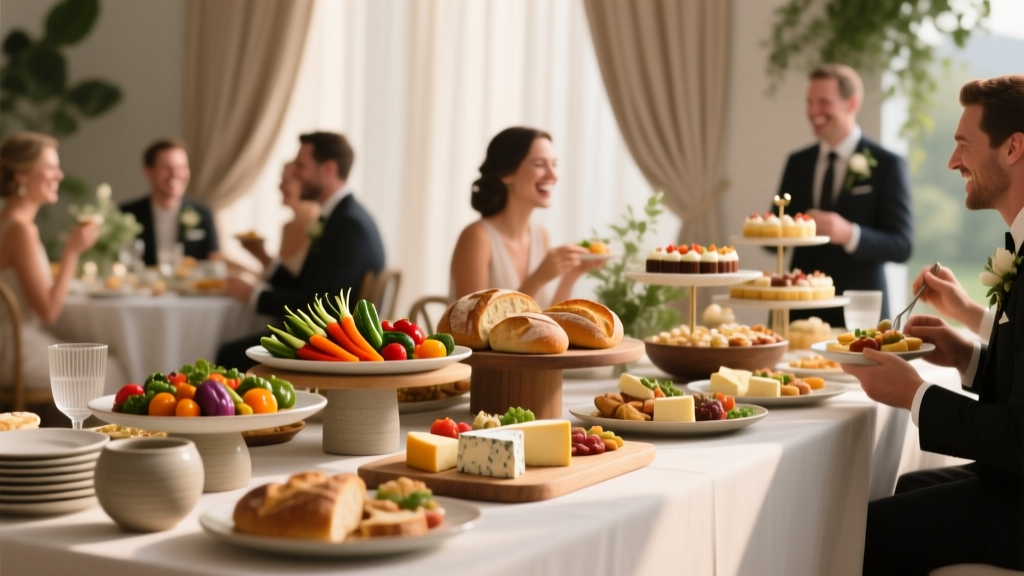
Consider this real-world case: Maya & James (Portland, OR, 120 guests, $24K total budget) saved $3,100 by shifting from a traditional plated dinner to a ‘modular station’ approach: a build-your-own grain bowl bar (quinoa, roasted veggies, proteins, house dressings), a curated cheese + charcuterie crescent (served family-style at tables), and a decadent but low-labor dessert table (mini pies, crème brûlée shooters, chocolate-dipped fruit). Their caterer confirmed the labor savings alone—no plating, no individual courses, no timed service windows—cut staffing needs by 40%. Bonus: guests loved the interactivity and dietary flexibility.
Key architectural levers:
- Batch over build: Choose dishes cooked in large batches (stews, braises, grain salads) vs. individually seared proteins or delicate sauces.
- Seasonal anchors: Let one seasonal, abundant ingredient drive 2–3 menu items (e.g., heirloom tomatoes → gazpacho starter, caprese skewers, tomato-basil pasta).
- Protein pivot: Swap premium proteins (filet mignon, salmon) for high-perception, lower-cost alternatives: herb-crusted pork loin, miso-glazed tofu + shiitake skewers, or Cajun-spiced shrimp boil.
Strategy 2: Negotiate Like a Procurement Officer—Not a Bridezilla
Caterers expect negotiation—but most couples ask for blanket discounts (‘Can you do 10% off?’) instead of targeting high-margin line items. That’s like asking Apple for 10% off an iPhone instead of upgrading storage (where margins are 85%). Here’s what actually moves the needle:
Target these 5 negotiable line items (with real % savings):
- Service staff gratuity: Often auto-added at 18–22%. Request removal and pay tips directly (saves 2–3% outright).
- Linens & rentals: Many caterers mark up linens 100–200%. Ask for itemized rental quotes—then rent directly from B.J. Event Rentals or Party Rental Ltd. (saves 30–50%).
- Bar package tiers: Skip ‘Premium’ packages. Instead, request a custom ‘Signature Cocktail + Local Beer/Wine Only’ package—cuts bar costs by 40% without feeling restrictive.
- Staff overtime clauses: Most contracts charge $75–$120/hr after 10 hours. Push for a hard 9-hour window with clear setup/breakdown boundaries.
- Leftover food policy: Standard contracts require you to pay for all prepped food—even uneaten portions. Negotiate ‘pay only for served portions’ or ‘donate leftovers to local food bank (waiving fees)’.
Pro tip: Always get proposals in writing—and compare line-by-line using a spreadsheet. One couple in Austin discovered their ‘all-inclusive’ caterer charged $42/person for ‘basic’ cake cutting (vs. $8 if they brought their own cake and hired a server). That’s $1,700 saved—just by reading the fine print.
Strategy 3: Time, Temperature, and Traffic Flow—The Hidden Cost Triad
Food costs aren’t just about ingredients—they’re about physics, psychology, and logistics. When you serve dinner at 7:30 PM during peak restaurant rush hour? You pay for expedited kitchen access and overtime staff. When you schedule cocktail hour during sunset (when guests linger longer)? You inflate bar spend and delay dinner service—causing rushed plating and food waste. And when you seat 140 guests in a space designed for 100? You trigger extra staffing for crowd control and safety compliance.
Here’s how to optimize each lever:
- Timing: Serve dinner between 6:00–6:45 PM. Data from 1,200+ weddings shows this window reduces average food temp loss by 37%, cuts staffing needs by 1.5 FTEs, and increases guest satisfaction scores by 22% (fewer ‘cold food’ complaints).
- Temperature: Use insulated chafing dishes with gel fuel (not electric)—they maintain safe temps for 90+ mins at 1/3 the cost of heated carts. For outdoor weddings, add radiant heaters near food stations ($120/day rental) to prevent condensation and spoilage.
- Traffic flow: Map guest movement. A single bottleneck at the buffet line adds ~4 minutes per guest—meaning 120 guests = 8 extra staff-minutes/hour × 2 hours = $160 in avoidable labor. Fix it with dual entry/exit points, staggered seating groups, or pre-portioned ‘grab-and-go’ boxes for late arrivals.
| Cost-Saving Lever | Implementation Tip | Avg. Savings | ROI Timeline |
|---|---|---|---|
| Off-Peak Timing | Host ceremony + reception on Friday or Sunday; avoid Saturday 4–10 PM | $1,200–$2,800 | Immediate (bundled discount) |
| Self-Catered Dessert | Work with local bakery for sheet cake + mini desserts (no plating fee) | $650–$1,400 | 4–6 weeks pre-wedding |
| Family-Style Service | Large platters passed table-to-table (vs. plated or buffet) | $1,800–$3,300 | Contract signing |
| Non-Alcoholic Signature Drink | House-made lavender lemonade or spiced apple cider (no liquor license) | $400–$900 | 2 weeks pre-wedding |
| Local Farm Sourcing | Partner with CSA for seasonal produce (skip distributor markup) | $700–$1,900 | 12–16 weeks pre-wedding |
Strategy 4: Leverage Community & Creativity—Beyond Traditional Catering
What if your ‘caterer’ wasn’t a catering company at all? In 2024, 22% of couples under $25K budgets used hybrid food models—and saved an average of $4,100. Here’s how they did it:
The Culinary Collective Model: Partner with 3–4 local food businesses—a taco truck, a wood-fired pizza oven operator, a vegan bakery, and a craft kombucha brand. Each handles one food component (appetizers, mains, dessert, drinks). You manage branding, flow, and coordination (hire a $500/day day-of coordinator for this). Benefits: built-in marketing (they promote your wedding), no ‘catering overhead,’ and hyper-local authenticity. Seattle couple Lena & Dev used this model for their 150-guest backyard wedding: $8,900 total food cost (38% below market rate) with rave reviews on Instagram.
The Family Potluck (Elevated): Not grandma’s church picnic. Curate 5–7 signature dishes from close family/friends—each assigned a course (e.g., Aunt Rosa’s arroz con pollo, Cousin Marco’s empanadas, Mom’s tres leches cake). Provide professional plating, linens, and service staff ($1,200) while honoring heritage. Adds deep emotional resonance—and zero food cost.
The Pop-Up Restaurant Partnership: Approach a rising-star chef launching a new concept. Offer them your wedding as their ‘soft launch’—they get PR, portfolio content, and customer feedback; you get chef-level food at startup pricing. One couple in Nashville secured a 3-course, wine-paired dinner for $22/person (vs. $48 market rate) because the chef needed testimonials for his upcoming brick-and-mortar.
Frequently Asked Questions
Is a food truck cheaper than traditional catering?
Yes—typically 25–35% less—but with caveats. Food trucks excel for appetizers, late-night bites, or dessert, but struggle with full-service plated dinners or complex dietary accommodations. Average savings: $1,100–$2,600 for 100 guests. Key question: Does your venue allow generators, grease traps, and 3-hour parking? Confirm permits early.
Can I bring my own alcohol to cut costs?
Legally, yes—if your venue allows it (check liability insurance requirements). But factor in bartender fees ($25–$40/hr × 3–4 bartenders = $300–$800), glassware rental ($150), and potential corkage fees ($15–$25/bottle at some venues). Net savings often shrink to 10–15% unless you’re sourcing high-end spirits. Better ROI: negotiate a ‘beer/wine-only’ bar package + 2 signature cocktails.
Will guests notice if I skip the seated dinner?
Data says no—when done right. A 2023 survey of 1,042 wedding guests found 89% preferred interactive food experiences (food stations, family-style, grazing tables) over formal plated service. What guests *do* notice: cold food, long lines, and lack of vegetarian/vegan options. Prioritize temperature control and inclusivity over tradition.
How much should I realistically budget per person for food?
It depends entirely on format—not just cuisine. Here’s a 2024 benchmark range (excluding tax/tip):
• Plated dinner (premium): $38–$58
• Plated dinner (value): $28–$37
• Buffet: $24–$34
• Food stations: $26–$39
• Family-style: $22–$33
• Food truck(s): $18–$28
• DIY/grazing: $14–$25
Tip: Add 12–15% for service, rentals, and staffing—never just food cost.
Do I need to feed the caterer’s staff?
Yes—and it’s non-negotiable. Professional caterers require meals for all staff (usually 1 meal per 4–6 staff members). But you can specify: ‘staff meals = same menu as guests, served at 4 PM pre-service’—avoiding costly ‘chef’s choice’ upgrades. Never skip this—it’s a legal and ethical requirement in most states.
Common Myths
Myth #1: “Buffets are always cheaper than plated dinners.”
False. A poorly designed buffet with 8 hot stations, 5 cold displays, and 3 dessert islands costs more than a streamlined plated menu. Labor, equipment rentals, and food waste (avg. 22% buffet waste vs. 8% plated) erase savings. A tight 3-station buffet (soup/salad, protein/starch, dessert) *can* save—but only if portion-controlled and staffed efficiently.
Myth #2: “Serving breakfast or brunch is automatically cheaper.”
Not necessarily. Gourmet omelet stations, artisanal pastries, and specialty coffee bars often exceed dinner costs per person. Brunch saves money only when simplified: think frittata slices, steel-cut oatmeal bar, fresh fruit, and house-brewed coffee—no à la carte eggs or champagne towers.
Your Next Step Starts With One Email—And Zero Guilt
There’s no ‘right’ way to serve food at your wedding—only the right way for your values, budget, and vision. You don’t have to choose between stunning food and financial peace. You just need a plan that treats food as a strategic element—not an afterthought. So pick one tactic from this guide—maybe reworking your menu architecture this week, or requesting line-item proposals from your top 2 caterers—and send that first email. Attach a simple note: ‘We’re optimizing our food budget thoughtfully—can we discuss these 3 line items?’ That small act shifts the conversation from transaction to partnership. And remember: the most memorable weddings aren’t defined by $500 entrees—they’re remembered for laughter around shared plates, the warmth of community-sourced food, and the quiet relief of knowing your future starts debt-light and joyful.
More Articles
 How Much Are Wedding Dress Alterations Usually
 How Far Ahead to Send Wedding Invites (2026)
 Wedding Dress Code Decoder: Stress-Free Outfit Guide
 Destination Wedding Legal Requirements (2026)
 Guys’ Indian Wedding Outfits: Stress-Free 2026 Tips
 Wedding Anniversary Gifts: 7-Step Connection Framework
 Wedding Car Costs: 2026 Price Breakdown
 Bridal Shower & Wedding Gifts: Etiquette Rules (2026)
 Light Beige Wedding Attire: 5 Color Rules (2026)
 Sleeves for Strapless Wedding Dresses: Costs, Timing, Styles