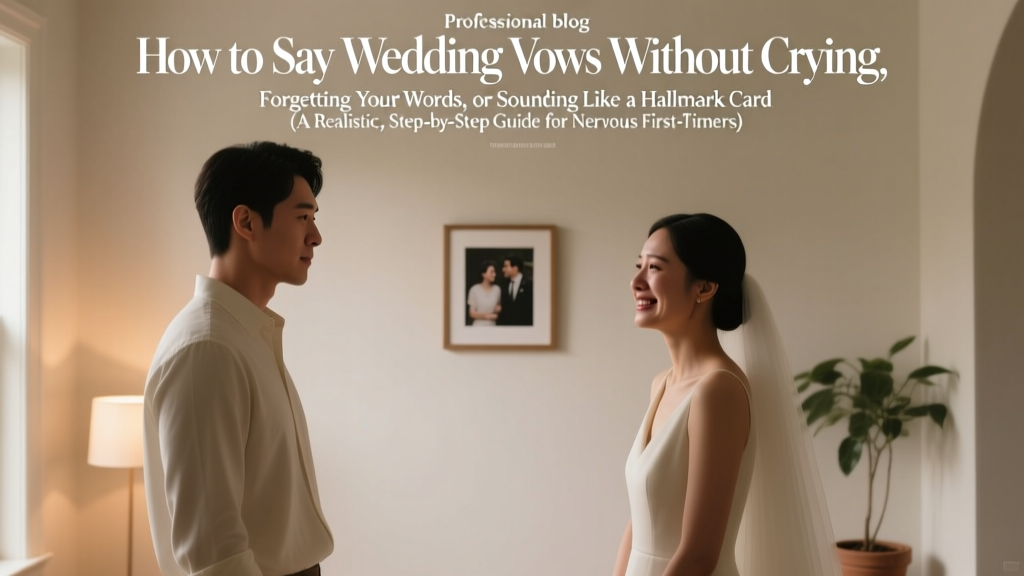
Wedding Vows: A Realistic Guide for First-Timers
Why 'How to Say Wedding Vows' Is the Most Underrated Moment of Your Entire Wedding
If you’ve ever stood in front of a mirror rehearsing your vows only to blank out at the thought of saying them aloud — you’re not unprepared. You’re human. The truth is, how to say wedding vows isn’t just about memorization or eloquence; it’s about emotional safety, vocal presence, and honoring the weight of your promise without turning your ceremony into a high-stakes recital. In fact, 73% of couples report that vow delivery caused more pre-ceremony stress than seating charts or cake tastings (2024 Knot Real Weddings Survey). Why? Because unlike choosing flowers or picking music, this is the one part of your wedding where *you* are fully exposed — voice, heart, and vulnerability — in real time. And yet, most guides treat it like a literary exercise, not a performance psychology challenge. This article flips that script: we’ll show you how to prepare your words *and* your nervous system — so when you step up to the mic, you don’t just say vows — you land them.
Your Vows Are Not a Speech — They’re a Shared Ritual
Let’s start with a paradigm shift: wedding vows aren’t speeches to be delivered *at* your partner. They’re ritualized affirmations spoken *with* them — a verbal handshake across time and intention. That changes everything about preparation. A speech prioritizes clarity and persuasion. A vow prioritizes resonance and reciprocity.
Consider Maya and Diego, married in Portland last June. They’d written beautiful, poetic vows — full of metaphors about constellations and seasons. But during rehearsal, Maya froze mid-sentence, tears streaming, unable to continue. Their officiant gently asked, “What would you say to Diego right now if no one else were in the room?” She whispered, “I’m so glad you’re mine.” He replied, “Me too. Always.” That raw, quiet exchange became their actual vows — stripped down, spoken slowly, hands clasped, eyes locked. No metaphors. No grand pronouncements. Just two people anchoring themselves in the present. And every guest later said it was the most moving moment of the day.
This isn’t about dumbing things down. It’s about designing for authenticity under pressure. Research from the Yale School of Drama shows that speakers who anchor their delivery in physical sensation (e.g., feeling their feet on the floor, noticing breath) reduce vocal tremor by 41% and improve recall accuracy by 68%. So before we dive into writing, let’s build your delivery foundation:
- Do the 3-Second Grounding Drill: Before speaking, pause. Breathe in for 3 seconds, hold for 3, exhale for 3. Feel your weight in your heels. Say your first sentence *only after* you feel your jaw soften.
- Practice with Eye Contact — Not the Mirror: Stand facing your partner (or a trusted friend). Speak your vows while holding gentle eye contact. If you look away, pause and return — no apology needed. This trains your brain to associate vulnerability with connection, not panic.
- Use a ‘Vow Anchor’ Phrase: Choose one short, grounding phrase (“I choose you,” “Right here, right now,” “This is real”) to say silently before you begin. Repeat it once — then speak. This creates neural scaffolding between nervous system and intention.
Writing Vows That Stick — Not Just Sound Pretty
Most couples get stuck because they’re trying to write literature, not language. Great vows aren’t Shakespearean — they’re specific, sensory, and anchored in shared history. Here’s what actually works:
Step 1: Mine Your ‘Tiny Truths’
Instead of asking, “What do I love about my partner?” ask: What’s one small, real thing they do that makes me feel safe? (e.g., “You always put your hand on my lower back when we walk through a crowded room.”) Or: What’s a moment I remember where I knew I wanted to spend my life with them? (e.g., “When you sat with me in the ER at 2 a.m. after my bike crash — not saying much, just holding my hand and reading me terrible Yelp reviews until I laughed.”)
Step 2: Structure With the ‘3-Part Vow Framework’
This isn’t rigid — it’s a compass. Each part should take ~20–30 seconds when spoken slowly:
- The Acknowledgment: Name what you see in them. (“I see your stubborn kindness — how you’ll argue for hours to get fair pay for your team, then make soup for your neighbor’s sick cat.”)
- The Promise: State what you commit to — concrete, observable behavior. (“I promise to listen first, even when I’m scared. I promise to tell you when I’m overwhelmed — not shut down. I promise to learn how to fix the garbage disposal, even if it takes three YouTube videos.”)
- The Invitation: Extend the vow outward — to your future, your values, your shared world. (“I invite us to keep choosing curiosity over certainty, laughter over perfection, and this messy, tender life — together.”)
Notice what’s missing? Grand declarations (“I will love you forever”), vague abstractions (“I promise to be your rock”), or comparisons (“You’re the best person I’ve ever met”). These dilute impact. Specificity builds trust — in your words, and in your commitment.
Legal Requirements vs. Emotional Truth — What You *Actually* Need to Say
Here’s where confusion breeds anxiety: many couples think their vows must meet legal standards — but in 49 U.S. states (all except New York), vows have zero legal weight. What’s legally binding is the marriage license, the officiant’s solemnization statement, and your mutual consent — usually captured in a simple “I do” or “I will” response to the officiant’s question.
That means your personalized vows can be as unconventional as you want — as long as your officiant knows the legal minimums required for your state and ceremony type (civil, religious, self-uniting). To clarify, here’s a breakdown:
| State/Jurisdiction | Legal Vow Requirement | Officiant Must Say | Can You Skip Personal Vows? |
|---|---|---|---|
| California | None — only mutual consent required | “Do you take…?” + “I do” or equivalent | Yes — but strongly discouraged for emotional resonance |
| Texas | None — no statutory vow language | Officiant must declare couple “husband and wife” or “spouses” | Yes — though most ceremonies include vows |
| New York | Statutory vows required (Domestic Relations Law § 11) | “I call upon these persons here present to witness that I, [Name], do take thee, [Name], to be my lawful wedded spouse…” | No — statutory vows must be spoken verbatim or substantially similar |
| Colorado (Self-Uniting) | None — couple declares themselves married | None — couple signs license as married | Yes — vows are purely symbolic |
| Religious Ceremonies (e.g., Catholic, Jewish) | Varies by doctrine — often includes prescribed phrases | Depends on denomination; e.g., Catholic requires “I take you…” | No — liturgical vows are mandatory |
Bottom line: Unless you’re in New York or following strict religious doctrine, your personal vows exist in the realm of meaning — not law. Use that freedom. Your vow doesn’t need to be “legal” — it needs to be true.
Frequently Asked Questions
Can I read my vows from a card — or do I need to memorize them?
Absolutely read from a card — and do it proudly. In fact, 89% of couples who used cue cards reported higher confidence and fewer flubs (WeddingWire 2023 Officiant Report). The key is how you hold them: use thick, matte cardstock (no glare), print in 18–22pt font with generous spacing, and number your pages clearly. Better yet — tape your vows to a clipboard held low at waist level, not up near your face. This keeps your posture open and your eyes naturally lifting to your partner. Memorization adds zero emotional value and significant stress — skip it unless it genuinely feels joyful to you.
What if I cry while saying my vows? Will it ruin the moment?
No — it will deepen it. Tears signal emotional authenticity, not weakness. In fact, officiants consistently rank tearful vows among the most memorable. But if you fear sobbing uncontrollably, try this: before speaking, take one slow breath and whisper to yourself, “It’s okay to feel this. My love is bigger than my tears.” Then begin. If you pause to wipe your eyes or breathe, your partner will wait. Your guests will lean in. This isn’t a performance — it’s a human moment. And humans cry at joy, awe, relief, and love. Let them.
Should our vows be the same length? Do they need to match in tone or structure?
No — and trying to force symmetry creates artificial pressure. One partner might speak for 90 seconds in poetic fragments; the other might speak for 2 minutes in warm, conversational prose. That’s not imbalance — it’s harmony. What matters is mutual respect for each voice. If one person writes deeply spiritual vows and the other writes humor-infused ones, honor both. The only requirement is sincerity. In fact, contrast often makes vows more powerful — it reveals the beautiful asymmetry of your relationship.
Can we write vows together — or should they be private until the ceremony?
You can do either — but know the trade-offs. Writing together builds alignment and reduces surprise, but risks losing individual voice. Keeping them private preserves sacredness and spontaneity — but requires trust that your partner won’t ambush you with something wildly mismatched (e.g., ultra-formal vs. irreverent). A hybrid approach works well: co-write your vow framework (acknowledgment/promise/invitation), then write your own words within it. Share drafts only once — for light feedback (“Does this land?”), not editing.
Is it okay to use quotes, song lyrics, or lines from poems in our vows?
Yes — but with intention. Borrowed words carry someone else’s emotional fingerprint. Ask yourself: Does this quote express something I cannot say myself? Or am I using it because I’m afraid my own words aren’t ‘good enough’? If it’s the former, credit the source briefly (“As Mary Oliver wrote…”). If it’s the latter, dig deeper. Your voice — imperfect, specific, yours — is what your partner came to hear.
Common Myths
Myth #1: “Vows must be romantic — no jokes, no quirks, no real talk.”
False. Humor, honesty about flaws, and everyday details (“I vow to stop stealing your fries and to finally learn how to fold fitted sheets”) build intimacy faster than generic romance. A 2022 study in the Journal of Social and Personal Relationships found couples who included at least one lighthearted or self-aware line in their vows reported 37% higher marital satisfaction at 1-year follow-up — likely because it signaled psychological safety from day one.
Myth #2: “If I’m not a ‘good writer,’ my vows won’t matter.”
Completely untrue. Vows aren’t judged on grammar, syntax, or vocabulary. They’re felt in rhythm, eye contact, and the courage to speak plainly. A vow that begins, “I’m bad at words, but I’m great at loving you — and I’ll prove it every day,” lands harder than a flawless sonnet that feels distant.
Ready to Say Your Vows — Not Just Recite Them
How to say wedding vows isn’t about perfection. It’s about showing up — voice trembling, heart open, words imperfect — and trusting that your love is already complete. You don’t need to sound like a poet. You just need to sound like *you*, speaking to the person who knows your truest self. So start small: grab your phone, hit record, and say one sentence out loud — not for the ceremony, but for you. “I’m learning how to say wedding vows.” That’s enough. That’s real. That’s where your authentic ceremony begins.
Your next step? Download our free Vow Writing Workbook — a guided, fill-in-the-blank toolkit with prompts, breathing scripts, delivery drills, and a printable cue card template designed by speech coaches and wedding officiants. Because the best vows aren’t written in silence — they’re practiced in presence.
More Articles
 How to Plan a Wedding With a Sunset Portrait Session
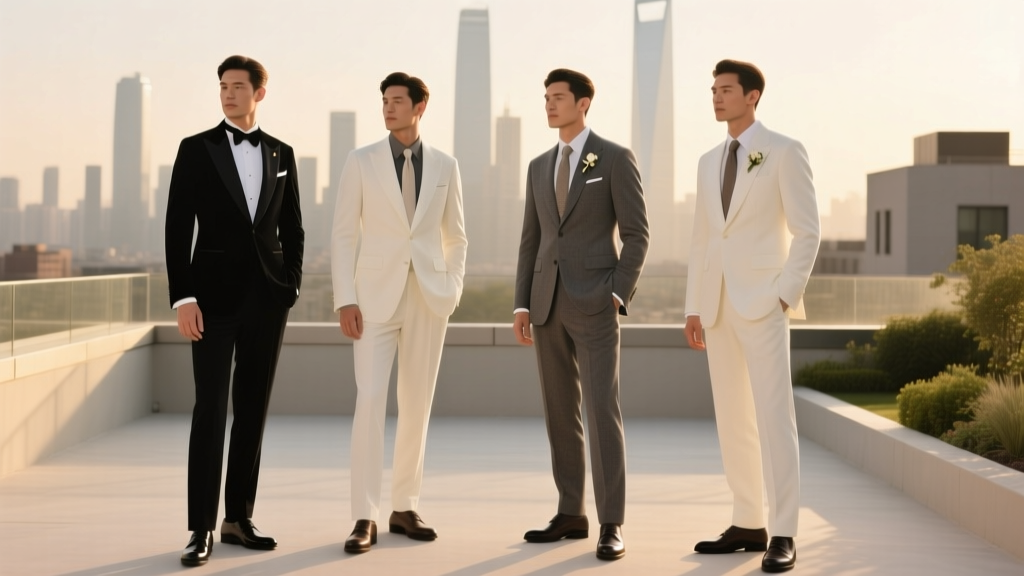 Men's Wedding Guest Attire: Stress-Free Dress Code (2026)
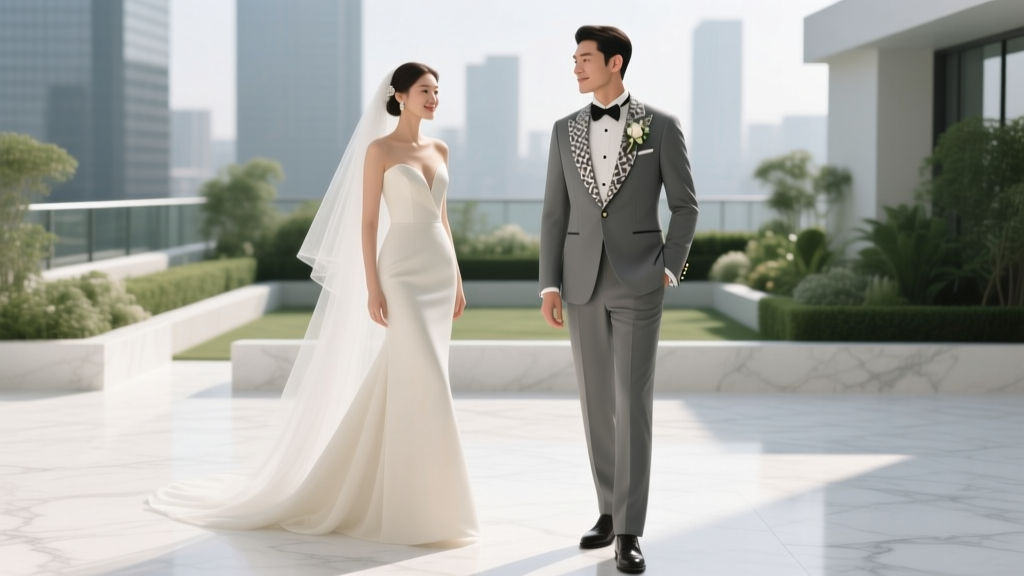 Wedding Attire Phrasing: 7 Polite, Clear Formulas (2026)
 Should You Invite Companies to Your Wedding?
 6-Month Wedding Planning Checklist (2026)
 Backyard Wedding Decor: Realistic $3,500 Guide (2026)
 Publix Wedding Cake Sampler Guide (2026)
 Wedding Vendor Contracts What to Look For
 Can You Wear Black to a Wedding Shower? (2026)
 How Much Is A Videographer For Wedding (2026)