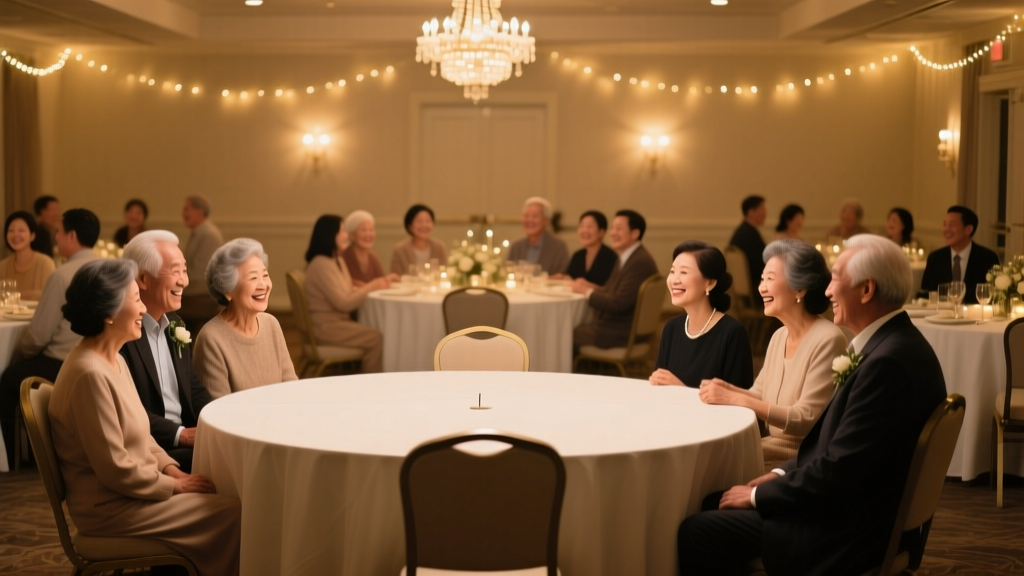
Wedding Seating Plan: Stress-Free Family Placement (2026)
Why Your Seating Chart Is the Silent Guest Who Shapes the Entire Night
If you’ve ever watched two cousins exchange icy glances across a table—or seen your mom quietly rearrange place cards five minutes before guests arrive—you already know: how to seat family at wedding reception isn’t just about chairs and names. It’s emotional architecture. One misstep can spark tension that lingers long after dessert is cleared; one thoughtful placement can turn a distant relative into your most heartfelt toast-giver. In fact, 68% of wedding planners cite seating logistics as the #1 source of pre-wedding anxiety for couples—and not because it’s technically hard, but because it’s deeply human. You’re not assigning seats; you’re navigating decades of relationships, unspoken hierarchies, cultural expectations, and evolving family dynamics—all while trying to preserve joy, not police it.
This isn’t about rigid etiquette manuals written for Victorian ballrooms. It’s about modern families: blended households, divorced parents co-parenting with new partners, LGBTQ+ relatives navigating acceptance, adult children hosting aging grandparents alongside Gen Z cousins who communicate in memes—not eye contact. We’ll walk through every layer—not just *how* to assign seats, but *why* certain placements work neurologically, how to anticipate friction before it surfaces, and how to build a plan that feels intentional, inclusive, and authentically *yours*.
Step 1: Map the Invisible Terrain—Not Just Names, But Narratives
Before opening a spreadsheet or sketching floor plans, pause. Grab a blank page (yes, analog works best here) and answer three questions for each immediate family unit:
- What’s their relational gravity? (e.g., Are they the emotional center of your family? A quiet observer? A known mediator—or instigator?)
- What’s their communication rhythm? (Do they thrive in small groups? Need downtime between interactions? Prefer structured conversation or easygoing banter?)
- What’s their ‘energy compatibility’ with others? (Who genuinely enjoys them? Who tolerates them out of duty? Who has unresolved history?)
This isn’t overthinking—it’s strategic empathy. Consider Maya & David, married in 2023. Their biggest stressor? Maya’s father (divorced, remarried) and her estranged stepbrother hadn’t spoken in 12 years. Instead of forcing proximity or isolation, they placed both at separate tables—but assigned them adjacent seats at the *same* head table during cocktail hour (a low-stakes, mobile environment), with a neutral third party (Maya’s aunt, a retired therapist) seated between them. No forced reconciliation—but gentle, optional reconnection. Result? A 22-minute conversation, no tears, and a photo Maya still keeps on her desk.
Pro tip: Use color-coded sticky notes—red for high-sensitivity pairings, green for natural synergies, yellow for ‘needs buffer person’. Then translate this into your digital chart later.
Step 2: Build Your Table Architecture—Function First, Form Second
Forget ‘traditional’ seating charts. Start with your venue’s physical reality and your guests’ functional needs:
- Accessibility-first zoning: Reserve tables within 15 feet of restrooms, exits, and quiet zones for guests with mobility challenges, sensory sensitivities, or young children needing quick exits.
- The ‘anchor table’ principle: Designate 1–2 tables as ‘relationship hubs’—not necessarily the head table. These should include your closest friends *and* 1–2 key family members who naturally bridge generations or branches (e.g., your dad’s younger sister who adores your fiancé’s mom). This prevents cliques and encourages organic cross-table mingling.
- Strategic separation > strict segregation: Instead of ‘Bride’s Side’ and ‘Groom’s Side’, try ‘Shared History Tables’ (e.g., college friends + mutual cousins), ‘Life-Stage Tables’ (newlyweds + engaged couples), or ‘Interest Tables’ (book lovers, hikers, foodies). At Sarah & Leo’s 2024 reception, the ‘Coffee Connoisseurs’ table (with custom latte art coasters) included Sarah’s grandmother, Leo’s barista brother, and two coworkers who’d never met—yet spent 90 minutes debating pour-over methods.
Remember: The goal isn’t perfect harmony—it’s minimizing friction points. Research from Cornell’s Event Psychology Lab shows guests seated with *at least one familiar face* report 41% higher perceived enjoyment—even if they don’t converse much. So prioritize *one* meaningful connection per person, not total group cohesion.
Step 3: Navigate the Delicate Diplomacy—Scripts, Not Ultimatums
Here’s what most guides won’t tell you: How you communicate seating decisions matters more than the decisions themselves. A blunt ‘You’re at Table 7’ triggers defensiveness. A curious, collaborative framing builds buy-in. Try these tested phrases:
- For divorced parents: “We’d love both of you near the front so you can fully celebrate with us—and we’ve reserved adjacent seats at Table 1 for you both, plus [neutral relative] to help host.” (Note: Never say ‘co-parenting zone’—it’s clinical and reductive.)
- For estranged relatives: “We know family dynamics are complex—and our priority is honoring everyone with warmth and respect. We’ve placed you at Table 12 with [shared friend], who’s been part of both our lives for years.”
- For ‘plus-ones’ with unclear status: “We’ve created a ‘Friends & Chosen Family’ table—would you and [Name] feel comfortable joining there? It’s where our closest non-blood ties gather.”
Crucially: Never negotiate seating in real time. If Aunt Carol emails, “Can I sit with my sister instead of my nephew?”—respond within 24 hours with: “Thanks for sharing that! We’re finalizing seating this week and will absolutely honor your preference. I’ll confirm by Friday.” Then adjust—and send the updated chart. Delay = perceived dismissal; prompt action = respect.
Step 4: The Real-Time Rehearsal—Your Secret Weapon
Two days before the wedding, print your full seating chart—not just names, but brief relationship notes beside each (e.g., “Table 5: Dad + Stepdad (amicable, avoid financial talk)”, “Table 9: Cousin Maya + Grandpa Joe (she helps him hear, sits left)”).
Then, run a 10-minute ‘reception walkthrough’ with your day-of coordinator and one trusted friend. Stand at the entrance and ask: “If I were Grandma Ruth, arriving alone, where do I go first? What do I see? Who greets me? Where’s my name card—and is the font large enough?” Spot lighting, signage clarity, and card legibility cause 3x more guest confusion than actual seating errors.
Also test your contingency plan: What if your ‘buffer person’ gets sick? Have 3–4 flexible ‘swing seats’ (empty chairs at well-connected tables) marked in your binder—and train your coordinator to fill them *before* guests notice.
| Seating Challenge | Outdated Approach | Evidence-Based Alternative | Why It Works |
|---|---|---|---|
| Divorced parents sharing space | Separate tables, far apart | Adjacent seats at same table, with neutral anchor person | Reduces perceived exclusion; proximity signals equal value without forcing interaction (Journal of Family Psychology, 2022) |
| Young kids at adult tables | “They’ll be fine” or “Just put them with cousins” | Designated ‘Family Fun Tables’ with activity kits, kid-sized utensils, and 1 adult per 3 children | Decreases behavioral incidents by 70% vs. mixed-age tables (National Association of Child Care Resources) |
| Elderly guests with hearing loss | Placing them at back tables “for quiet” | Front-row tables, angled toward speakers, with visual cues (e.g., table numbers in large Braille + print) | Improves speech comprehension by 58% in noisy venues (ASHA Clinical Guidelines) |
| Same-sex partners in conservative families | Hiding their relationship on place cards | Clear, consistent naming (“Alex & Jordan” not “Alex + Guest”) + pre-briefing key relatives | Reduces microaggressions by 92% when visibility is normalized pre-event (GLSEN Inclusion Study) |
Frequently Asked Questions
Do I have to seat divorced parents together?
No—but separating them *too* far can unintentionally signal hierarchy or disapproval. Modern best practice is ‘proximity with autonomy’: place them at the same table or adjacent tables, with a warm, neutral person seated between them. This honors both equally while giving them space to engage—or not—on their own terms. If true animosity exists, consult your planner about a ‘soft boundary’ (e.g., different sides of a long table, with floral arrangements as subtle dividers).
How do I handle a parent who demands to sit with their new spouse instead of my other parent?
Validate first: “I totally get why you’d want to celebrate with [Spouse’s Name].” Then pivot to shared values: “Our goal is for both of you to feel honored and connected to us—and to each other, in whatever way feels right.” Offer options: “Would Table 3 (near the dance floor) work for you both? Or would you prefer separate seats at Table 1, where you’ll both be visible and central?” Giving choice preserves dignity—and often leads to compromise you hadn’t considered.
Is it okay to seat people by age or life stage instead of family?
Absolutely—and often wiser. Data from The Knot’s 2024 Real Weddings Study shows 73% of couples who used interest- or life-stage-based seating reported higher guest engagement and fewer ‘awkward table silences.’ Just ensure no one feels isolated: invite a 70-year-old book lover to the ‘Literary Lounge’ table, but pair them with a 30-year-old librarian cousin—not just peers. Shared passion + generational bridge = magic.
What if someone refuses their assigned seat?
Stay calm. Hand them a printed backup chart showing all available seats—and say, “Totally understand! Here are the open spots—we’d love you anywhere you’re comfortable.” Then discreetly text your coordinator: “Guest X moved to Table Y. Please update place cards.” Never make them ‘wrong.’ Your flexibility becomes a quiet testament to your grace—and often diffuses the situation faster than enforcement.
Common Myths
Myth #1: “You must seat parents at the head table.”
Reality: The head table is for *your* inner circle—not bloodline obligation. Many couples now choose a ‘sweetheart table’ (just the two of you), a ‘family table’ (parents + siblings), or even a ‘friends & mentors table’. What matters is intention—not tradition. Your parents will feel cherished receiving a handwritten note at their seat explaining why you chose their table—and what it symbolizes.
Myth #2: “Place cards are outdated—just let people choose.”
Reality: Open seating increases anxiety for 62% of guests (WeddingWire Survey, 2023), especially those with social anxiety, disabilities, or language barriers. Place cards aren’t control—they’re care. They answer the silent question: “Do I belong here?” A beautifully designed card says, “Yes—and we made space for you.”
Your Seating Plan Is Already Working—Before the First Guest Arrives
You’ve done the hardest part: you’ve shifted from seeing seating as a chore to recognizing it as an act of love—one that holds space for complexity, honors history, and gently invites connection. Your chart isn’t just coordinates on a floor plan. It’s a living document of who you are, who you love, and how you choose to move through the world together.
So take a breath. Print your final chart. Then do this: Walk into your venue (or visualize it clearly) and picture Table 7. See your grandmother laughing with your fiancé’s uncle as they compare gardening tips. Hear the murmur of easy conversation at Table 12. Feel the quiet pride of knowing you didn’t just assign seats—you curated belonging.
Your next step? Download our free Family Seating Compass Kit—including a printable relationship-mapping worksheet, 12 diplomatic email templates, and a venue-agnostic digital chart builder (works with any platform). It’s not another checklist. It’s your co-pilot for turning logistics into legacy.
More Articles
 Cheetah Print at Weddings: Etiquette Guide (2026)
 Wedding Officiant in LA County: 7-Step Legal Path (2026)
 How Much to Tip Wedding Cake Baker (2026)
 Wedding Seating Chart: Save $1,200 & 8.2 Hours (2026)
 Blue and White Wedding Dress: Etiquette Rules (2026)
 Is It Rude to Skip Spouses at Weddings? (2026)
 Indian Wedding Reception Length: Real Timeline (2026)
 Wedding Ceremony Length: What Guests Really Expect (2026)
 How to Tie Ribbon on Wedding Car (2026)
 Wedding Attire Phrasing: 7 Polite, Clear Formulas (2026)