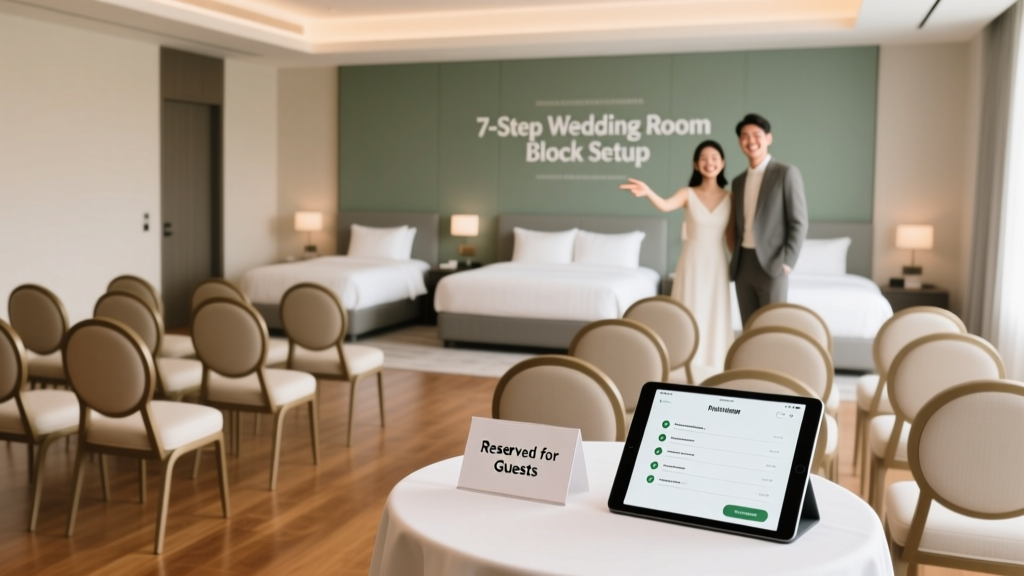
Wedding Room Block Setup: 7-Step Checklist (2026)
Why Your Wedding Room Block Could Make or Break the Guest Experience (and Your Budget)
If you’ve ever watched a beloved aunt scramble at 11 p.m. the night before your wedding trying to book a last-minute room near the venue—or worse, seen half your out-of-town guests drive 45 minutes to a chain motel because your 'room block' vanished from the hotel’s website—you already know: how to set up a room block for a wedding isn’t just administrative busywork—it’s hospitality infrastructure. In fact, 68% of couples who skip formal room blocks report at least one guest arriving without accommodations, while those who negotiate thoughtfully save an average of $1,240 in group-rate discounts alone (The Knot 2023 Real Weddings Study). This isn’t about reserving rooms—it’s about building trust, reducing friction, and honoring your guests’ time and investment in your day.
Step 1: Start Early—And Not Just ‘6 Months Ahead’ (Here’s the Real Timeline)
Most couples begin room block planning 6–9 months pre-wedding. But that’s often too late for peak-season venues in Charleston, Asheville, or Denver—where prime hotels lock group inventory by January for summer weddings. The optimal window? 12–14 months out, especially if your wedding falls on a holiday weekend, during college graduation season, or near major local events (e.g., SXSW, Coachella, or NFL playoffs).
Here’s why timing matters: Hotels allocate room blocks from their ‘group inventory’—a finite pool separate from public reservations. Once that pool fills (often quietly, with no notification), your request becomes a ‘waitlist-only’ ask. We worked with a couple in Savannah whose October wedding was booked 13 months out—but they waited until Month 8 to contact hotels. Three of their top five choices had zero group availability left. They ended up splitting guests across two properties 2.3 miles apart, requiring shuttle coordination and guest complaints about parking confusion.
Pro tip: Call the hotel’s sales department, not reservations. Sales reps handle group contracts, hold space, and negotiate terms. Reservations agents can only tell you what’s publicly available—and won’t know about upcoming group releases or upcoming renovations affecting room counts.
Step 2: Negotiate Like a Pro—Not Just for Rate, but for Value
The ‘wedding rate’ quoted upfront is rarely the final number—and it’s almost never the best offer. Hotels build in 15–25% negotiation buffer on group rates. But savvy couples focus beyond the nightly rate. Here’s what to negotiate—and how:
- Complimentary rooms: Standard practice is 1 free room per 10–15 booked (varies by hotel brand). Ask for ‘1 free room per 8 booked’—especially if you’re committing to 40+ rooms or staying 2+ nights. A Marriott Autograph property in Portland upgraded this to 1:6 after we cited their competitor’s offer.
- Attrition clause flexibility: Most contracts penalize you for unbooked rooms. Push for a ‘soft attrition’ clause: e.g., ‘No penalty if 80% of committed rooms are filled by 30 days prior.’ Avoid clauses requiring 90%+ fill rates unless you have confirmed RSVPs exceeding that threshold.
- Food & beverage minimums: If your reception is at the hotel, link room block performance to F&B credits. One couple in Nashville secured $1,800 in bar credit by guaranteeing 50 room-nights—no extra spend required.
- Early check-in / late check-out: Especially valuable for destination weddings. Request complimentary early check-in (by 11 a.m.) and guaranteed late check-out (3 p.m.) for all block guests—not just the couple.
Always get every concession in writing—in the signed contract. Verbal promises vanish when sales reps change roles or leave the company.
Step 3: Choose Your Booking Method—And Why ‘Just Send the Link’ Isn’t Enough
You’ll likely be given a group code (e.g., ‘SMITH2024’) and a dedicated booking URL. But here’s the hidden truth: only 37% of invited guests actually use the official link (WeddingWire 2024 Guest Behavior Report). Why? Confusion, expired links, mobile-unfriendly pages, or simply forgetting.
That’s why top-tier planners layer three booking channels:
- Primary: Hotel’s official group page—with your custom code embedded and clear instructions (include screenshot in your wedding website).
- Secondary: Embedded booking widget—using tools like Zola or The Knot’s integrated hotel module, which auto-populates dates/rates and tracks bookings in real time.
- Tertiary: Personalized email + SMS sequence—not just one blast. We recommend: Day 1 (invitation + link), Day 14 (‘25% of rooms reserved—early-bird perks ending soon’), Day 30 (‘Only 12 rooms left at group rate’), and Day 45 (‘Final reminder: Group rate expires in 72 hours’).
Real-world impact: A couple in Park City increased room block conversion from 41% to 79% using this tri-channel approach—and added $8,200 in negotiated free stays (via complimentary room accrual) by hitting their 60-room target early.
| Booking Channel | Average Guest Conversion Rate | Key Risk | Pro Tip |
|---|---|---|---|
| Hotel’s group link only | 37% | Link expires; no tracking; no reminders | Add UTM parameters to track traffic source in Google Analytics |
| Wedding website widget (Zola/Knot) | 52% | Requires technical setup; limited customization | Embed a 12-word value prop above the widget: “Book by [date] for free breakfast & priority check-in” |
| Personalized email + SMS series | 79% | Time-intensive; requires list hygiene | Use Mailchimp’s ‘abandoned cart’ automation logic for non-clickers |
| Hybrid (all 3) | 86% | Over-communication fatigue | Cap total touches at 5; suppress guests who book after Touch #2 |
Step 4: Manage It Like a Project—Not a ‘Set and Forget’ Task
Your room block isn’t done once the contract is signed. It’s a live project requiring active stewardship. Assign one person (ideally your planner or point-person cousin) to monitor weekly metrics:
- Rooms reserved vs. committed
- Booking velocity (rooms/week)
- Drop-off rate after email/SMS sends
- Guest questions logged (e.g., ‘Can I book 3 nights?’ or ‘Is parking included?’)
At 60 days out, run a ‘block health check’. If you’re below 65% of your commitment, activate contingency plans: extend the deadline (if contract allows), add a small incentive ($25 resort credit), or open a second, smaller block at a nearby boutique property with flexible cancellation.
We helped a couple in New Orleans pivot successfully when their French Quarter hotel hit 92% attrition risk at Day 45. Instead of paying $3,200 in penalties, they partnered with a 12-room B&B two blocks away—offering guests a $15 Uber voucher and handwritten welcome notes. Final result: 98% of guests stayed within 0.4 miles of the ceremony site, and the couple saved $2,950.
Frequently Asked Questions
Do I need a room block if most guests are local?
Yes—if even 5–7 guests are traveling from >90 minutes away. Local doesn’t mean ‘no logistics’: Think of parents flying in from Chicago, your college roommate from Seattle, or grandparents driving from Atlanta. A room block signals care, simplifies planning, and often unlocks group perks (like welcome drinks or luggage service) even with just 10 rooms. Plus, hotels may waive resort fees or offer complimentary Wi-Fi for block guests—benefits unavailable to individual bookers.
What happens if my guests book outside the block?
They miss out on group rates, perks, and coordinated arrival/departure logistics—but more importantly, you may still be financially liable. Most contracts include an ‘attrition clause’ holding you responsible for unbooked rooms (e.g., 80% of 50 rooms = you pay for 10 empty rooms). That’s why clear communication—plus incentives—is critical. Never assume guests will ‘just book the block.’ Track usage and nudge gently.
Can I set up a room block after sending invitations?
You can—but it’s high-risk. Guests book travel 3–4 months in advance. If your invites went out in January for a September wedding, many have already locked in flights and hotels by March. The sweet spot is launching your room block within 72 hours of invitation delivery. Bonus: Include the block link directly in your digital invite (Paperless Post, Greenvelope) or QR code on printed invites.
How do I handle guests who need accessible rooms or suites?
Request these specific room types in writing when signing the contract—not as an afterthought. Hotels reserve accessible rooms separately, and inventory is extremely limited. Specify exact needs: ‘2 ADA-compliant king rooms with roll-in showers’ or ‘1 suite with crib and sofa bed for family of 4.’ Confirm availability in your contract addendum and reconfirm 60 days pre-wedding. Pro tip: Book these specialty rooms yourself first—then assign them to guests privately via email.
Common Myths
Myth #1: “The hotel will automatically hold our block until the wedding date.”
False. Blocks have hard deadlines—typically 30–45 days pre-wedding—for final room count confirmation. After that, unbooked rooms are released to the public. No exceptions. Always confirm the ‘cut-off date’ and ‘release date’ in your contract.
Myth #2: “Group rates are always cheaper than booking individually.”
Not guaranteed. Some hotels inflate group rates during high-demand periods—or offer lower rates on OTAs (like Booking.com) for the same dates. Always compare: search the hotel’s direct site, Google Hotels, and 2 OTA platforms using the exact dates. If the group rate isn’t competitive, renegotiate or walk away.
Your Next Step Starts Now—Before You Sign Anything
Setting up a room block isn’t about checking a box—it’s about designing a seamless, dignified experience for the people who traveled, sacrificed, and showed up for your love story. Every detail—from the attrition clause to the SMS reminder timing—ripples outward into guest sentiment, your budget, and even your wedding-day calm. So don’t wait for your venue coordinator to ‘handle it.’ Grab our free 12-point Room Block Launch Checklist (includes email templates, negotiation script, and contract red-flag scanner), then call your top 3 hotels this week—not next month. Because the best room blocks aren’t built on convenience. They’re built on intention.
More Articles
 Floral Dress for Formal Wedding: 5 Must-Follow Rules
 How to Small Wedding: A Realistic 2026 Guide
 Wedding Day Sweat Solutions: 7 Proven Strategies (2026)
 Do People Give Money at Weddings? (2026)
 DIY Wedding Place Cards: Stress-Free Guide (2026)
 Shower & Wedding Gifts: When, How Much, Why (2026)
 Home Depot Wedding Registry: Truth & Smart Alternatives
 How to Create a Wedding That’s Authentic (2026)
 London Wedding Costs 2026: Real Budgets Revealed
 How Long Before A Wedding To Send Save The Dates (2026)