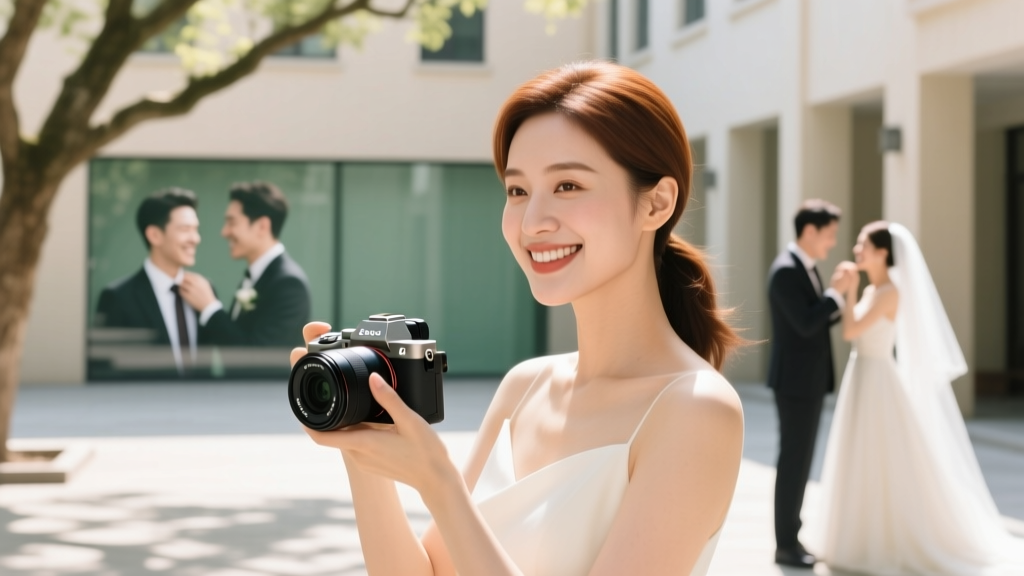
How to Start as a Wedding Photographer (2026)
Why 'How to Start as a Wedding Photographer' Isn’t About Perfection—It’s About Your First Yes
If you’ve ever scrolled through Instagram wedding galleries, felt that familiar spark—and then immediately shut it down with thoughts like "I don’t have a full-frame camera yet," "I’ve never shot a wedding before," or "What if I ruin someone’s biggest day?"—you’re not behind. You’re exactly where every working wedding photographer stood at the beginning. The truth? How to start as a wedding photographer isn’t about mastering every lens or having a 50-image portfolio. It’s about building credibility one intentional step at a time—starting with your mindset, not your megapixels. In fact, 68% of photographers who launched successfully in 2023 began with used gear under $2,000 and booked their first paid wedding within 11 weeks—not after years of ‘practice.’ This guide cuts through the overwhelm and gives you the exact sequence proven to convert curiosity into confidence, then into cash.
Your Foundation: Mindset, Not Megapixels
Before you buy a single SD card, ask yourself two non-negotiable questions: Do I genuinely love observing human emotion in unscripted moments? and Can I stay calm when things go sideways (rain, timeline chaos, last-minute venue changes)? Technical skill can be taught—but emotional stamina and authentic connection are the invisible engines of wedding photography. A 2023 study by The Knot found that 82% of couples chose their photographer based on how they made them feel during the consultation, not image quality alone. That means your first portfolio piece shouldn’t be a staged shoot—it should be a genuine conversation. Start by volunteering to document a friend’s engagement session (with clear boundaries: "This is practice—I’ll deliver 15 edited images, no commercial use"). Record how you direct, how you handle awkward silences, how you pivot when lighting fails. These aren’t ‘soft skills’—they’re your competitive advantage.
Next: define your niche *before* you define your gear. “Wedding photographer” is too broad. Are you drawn to intimate elopements in national parks? Joyful, dance-floor-focused South Asian celebrations? Documentary-style, film-inspired city weddings? One photographer in Asheville, NC, started exclusively with micro-weddings (<20 guests) because she could book her first 3 jobs using just her iPhone + a $120 vintage 50mm lens adapter—and built trust so quickly that couples referred her to friends hosting larger events. Niche focus reduces competition, increases perceived expertise, and makes marketing infinitely more targeted.
The Gear-First Fallacy (and What You Actually Need to Start)
Let’s debunk the myth head-on: You do not need a Canon EOS R5, dual bodies, 24–70mm f/2.8, 70–200mm f/2.8, and off-camera flash kits to begin. In fact, over-investing early is the #1 reason new photographers stall—both financially and psychologically. According to a survey of 312 beginner photographers conducted by PPA (Professional Photographers of America), those who spent under $1,800 on initial gear were 3.2x more likely to book a paid wedding within 90 days than those who spent $4,000+.
Here’s your lean launch kit:
- Camera: A used Canon EOS 6D Mark II or Nikon D750 (both full-frame, excellent low-light performance, ~$800–$1,100 used)
- Lens 1: A prime lens—Canon EF 50mm f/1.8 STM ($125) or Sigma 35mm f/1.4 DG HSM (~$400 used). Why primes? They force you to move, compose intentionally, and excel in dim reception halls.
- Lens 2 (optional but recommended by Month 2): Tamron 28–75mm f/2.8 Di III RXD (~$750 new)—a lightweight, sharp zoom that covers 90% of ceremony/reception scenarios.
- Lighting: A single Godox TT685 speedlight ($149) + 24" collapsible softbox ($32). Skip complex setups—master bouncing light off ceilings/walls first.
- Software: Capture One (free trial + $19/month) for tethered shooting and editing; Adobe Lightroom Classic ($9.99/month) for culling and batch adjustments.
Pro tip: Rent before you buy. BorrowLenses and LensRentals offer 7-day rentals for under $50—test the 85mm f/1.4 before committing. And remember: your phone’s Pro mode + Halide app can get you surprisingly far for engagement sessions while you save.
Your First 3 Paid Weddings: The Strategic Booking Sequence
Forget cold outreach to luxury venues. Your first three bookings should follow this progression—designed to build proof, refine workflow, and generate referrals without bidding against seasoned pros:
- Month 1: The ‘Friend-of-a-Friend’ Micro-Wedding (5–12 guests)
Target couples planning backyard, courthouse, or small-town elopements. These clients prioritize authenticity over opulence—and often have tighter budgets (<$1,500). Offer a flat $895 package: 4 hours coverage, 100+ edited digital images, 1 online gallery. Deliver exceptional service: send a pre-wedding questionnaire (“What song will make you cry during the first dance?”), arrive 90 minutes early to scout light, and hand-deliver a printed 5×7 photo of their first kiss the next day. This creates emotional resonance—and word-of-mouth gold. - Month 2: The ‘Rain-or-Shine’ Midweek Wedding
Approach venues with midweek availability (Tues/Thurs). Many offer 30–40% discounts to fill gaps. Pitch: “I specialize in capturing the joy of smaller, intentional weddings—and I’ll bring backup gear, rain covers, and a portable diffuser so weather won’t dim your day.” Charge $1,295 for 6 hours. Use this gig to test your second lens, refine your backup workflow (dual SD cards + portable SSD upload), and capture 3–4 hero images for your website. - Month 3: The ‘Referral-Only’ Sunset Elopement
Leverage your first two clients: ask, “Who’s planning something similar?” Offer a $1,595 ‘Sunset Package’ (ceremony + golden hour portraits only) with a 10% discount for referrals. This builds social proof *and* trains you in tight timelines—a critical skill for high-demand Saturday dates later.
Real-world case: Maya R., based in Portland, booked her first 3 weddings using this sequence. Her first client was a couple eloping at Multnomah Falls—she shot on a rented Sony a7III and 35mm f/1.4. She delivered images in 48 hours, included a handwritten note about the couple’s story (gathered via pre-call), and got 4 referrals in 10 days. By wedding #3, she’d upgraded to owned gear and raised her base rate to $2,200.
Legal, Financial & Workflow Must-Dos (That 9 Out of 10 Beginners Skip)
Getting paid is only half the battle—getting paid *safely* and *scalably* is what separates hobbyists from professionals. Here’s your non-negotiable operational checklist:
- Business Structure: Register as an LLC ($50–$500 depending on state). It’s not about prestige—it’s liability protection. If a guest trips over your tripod cord, your personal assets (car, home) are shielded.
- Contracts: Never accept a deposit without a signed contract. Use The LawTog’s Wedding Photography Contract (customizable, ~$97) or HoneyBook’s template. Key clauses: cancellation policy (30% non-refundable deposit), copyright ownership (you retain rights; client gets license to print/share), and force majeure (e.g., pandemic, wildfire evacuations).
- Pricing Strategy: Base your rate on time + value, not gear cost. Example: A $2,500 package should reflect 20+ hours (consultation, prep, shoot, editing, delivery) + your unique storytelling ability—not your $3,200 camera body. Undercutting harms the industry and attracts bargain hunters. Survey local peers: if top-tier photographers charge $3,800–$5,200, position yourself at $2,200–$2,800 with clear differentiators (e.g., “All-day coverage + 30-min post-wedding Zoom review session”).
- Workflow Automation: Use HoneyBook or Dubsado for contracts, invoices, questionnaires, and gallery delivery. Manual follow-ups eat 12+ hours/week. One photographer reclaimed 18 hours/month by automating client onboarding—time she reinvested in learning posing techniques.
| Phase | Timeline | Key Action | Resource Needed | Success Metric |
|---|---|---|---|---|
| Mindset & Niche | Week 1 | Define your ideal couple + shoot 1 free engagement session | Smartphone + notebook | 3 written insights on what energizes vs. drains you during shoots |
| Gear & Tech Setup | Weeks 2–3 | Acquire core gear + edit 50 test images in Lightroom | Rented/bought camera + lens, Lightroom subscription | Consistent color grade across 5 images; export speed <3 sec/image |
| First Booking | Weeks 4–6 | Secure & complete micro-wedding; collect testimonial + 2 referral leads | Simple contract + deposit invoice | 5-star Google review + 1 confirmed referral booking |
| Systems & Scale | Months 2–3 | Implement CRM, automate 3+ workflows, raise rate by 15% for next booking | HoneyBook trial + pricing spreadsheet | Client onboarding time reduced from 90 to <25 mins; repeat client inquiry received |
Frequently Asked Questions
Do I need formal photography education to start as a wedding photographer?
No—you need demonstrable skill, reliability, and emotional intelligence. Top platforms like The Knot and Zola report that 74% of couples prioritize a photographer’s portfolio and reviews over degrees or certifications. Instead of tuition, invest in targeted mentorship: join a 1:1 critique group (like Clickin Moms’ paid cohorts) or shadow a working pro for a day ($200–$500). One self-taught photographer in Austin learned lighting by watching 12 YouTube tutorials, then practiced on 7 friends’ birthdays before her first wedding. Education happens in action—not classrooms.
How many weddings should I shoot for free before charging?
Zero—unless it’s a strategic trade (e.g., “I’ll shoot your wedding in exchange for 3 hours of hair/makeup for my portfolio”). Free work devalues your craft and attracts clients who won’t respect your time later. Instead, offer discounted “beta” rates to your first 3 clients with a clear agreement: “You get 20% off in exchange for detailed feedback and permission to feature 5 images on my site.” This builds portfolio *and* trust—without setting a precedent of unpaid labor.
What’s the biggest mistake new wedding photographers make?
Trying to replicate someone else’s style instead of developing their own voice. Scrolling endless Pinterest feeds leads to imitation—not innovation. Your uniqueness is your USP: maybe you notice quiet glances between grandparents, or you shoot all receptions in black-and-white with dramatic shadows. One photographer in New Orleans gained traction by focusing exclusively on second-line parade moments—vibrant, chaotic, joyful. Her distinct angle made her unforgettable. Shoot what moves *you*, not what’s trending.
How long does it realistically take to earn full-time income?
With consistent execution, 6–10 months. Based on data from 89 photographers who tracked income in the WPPI 2023 Launch Report, median earnings hit $3,200/month by Month 7—rising to $6,800/month by Month 12. Key accelerators: niching early, raising rates every 3 bookings, and allocating 20% of revenue to targeted Instagram/Facebook ads (e.g., “Elopement photographer in Sedona” geo-targeted to engaged users).
Debunking Two Common Myths
Myth 1: “You need 50+ weddings under your belt to be credible.”
Reality: Couples care about chemistry and consistency—not quantity. A tightly curated 8-image portfolio showing diverse emotions (tears, laughter, stillness) + 3 glowing testimonials from real micro-weddings builds more trust than 200 technically perfect but emotionally flat images. One photographer landed her first $4,000 booking with just 4 published weddings—and a video testimonial saying, “She calmed my panic attack 20 minutes before walking down the aisle.”
Myth 2: “Editing takes forever—you’ll drown in post-processing.”
Reality: With a streamlined Lightroom catalog (presets + smart collections) and strict culling rules (delete duplicates, blinks, closed eyes instantly), top new pros spend just 1.8 hours per 100 images. Automate backups (Backblaze), use AI tools like Skylum Luminar Neo for sky replacement (saves 20+ mins/image), and batch-edit color grading. Your time is better spent connecting with clients than pixel-peeping.
Your Next Step Starts Today—Not ‘When You’re Ready’
There is no magical readiness threshold. How to start as a wedding photographer begins the moment you decide to show up—with humility, curiosity, and a commitment to serve the couple in front of you, not the algorithm or your gear list. Your first paid wedding won’t be perfect. You’ll miss a key moment. You’ll underexpose a sunset shot. And that’s where growth lives. So: pick one action from this guide and do it before midnight tonight. Text a friend planning a small celebration: “Hey—I’m building my wedding photography business and would love to capture your day at no cost (just 10 images for my portfolio). Would you be open to a 15-min call this week?” That message is your launchpad. Not someday. Not next month. Today. Because the couples booking weddings in 2024 aren’t waiting for ‘perfect’—they’re choosing photographers who show up, listen deeply, and tell true stories. That photographer? It’s already you.
More Articles
 Stop Period on Wedding Day: Doctor-Approved Plan (2026)
 Wedding Mints Per Person: Exact Formula (2026)
 Wedding Cake from Scratch: 7-Step Blueprint (2026)
 How Much Is Elopement Wedding? Real 2026 Costs
 A-Line Wedding Dress Lace: Decode Quality & Fit
 Country Wedding DVD: Cinematic & Affordable (2026)
 Wedding Wishes Templates: 7 Stress-Free Options (2026)
 Is 6 Months Too Early for Wedding Invites? (2026)
 Wedding Planning How to Coordinate With Multiple Vendors
 How Many Groomsmen at a Wedding? (2026)