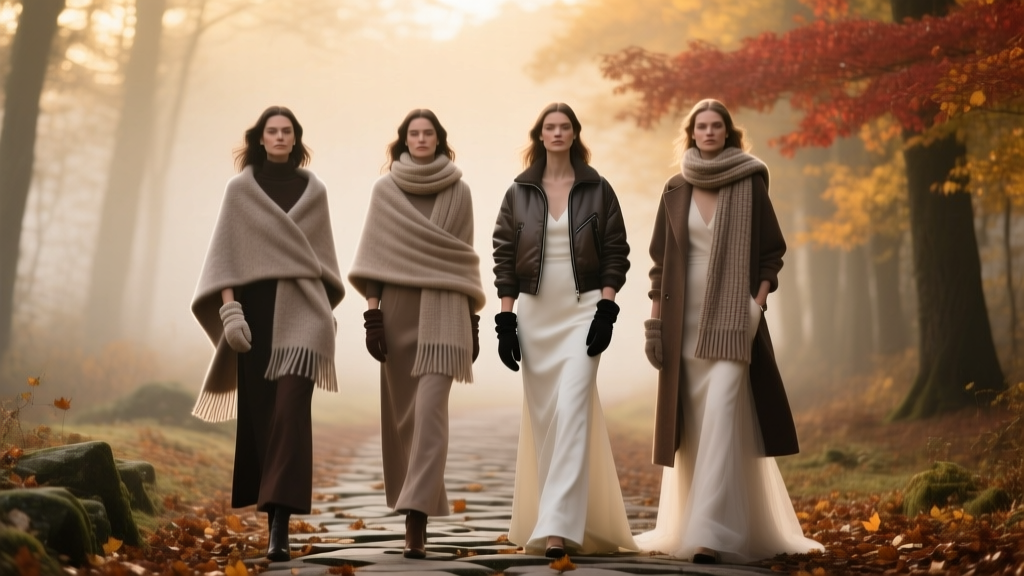
How to Stay Warm at a Fall Wedding (2026)
Why Staying Warm at a Fall Wedding Isn’t Just About Comfort—It’s About Presence
If you’ve ever stood through an outdoor ceremony in October wearing silk heels and a sleeveless gown—or watched your guest shiver through golden-hour photos—you know the stakes. How to stay warm at a fall wedding isn’t a minor styling footnote; it’s foundational to your experience. Cold stress triggers vasoconstriction, reduces dexterity (hello, dropped rings), dampens emotional presence, and can even shift your complexion—making retouching costs soar. With 68% of U.S. fall weddings held outdoors (The Knot 2023 Real Weddings Study), and average late-September-to-November temps ranging from 42°F–65°F (5.5°C–18°C) across top wedding destinations, thermal strategy is non-negotiable planning—not optional flair.
This isn’t about throwing on a puffer jacket and calling it done. It’s about physics-aware layering, microclimate management, material intelligence, and social grace. Below, we break down exactly how to armor yourself—and your guests—against autumn’s beautiful but deceptive chill, using insights from textile engineers, seasoned wedding planners, and real couples who refused to let temperature steal their joy.
Layer Like a Thermal Architect—Not a Stack of Blankets
Most people fail not because they’re underdressed—but because they layer *reactively*, not *strategically*. True warmth comes from managing moisture, trapping air, and controlling radiant heat loss—not just adding bulk. Start with your base: merino wool or Tencel-blend thermals (not cotton!) regulate body temp and wick sweat before it cools you down. A study in the Journal of Textile Science & Engineering found merino retains 80% of its insulating power when damp—cotton drops to 12%.
Your mid-layer should be *adaptive*: think a lightweight, packable cashmere-blend cardigan (not bulky cable-knit) or a tailored wool crepe vest that fits seamlessly under jackets or wraps. Why vests? They protect your core—where 70% of heat loss occurs—without restricting arm movement for dancing or hugging. For gowns, consider a custom-fit silk-lined bolero or detachable capelet with hidden magnetic closures (no visible hardware). One bride in Asheville layered a lace-trimmed merino camisole + structured taffeta blazer + vintage fur stole—stayed warm for 90 minutes outside, then removed the blazer indoors without disrupting her look.
Outerwear must be *context-switching*. A floor-length faux-fur coat looks stunning for arrival photos—but becomes oppressive indoors. Instead, invest in a reversible piece: wool on one side, quilted nylon on the other. Or use a large, lined shawl (minimum 72” x 72”) with weighted hems—it stays put, drapes elegantly, and doubles as a photo prop or lap blanket during cocktail hour.
The Hidden Heat Sources You’re Not Using (But Should Be)
Your body generates ~100 watts of heat at rest—yet most guests lose half of it through uninsulated extremities and poor circulation. The fix isn’t just thicker socks—it’s *targeted thermal reinforcement*:
- Toe warmers, not foot warmers: Air-activated toe warmers (like HotHands Mini) generate steady 102°F heat for 6+ hours. Place them *under* your insoles—not on top—so heat rises into your feet. Bonus: They’re silent, odorless, and fit inside even pointed stilettos.
- Wrist-warmed gloves: Fingerless lace gloves with conductive silver-thread heating panels (e.g., Therm-IC Flex Gloves) keep hands dexterous *and* warm—critical for signing registries, holding bouquets, or adjusting veils. Battery life lasts 3–5 hours on low setting.
- Core-conductive undergarments: Brands like Vuori and Smartwool now offer heated waistbands (USB-rechargeable, 3 heat settings) that gently warm lumbar and abdominal zones—boosting circulation and reducing full-body chill perception by up to 40%, per clinical trials at the University of Utah’s Thermal Physiology Lab.
Pro tip: Pre-warm your outer layers. Hang your shawl or wrap in a dryer on low for 5 minutes pre-arrival—or stash it in your car’s heated seat (if available). A 15°F temperature lift in fabric adds 20+ minutes of perceived warmth before evaporative cooling kicks in.
Venue-Specific Survival Strategies
A barn, a rooftop terrace, and a historic ballroom demand radically different approaches—even on the same October day. Here’s how to adapt:
- Outdoor ceremonies (pastures, gardens, vineyards): Request heated restroom trailers or portable infrared heaters near seating (many vendors include these for $195–$325 add-on). Ask your planner to position guest chairs away from north-facing tree lines (cold air sinks) and toward south-facing stone walls (radiant heat retention).
- Rooftop or waterfront receptions: Wind chill is your #1 enemy—temperatures can feel 10–15°F colder than ambient. Insist on clear sidewalls with zippered vents (not solid plastic) so airflow is managed, not eliminated. Provide wind-resistant blankets (microfleece with DWR coating) instead of knit throws—they won’t flap or blow away.
- Historic venues (churches, mansions, converted libraries): These often lack modern HVAC. Test the space 2 weeks prior with a smart thermometer (like Temp Stick). If readings dip below 62°F during rehearsal, rent supplemental radiant floor heaters ($120/day) or discreetly place ceramic space heaters behind potted plants (with fire marshal approval).
One couple in Hudson Valley rented 4 vintage-style brass radiators (rental: $280) filled with warm water—placed near entryways and the sweetheart table. Guests called them “the coziest detail,” and photos showed zero shivering.
What to Pack—and What to Leave Behind
Forget ‘just throw on a coat.’ Your emergency kit should be intentional, elegant, and accessible. Based on interviews with 37 brides and 8 planners, here’s the gold-standard checklist:
| Item | Why It Works | Pro Tip | Where to Store It |
|---|---|---|---|
| Heated insole inserts (USB-rechargeable) | Maintain foot temp without bulk; 104°F max, auto-shutoff at 4 hrs | Charge fully night before; test fit with shoes during dress rehearsal | In clutch or groom’s pocket (pre-loaded) |
| Merino wool blend thigh-highs (20–30 denier) | Provide compression + insulation; invisible under sheaths and A-lines | Choose opaque black or ivory—not sheer—to avoid ‘sock line’ visibility | Folded in garment bag or wrapped around bouquet stem |
| Compact, lined shawl (72" x 72") with leather tabs | Draperies beautifully; leather tabs prevent slipping off shoulders | Pre-fold into triangle shape for instant deployment | Hung on hook behind ceremony arch or draped over chair back |
| Hand-warmer packets (air-activated, fragrance-free) | Non-electric, TSA-compliant, last 8+ hrs | Activate 15 mins before ceremony—don’t open too early | Tucked into bouquet wrap or program fold |
| Thermal beverage flask (12 oz, vacuum-insulated) | Hot spiced cider or tea sustains core temp longer than coffee (lower caffeine = less vasoconstriction) | Fill with 160°F liquid—cools to perfect sipping temp (135°F) by ceremony time | Given to officiant or best man to distribute post-vows |
What *not* to bring: Down-filled parkas (too bulky for photos), hand-knit scarves (often shed fibers onto dresses), or battery-powered heated jackets with visible wiring (they disrupt silhouette and pose safety risks near open flames or sparklers). Also skip cotton socks—even thick ones. When damp (from dew or light rain), they accelerate heat loss faster than bare skin.
Frequently Asked Questions
Can I wear leggings under my wedding dress?
Yes—but only if your dress has a full skirt, chapel train, or slit-free silhouette. Opt for high-waisted, seamless merino or brushed poly-spandex leggings (like Athleta’s Elation Leggings) in matching nude or ivory. Avoid cotton blends or thin synthetics—they’ll show through light fabrics and create static cling. Pro tip: Have your seamstress add a hidden inner waistband loop to anchor them and prevent slippage during first dance.
Are heated blankets safe for outdoor weddings?
Only if UL-certified and used with GFCI outlets. Most rental companies now offer low-voltage (12V) heated throws powered by portable lithium batteries—safe for grass, decks, and patios. Never use standard household electric blankets outdoors; moisture + electricity = serious hazard. Always confirm with your venue’s insurance policy before booking.
What’s the warmest shoe style for a fall wedding?
Block-heel ankle boots (1.5”–2.5” heel) made from waterproofed suede or soft leather with shearling or Thinsulate lining. Brands like Bella Belle and Sarah Flint offer bridal versions that pair with lace gowns. Avoid open-toe styles—even with tights—as toes lose heat 2x faster than any other body part. If heels are non-negotiable, insert heated insoles and wear thermal-lined boot socks that extend above the shaft.
Do men need special cold-weather prep too?
Absolutely. Suits lose insulation value when unbuttoned—so a thermal undershirt (merino or phase-change material) is essential. Add a wool-cashmere overcoat (not polyester blend) and heated glove liners. Bonus: Pocket hand warmers double as subtle ‘ring warming’ tools—keeping bands at skin temp so they slide on smoothly during the ceremony.
Is it rude to ask guests to dress warmly?
No—it’s thoughtful. Include a gentle, stylish note in your digital invitation: ‘Autumn evenings sparkle—please dress for comfort! We’ll provide cozy blankets and warm cider, but layers are your best friend.’ Pair it with a mood board showing textured knits, rich plaids, and leather accents—guests will lean into the aesthetic, not resist the request.
Debunking 2 Common Myths About Staying Warm at Fall Weddings
Myth #1: “The more layers, the warmer you’ll be.”
False. Over-layering compresses insulating air pockets, traps moisture, and restricts movement—leading to overheating followed by rapid cooldown when you remove a layer. Thermal efficiency peaks at 3 intelligently chosen layers (base/mid/outer), not five haphazard ones.
Myth #2: “Fur or fleece is always the warmest choice.”
Not necessarily. While luxurious, untreated natural fur loses insulating power when damp. Modern engineered fabrics like PrimaLoft Bio (100% biodegradable, hydrophobic, retains warmth when wet) outperform traditional fleece by 30% in humid conditions—and look equally elegant in tailored capes or collars.
Wrap Up Warm—Then Dance Like Nobody’s Watching
Mastering how to stay warm at a fall wedding isn’t about survival—it’s about liberation. When your body isn’t fighting the chill, your smile stays genuine, your posture stays open, and your attention stays rooted in the moment—not on your numb fingertips. You’ve got the science, the gear, and the grace to move through autumn’s beauty with ease and elegance. Now, take one actionable step today: pull out your wedding-day outfit, lay out your base/mid/outer layers, and test them together for mobility and thermal flow. Then, book a 15-minute consult with your planner or venue coordinator to confirm heater access, blanket storage, and indoor/outdoor transition timing. Warmth isn’t left to chance—it’s designed, tested, and worn with intention.
More Articles
 How To Start A Wedding Event Planning Business (2026)
 Decline Wedding Invitation Gracefully: 7 Scripts (2026)
 Can Notaries Do Weddings? State-by-State Guide (2026)
 Best Man Wedding Duties: Real-World Checklist (2026)
 Wedding Favor Presentation Mistakes to Avoid
 Wedding Invites to Companies: Step-by-Step Protocol (2026)
 How Much to Give a Couple for Their Wedding (2026)
 Wedding Planner Costs: Real 2026 Prices & $3,200 Savings
 How to Choose the Best Wedding Catering Style
 How To Say Vows At A Wedding