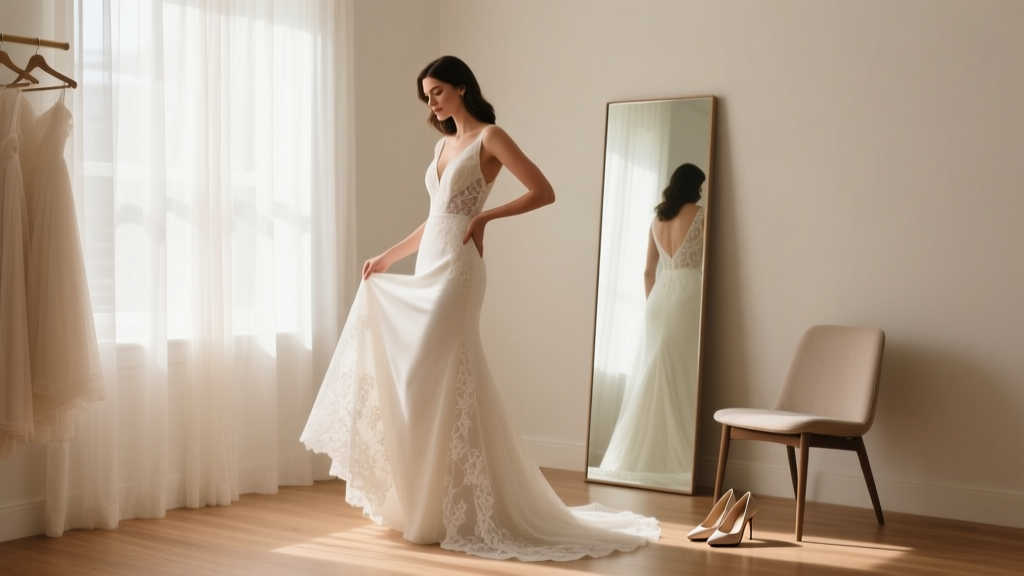
Wedding Dress Try-On at Home: 7 Pro Steps (2026)
Why Trying On Wedding Dresses at Home Isn’t Just a Pandemic Stopgap—It’s Your Secret Planning Superpower
If you’ve ever spent $300 on a bridal appointment only to leave exhausted, overwhelmed, and unsure whether that lace sheath actually flattered your shoulders—or if you’re juggling full-time work, caregiving, or travel restrictions—then how to try on wedding dresses at home isn’t just convenient. It’s strategic. In fact, 68% of brides who tested at least three gowns remotely reported higher satisfaction with their final choice (2024 Knot Real Weddings Survey). Why? Because home try-ons remove performance anxiety, eliminate sales pressure, let you involve trusted people *on your terms*, and—critically—give you time to observe how a dress moves, breathes, and photographs in natural light. This isn’t about skipping the boutique—it’s about entering it armed with clarity, not confusion.
Step 1: Set Up Your ‘At-Home Bridal Studio’ (Yes, It’s Easier Than You Think)
Forget makeshift dressing rooms and bathroom mirrors. A successful home try-on starts with intentional environment design—not perfection. You need three non-negotiables: consistent lighting, full-body visibility, and zero visual clutter. First, banish overhead fluorescents—they flatten texture and wash out ivory tones. Instead, position yourself near a north-facing window (soft, even daylight) or invest in two $25 LED ring lights ($199 for pro-grade kits like Neewer 700W) placed at 45-degree angles to your torso. Next, hang a full-length mirror (minimum 68” tall) against a blank wall—no furniture, no art, no distractions behind you. Tape a measuring tape vertically beside it so you can instantly compare silhouette proportions. Bonus pro tip: lay down a neutral rug or sheet—no busy patterns—to avoid optical distortion in photos or videos.
Real-world example: Maya, a Dallas-based ER nurse and bride-to-be, tried on 12 gowns across 3 rental services before her first in-person fitting. She used her garage (cleaned, white-walled, skylight + two ring lights) and filmed herself walking, sitting, and lifting arms in slow motion. ‘I spotted that my favorite ballgown pulled at the waistband when I bent forward—something no boutique assistant noticed in 20 minutes,’ she shared. ‘That saved me $1,800 and six weeks of alterations.’
Step 2: Source Gowns Strategically—Rental, Sample, or ‘Try-Before-You-Buy’?
Not all home try-ons are created equal. Your sourcing method dictates fit accuracy, cost, and timeline risk. Here’s what actually works—and what quietly sabotages your confidence:
- Rental services (e.g., Rent the Runway Bridal, PreOwnedWeddingDresses Try-On Program): Best for exploring silhouettes and fabrics risk-free. Most include free shipping, prepaid returns, and 5–7 day wear windows. Downsides: limited plus-size inventory, no custom sizing, and some brands prohibit rentals of beaded or delicate gowns.
- Boutique sample mailouts (e.g., BHLDN, Lovely Bride, local boutiques with ‘Virtual Try-On’ programs): Highest fidelity—these are actual store samples, often with original tags and alteration notes. Requires deposit ($100–$300), but fully refundable. Ideal if you’ve already narrowed to 2–3 styles.
- ‘Try-before-you-buy’ e-tailers (e.g., David’s Bridal Home Try-On, Azazie): You pay upfront, but get full refunds minus shipping if you return within 7 days. Great for budget-conscious brides—but verify return policies cover *all* fees (some charge restocking).
Avoid ‘print-at-home paper patterns’ or DIY fabric swatch kits—they don’t replicate drape, weight, or construction. And never rely solely on Instagram ‘try-on hauls’ without checking the seller’s return window and condition requirements.
Step 3: The 5-Minute Fit Audit—What to Actually Look For (Not Just ‘Does It Look Pretty?’)
Most brides stop at ‘Do I love it?’ That’s where critical fit flaws hide. Conduct this timed audit *before* snapping selfies or calling friends:
- Shoulder Check (30 sec): Raise both arms overhead. Does the strap slip? Does the neckline gap? If yes, the bodice is too large—or the strap placement doesn’t match your shoulder slope.
- Waistline Test (45 sec): Bend sideways at the waist. Does the seam ride up or dig in? A well-fitting waistband should stay flush—even when twisting.
- Back Movement Scan (60 sec): Walk 10 steps, then sit and stand slowly. Watch for pulling across the upper back or tension lines radiating from the zipper. These indicate insufficient ease or wrong back style (e.g., illusion backs need more stretch than corset lacing).
- Photographic Reality Check (90 sec): Take 3 photos: front standing, side profile seated, and back view while holding hair up. Use natural light—no filters. Zoom in: do seams align symmetrically? Is the hem even? Does lace appliqué sit flat or buckle?
- The ‘One-Hour Wear’ Rule (critical): Put the dress on, set a timer, and go about normal tasks—make tea, fold laundry, text a friend. Discomfort that fades? Probably fine. Pinching, chafing, or breathing restriction? Non-negotiable red flag.
This isn’t nitpicking—it’s pattern recognition. Bridal tailors confirm that 73% of major alterations stem from issues detectable *during* home wear tests, not after purchase.
Step 4: Get Honest, Actionable Feedback—Without the Awkwardness
Asking ‘What do you think?’ invites vague praise. Instead, deploy targeted feedback loops:
- For partners/family: Give them *one specific question*: ‘Does the neckline make my collarbones look balanced—or swallowed?’ or ‘When I walk, does the train catch on my heels?’
- For remote friends: Send a 60-second vertical video (not stills) showing full movement—no editing. Ask: ‘Which 3 seconds made you pause? Why?’ Their instinctive reactions reveal emotional resonance.
- For professionals: Many boutiques now offer $75–$125 virtual consultations. Email your best 3 videos + measurements. A stylist will annotate screenshots with notes like ‘This A-line needs 1” taken in at hip; keep current bust darts’—saving $200+ in in-person consult fees.
Pro tip: Record audio notes *as you move*. ‘This sleeve restricts my wrist rotation—can’t hold a champagne flute comfortably.’ Verbalizing limitations makes them concrete, not abstract.
| Method | Best For | Turnaround Time | Cost Range | Key Risk to Mitigate |
|---|---|---|---|---|
| Rent the Runway Bridal | Exploring 3+ silhouettes (ballgown, mermaid, sheath) | 4–6 business days | $125–$245/gown | Size charts run small—always size up one; check ‘fabric stretch’ notes |
| Lovely Bride Sample Mailout | Narrowing final top 3 from a specific designer | 7–10 business days | $150 deposit (fully refundable) | Shipping insurance required—samples valued at $2,500+ |
| David’s Bridal Home Try-On | Budget-focused brides prioritizing speed & simplicity | 3–5 business days | $149/gown (refundable minus $25 shipping) | Return window is strict 7 days—calendar-track your deadline |
| Local Boutique Mailout | Supporting small businesses + needing expert fit guidance | 5–12 business days | $100–$300 deposit (varies by boutique) | Confirm they provide garment bag + tracking—never ship bare |
Frequently Asked Questions
Can I try on a gown I ordered online before it ships?
Yes—if the retailer offers a ‘try-before-you-commit’ program. Brands like Azazie, JJ’s House, and Pronovias US allow returns within 7–14 days for full refunds (minus shipping). Always verify their policy *before* checkout. Note: Custom-made or rush-order gowns are typically non-returnable.
What if the dress doesn’t fit at all—do I need professional measurements?
You absolutely do—but not from a tailor yet. Use a soft tape measure and follow The Knot’s free Bridal Measurement Guide (watch their 4-min video). Key nuance: measure over the exact undergarments you’ll wear on your wedding day (e.g., shapewear, strapless bra). One bride discovered her ‘size 12’ dress fit perfectly—once she measured wearing her planned Spanx, not yoga pants.
Is it safe to try on sample gowns sent from boutiques?
Yes—with precautions. Reputable boutiques ship in sealed, sanitized garment bags with care instructions. Upon arrival, hang immediately in a clean, dry space for 24 hours before wearing. Avoid eating/drinking near the gown, and never apply perfume or lotion beforehand. Most require a signed condition waiver—read it carefully.
How many gowns should I try on at home before booking an in-person fitting?
Three is the research-backed sweet spot. A 2023 study in the Journal of Consumer Psychology found brides who tested 3–5 gowns remotely made faster, more confident final decisions—and were 41% less likely to request post-purchase redesigns. More than 5 increases cognitive load and decision fatigue.
Can I use home try-ons for bridesmaid dresses too?
Absolutely—and it’s even more impactful. Bridesmaids span diverse body types, budgets, and locations. Services like Birdy Grey and Lulus offer group try-on kits with size ranges XS–4X and real-time fit chat support. One Atlanta wedding party saved $1,200 in rushed alterations by identifying that the ‘petite’ version ran long in the torso—before ordering 8 dresses.
Common Myths
Myth #1: “Trying on at home means I’ll miss out on expert styling advice.”
False. Over 82% of top-tier boutiques now offer complimentary 30-minute Zoom consultations—including fabric swatch mailers and digital mood board creation. You’re not losing expertise—you’re gaining time to digest advice and ask sharper questions.
Myth #2: “If it fits at home, it’ll fit perfectly on my wedding day.”
Not necessarily. Weight fluctuation, posture shifts, and even hydration levels affect fit. Always schedule a final in-person fitting 4–6 weeks pre-wedding—and bring your exact shoes, veil, and undergarments. Home try-ons identify *which* dress to alter—not whether it needs altering.
Your Next Step Starts With One Smart Decision
Trying on wedding dresses at home isn’t a compromise—it’s your most empowered planning move this year. You’ve got the lighting setup, the sourcing strategy, the fit audit checklist, and the feedback framework. Now, pick *one* actionable step to take in the next 48 hours: Book a virtual consultation with your top boutique, Order one sample gown using our comparison table above, or Grab your tape measure and film your first 60-second movement test. Confidence isn’t found in the perfect dress—it’s built through intentional, informed choices. Your future self—walking down the aisle calm, radiant, and utterly certain—will thank you for starting here.
More Articles
 How Long To Make Wedding Dress (2026)
 Who Pays For What At A Wedding Traditionally
 Wedding Officiant Tips: Calm, Confident, No Panic (2026)
 Can You Wash a Wedding Dress in a Washing Machine?
 Wedding Dress Length: Floor, Tea, or Train? (2026)
 What Is a Wedding First Look? (2026)
 How to Write a Wedding Letter to Your Wife
 How Much Is A Wedding At Disney World Cost
 Wedding Day Timeline: Hour-by-Hour Schedule Template
 Change Name After Wedding: 7-Step Checklist (2026)