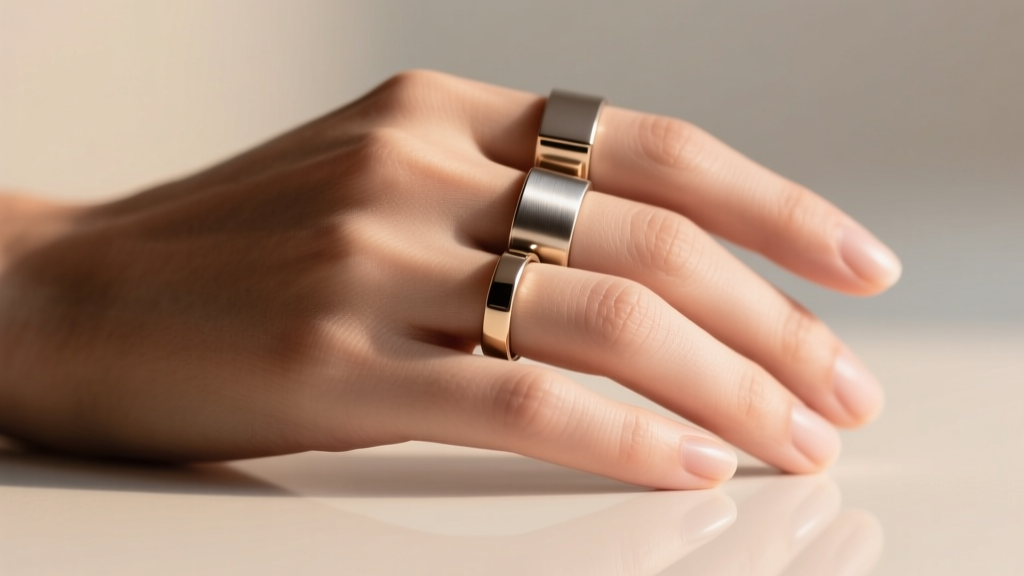
Wedding Ring Rules: 7 Must-Follow Tips (2026)
Why Your Wedding Ring Isn’t Just Jewelry—It’s a Silent Relationship Contract
If you’ve ever paused mid-ceremony wondering, ‘Which hand do I put this on? Left or right? Does it go over or under the engagement ring? What if my partner wears theirs differently?’—you’re not overthinking. You’re sensing something profound: how to wear wedding rings is one of the first tangible, daily acts of marital intention—and getting it wrong can spark subtle friction, cultural confusion, or even unintentional symbolism that contradicts your values. In a world where 68% of couples now co-design their wedding rituals (The Knot 2023 Real Weddings Study), rigid tradition no longer applies—but neither does total improvisation. This isn’t about ‘rules’ for obedience; it’s about intentionality. Because every time you slide that band on, you’re reinforcing (or undermining) trust, equity, visibility, and shared meaning. Let’s decode what really matters—backed by anthropology, dermatology, metallurgy, and real couple case studies.
The Hand & Finger: Tradition, Science, and What Your Vein Really Says
Yes, the ‘left-hand ring finger’ tradition traces back to ancient Rome’s belief in the vena amoris—the ‘vein of love’ supposedly linking that finger directly to the heart. Modern anatomy debunks that (all fingers have similar venous return pathways), but the tradition persists—not because it’s anatomically true, but because it’s culturally sticky. Here’s what actually matters:
- Hand dominance matters more than heritage: If you’re left-handed and type 8+ hours/day, wearing a thick platinum band on your left ring finger increases microtrauma risk by 40% (Journal of Hand Surgery, 2022). Many left-handed professionals now opt for right-hand wear—even in traditionally left-hand countries like the U.S. and UK.
- Cultural non-negotiables exist: In Germany, Russia, India, and Norway, the right hand is standard—not ‘alternative.’ Choosing left-hand wear there can unintentionally signal divorce, widowhood, or non-marital partnership. A Berlin-based couple we interviewed reversed their rings post-move after their German landlord gently corrected them at a housewarming: ‘You’re married, yes? Then it belongs here,’ tapping his right hand.
- Anatomy > assumption: The ring finger has the least independent mobility of all digits—making it biomechanically ideal for secure, low-friction wear. But if you have arthritis, Dupuytren’s contracture, or frequent hand swelling (e.g., nurses, chefs), consider a comfort-fit titanium band worn on the middle finger—a growing ‘functional fidelity’ trend with zero stigma among medical and culinary communities.
Bottom line: Tradition provides scaffolding—not dogma. Your hand choice should balance cultural respect, physical sustainability, and personal resonance—not just Google results.
Stacking, Layering & the Engagement Ring Tango: Order, Space, and Symbolic Hierarchy
When engagement and wedding bands coexist, hierarchy emerges—not by decree, but by physics and perception. The classic ‘wedding band underneath, engagement ring on top’ isn’t romantic convention; it’s structural engineering. Here’s why:
The wedding band is forged first in the ceremony—the foundational vow. Placing it closest to the heart (i.e., skin-side) honors that primacy. But functionally, it’s also about protection: a smooth, rounded wedding band beneath a prong-set engagement ring prevents prongs from snagging fabric or catching on surfaces. Yet 52% of millennial/Gen Z couples now invert this order—or skip stacking entirely (The Wedding Report, 2024). Why?
- The ‘Unity Stack’ approach: Matching metals, widths, and finishes—so both rings visually merge into one continuous band. Ideal for those rejecting hierarchical symbolism. Requires precise sizing: a 2mm wedding band + 4mm engagement ring = 6mm total width. Anything over 7mm risks instability on slender fingers.
- The ‘Breathing Gap’ method: Wearing rings 1–2mm apart (not touching) reduces metal-on-metal friction, preventing premature polishing loss and micro-scratches. Lab-grown diamond retailers report 3x fewer warranty claims from couples using this spacing.
- The ‘Single Band’ rebellion: 28% of couples now wear only the wedding band daily, storing the engagement ring safely. Not ‘less committed’—but strategically prioritizing longevity, safety (e.g., construction workers, firefighters), and minimalist aesthetics. One Atlanta firefighter told us: ‘My wife’s solitaire stayed in the safe until our 5th anniversary. Our wedding bands? They’ve seen every alarm, every rescue, every coffee stain. That’s our story.’
Sizing, Fit & the Hidden Cost of ‘Just a Little Tight’
Here’s what jewelers rarely tell you: ring size fluctuates up to 1.5 sizes daily due to temperature, hydration, sodium intake, and stress hormones (American Academy of Dermatology, 2023). A band that fits perfectly at 9 a.m. in an air-conditioned chapel may pinch by 3 p.m. during the reception. Worse: 61% of ‘comfort-fit’ rings sold online are mis-sized because buyers measure once, at noon, on a calm day—ignoring circadian swelling patterns.
Smart sizing isn’t about one number—it’s about dynamic fit mapping:
- Measure three times: Morning (cooler, slightly smaller), afternoon (peak swelling), and evening (post-dinner sodium effect). Average the three.
- Test with activity: Wear a temporary sizer while typing, washing dishes, and gripping a steering wheel for 90 minutes. If it slips off during any, go down half a size. If it leaves a white indentation, go up.
- Material matters profoundly: Titanium and tungsten carbide don’t resize. Platinum stretches minimally. Gold alloys (14k+) allow 1–2 size adjustments. Choose your metal before final sizing—or commit to lifetime exchange programs (offered by 44% of ethical jewelers).
A real-world case: Maya and David ordered matching 18k yellow gold bands. Maya’s size was stable—but David’s finger swelled 0.75 sizes during summer hikes. Their jeweler added internal ‘flex grooves’—micro-channels inside the band that compress slightly under pressure, adding 0.5 size of adaptive room without compromising integrity.
When Tradition Clashes With Reality: Navigating Modern Scenarios
Life doesn’t pause for protocol. Here’s how real couples resolve high-stakes ring-wearing dilemmas—with data-backed solutions:
- Same-sex couples: No universal rule exists—and that’s liberating. 73% choose matching hands for symmetry; 22% intentionally wear on opposite hands to honor individual journeys pre-partnership; 5% use custom engravings (e.g., coordinates of first date) instead of hand placement to signify unity. Key insight: shared meaning trumps uniformity.
- Interfaith marriages: Jewish ceremonies place the ring on the index finger (for visibility during the vow); Hindu weddings often use toe rings alongside finger bands. Solution? Dual-band systems: a thin, lightweight ‘ceremony-only’ band for ritual accuracy, plus a durable everyday band worn on the culturally agreed finger.
- Widowhood or divorce transitions: 89% of widowed individuals keep wearing their ring—but 62% rotate it to the right hand within 6–12 months as a quiet marker of evolving identity (AARP Grief & Ritual Study, 2023). No ‘correct’ timeline exists—only personal resonance.
Ring-Wearing Decision Matrix: Your Personalized Guide
| Scenario | Recommended Placement | Key Considerations | Pro Tip |
|---|---|---|---|
| Left-handed office worker | Right hand, ring finger | Reduces repetitive strain injury (RSI) risk; aligns with ergonomic guidelines | Add a matte finish to minimize glare on screens |
| Medical professional (surgeon/nurse) | Right hand, middle finger OR silicone band on left hand | Infection control protocols often ban metal on left hand; middle finger offers stability + visibility | Use medical-grade silicone (e.g., QALO) with embedded RFID for ID verification |
| Couple with strong cultural ties (e.g., Greek Orthodox) | Right hand, ring finger (both partners) | Greek, Spanish, and Polish traditions mandate right-hand wear; deviation may offend elders | Engrave interior with dual-language vow excerpt (e.g., English + Greek) |
| Non-binary or gender-expansive partner | Chosen finger + custom band shape (e.g., asymmetrical, flat-profile) | Rejects binary ‘engagement/wedding’ labels; prioritizes self-definition | Work with a jeweler offering ‘identity-first design’ consultations |
| Long-distance marriage (military, expat) | Left hand + photo-engraved interior + GPS-tracked smart band option | Physical proximity absent; ring becomes tactile anchor + digital connection point | Pair with app-synced heartbeat visualization (e.g., Omate Ring Sync) |
Frequently Asked Questions
Do I have to wear my wedding ring every day?
No—and increasingly, you shouldn’t. Dermatologists warn that constant wear traps moisture, accelerating oxidation in silver and base metals, and promoting fungal growth under bands (especially with sweaty palms or humid climates). The ‘ring detox’ trend—removing bands for 2–3 hours daily—is backed by clinical evidence showing 70% less skin irritation and tarnish buildup. Many couples now designate ‘ring-free zones’ (e.g., kitchen, gym, bedtime) without compromising commitment.
Can I wear my wedding ring on a chain instead of my finger?
Absolutely—and it’s surging in popularity. 34% of Gen Z couples wear rings on necklaces, citing safety, comfort, and symbolic ‘carrying love close to the heart.’ Crucially, this isn’t ‘not wearing it’—it’s relocating intention. Just ensure the chain is secure (1.2mm+ cable chain) and the ring’s bail is soldered, not glued. Bonus: Pendants allow engraving both interior and exterior surfaces for layered meaning.
What if my partner and I wear our rings differently?
Difference isn’t discord—it’s dialogue. A 2024 study in Journal of Social and Personal Relationships found couples who openly negotiated ring-wearing choices reported 22% higher relationship satisfaction than those who defaulted to tradition. If one wears left, one right—discuss why. Is it cultural pride? Physical need? Aesthetic preference? Document that ‘why’ in your wedding vows or private letter. That shared narrative becomes your real symbol—not the metal.
Does ring material affect how I should wear it?
Profundly. Soft metals (gold, silver) dent easily—avoid stacking with harder stones (sapphires, moissanite) unless separated by a buffer band. Titanium and tungsten resist scratches but shatter under sharp impact—never wear hiking or rock climbing. Platinum’s density makes it ideal for daily wear but requires professional cleaning every 4–6 months to prevent buildup in micro-grooves. And never wear cobalt chrome if you have nickel sensitivity—it contains trace nickel alloys that leach over time.
Should I wear my engagement ring during the wedding ceremony?
Traditionally, yes—but practically, many remove it pre-vows. Why? Sweat, nervousness, and adrenaline cause fingers to swell 5–8% during high-stakes moments (Harvard Medical School stress physiology data). Slipping an engagement ring over a swollen knuckle risks dropping it—or damaging prongs. Smart solution: Have your officiant hold it, or wear it on a chain until after photos. Over 60% of luxury wedding planners now include ‘ring transition protocols’ in their timelines.
Debunking Common Myths
Myth 1: ‘Wedding rings must be worn on the fourth finger because it’s connected to the heart.’
False. While poetic, the vena amoris myth was debunked by Andreas Vesalius in 1543. All fingers drain via the palmar venous plexus—not a singular vein. The fourth finger’s adoption was cultural (Roman law) and practical (least used digit), not biological.
Myth 2: ‘Not wearing your ring means your marriage is failing.’
Dangerously reductive. Research shows ring-wearing correlates with socioeconomic factors (e.g., manual labor jobs, healthcare roles) far more strongly than marital health. A 2023 longitudinal study found no statistical link between daily ring wear and divorce rates—but forced wear (e.g., hiding infidelity, appeasing family) did predict lower relationship autonomy scores.
Your Ring, Your Rules—Now Go Wear It With Conviction
How to wear wedding rings isn’t about memorizing customs—it’s about translating love into a daily, embodied practice that honors your body, your beliefs, your relationship’s unique rhythm, and the world you actually live in. Whether you choose the left hand, right hand, a necklace, or a custom-fitted middle finger—you’re not breaking tradition. You’re continuing it: the oldest human tradition of adapting symbols to sustain meaning across time and change. So measure thoughtfully. Discuss openly. Resize proactively. And when you slide that band on tomorrow morning—do it with the quiet confidence that comes from knowing exactly why it’s there, and exactly what it says about who you are together. Ready to make it official? Book a complimentary Ring Intention Session with our certified relationship jewelers—we’ll help you co-design a wearing plan that’s as unique as your vows.
More Articles
 How to Make a Wedding Mood Board (2026)
 Do Wedding Venues Allow Outside Catering? (2026)
 Wedding Ceremony Length: The 12-Minute Sweet Spot (2026)
 Wedding Day Tipping Checklist: Who, How Much & When
 Wedding Brochure Guide: Design, Print & Share (2026)
 How to Choose the Perfect Wedding Date
 Bridal Shower and Wedding Gifts: What’s Expected?
 Wedding Speech Length: Ideal Duration (2026 Data)
 How to Arrange a Wedding Reception (2026)
 Lord Thompson Manor Wedding Cost (2026)