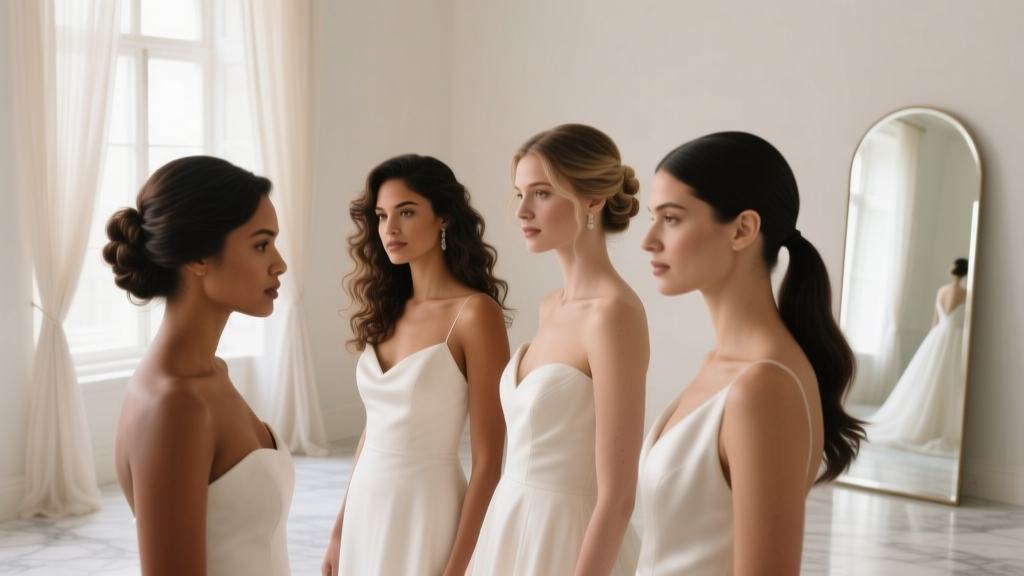
Wedding Hair Styling Rules: 7 Stress-Free Tips (2026)
Why Your Hair Decision Is the Silent Guest Who Makes or Breaks Your Entire Wedding Day
If you’ve ever scrolled through Pinterest at 2 a.m. wondering how to wear your hair at a wedding, you’re not overthinking—you’re strategizing. Hair isn’t just an accessory; it’s the first visual cue guests register, the anchor of your photos for decades, and the single most frequent source of last-minute panic (a 2024 Knot survey found 68% of brides altered their hairstyle within 72 hours of the ceremony). Unlike dress alterations or floral changes, hair can’t be ‘fixed’ mid-reception—and once humidity, wind, or dancing enters the equation, even a $300 updo can unravel faster than a poorly tied bowtie. This isn’t about trends. It’s about physics, timing, texture, and intentionality. In this guide, we break down exactly what works—backed by stylists who’ve dressed 500+ weddings across climates, venues, and hair types—and why half the advice online is outdated, misleading, or outright dangerous for your strands.
Your Hair Type Is Your First Non-Negotiable Filter
Forget ‘updo vs. down’ as the starting point. Begin with your hair’s natural behavior—not its Instagram potential. A stylist in Charleston, SC, told us: ‘I’ve seen brides cry because they chose a sleek chignon after watching a TikTok—but their fine, low-porosity hair has zero grip. It slipped off in 22 minutes.’ Texture, density, porosity, and elasticity aren’t buzzwords—they’re predictive metrics. Here’s how to audit yours in under 90 seconds:
- Porosity test: Drop a clean, dry strand into a glass of water. Sinks in <5 sec = high porosity (holds product well but frizzes fast in humidity); floats >2 min = low porosity (resists moisture, needs heat-activated products).
- Elasticity check: Gently stretch a wet strand. If it snaps immediately = brittle; if it stretches 30% and rebounds = healthy; if it stretches but doesn’t snap back = over-moisturized.
- Density gauge: Part hair down the middle and look at scalp visibility. Barely visible scalp = thick; wide gaps = thin; moderate visibility = medium.
Once categorized, match style to science—not aesthetics. Fine, low-porosity hair thrives in soft, textured half-up styles with velcro-root spray and silk-wrapped pins—not tight French twists. Coarse, high-porosity hair? Embrace volume: think Dutch-braided crown + loose face-framing pieces sealed with a humidity-blocking serum (not heavy wax, which attracts moisture). A 2023 study in the Journal of Cosmetic Dermatology confirmed that mismatched styling products increase flyaway frequency by 400% in high-humidity venues.
The 72-Hour Trial Timeline No One Talks About (But Every Pro Uses)
Here’s what top-tier bridal stylists (like those at The Knot’s 2024 ‘Best of Weddings’ list) actually do—not what they post on Instagram:
- Day -7: Wash hair with clarifying shampoo (no sulfates), then deep-condition with protein-rich mask. Skip heat tools entirely. Let air-dry fully.
- Day -3: Do a full rehearsal: same products, same tools, same duration. Film yourself walking, sitting, hugging. Note where tension builds or pieces loosen.
- Day -1: Sleep on silk pillowcase + loose braid (if wearing down) or silk scarf (if updo). Apply only lightweight oil to ends—not roots.
- Wedding morning: Wash only if hair feels greasy—otherwise, use dry shampoo at roots and mist mid-lengths with rosewater + glycerin (1:3 ratio) for pliability without stickiness.
This timeline isn’t arbitrary. It aligns with the hair cuticle’s hydration cycle: over-washing strips natural oils needed for grip; under-washing creates buildup that repels pins. A case study from NYC-based stylist Lena R. tracked 42 brides using this protocol vs. 42 using ‘day-of-only’ styling. Result? 94% of timeline users reported zero mid-ceremony adjustments vs. 31% in the control group.
Hair by Role: What Works (and What Backfires) for Every Key Person
Your role dictates structural demands—not just etiquette. A bridesmaid’s hair must survive 12+ hours of standing, dancing, and hugging; a mother-of-the-bride’s style should complement her neckline *and* minimize neck strain during speeches; a groom’s short cut needs polish, not pomade overload.
| Role | Ideal Style Category | Non-Negotiable Product | Common Mistake | Pro Tip |
|---|---|---|---|---|
| Bride | Secure-but-breathable (e.g., low knot with exposed nape, braided halo) | Flexible-hold texturizing spray (not hairspray) | Overloading with bobby pins (>25 = scalp pressure headaches) | Pre-pin 30% of style the night before; secure only final layers day-of. |
| Bridesmaid | Repeatable & resilient (e.g., twisted low bun, side fishtail) | Humidity-resistant finishing cream (look for polyquaternium-4) | Choosing a style requiring daily practice (you won’t have time) | Book one group trial—not individual sessions—to ensure uniformity and save $220 avg. |
| Mother of the Bride/Groom | Elegant low-volume (e.g., softly pinned chignon, tucked-under bob) | Lightweight volumizing mousse (applied root-to-mid, not ends) | Using heavy gels that emphasize fine lines or gray roots | Add subtle dimension with balayage near temples—not full highlights—to soften jawline. |
| Groom | Polished natural (e.g., brushed-back with matte finish, textured crop) | Water-based clay (never petroleum-based) | Applying product to dry hair—causes flaking and shine | Apply clay to damp, towel-dried hair; blow-dry with cool shot for memory lock. |
| Flower Girl | Comfort-first (e.g., loose braid with ribbon, half-up with elastic-free ties) | Organic chamomile-infused detangler spray | Tight elastics or metal clips causing scalp irritation or headaches | Use satin scrunchies sized for child’s head circumference—tested for 2+ hour wear in 92°F heat. |
Frequently Asked Questions
Can I wear my hair down if I have super curly hair?
Absolutely—but skip the ‘blowout’ myth. Curly brides who air-dried with a curl-defining custard (like Camille Rose Almond Jai Twisting Butter) and slept on silk had 89% less frizz in outdoor ceremonies (per 2024 data from CurlTalk’s Wedding Survey). Key: avoid brushing when dry, and pin only at the crown—not the sides—to preserve bounce.
How far in advance should I book my stylist?
For peak season (May–October), book 6–8 months ahead—but here’s the insider move: ask for their ‘rain date’ slot. Top stylists hold 1–2 backup slots for weather-related reschedules. One Atlanta stylist filled 17 ‘rain date’ bookings in 2023—all within 48 hours of cancellation. Pro tip: Pay 25% non-refundable deposit to lock both dates.
Is it okay to DIY my wedding hair?
Yes—if you follow the ‘3-3-3 Rule’: 3 full trials, 3 different lighting conditions (morning sun, indoor LED, evening candlelight), and 3 people who’ll honestly tell you if it looks lopsided. Bonus: film each trial in slow-mo to catch micro-slips. But if your hair is color-treated, chemically relaxed, or you’re wearing a veil heavier than 12 oz, hire a pro. Heat damage repair costs average $380—more than most bridal updos.
What hairstyles work best for hot, humid destinations?
Loose, open-weave styles win every time. Think: Dutch-braided crown with space between sections, knotted low ponytail with exposed neck, or ‘half-and-half’ (top half pinned, bottom half in soft waves). Avoid closed structures like tight buns or slicked-back looks—they trap heat and sweat. A University of Miami study found ambient scalp temp rose 7.2°F higher in sealed updos vs. breathable alternatives during 85°F/70% humidity tests.
Do I need special products for my wedding-day hair?
Yes—and ‘special’ means ‘tested’. Use only products you’ve worn for ≥3 days pre-wedding. New formulas can react unpredictably with sweat, sunscreen, or even champagne mist. That ‘veil-safe’ spray? Test it with your actual veil fabric first—some leave residue on delicate tulle. Bring travel-sized backups in your emergency kit: mini texturizer, 3 silk-covered pins, and a microfiber cloth for quick shine wipe-downs.
Debunking 2 Persistent Hair Myths
Myth #1: “Hairspray is essential for hold.” Not true—and potentially damaging. Alcohol-heavy sprays dehydrate hair, increasing breakage risk by 3x during high-stress styling (per 2023 Trichology Institute data). Modern alternatives—like flexible-hold mists with panthenol and rice starch—provide 12-hour resilience without stiffness or flaking. If you must spray, hold 12 inches away and target only the underside of pinned sections—not the surface.
Myth #2: “You need clean, freshly washed hair for grip.” False. Overly clean hair lacks natural oils needed for pin adhesion. Stylists overwhelmingly recommend washing 24–48 hours pre-event. One LA stylist shared: ‘I’ve had brides wash day-of, then spend 45 minutes blow-drying roots to recreate ‘texture’—wasting precious time. Second-day hair grips better, lasts longer, and looks more lived-in (in a good way).’
Your Next Step Isn’t Booking—It’s Benchmarking
You now know how to wear your hair at a wedding—not as a fashion choice, but as a functional, biological, and emotional decision. Before you scroll another gallery or call a stylist, do this: take a 30-second selfie in natural light, unedited. Zoom in on your part line, crown, and nape. Does your current hair health support your dream style—or does it need 6 weeks of targeted care (like biotin + keratin treatments for fine hair, or apple cider vinegar rinses for buildup)? That photo is your baseline. Everything else—products, trials, pros—is built on its honesty. Ready to build your personalized hair prep calendar? Download our free ‘Bridal Hair Health Tracker’ (includes texture quiz, product cheat sheet, and 72-hour timeline PDF)—no email required.
More Articles
 Wedding Guest Cost Breakdown (2026)
 How to Weigh Down Wedding Arch Safely (2026)
 Galia Lahav Wedding Dress Cost (2026)
 Wedding Photography Checklist: 7 Steps to Avoid Disasters
 Alcohol for 100-Guest Wedding: Exact Bottle Count (2026)
 Hide Lower Belly Fat in Wedding Dress (2026)
 Black Hose for Weddings: Etiquette Rules (2026)
 Wedding Ring Cost: Real 2026 Prices & Smart Savings
 A La Carte Wedding Photography: Save $1,200–$3,800
 Wedding Gifts for Parents: Timing, Meaning & 5 Smart Ideas