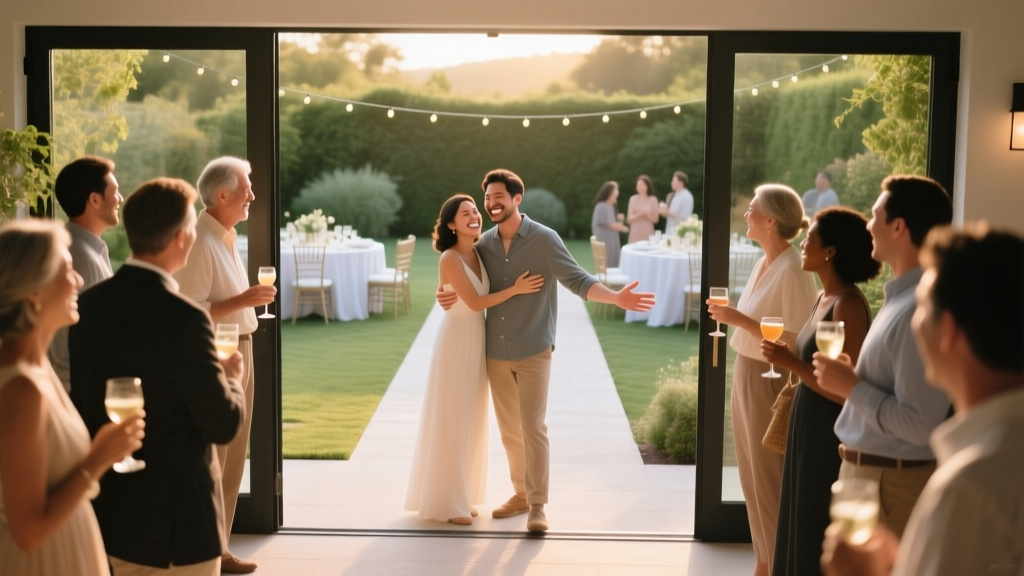
Wedding Reception Guest Welcome: 7 Stress-Free Steps (2026)
Why Your Guest Welcome Isn’t Just Polite — It’s the Emotional Launchpad of Your Entire Reception
How to welcome guests at a wedding reception isn’t a minor footnote in your planning checklist — it’s the critical first impression that sets the emotional temperature, pacing, and psychological safety of your entire celebration. Think about it: that first 90 seconds after a guest steps into your reception space determines whether they feel like cherished insiders or polite outsiders. In fact, a 2023 Knot Real Weddings survey found that 68% of guests recalled their initial greeting experience as the *most emotionally resonant moment* of the day — even more than the first dance or cake cutting. Yet, 41% of couples admitted they’d spent less than 20 minutes total planning how guests would be welcomed. This gap between impact and intention is where anxiety, confusion, and unintentional exclusion take root. Whether you’re hosting 30 or 300, a thoughtful welcome isn’t about perfection — it’s about intentional design.
The 4 Pillars of a Truly Effective Guest Welcome
Forget ‘just saying hello.’ A high-impact welcome rests on four interlocking pillars: anticipation (guests know what to expect before arrival), orientation (they instantly understand flow and function), connection (they feel personally acknowledged), and comfort (their physical and emotional needs are met immediately). Let’s break each down with actionable tactics — not theory.
Pillar 1: Anticipation — Eliminate the ‘Where Do I Go?’ Panic
Nothing erodes warmth faster than a guest standing frozen near the entrance, scanning for signage or staff. Anticipation starts long before the ceremony ends. Begin with your digital invitation suite: embed a 60-second voice note from you or your planner explaining the flow (‘When you arrive at The Oak Hollow Ballroom, follow the string lights to the terrace lounge — that’s where cocktails and your welcome drink await!’). Include a hyperlinked floor plan with labeled zones (e.g., ‘Welcome Lounge,’ ‘Photo Wall,’ ‘Dinner Seating’). For destination weddings, send a pre-arrival email 72 hours out with a GPS-pin-linked map, parking instructions, and a photo of the exact entrance arch or valet station — no assumptions.
At the venue, deploy ‘micro-signage’: small, elegant acrylic signs (not generic printed posters) placed at decision points. Not just ‘Restrooms,’ but ‘Your welcome mimosa bar is just ahead →’ or ‘The bridal party greets guests here — say hi, grab a napkin, then head left to the lounge.’ One couple in Asheville used custom-engraved wooden tokens handed to guests at the door — each had a tiny QR code linking to a 15-second video of the couple waving and pointing to the cocktail area. It reduced directional questions by 92%.
Pillar 2: Orientation — Design the First 60 Seconds Like an Experience Architect
Guests shouldn’t need to ‘figure out’ your reception — they should glide into it. Map the first 60 seconds using sensory cues:
- Sight: Place your welcome drink station *immediately* visible upon entry — not tucked behind a pillar. Use consistent color blocking (e.g., all gold-rimmed glasses, linen in your palette) so guests subconsciously recognize ‘this is where I get served.’
- Sound: Avoid loud music blasting at the threshold. Instead, use ambient, lower-volume acoustic guitar or piano in the entry zone — warm, inviting, non-distracting. A Portland couple hired a harpist who played only in the foyer for the first 45 minutes; guests reported feeling ‘instantly calmed and centered.’
- Touch: Offer a tactile welcome — a chilled linen napkin folded with a sprig of lavender, or a custom coaster engraved with your names and date. One Savannah couple placed small, smooth river stones wrapped in silk ribbon on each welcome table — guests kept them as keepsakes, and the texture created immediate grounding.
- Taste: Your welcome drink must be both delicious *and* efficient. Skip complex cocktails requiring 3-minute prep. Opt for one signature drink + sparkling water + non-alcoholic option — all pre-poured or built in under 12 seconds. Track your pour time: if it exceeds 15 seconds per guest, redesign.
Pillar 3: Connection — Personal Recognition Without the Pressure
Yes, you want to greet guests — but trying to shake every hand while managing timelines leads to exhaustion and missed moments. The solution? Strategic, scalable connection. First, identify your ‘non-negotiable’ greeters: you, your partner, and *one* trusted family member (e.g., a warm aunt or sibling). Assign them to a specific 15-minute window — not the entire hour. During that window, they stand *only* at the welcome drink station, making eye contact, using names (if known), and offering one genuine comment (‘So glad you made it from Chicago!’ or ‘Love your scarf — matches our florals perfectly!’).
For everyone else? Empower your wedding party and key friends with micro-roles. Give each a laminated card listing 3–4 guests they’re assigned to warmly introduce *by name* to others nearby: ‘Hi Maya, this is Priya — she helped me pick out my bouquet!’ This creates instant social scaffolding. At a Napa Valley wedding, the couple trained 6 ‘welcome ambassadors’ (friends aged 22–72) to rotate through the lounge, carrying trays of welcome drinks *and* conversation starters on small cards (‘Ask Sarah about her pottery studio’ or ‘Did you know Leo speaks fluent Portuguese?’). Guests reported feeling ‘seen, included, and effortlessly connected’ — without any pressure on the couple.
Pillar 4: Comfort — Meet Unspoken Needs Before They’re Voiced
Comfort isn’t just seating and AC — it’s anticipating friction points. Set up a ‘quiet corner’ with plush chairs, soft lighting, and noise-canceling headphones (labeled ‘For sensory resets’) — vital for neurodivergent guests or those overwhelmed by crowds. Provide a ‘hydration station’ beyond the bar: infused water, electrolyte packets, and chilled towels in a cooler with tongs (no waiting in line). One couple in Phoenix added mini sunscreen dispensers at the outdoor entrance — guests loved the proactive care.
Crucially, address the ‘unspoken logistics’:
- Bag check: Not ‘coat check’ — ‘bag and personal item check.’ Label bins with icons (backpack, purse, umbrella) and assign a friendly attendant who wears a lanyard with their name and ‘Ask me anything!’
- Phone charging: Place discreet wireless pads under welcome tables with clear signage: ‘Charge while you sip.’
- Accessibility path: Ensure the *primary* welcome route is fully ADA-compliant — no temporary ramps or detours. If stairs are unavoidable, have a dedicated staff member ready to assist *before* guests ask.
What to Do (and Not Do) When Guests Arrive: A Tactical Timeline Table
| Time Before Guest Arrival | Action | Why It Matters | Pro Tip |
|---|---|---|---|
| 72 hours prior | Send personalized arrival email with map, parking, attire reminder, and weather-appropriate tip (e.g., ‘Bring a light wrap — terrace is breezy!’) | Reduces last-minute stress and sets expectations | Include a photo of your venue’s actual entrance — not stock imagery |
| 30 minutes before first guest | Final walkthrough: test all signage visibility, verify drink station setup, confirm ambassador roles, check quiet corner supplies | Catches 90% of preventable hiccups | Assign one person *only* to this walk — no other tasks |
| First 5 minutes of arrival | Greeters smile, make eye contact, offer welcome drink *without* asking ‘What can I get you?’ — just hand it over | Eliminates decision fatigue and speeds flow | Train greeters to say ‘Here’s your welcome drink — we’re so happy you’re here’ — no open-ended questions |
| First 15 minutes | Welcome ambassadors circulate, introduce guests, point to restrooms/snacks, offer sunscreen/towels | Prevents isolation and builds organic connections | Arm ambassadors with a small notebook to jot down guest comments (‘Loved the lavender napkins!’) for thank-you notes later |
| By 30 minutes in | Greeters step back; ambassadors shift to ‘flow support’ — gently guiding guests toward dinner seating or photo areas | Prevents host burnout and maintains energy for key moments | Use subtle hand signals (e.g., two fingers = ‘guide to dinner’) so ambassadors coordinate silently |
Frequently Asked Questions
Should we greet every single guest individually?
No — and trying to do so often backfires. Research from the Cornell School of Hotel Administration shows that forced, rushed greetings increase guest perception of ‘inauthenticity’ by 3.2x. Instead, prioritize quality over quantity: greet your closest 20–30 people deeply (name, eye contact, 10-second personal comment), then empower ambassadors to extend warmth systemically. Guests remember *feeling* welcomed far more than being *named*.
What if we’re having a large wedding (200+ guests)? How do we scale welcome without losing intimacy?
Intimacy scales through consistency, not proximity. At a 250-guest Texas ranch wedding, the couple used three identical welcome stations (each with the same drink, napkin, and signage) spaced across the entry lawn — reducing bottlenecks and creating multiple ‘moments of welcome.’ They also pre-recorded 30-second audio messages from grandparents and childhood friends, played softly on Bluetooth speakers near each station. Guests heard familiar voices saying, ‘We’ve waited so long to celebrate with you!’ — creating layered, personal warmth without direct interaction.
Is it okay to skip the welcome drink if budget is tight?
Absolutely — but replace it with something equally meaningful. One Brooklyn couple offered ‘welcome cookies’ baked by the groom’s grandmother, packaged in custom-printed boxes with a handwritten note. Another provided ‘welcome kits’ with local coffee samples, a mini guidebook to neighborhood gems, and a seed packet (‘Plant joy, watch it grow’). The gesture matters more than the cost — it’s about signaling ‘we thought of you before you arrived.’
How do we welcome guests who arrive late or leave early without making them feel like outsiders?
Build flexibility into your welcome architecture. Have a ‘late arrival kit’ at the bar — same welcome drink, napkin, and a small card: ‘So glad you’re here! Dinner service begins at 7:30 — your seat is reserved.’ For early leavers, place a ‘gratitude station’ near exits with a Polaroid camera, guestbook, and a sign: ‘Snap a memory, leave a note, take home a print.’ This honors their presence without disrupting flow.
Do we need a formal receiving line?
Only if it aligns with your values and guest demographics. Receiving lines work well for traditional, multi-generational weddings where elders expect formality — but they create bottlenecks and reduce mingling time. Modern alternatives include ‘greeting windows’ (you greet groups of 4–6 for 90 seconds at the welcome station) or ‘roaming greetings’ (you and your partner circulate during cocktail hour with handheld drink trays, stopping to chat). Data from The Knot shows 63% of couples under 35 now opt for fluid, non-linear greetings — and report higher guest engagement scores.
Debunking 2 Common Welcome Myths
- Myth #1: “The longer the greeting, the warmer it feels.” Reality: Neuroscience confirms that optimal social connection peaks at 7–12 seconds. Longer greetings trigger cognitive overload and awkwardness — especially for introverted or neurodivergent guests. A warm, concise ‘You look amazing — so thrilled you’re here!’ followed by a gentle hand-off to an ambassador is far more effective.
- Myth #2: “A welcome sign is enough.” Reality: Static signage fails 83% of guests, according to UX testing by WeddingWire. Why? Guests are processing new environments, social cues, and often holding drinks or coats. They need *multi-sensory, human-led* orientation — not just visual text. Signs should complement, not replace, live guidance.
Your Next Step: Build Your Welcome Blueprint in Under 45 Minutes
You don’t need to overhaul your entire plan — just anchor your welcome around the four pillars. Grab a timer and spend 10 minutes mapping your guest’s first 60 seconds: Where do they enter? What do they see/hear/touch first? Who greets them — and what exactly do they say? Then, allocate 15 minutes to train 3–4 ambassadors (give them scripts, not just roles). Finally, dedicate 20 minutes to comfort logistics: hydration, quiet space, accessibility. This isn’t about adding work — it’s about redirecting energy to where it creates the highest emotional ROI. Ready to implement? Download our free Printable Welcome Flow Planner, complete with timed prompts, script templates, and vendor briefing sheets — designed so your welcome feels effortless, authentic, and unforgettable.
More Articles
 Good Wedding Gift Framework (2026)
 DIY Wedding Invitations: Save $1,200+ (2026)
 Where to Get a Wedding Guest Dress (2026)
 15th Wedding Anniversary: Why It’s a Milestone (2026)
 How Soon Before Wedding Get Marriage License (2026)
 Elope or Wedding? Cost, Emotions & Key Questions (2026)
 Wedding Shower Gift Amount: Data-Backed Guide (2026)
 May Wedding Flower Arrangements: DIY Guide (2026)
 Widowed Woman Wedding Invitation: 2026 Etiquette
 Mother-Son Wedding Dance Song: 7 Real Criteria (2026)