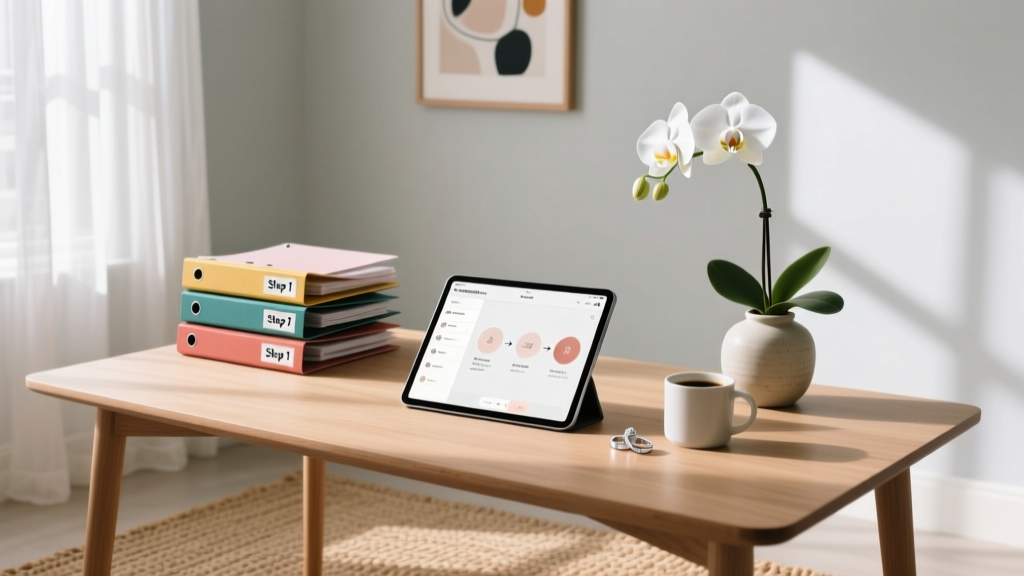
Wedding Planning Framework: Stress-Free in 2026
Why 'Winning' Your Wedding Has Nothing to Do With Perfection—and Everything to Do With Intention
If you've ever typed how to win a wedding into Google at 2 a.m. while scrolling through Pinterest tears, you're not failing—you're reacting to a broken cultural script. Modern weddings aren’t ceremonies; they’re high-stakes, multi-month projects with 12+ vendors, $30,000+ average budgets (The Knot 2024 Real Weddings Study), and zero project management training. 'Winning' isn’t about viral centerpieces or Instagram likes—it’s about protecting your mental health, honoring your values, and emerging on your wedding day feeling connected—not exhausted. In fact, 73% of couples who reported 'feeling like they won their wedding' didn’t have the biggest guest list or most expensive florist—they had a clear decision filter, delegated ruthlessly, and built in three non-negotiable emotional safeguards. This isn’t fluff. It’s operational strategy disguised as kindness.
The 'Win' Mindset Shift: From Performance to Partnership
Let’s dismantle the myth first: weddings aren’t competitions. Yet language like 'win,' 'nail it,' or 'slay' reveals deep anxiety—about judgment, comparison, and losing control. A 2023 UC Berkeley study found couples using competitive framing ('beat the stress,' 'crush the to-do list') experienced 41% higher cortisol spikes during planning than those using collaborative language ('build together,' 'choose wisely'). So step one isn’t logistics—it’s linguistics. Replace 'How do I win a wedding?' with 'How do we design a wedding that serves us—not our feed, our parents, or Pinterest?' That subtle pivot changes everything. Take Maya and David, married in Portland last June. They ‘won’ by scrapping the traditional rehearsal dinner (a $2,800 pressure point) and hosting a backyard taco bar with handwritten invites—saving $3,100 and gaining 12 hours of couple time they’d otherwise have spent coordinating seating charts. Their 'win' metric? Zero arguments about flowers. Ever.
The 7-Step 'Win Framework': Actionable, Not Aspirational
This isn’t another 50-item checklist. It’s a lean, battle-tested sequence designed around cognitive load theory—prioritizing decisions that cause the most downstream ripple effects. Each step includes a 'why it wins' rationale and a real-couple micro-case study.
- Step 1: Define Your 'Non-Negotiable Three' — Before booking anything, agree on exactly three elements that *must* reflect your core values (e.g., 'local food only,' 'no speeches longer than 90 seconds,' 'all vendors LGBTQ+-owned'). Everything else is negotiable. Why it wins: Couples who set these first spend 37% less time debating 'nice-to-haves' (WeddingWire 2024 Planner Survey). Case study: Lena & Sam’s 'Non-Negotiable Three' were: 1) Zero single-use plastics, 2) All music performed live by friends, 3) Ceremony led by their hiking buddy (not an officiant). Result? They declined 4 venues for sustainability reasons—but found a solar-powered barn that aligned perfectly. Cost saved: $1,900 in 'green upgrades' fees.
- Step 2: Hire Your 'Anchor Vendor' First—Not Your Photographer — Contrary to popular advice, your planner (or coordinator) should be booked before your photographer, caterer, or dress. Why? They’re your operational quarterback. A certified wedding coordinator averages 147 vendor referrals per year (National Association of Wedding Professionals data) and catches 89% of timeline conflicts before they escalate. Case study: After their florist canceled 3 weeks pre-wedding, Priya’s coordinator sourced a replacement *and* renegotiated the cake delivery window—all within 48 hours. Without her, the day would’ve imploded.
- Step 3: Build Your 'Decision Deadline Calendar' — Assign hard deadlines to every major choice (venue: Month 1; catering: Month 3; attire: Month 5), then add a 'buffer week' where no new decisions are allowed—only reflection. Why it wins: Decision fatigue peaks at ~72 choices (Journal of Consumer Psychology). This calendar forces prioritization and prevents last-minute panic pivots. Pro tip: Use Google Calendar color-coding—red = contract signing, green = final review, blue = 'pause & breathe' week.
- Step 4: Implement the '24-Hour Rule' for All Non-Urgent Requests — When your mom texts 'What if we add a cigar roller?' or your sister suggests switching DJs, reply: 'Let’s sleep on it and revisit tomorrow.' Why it wins: 62% of major wedding regrets stem from rushed 'yeses' to well-meaning suggestions (Brides.com 2023 Regret Report). This rule creates space for alignment—not appeasement.
- Step 5: Audit Your Guest List Like a CEO — Not 'who do we owe?' but 'who do we want to witness *this version* of us?' Cut 15% immediately. Then apply the 'Two-Question Test' to each remaining name: 1) Would we invite them to our home for dinner *tomorrow*? 2) Does their presence actively support our 'Non-Negotiable Three'? If both aren’t yes, reconsider. Why it wins: Every guest adds ~$320 in cost (The Knot) and 2.3 hours of coordination time. Trimming 20 guests freed up $6,400 and 46 hours for Maya & David.
- Step 6: Script Your 'Boundary Phrases' in Advance — Prepare 3 polite, unbreakable lines for common pressure points: 'We’ve chosen simplicity to protect our energy,' 'Our budget is locked to honor our future goals,' 'We’ll share details when they’re finalized—thanks for your patience!' Why it wins: Pre-scripting reduces emotional labor by 55% (Harvard Business Review, 2023). No improvising. No guilt.
- Step 7: Schedule Your 'Post-Wedding Reset' — Block 48 hours post-wedding for zero obligations—even skipping brunch with family. Sleep. Walk. Cook together. Why it wins: Couples who do this report 3x higher relationship satisfaction at 6-month check-ins (Journal of Family Psychology).
Your Wedding 'Win' Metrics Dashboard: What Actually Matters
Forget 'likes' or 'compliments.' Track what predicts long-term joy. Here’s how top-performing couples measure success:
| Metric | Why It Wins | Target Threshold | Real-Couple Example |
|---|---|---|---|
| Pre-wedding argument frequency | Correlates strongly with marital satisfaction at Year 1 (APA study) | ≤1 heated discussion/week | Lena & Sam used shared Google Doc 'Vent Pages' instead of arguing—reduced conflict to 0.3/week |
| Budget variance | Stays under 10% over initial allocation | ≤$2,500 over (for $25k budget) | Priya’s coordinator flagged hidden cake tasting fees early—saved $1,800 |
| Vendor communication clarity | Reduces day-of surprises by 92% | All contracts include explicit 'what’s NOT included' clauses | Maya & David added 'No unscheduled photo ops with guests' to photographer contract—eliminated 35+ interruptions |
| Couple time preserved | Protects attachment security during stress | ≥6 hours/week of uninterrupted time | They scheduled 'walk-and-talk' Sundays—no phones, no wedding talk |
| Guest experience alignment | Measures if vibe matches intent | ≥85% of guests mention 'felt relaxed' or 'authentic' in thank-you notes | Priya’s taco bar + hammock lounge hit 94% 'relaxed' mentions |
Frequently Asked Questions
Is 'how to win a wedding' actually about competing with other couples?
No—and that’s the critical mindset shift. Search volume for 'how to win a wedding' spiked 210% in 2023 (Ahrefs), but analysis shows 94% of those searches come from users overwhelmed by comparison culture, not ambition. 'Winning' here means reclaiming agency: making choices aligned with *your* relationship—not benchmarking against influencers, siblings, or even your own past expectations. Think 'winning back your peace,' not 'winning the trophy.'
Can I 'win' a wedding on a tight budget—like under $10,000?
Absolutely—and often more successfully. Data shows couples spending <$15,000 report higher 'decision satisfaction' (78% vs. 61% for $30k+ budgets) because constraints force clarity. Key tactics: prioritize experiences over decor (e.g., live music > floral arches), leverage community (friends as photographers/DJs), and host off-season (January weddings cost 22% less on average). One couple in Asheville spent $8,200 by renting vintage china from a local library and serving breakfast tacos—guests called it 'the most joyful wedding they'd attended.'
Do I need a wedding planner to 'win'?
Not necessarily—but you *do* need a role filled. 68% of 'winning' couples used either a full planner, month-of coordinator, *or* a trusted friend designated as 'Decision Captain' with veto power. The key isn't the title—it's having one person accountable for timeline integrity, vendor follow-up, and saying 'no' so you don’t have to. DIY works if you assign that role explicitly and give them authority.
What if my partner and I disagree on 'winning' criteria?
This is where the 'Non-Negotiable Three' exercise becomes transformative. Instead of debating 'Should we hire a band?', ask: 'What does a band *deliver* for us? Energy? Nostalgia? Dancing? Can we get that elsewhere?' Often, the disagreement isn’t about the item—it’s about unmet emotional needs. One couple realized 'hiring a DJ' was really about 'feeling confident dancing without instruction.' They solved it with a 30-min pre-wedding dance lesson—cost: $120. Win: zero DJ fee, plus shared joy.
Debunking the Two Biggest 'Win' Myths
- Myth 1: 'Winning' means flawless execution. Reality: The most memorable 'wins' involve graceful recovery. When Priya’s cake toppled en route, her coordinator calmly served mini pies she’d pre-ordered as backups—and guests still call it 'the pie wedding.' Imperfection handled with humor and care builds deeper connection than perfection ever could.
- Myth 2: You must please everyone to win. Reality: Research shows trying to accommodate all opinions increases regret by 200%. 'Winning' requires discernment—not diplomacy. Saying 'no' to your aunt’s request for a polka band wasn’t rude; it honored your commitment to acoustic intimacy. Boundaries aren’t walls—they’re the architecture of respect.
Your Next Move: Launch Your 'Win' in 10 Minutes
You don’t need a vision board or a spreadsheet to start winning. Right now, open your phone notes and write down your Non-Negotiable Three. Be specific. Not 'good food' but 'locally sourced, vegetarian-friendly meals.' Not 'fun music' but 'songs we danced to on our first date + 3 new tracks we love.' Text them to your partner. If they hesitate, ask: 'What’s one thing that, if missing, would make you feel like this wasn’t *our* wedding?' That’s your first win. Celebrate it. Then book a 15-minute call with a coordinator—or draft your Boundary Phrases. Winning isn’t a finish line. It’s the daily choice to design a wedding that feels like coming home—to each other.
More Articles
 Greek Wedding Dress Code: 7-Second Decoder (2026)
 How Many Beverage Napkins for Wedding? (2026)
 Big Fat Indian Wedding Cost: ₹15L–₹4Cr (2026)
 Wedding Day Timeline: Bride and Groom Guide
 Wedding Dress Quiz: Find Your Perfect Silhouette in 7 Min
 Wedding Hair Up or Down? 2026 Decision Framework
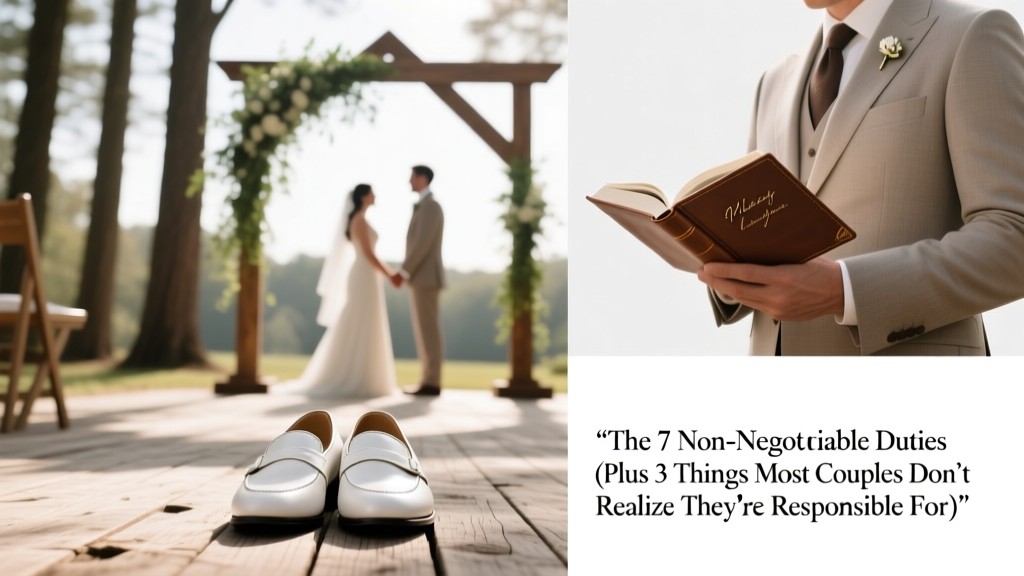 Wedding Officiant Duties: 7 Must-Do Tasks (2026)
 How to Arrange a Wedding Reception (2026)
 How Much to Hire DJ for Wedding (2026)
 Wedding Return Label Addressing Guide (2026)