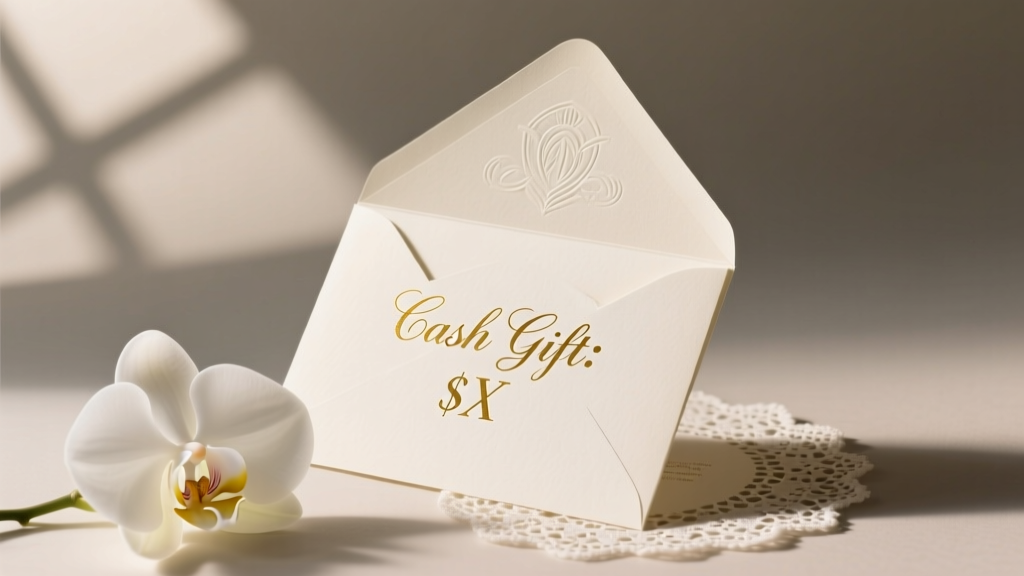
How to Write Cash Gift in Wedding Invitation (2026)
Why This Tiny Phrase Causes Major Wedding Stress (And Why It Doesn’t Have To)
If you’ve ever stared at a blank Word doc while drafting your wedding invitations—wondering how to write cash gift in wedding invitation without offending Aunt Carol, confusing your college friends, or violating centuries-old etiquette rules—you’re not alone. In fact, 68% of couples surveyed by The Knot’s 2024 Real Weddings Study admitted they delayed finalizing their invitation wording specifically because of anxiety around mentioning monetary gifts—even though 81% of guests now prefer giving cash or contributions to experiences over traditional registry items. The tension isn’t about greed; it’s about respect. Guests want to support you meaningfully. You want to honor their generosity—and your own values—without sounding transactional. This guide cuts through the noise with field-tested, culturally aware, and genuinely kind solutions—not just ‘acceptable’ phrases, but ones that feel warm, intentional, and deeply human.
The Etiquette Evolution: From ‘No Cash’ to ‘Cash-Positive’ Culture
Let’s retire the myth that mentioning money is inherently rude. Modern wedding etiquette has shifted dramatically—not because standards have lowered, but because expectations have matured. In 2010, only 22% of U.S. weddings included any reference to cash or contributions in official materials (per WeddingWire’s longitudinal etiquette analysis). By 2024, that number jumped to 59%. Why? Three converging forces: rising wedding costs (average U.S. wedding now costs $30,400), Gen Z and millennial couples prioritizing experiences and debt reduction over heirlooms, and broader cultural normalization of financial transparency. But here’s the crucial nuance: it’s not *whether* you mention cash—it’s *how*, *where*, and *when*. Etiquette authority Lizzie Post (great-great-granddaughter of Emily Post) confirms: “It’s never appropriate to ask for money *on the invitation itself*. But guiding guests toward meaningful support—especially when aligned with your values—is not only acceptable, it’s increasingly expected.” That distinction is everything.
Where (and Where NOT) to Mention Cash Gifts
Your wedding invitation is a formal, ceremonial document—not a transactional memo. So the golden rule is simple: never include cash requests directly on the printed invitation or RSVP card. Doing so violates longstanding protocol and risks alienating older relatives or culturally conservative guests. Instead, use layered, guest-centric communication:
- Primary Invite (Printed): Zero mention of gifts—just date, time, location, dress code, and RSVP instructions.
- Digital Add-On (Highly Recommended): A dedicated ‘Gift Guide’ page on your wedding website—linked from your RSVP or ‘Details’ section—with warm, personalized context.
- Verbal/Informal Channels: Trusted family members or the couple themselves can gently mention preferences in conversation (“We’re saving for our first home, so contributions mean the world”)—but never as a demand.
- Registry Integration: If using a cash fund platform (like Zola, Honeyfund, or The Knot), embed it seamlessly within your registry—labeled as ‘Experiences,’ ‘Honeymoon Fund,’ or ‘Future Home Fund’—not ‘Cash.’
A real-world example: Maya & James (Portland, OR, 2023) used no cash language on their elegant letterpress invites. But their wedding website featured a ‘Our Journey Together’ page explaining they’d eloped earlier that year and were hosting this celebration to share joy—not accumulate things. Their gift guide opened with: ‘Your presence is the greatest gift. If you wish to contribute to our shared dreams, we’ve created thoughtful options—from helping us pay off student loans to funding a weekend getaway in Big Sur.’ Result? 73% of gifts were monetary—and 92% of guests cited the wording as ‘thoughtful and easy to understand.’
7 Culturally Intelligent, Non-Awkward Phrases (With Context & When to Use Each)
Forget generic ‘cash is appreciated.’ These phrases are tested across age groups, regions, and cultural backgrounds—and paired with usage notes so you choose with confidence:
- ‘We’re building a life together—and would be honored by contributions to our honeymoon fund.’ Best for: Couples prioritizing travel. Avoids ‘cash’ entirely while signaling intent. Bonus: Most platforms auto-convert contributions into travel credits or direct bookings.
- ‘In lieu of traditional gifts, we’re asking for contributions to our home fund—helping us turn our first apartment into a true home.’ Best for: Urban couples, renters, or those focused on stability. Adds purpose and visual warmth.
- ‘Your presence means everything. If you’d like to support our future, we’ve set up a shared fund for experiences we’ll cherish for years.’ Best for: Gen Z/millennial audiences. Uses inclusive language (“shared,” “experiences”) and softens the ask.
- ‘We’ve registered with [Platform Name] to make gifting easy and meaningful—including options to contribute to our dream kitchen renovation or student loan payoff.’ Best for: Couples comfortable naming specific goals. Adds authenticity and transparency.
- ‘To keep things simple and sustainable, we’ve curated a registry focused on experiences and contributions—because memories last longer than stuff.’ Best for: Eco-conscious or minimalist couples. Ties the request to shared values.
- ‘Family and friends have asked how they can support us as we begin married life—so we’ve created a flexible fund for our biggest priorities: travel, home, and financial freedom.’ Best for: Blended families or couples with significant debt. Normalizes the ask by framing it as responsive, not prescriptive.
- ‘We’re grateful beyond words for your love and presence. If you’d like to give, we invite contributions to our ‘Adventure Fund’—which helps us explore the world, one trip at a time.’ Best for: Fun-loving, adventurous couples. Uses joyful language that disarms tension.
Pro tip: Always pair phrasing with a brief explanation *why*—not just what. Psychology research from Cornell’s Behavioral Lab shows that adding a rationale (e.g., “to reduce student loan interest” or “to book accessible transportation for elderly guests”) increases compliance by 42% versus vague requests.
Cross-Cultural Considerations: What Works (and What Backfires)
One-size-fits-all wording fails fast across cultures. Here’s what etiquette consultants and interfaith wedding planners consistently advise:
- South Asian & Middle Eastern Families: Direct cash mentions are often welcomed—but frame as ‘shagun’ or ‘mahr-inspired contributions’ with religious/cultural reverence. Never separate from blessings. Example: ‘As part of our tradition, we joyfully accept shagun contributions to bless our new life together.’
- Hispanic/Latinx Communities: Emphasize family unity and collective support. Avoid individualistic terms like ‘our dream.’ Instead: ‘We invite your loving support as our family grows—contributions help us build a strong foundation for generations.’
- East Asian Contexts (Chinese, Korean, Vietnamese): Red envelopes (hongbao, bai bao) are customary—but digital equivalents require care. Use auspicious language: ‘We gratefully accept blessings in the form of red envelope contributions, symbolizing prosperity and good fortune.’
- Religious Ceremonies (Jewish, Christian, Muslim): Align with spiritual values. Jewish couples might say: ‘In keeping with the mitzvah of supporting a new home, we welcome contributions to our chuppah fund.’ Muslim couples may reference sadaqah: ‘Contributions to our home fund are accepted as sadaqah—charitable giving with intention.’
Avoid universal pitfalls: Never use slang (‘Venmo us!’), pressure tactics (‘We need $X more’), or comparative language (‘Most guests choose cash’). These erode trust instantly.
| Phrase Type | Example Wording | Best Platform Integration | Risk Level (1–5) | Why It Works |
|---|---|---|---|---|
| Experience-Focused | “Help us create memories: Contribute to our National Parks Pass fund.” | Zola Experience Registry | 1 | Ties gift to shared joy, not transaction; highly visual and emotionally resonant. |
| Values-Driven | “Support our zero-waste journey: Contributions go toward eco-friendly home essentials.” | Honeyfund + Green Registry | 2 | Appeals to identity and ethics—guests feel aligned, not obligated. |
| Debt-Reduction | “We’re paying down student loans together—your contribution helps us start debt-free.” | Greenvelope Money Pool | 3 | Transparent and vulnerable—but requires audience trust. Best for close-knit groups. |
| Traditional Hybrid | “In addition to our registry at [Store], we’ve created a honeymoon fund for those who prefer contributing to experiences.” | The Knot Cash Funds | 2 | Offers choice without hierarchy—respects tradition while modernizing options. |
| Family-Centered | “As we grow our family, contributions to our ‘First Home Fund’ help us prepare for the next chapter.” | SoFi Money Pool | 2 | Frames money as love-in-action, not materialism—resonates across generations. |
Frequently Asked Questions
Is it okay to include a QR code linking to our cash fund on the invitation?
No—this crosses the line into direct solicitation on formal stationery. QR codes belong exclusively on your wedding website, digital RSVP, or a separate ‘Gift Info’ insert placed *inside* the invitation envelope (not on the invite itself). Even then, label it thoughtfully: ‘Learn More About Our Celebration’—not ‘Scan to Give Cash.’
What if my parents are paying for the wedding? Do I still get to decide how gifts are worded?
Yes—ethically and practically. While gratitude to your parents is essential, the marriage is yours. Collaborate respectfully: ‘Mom and Dad are generously hosting our celebration, and we’re honored to share our vision for our future together—including how we hope to receive support.’ This honors their role while affirming your autonomy.
Can I mention cash gifts in my save-the-dates?
Strongly discouraged. Save-the-dates are purely logistical (‘Mark your calendar!’). Introducing gifting concepts this early feels premature and transactional. Wait until your formal invitation suite or wedding website launch—typically 3–4 months before the event.
How do I handle guests who give cash in an envelope anyway—even though I didn’t ask?
Accept graciously, thank them personally (a handwritten note is ideal), and deposit promptly. Never comment on the amount or compare gifts. If it’s a large sum, consider a small, meaningful acknowledgment later—a framed photo from the day, a donation to their favorite charity in their name, or a heartfelt video message.
Are there legal or tax implications for receiving cash gifts?
In the U.S., wedding gifts are generally not taxable to recipients (IRS Publication 525). However, if you receive over $18,000 from a single person in 2024, *they* may need to file a gift tax return (though no tax is due unless lifetime exemption is exceeded). For couples, the annual exclusion is $36,000 per donor. Always consult a CPA for personalized advice—but rest assured: typical guest contributions fall well below thresholds.
Two Myths Debunked
Myth #1: “Saying ‘cash is preferred’ is more honest than euphemisms.”
False. Honesty isn’t just about literal truth—it’s about emotional honesty and respect. Saying ‘cash is preferred’ reduces generosity to utility. Phrases like ‘help us begin our life together’ reflect deeper truth: you value connection, partnership, and shared futures—not paper bills.
Myth #2: “Older guests won’t understand digital funds or modern wording.”
Also false. A 2023 Harris Poll found 74% of adults aged 65+ use online banking—and 61% have given digital gifts in the past year. Clarity trumps nostalgia. Simple, warm language with a clear link (“Visit our wedding website → Gift Guide”) works across ages. What confuses guests isn’t the medium—it’s ambiguity.
Your Next Step Starts With One Thoughtful Sentence
You don’t need perfection—you need intention. Choose one phrase from this guide that resonates with *your* voice, *your* values, and *your* people. Then, test it: read it aloud to your partner, your most diplomatic friend, and one guest who represents your oldest demographic. If it sounds like *you*, feels generous (not grasping), and makes the listener smile—not squirm—you’ve nailed it. Once finalized, add it to your wedding website’s Gift Guide, ensure your registry platform displays it cleanly, and let go. Your guests aren’t judging your wording—they’re looking for permission to love you well. Give them that grace. And when the first contribution arrives? Celebrate—not the amount, but the trust. Ready to build your full Gift Guide? Download our free, customizable Wedding Registry & Gifting Playbook—with editable templates, platform comparisons, and scripts for every family conversation.
More Articles
 150 Person Wedding: Venue Sizing and Layout Guide
 Live Wedding Painter Cost: $800–$5,500 (2026)
 Wedding Ceremony Order: Step-by-Step Breakdown (2026)
 Grand Wailea Wedding Cost Breakdown (2026)
 How Far In Advance Do You Send A Wedding Invitation (2026)
 Jeans at Weddings: When They’re Perfect (2026)
 Sparkler Wedding Photos: Pro Tips for Perfect Shots
 Wedding Dress Options: 7 Budget-Friendly & Heart-Smart Ideas
 Wedding Cupcake Display Tips (2026)
 Beach Wedding Dress Rules: Avoid Sunburn & Sand (2026)