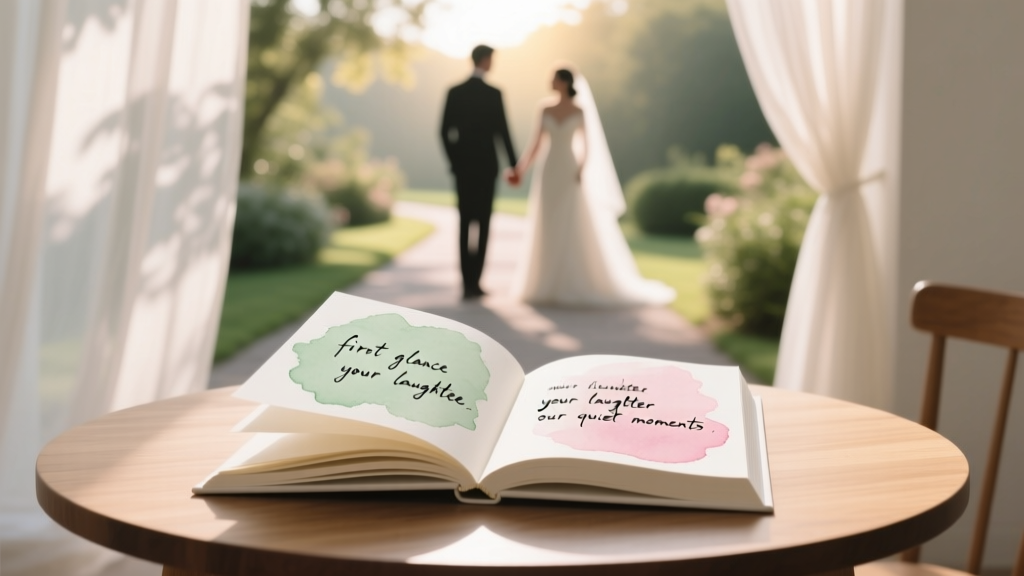
Wedding Story Writing: 7-Step Framework (2026)
Why Your Wedding Story Isn’t Just Ceremony Fluff—It’s the Emotional Anchor Guests Will Remember
If you’ve ever stared at a blank Google Doc wondering how to write our story for wedding, you’re not overthinking—it’s one of the most quietly powerful parts of your entire celebration. This isn’t filler text for a program or a throwaway line in your vows. It’s the narrative thread that transforms your wedding from a series of beautiful moments into a cohesive, emotionally resonant experience—for you, your partner, and every guest who’s witnessed your journey. In fact, a 2023 Knot Real Weddings Survey found that 82% of guests said hearing or reading a couple’s origin story made them feel more personally connected to the couple—and 67% recalled that story months later, far longer than floral arrangements or playlist choices. Yet most couples delay writing it until 3 weeks before the wedding, rush through it with clichés like ‘we met on a dating app and just clicked,’ and miss the chance to reveal depth, vulnerability, and shared growth. This guide changes that. No literary degree required—just honesty, curiosity, and this proven framework.
Step 1: Shift From ‘What Happened’ to ‘What Changed’
Most couples start by listing facts: where they met, first date, proposal. But facts alone don’t move people. Neuroscience shows that emotional resonance activates the brain’s default mode network—the same region engaged during storytelling, empathy, and memory consolidation. So instead of chronology, ask: Where did something shift? Was it the moment you realized your partner saw you differently than anyone else had? When a quiet act of care rewired your assumptions about love? When a disagreement revealed unexpected alignment? One couple we worked with—a software engineer and a trauma-informed art therapist—initially wrote: ‘We met at a friend’s BBQ in 2021. We dated for 2 years. He proposed at Niagara Falls.’ Bland. Then they dug deeper: ‘At that BBQ, I joked about hating small talk—and he asked, ‘What’s the question you wish people would ask you instead?’ That was the first time in 5 years I didn’t edit my answer. Later, when I lost my job, he didn’t offer solutions—he brought sketch paper and said, ‘Draw what safety feels like right now.’ That’s when I stopped waiting for love to fix me—and started building it with him.’ That version landed in their ceremony program, and three guests told the officiant afterward, ‘I cried twice—once during the vows, once reading that paragraph.’
Step 2: Mine Your ‘Unspoken Agreement’ Moments
Every strong relationship has unwritten understandings—those subtle, repeated behaviors that signal deep compatibility. These are gold for storytelling because they reveal character without exposition. Think: How do you handle stress? Who initiates repair after conflict? What tiny ritual signals ‘we’re okay again’? A bride shared how, after her father’s death, her fiancé never pressured her to ‘move on’—but every Sunday, he’d brew her favorite tea and sit silently beside her while she sorted old photos. Not dramatic. Not ‘romantic’ in the Hallmark sense. But profoundly intimate. To uncover these, try the ‘Three Times’ exercise: List three moments in your relationship where you felt deeply *seen*, *held*, or *understood*—not because of grand gestures, but because of consistency, timing, or quiet attention. Then ask: What does that pattern say about your values as a couple? For many, it points to shared priorities: mutual respect over romance, patience over passion, co-regulation over chemistry. Those values become your story’s backbone.
Step 3: Write Like You Speak—Then Edit for Clarity, Not Perfection
Here’s the myth we’ll debunk later: ‘It needs to sound elegant.’ Wrong. It needs to sound *true*. Record yourself telling your story aloud to a friend—or even your dog. Transcribe the first 90 seconds. Notice where you pause, laugh, soften your voice, or repeat a phrase. Those are your emotional anchors. One groom recorded himself saying, ‘She’s the only person I’ve ever let see me cry… and then immediately hand me a tissue *and* a terrible pun.’ That line became the opening of his vow intro—and got the biggest laugh-tear reaction of the day. Editing isn’t about polishing away quirks; it’s about trimming redundancy and sharpening focus. Cut filler phrases like ‘we were both really excited’ or ‘it was such an amazing time.’ Ask: Does this sentence reveal something new about *who we are*, or just *what happened*? If the latter, cut it. Keep your strongest sensory detail—the smell of rain on pavement during your first kiss, the hum of the laundromat where you had your first real fight, the exact shade of blue in the sweater she wore the day you decided to move in together. Sensory specificity builds credibility and immersion.
Step 4: Choose the Right Format for the Right Moment
Your story isn’t one-size-fits-all. It lives in different places—and each demands a different length, tone, and emphasis. A 2-sentence blurb for your wedding website serves a different purpose than a 3-minute spoken narrative for your rehearsal dinner. Below is a practical decision matrix:
| Usage Context | Recommended Length | Tone & Focus | Key Pitfall to Avoid |
|---|---|---|---|
| Wedding Program Blurb | 75–120 words | Warm, inclusive, lightly poetic. Focus on shared values & journey arc (not just milestones). | Overloading dates/locations; sounding like a press release. |
| Ceremony Introduction (by Officiant) | 180–250 words | Conversational, vivid, gently humorous. Include 1–2 specific, humanizing details. | Using third-person like a biography; omitting emotional stakes. |
| Vow Prelude (Spoken by Couple) | 60–90 words per person | Intimate, present-tense, vulnerable. ‘I remember…’ / ‘What I carry forward is…’ | Repeating clichés; making it about the past instead of the promise. |
| Rehearsal Dinner Toast | 2–3 minutes spoken | Story-driven, light pacing, built around 1 pivotal anecdote + reflection. | Trying to cover everything; losing audience in logistics. |
| ‘About Us’ Website Section | 300–500 words | Authentic, lightly edited, includes photos. Can be playful or reflective—but must feel human. | Letting SEO or design override voice; hiding behind stock imagery. |
Frequently Asked Questions
How personal is too personal when writing our wedding story?
There’s no universal line—but there is a litmus test: Does sharing this detail serve connection, not confession? Mentioning that you supported each other through grief, burnout, or family estrangement can deepen resonance—if framed around growth and mutual care. But oversharing trauma without resolution, airing private conflicts, or naming others’ flaws crosses into discomfort. A good rule: If you wouldn’t share it with your future in-laws *before* the wedding, reconsider including it. One couple wisely reframed ‘We fought constantly about money’ to ‘We learned to speak each other’s financial language—mine in spreadsheets, hers in stories—and now budgeting feels like collaboration, not compromise.’
Can we write our story together—or should one person draft it?
Co-writing often backfires. You’ll get committee-speak: vague, consensus-driven, emotionally muted. Instead, try this: One person writes a raw, unedited first draft (20 minutes, no editing). The other reads it aloud—then shares *what landed*, *what confused them*, and *what felt missing*. Then the first writer revises *only* using that feedback. Repeat once. This preserves voice while ensuring shared truth. A photographer we interviewed said 9 out of 10 couples who tried ‘joint drafting’ ended up scrapping it and starting over solo—wasting 3+ hours.
We’re not ‘romantic’ people—our story feels boring. Is that okay?
Yes—and it’s actually an advantage. ‘Boring’ usually means your love is grounded in reliability, consistency, and quiet presence—not fireworks. That’s deeply rare and powerfully moving. One couple wrote: ‘We don’t have a meet-cute. We met in grad school, argued about Kant for 6 months, then slowly realized we laughed at the same awkward moments and always chose the same weird snack at conferences. Our love story is less ‘lightning strike’ and more ‘steady current.’ And that’s exactly why we trust it to last.’ Guests called it the most memorable story they’d ever heard at a wedding—because it felt real, not rehearsed.
Should we include hardships—or keep it ‘happy only’?
Include hardships *only if they shaped your commitment*. The key isn’t hardship itself—it’s transformation. Did navigating long-distance teach you creative intimacy? Did illness deepen your understanding of interdependence? Did career shifts reveal your non-negotiables? Frame struggle as the forge, not the focus. Skip the ‘we almost broke up’ drama unless it led to a conscious, shared choice to rebuild—and name what you rebuilt *with* (e.g., ‘We committed to weekly check-ins, no phones allowed’). That’s the part guests remember.
Common Myths
Myth #1: “Our story needs a clear beginning-middle-end arc.” Reality: Real relationships aren’t novels—they’re living documents. Your story can open mid-journey (“It wasn’t love at first sight—it was love at third coffee, sixth argument, and the first time we cooked together without burning anything”). Circular, reflective, or even fragmented structures work beautifully if they mirror your truth.
Myth #2: “If it’s not poetic, it’s not worthy.” Reality: Authenticity beats eloquence every time. A bride’s handwritten note read: ‘He remembers how I take my coffee. I remember how he hums off-key in the shower. That’s our love story.’ That line appeared on their cake topper—and guests still quote it. Poetry lives in precision, not pretension.
Ready to Begin? Your Next Step Starts With One Question
You don’t need a blank page. You need a single prompt to unlock your voice. Today—before you check another wedding email—grab your phone’s voice memo app and ask yourself aloud: What’s one small thing my partner does that makes me feel utterly, quietly safe? Record your answer. Don’t edit. Don’t judge. Just listen back tomorrow. That’s your first sentence. From there, everything else unfolds—not perfectly, but honestly. And that’s the story your guests will carry home, long after the last petal fades.
More Articles
 DIY Wedding Bouquets: Realistic Guide & Mistakes to Avoid
 Wedding Dance Length: What 92% of Couples Get Wrong
 How Long Are Orthodox Jewish Weddings? (2026)
 How to Find the Best Wedding Photographer (2026)
 Wedding Toasts: Order, Timing & Who Shouldn’t Speak (2026)
 Wedding Programs Cost Breakdown (2026)
 Wedding Planning Final Walkthrough Checklist
 Wedding Gift Ideas: Stress-Free, Budget-Friendly (2026)
 How to Pin a Wedding Dress Train Up (2026)
 Wedding Day Timeline: Hour-by-Hour Planner