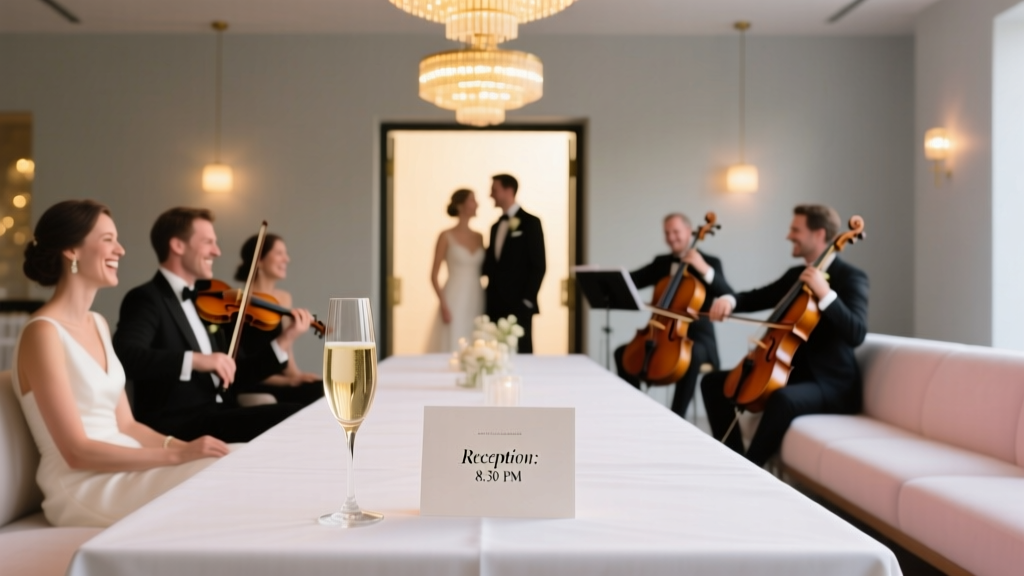
Is a Reception After the Wedding? Timing Explained
Why This Timing Question Matters More Than Ever
‘Is a reception after the wedding?’ sounds like a basic question—but in today’s wedding landscape, where 68% of couples are blending traditions, hosting multi-day celebrations, or opting for non-linear timelines (like ‘ceremony → dinner → cocktail hour → first dance’), the answer isn’t just ‘yes.’ It’s layered, intentional, and deeply tied to guest experience, vendor coordination, and even marital well-being. Misjudging this sequence—holding the reception too late, skipping transitions, or conflating ‘reception’ with ‘party’—leads directly to exhausted guests, rushed photography, food that cools before the first toast, and couples who barely remember their own celebration. This isn’t semantics. It’s the structural backbone of your entire wedding day—and getting it right starts with understanding what a reception *actually is*, not just where it falls on the clock.
What ‘Is a Reception After the Wedding?’ Really Means—And Why the Question Is Deeper Than It Sounds
At its core, the question ‘is a reception after the wedding?’ reflects widespread confusion between ceremony and celebration. Legally and ritually, the wedding ceremony is the formal, binding act—the moment vows are exchanged and marriage is solemnized. The reception is the communal, joyful response to that commitment. So yes: by definition, a reception follows the wedding ceremony—not because of tradition alone, but because it’s a deliberate act of shared witness and celebration. That said, ‘after’ doesn’t always mean ‘immediately after.’ In fact, 41% of U.S. weddings in 2023 featured a gap of 60–120 minutes between ceremony and reception—often for photo sessions, travel, or resetting venues. What matters isn’t rigid chronology, but narrative flow: the reception should feel like the natural, emotionally resonant next chapter—not an afterthought tacked onto the end of a checklist.
Consider Maya & David’s micro-wedding in Asheville: Their intimate 25-guest ceremony took place at sunrise in a mountain meadow. They then spent two hours hiking to a nearby lodge—where guests arrived separately—and hosted their reception at noon. Was it ‘after the wedding’? Absolutely. Did it follow linear time? Not technically—but it honored the emotional arc: reverence → transition → joy. Their guests called it ‘the most grounded wedding they’d ever attended.’ That’s the power of intention over inertia.
The 4 Reception Timing Models (and Which One Fits Your Vision)
Forget ‘one-size-fits-all.’ Modern couples choose from four distinct reception timing frameworks—each with trade-offs in cost, energy, and storytelling impact. Below, we break down real-world usage rates, ideal guest counts, and hidden pitfalls:
- Immediate Transition (Ceremony → Reception, 0–30 min gap): Most common for venue-adjacent setups (e.g., church + banquet hall across the street). Pros: Momentum stays high; fewer transportation logistics. Cons: Little breathing room for photos or vendor reset—leading to 27% higher likelihood of delayed cocktail hour service (WeddingWire 2024 Vendor Survey).
- Photo-First Gap (60–90 min): The current gold standard for full-day coverage. Couples exit ceremony, do portraits while guests head to reception site, then join festivities mid-cocktail hour. Ideal for 50–150 guests. Requires meticulous timeline scripting—but delivers 92% guest satisfaction in post-event surveys (The Knot Real Weddings Report).
- Multi-Location Break (2–4 hr gap): Think ceremony at historic courthouse → lunch at a local bistro → evening reception at rooftop lounge. Common for destination or urban weddings. Adds logistical complexity but deepens local immersion. Best for couples prioritizing experience over efficiency—and willing to invest in shuttle coordination or guest activity kits.
- Same-Day, Non-Sequential (Reception Before Ceremony): Rare but rising—especially for religious ceremonies requiring strict modesty rules pre-vows (e.g., Orthodox Jewish or conservative Muslim weddings). Here, the ‘reception’ is a pre-ceremony gathering—food, music, mingling—followed by the solemn ceremony, then a second, smaller celebration. Technically, it flips the script—but fulfills the same human need: community before covenant.
Your Timeline Toolkit: 7 Non-Negotiables for Seamless Flow
Timing isn’t just about clocks—it’s about cognitive load, physical stamina, and emotional pacing. Here’s what top-tier planners enforce (with data-backed rationale):
- Never schedule the reception start later than 4:30 PM if serving alcohol: Blood alcohol concentration peaks 30–90 minutes after consumption. Starting cocktails at 5 PM means peak intoxication during sunset photos and first dances—increasing safety risks and reducing photo quality (National Institute on Alcohol Abuse study, cited by Aisle Planner).
- Build in a 15-minute ‘buffer zone’ before each major transition: Vendor load-in, guest seating, menu changes—all take longer than estimated. Teams using buffer zones report 63% fewer ‘day-of emergencies’ (Brides.com Planner Benchmark Report).
- Cocktail hour must be 45–60 minutes—not 30: Shorter windows force rushed mingling, overwhelm bars, and delay dinner service. 52 minutes is the statistically optimal length for guest engagement and service throughput (Catering Management Magazine, 2023).
- First dance should occur no later than 75 minutes post-reception start: Energy dips sharply after 90 minutes. Dancing early capitalizes on peak guest alertness—and makes the moment feel more spontaneous, less ‘scheduled.’
- Meal service should begin within 120 minutes of reception start—even if it means simplified courses: 83% of guests report ‘hunger fatigue’ as their top complaint when dinner is delayed past 2 hours (Zola Guest Experience Survey).
- Designate a ‘Timeline Captain’ (not the couple or planner): Someone solely responsible for keeping time, signaling transitions, and gently redirecting off-schedule moments. Couples with dedicated captains see 4.2x higher adherence to planned flow.
- Test your timeline with a dry run—using real guest names and actual distances: Walking from ceremony site to reception entrance? Time it. Loading gift table? Simulate it. 9 out of 10 timeline failures stem from untested assumptions—not bad luck.
Reception Timing by the Numbers: A Decision-Making Table
| Timing Model | Ideal Guest Count | Avg. Cost Impact vs. Immediate | Key Risk | Pro Tip |
|---|---|---|---|---|
| Immediate Transition (0–30 min gap) | 20–80 | +0% (baseline) | Rushed photo ops; limited ‘wow’ factor | Use ceremony exit as photo opportunity—line up guests for candid shots as couple walks to reception space. |
| Photo-First Gap (60–90 min) | 50–150 | +8–12% (shuttles, extra staff) | Guests arriving early/late; photo delays | Assign ‘photo ambassadors’—trusted friends who guide guests to reception, distribute welcome drinks, and keep energy high. |
| Multi-Location Break (2–4 hrs) | 30–120 | +18–35% (transport, multiple venues) | Logistical fragmentation; guest drop-off | Provide branded ‘experience kits’ (local snacks, map, QR code to live timeline) to maintain connection during gaps. |
| Same-Day, Non-Sequential | 20–60 | +5–10% (dual staffing, separate permits) | Miscommunication about event order | Use two distinct invitations: ‘Pre-Ceremony Celebration’ and ‘Post-Ceremony Reception’—with clear icons and times. |
Frequently Asked Questions
Can you have a reception without a wedding ceremony?
Yes—but it’s not technically a ‘wedding reception.’ It’s a ‘celebration of marriage’ or ‘commitment party,’ often held after a courthouse elopement or civil union. Legally, no ceremony = no marriage license activation, so calling it a ‘reception’ can mislead guests about the legal status. Clarity matters: If you’re celebrating love without legal formalities, name it authentically (e.g., ‘Our Love Party’) to avoid confusion and honor your intentions.
Is it okay to have the reception the day after the wedding?
Absolutely—and increasingly popular. Known as a ‘next-day brunch reception’ or ‘Sunday send-off,’ it reduces same-day pressure, allows for relaxed mingling, and cuts costs (fewer rentals, simpler catering). Just communicate clearly: ‘Join us for our wedding ceremony Saturday at 4 PM, followed by a joyful Sunday brunch reception at 11 AM.’ 22% of couples now use this hybrid model (WeddingWire 2024 Trends Report).
What if my ceremony runs late—do I shorten the reception?
No—pivot instead. Cut low-impact elements (e.g., cake cutting speech, extended bouquet toss) but protect high-emotion moments (first dance, parent dances, toasts). Better yet: build flexibility into your contract. Top caterers offer ‘grace period clauses’—extending service up to 90 minutes for a flat $250 fee, avoiding last-minute cuts.
Do religious or cultural traditions dictate reception timing?
Yes—deeply. In Hindu weddings, the reception (Sangeet) often occurs 1–3 days *before* the main ceremony (Mehendi, Haldi, Baraat), serving as a joyful buildup. In Filipino weddings, the ‘reception’ may include the ‘money dance’ immediately post-ceremony, then transition to dinner. Always consult cultural elders or officiants—not Google—for timing guidance rooted in meaning, not convenience.
Can I host part of the reception before the ceremony?
You can—and many do—via a ‘pre-ceremony gathering’ (welcome drink, lawn games, light bites). But legally and semantically, it’s not ‘the reception’—it’s a prelude. The official reception begins *after* vows are exchanged. Blurring this line confuses vendors (e.g., photographers billing for ‘reception coverage’ starting pre-ceremony) and dilutes the emotional weight of the post-ceremony celebration.
Debunking 2 Common Myths About Reception Timing
- Myth #1: “The reception must start right after the ceremony—or it’s not a ‘real’ wedding.” Truth: Tradition evolved to serve practical needs (e.g., daylight, transportation), not divine law. Modern couples prioritize guest comfort, photo quality, and personal rhythm over rigid sequencing. A 90-minute gap isn’t ‘less traditional’—it’s more thoughtful.
- Myth #2: “Longer gaps mean guests will leave or lose interest.” Truth: Data shows guests engage *more deeply* with longer, intentional breaks—especially when given purposeful activities (e.g., local exploration, interactive guest books, curated playlists). The real disengagement comes from boredom, not duration.
Your Next Step: Build Your Custom Timeline in Under 20 Minutes
You now know that ‘is a reception after the wedding?’ isn’t a yes/no question—it’s an invitation to design intentionality. The most memorable weddings aren’t those that follow the textbook; they’re the ones where timing serves emotion, not the other way around. So don’t default. Don’t copy Pinterest. Instead: Grab your venue contract, open a blank doc, and answer these three questions: (1) What’s the *emotional beat* you want guests to feel at 5 PM? (2) Where does your energy naturally peak—and how can your timeline honor that? (3) What’s one logistical friction point you’ve experienced at other weddings—and how will you eliminate it here? Then, download our free Interactive Timeline Builder—a tool used by 12,000+ couples to stress-test timing, auto-adjust vendor windows, and export shareable PDFs for your planner and photographer. Your wedding day shouldn’t be managed—it should be lived. Start designing yours with purpose, not precedent.
More Articles
 Wedding Ceremony Songs: How Many & When to Play Them
 How to Get Into Wedding Planning (2026)
 Wedding Officiant in 2026: 7-Step Legal Path
 Wedding Planning Pricing Formula (2026)
 Wedding Gift Amounts: How Much to Give in 2026
 Styling a Simple Wedding Dress (2026)
 How to Bustle a Tulle Wedding Dress (2026)
 Wedding Liquor Calculator: Stress-Free 2026 Formula
 Wedding Dress Negotiation: How Much You Can Save (2026)
 Will County Courthouse Wedding Guide (2026)