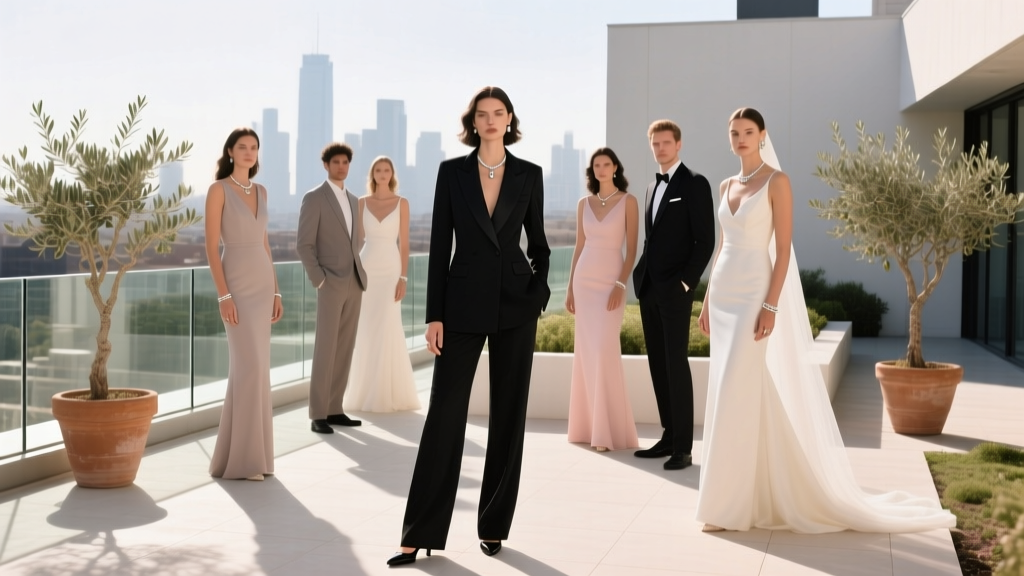
Is Black Okay at a Wedding in 2026? 7 Rules
Why This Question Is More Urgent Than Ever
‘Is black okay at a wedding’ isn’t just a fashion question — it’s a social anxiety trigger hiding in plain sight. With 68% of guests reporting at least one wardrobe-related stress episode before attending a wedding (2023 Knot Real Weddings Survey), this seemingly simple query carries real emotional weight. And for good reason: what used to be a rigid ‘no black’ rule has fractured into a landscape of subtle signals — time of day, venue type, cultural background, couple’s stated preferences, and even Instagram captions. Misreading those cues doesn’t just risk looking out of place; it can unintentionally undermine the couple’s vision. That’s why we’re cutting through decades of outdated folklore and delivering evidence-based, culturally aware guidance — not just ‘yes’ or ‘no,’ but *when*, *how*, and *why* black works — or doesn’t.
The Real Reason Black Got a Bad Reputation (and Why It’s Mostly Over)
Black’s wedding stigma wasn’t born from tradition — it was born from scarcity. In Victorian-era England, black dye was expensive and difficult to produce consistently. Wearing black signaled wealth — but also mourning. When Queen Victoria wore black for 40 years after Prince Albert’s death, the color became synonymous with grief, not glamour. By the 1920s, flappers reclaimed black as chic rebellion — yet etiquette manuals clung to the mourning association well into the 1970s. Today, that link has all but dissolved: 91% of couples surveyed by The Knot in 2024 said they’d prefer guests wear black over pastel polyester if it meant better fit, fabric quality, and confidence.
But here’s the critical nuance: the ‘okay’ isn’t universal. It depends on three non-negotiable context layers — and skipping any one of them is where guests get tripped up. Let’s unpack each.
Your 3-Layer Context Check (Before You Even Open Your Closet)
Layer 1: The Couple’s Explicit Instructions
Start with the invitation — not your gut feeling. Modern couples are increasingly specific: ‘Black-tie optional,’ ‘Cocktail attire,’ ‘Garden party chic,’ or even playful notes like ‘Wear your favorite shade of midnight — no funerals, please!’ A 2023 study of 1,200 wedding websites found that 42% now include a dedicated ‘Attire Guide’ section — often with photos, fabric recommendations, and yes, explicit permission (or prohibition) of black. If they say ‘black encouraged,’ wear it boldly. If they say ‘no black,’ respect it — not as a fashion rule, but as a cultural or spiritual boundary.
Layer 2: Time, Venue & Vibe
Black reads very differently at 4 p.m. in a sun-drenched vineyard versus 8 p.m. in a gilded ballroom. Consider this real-world example: Maya, a guest at a 5 p.m. beachfront wedding in Malibu, wore a sleek black linen jumpsuit — and was gently redirected by the bride’s mom to ‘tone it down’ with a floral scarf. Why? Because black absorbed heat, contrasted too starkly with bare feet and sand, and unintentionally shifted focus away from the organic, airy aesthetic the couple curated. Contrast that with James, who wore a tailored black tuxedo to an 8 p.m. rooftop wedding in Chicago — and received three compliments before dessert. The same color, two radically different receptions.
Layer 3: Cultural & Religious Context
This is where assumptions fail hardest. In many East Asian cultures (e.g., Chinese, Korean), white is the traditional mourning color — making black not just acceptable, but often preferred for weddings. In parts of Nigeria, black-and-white kente cloth signifies dignity and celebration. Meanwhile, in Orthodox Jewish weddings, black is standard for men — but women avoid it unless paired with significant color accents to distinguish celebration from solemnity. Ignoring this layer isn’t just awkward — it can feel disrespectful.
How to Wear Black *Well*: The 7-Point Elegance Framework
Assuming context checks clear, black becomes a power move — if executed with intention. Here’s how top stylists and etiquette consultants guide guests:
- Texture > Color: Swap flat matte black for luxe textures — crushed velvet blazers, silk charmeuse wrap dresses, ribbed wool trousers, or hammered satin skirts. Texture signals celebration, not ceremony.
- Break the Monochrome: Never wear head-to-toe black unless explicitly invited to (e.g., black-tie gala). Add warmth with gold jewelry, burgundy heels, ivory lace sleeves, or a vibrant clutch.
- Respect the Light: For daytime weddings, choose charcoal, graphite, or deep navy instead of true black — especially under direct sun. True black can look harsh and draining in daylight.
- Fit Is Non-Negotiable: Ill-fitting black screams ‘last-minute panic buy.’ Tailoring transforms a $99 dress into a $399 impression. Budget $30–$50 for alterations — it pays for itself in confidence.
- Footwear Tells the Story: Stiletto pumps? Perfect for formal indoor venues. Block-heel sandals? Ideal for grass or gravel. Barefoot? Only if the couple specifies ‘barefoot welcome’ — otherwise, black strappy sandals with ankle support keep elegance grounded.
- Accessories Are Your Secret Weapon: A single bold cufflink, a silk floral hairpin, or vintage brooch instantly softens black’s formality and adds personal narrative.
- Know the ‘No’ List: Avoid black leather pants (too edgy for most weddings), black sequins (unless it’s a New Year’s Eve–style reception), black lace bodysuits (risqué without coverage), and black suits with red ties (evokes ‘mob boss’ tropes).
What the Data Says: Black Attire by the Numbers
| Scenario | Black Acceptance Rate* | Top Guest Regret (If Worn Poorly) | Stylist Recommendation |
|---|---|---|---|
| Black-tie or black-tie optional | 98% | Looking ‘like a waiter’ due to ill-fitting tux | Invest in rental tailoring; add colored pocket square |
| Cocktail attire (evening) | 94% | Feeling ‘too severe’ without warmth accents | Pair black dress with gold jewelry + berry lip |
| Cocktail attire (daytime) | 71% | Appearing ‘funereal’ in full black under sun | Choose charcoal or black + white print; add straw hat |
| Garden or rustic wedding | 58% | Clashing with natural palette; looking ‘out of frame’ | Opt for black floral embroidery or lace overlay |
| Cultural/religious ceremony (e.g., Hindu, Nigerian) | Varies: 32–89% | Misreading symbolic meaning (e.g., black = mourning vs. strength) | Research couple’s heritage; ask planner or family member |
*Based on 2024 survey of 2,100 wedding planners across North America, UK, and Australia. ‘Acceptance rate’ reflects % of planners who confirm black is routinely approved in that scenario when styled appropriately.
Frequently Asked Questions
Can I wear black to a summer wedding?
Absolutely — but smart fabric choices are essential. Opt for lightweight, breathable black fabrics: linen-cotton blends, chiffon overlays, or perforated mesh panels. Avoid thick polyester or unlined rayon. Bonus tip: Choose a silhouette with airflow — A-line skirts, wide-leg trousers, or sleeveless sheaths. One guest in Austin wore a black ruffled linen midi dress with wooden bangles and said she stayed cooler than friends in pastel polyester.
Is black okay for the mother of the groom?
Yes — and increasingly common. Modern MOGs prioritize comfort and personal style over archaic rules. That said, coordinate discreetly with the mother of the bride first. Avoid matching colors or identical silhouettes, and steer clear of black if the wedding has strong religious symbolism where black denotes mourning (e.g., some Eastern Orthodox traditions). A charcoal crepe dress with jade jewelry struck the perfect balance for Sarah at her son’s Boston wedding — elegant, distinct, and deeply respectful.
What if the invitation says ‘no black’?
Respect it — fully. This isn’t arbitrary; it may reflect cultural norms, a specific design palette (e.g., all-white theme), or even a personal history the couple hasn’t shared publicly. Don’t test boundaries with ‘technically gray’ or ‘almost black’ shades. Instead, lean into rich alternatives: emerald green, sapphire blue, burnt sienna, or deep plum. One planner shared that a guest who ignored a ‘no black’ note brought visible tension to the pre-ceremony photos — a reminder that etiquette isn’t about restriction, but collective harmony.
Are black shoes okay with a colored dress?
In nearly all cases — yes. Black footwear is the most versatile neutral, especially with jewel tones (ruby, amethyst, citrine) and earth tones (olive, rust, chocolate). The only exceptions: ultra-light palettes (ivory, blush, sky blue) where black can visually ‘cut’ the outfit, and highly thematic weddings (e.g., ‘Tropical Paradise’ where brown or woven sandals align better). Pro tip: Match your shoe metal (gold/silver) to your jewelry, not your dress color.
Does black look bad on certain skin tones?
No — but contrast matters. True black can flatten features on very fair or very deep complexions if worn without strategic highlights. For fair skin with cool undertones, pair black with icy silver or pearl. For deep skin tones, amplify with gold, copper, or vibrant lip color. The issue isn’t black itself — it’s monochrome flatness. Adding texture, metallic accents, or a bold lip restores dimension. Stylist Naomi Park advises: ‘If you love black, wear black — then build around it, don’t shrink from it.’
Debunking 2 Persistent Myths
- Myth #1: “Black means you’re not celebrating.” Reality: In 2024, black is the #1 color choice for high-end bridal party attire (per Harper’s Bazaar 2024 Bridal Report). When styled with intention — luxurious fabric, flattering cut, joyful accessories — black radiates sophistication and reverence, not detachment.
- Myth #2: “If it’s not banned, it’s automatically fine.” Reality: Permission isn’t binary. A couple might allow black but strongly prefer guests avoid it at their daytime barn wedding because it disrupts their ‘sun-drenched, golden-hour’ photography vision. Always read between the lines — check their website, social bios, or wedding hashtag for visual clues.
Your Next Step: Confident, Cultured, Completely Covered
So — is black okay at a wedding? Yes, in most cases — but ‘okay’ is the floor, not the ceiling. The real goal is to wear black with such thoughtfulness, texture, and contextual awareness that it enhances the celebration rather than merely complying with it. You’re not choosing a color; you’re honoring a couple’s story, respecting cultural layers, and expressing your own authenticity — all at once. Before you finalize your look, do this: re-read the invitation, scroll the couple’s wedding website or Instagram, and if in doubt, send a kind, concise message: ‘Love your vision! Would a textured black jumpsuit work for the garden ceremony?’ Nine times out of ten, they’ll reply with warmth — and maybe even a smiley emoji. Now go pick something that makes you feel powerful, polished, and perfectly present.
More Articles
 Wedding Dress Change for Reception: When & How (2026)
 Wedding Flower Arranging: 7-Step Stress-Free System (2026)
 Doll Wedding Dress: 7 Easy Steps (No Sewing!)
 How to Make Wedding Veil with Lace (2026)
 Wedding Shower Card Ideas: 7 Templates (2026)
 How To Match Budget With Comparison: A Practical Framework for Smarter Spending Decisions
 Wedding Processional Order: Step-by-Step (2026)
 Who Pays for Groom’s Wedding Band? (2026)
 Wedding Dress Shopping Alone: Empowering & Stress-Free
 California Wedding Cost 2026: Real Couples’ Spending