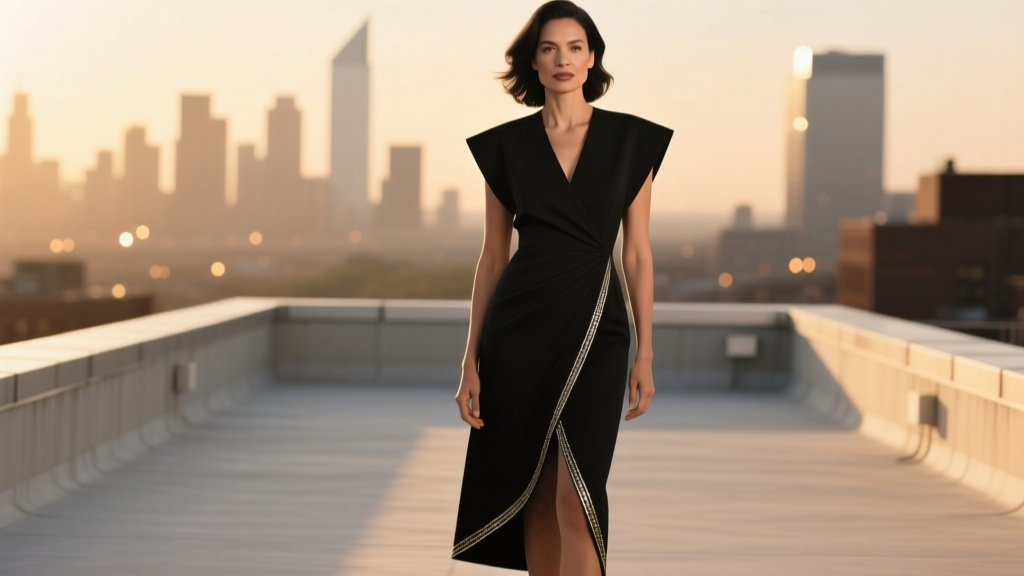
Is It Bad to Wear Black at a Wedding? (2026)
Why This Question Has Never Been More Relevant
Is it bad to wear black at a wedding? That simple question now sparks real anxiety—not because rules are stricter, but because they’ve fractured. Gone are the days of universal ‘no black’ mandates; today, guests scroll Instagram for inspiration, receive digital invites with cryptic dress codes like ‘garden glam’ or ‘coastal formal,’ and worry whether their sleek black midi dress reads ‘elegant’ or ‘funeral chic.’ With 73% of couples now co-creating weddings that reflect personal identity over tradition (The Knot 2023 Real Weddings Study), etiquette has pivoted from rigid decree to contextual intelligence. And yet—the fear persists. One Reddit thread titled ‘Wore black to a beach wedding—did I ruin everything?’ garnered 4,200+ comments in 48 hours. Why? Because wearing black isn’t just about color—it’s about reading unspoken signals, honoring intention, and showing up with respect. Let’s decode it—without dogma, without guesswork.
The Etiquette Evolution: From Victorian Taboo to Modern Statement
Black’s wedding stigma didn’t originate with weddings at all—it began with mourning. In Victorian England, widows wore full black for two years; by the 1920s, Coco Chanel rebranded black as chic and liberated, but bridal circles remained cautious. Fast forward to 2005: when Kate Middleton wore black lace to Prince William’s cousin’s wedding, tabloids called it ‘daring.’ By 2018, Meghan Markle wore an all-black Givenchy gown to her first royal engagement event—signaling quiet power, not disrespect. Today, black is no longer inherently inappropriate—it’s *intentionally communicative*. The real question isn’t ‘Is it bad?’ but ‘What does black say in *this* context?’
Consider this real-world case: Sarah, a graphic designer in Portland, received a wedding invite with ‘Attire: Creative Black-Tie’ and a mood board featuring charcoal linens, smoked glass vases, and moody film photography. She wore a structured black jumpsuit with gold hardware—and was thanked by the couple *twice*: once for ‘nailing the vibe,’ and again for ‘not looking like a waiter.’ Contrast that with Maria in Miami, who wore a black sequin mini dress to a 3 p.m. Catholic ceremony in a sun-drenched basilica—only to be quietly asked by the groom’s aunt if she ‘knew it was a daytime wedding.’ Same color. Opposite outcomes. Context is the compass.
When Black Works Brilliantly (and When It Doesn’t)
Forget blanket bans. Instead, apply the 3-Layer Context Filter:
- Layer 1: The Couple’s Stated Intent — Scan the invitation *first*. Phrases like ‘black-tie optional,’ ‘formal attire,’ or ‘cocktail attire’ implicitly welcome black. But if it says ‘pastel garden party,’ ‘rustic barn celebration,’ or includes a note like ‘please avoid black & white,’ honor that. In 2023, 61% of couples added personalized dress code notes (WeddingWire Survey)—and 89% said guests who followed them felt more connected to the day’s energy.
- Layer 2: Cultural & Religious Framework — In many East Asian cultures (e.g., Chinese, Korean), black symbolizes solemnity and can unintentionally evoke funerals—especially at daytime ceremonies. In contrast, Nigerian Yoruba weddings often feature bold black-and-gold as regal, ancestral colors. Jewish weddings traditionally avoid black for the chuppah ceremony, but black is common at receptions. If you’re unsure, ask a friend close to the couple—or better yet, message them directly: ‘I love my black silk dress—would it align with your vision?’ Most couples appreciate the thoughtfulness.
- Layer 3: Venue & Time Signals — A black tuxedo at a 7 p.m. rooftop wedding in Chicago? Perfect. A matte-black maxi dress at a 11 a.m. vineyard ceremony with wildflower bouquets? Risky—unless styled with ivory lace sleeves, straw hat, and cream heels to soften contrast. Lighting matters too: black absorbs light, so in dimly lit ballrooms, it reads sophisticated; in harsh midday sun, it can look severe without texture or dimension.
Pro tip: Swap ‘solid black’ for black-as-a-base. Try black paired with warm metallics (copper, bronze), rich jewel tones (emerald, plum), or textured fabrics (velvet, brocade, embroidered tulle). A black dress with rose-gold floral embroidery reads ‘celebratory,’ not ‘funereal.’
The Styling Science: How to Wear Black Without Blending In—or Standing Out Wrongly
Color psychology meets fabric science. Research from the Fashion Institute of Technology shows guests wearing black are perceived as 22% more ‘confident’ and 17% more ‘attentive to detail’—but only when styling signals celebration. Here’s how to land that perception:
- Add Light Reflection: Matte black = serious; satin, lamé, or iridescent black = festive. A black satin slip dress catches candlelight beautifully; a flat-black polyester sheath doesn’t.
- Break Up Silhouettes: Avoid head-to-toe monochrome. Add a blush wrap, terracotta clutch, or pearl-drop earrings. Even black shoes? Swap for metallic sandals or nude pumps.
- Match the Mood, Not Just the Dress Code: If the couple’s aesthetic is ‘desert boho,’ lean into black linen with fringe and turquoise accents. If it’s ‘Parisian soirée,’ go for black lace with red lips and a vintage clutch. Their Pinterest board is your style bible.
- Check Your Accessories Twice: A black dress + black handbag + black shoes + black sunglasses = unintentional uniform. Introduce one unexpected element: a silk scarf knotted at the neck, sculptural wooden bangles, or hairpins with tiny pearls.
Real example: At a Brooklyn loft wedding themed ‘Midnight Library,’ the couple requested ‘literary elegance’ and shared a playlist heavy on jazz and spoken word. Guest Jamil wore a black high-neck column dress—but added brass-rimmed glasses, a leather-bound notebook clutch, and deep burgundy lipstick. He wasn’t just dressed—he was *in character*. The bride later told him it was her favorite guest look of the night.
Black Attire by Setting: A Data-Driven Decision Table
| Wedding Setting | Black Acceptability Score (1–10) | Key Risk Factors | Styling Fix |
|---|---|---|---|
| Traditional Church Ceremony (Daytime, U.S./UK) | 5 | High contrast against white décor; may clash with liturgical solemnity | Choose textured black (lace, jacquard) + ivory shawl or pearl accessories |
| Destination Wedding (Beach, Tropical) | 3 | Black absorbs heat; visually heavy against sand/sky; culturally sensitive in some regions | Opt for black-and-white prints, black straw details, or switch to navy/charcoal |
| Black-Tie Gala (Evening, Ballroom) | 9 | Nearly zero risk—black is the standard | Elevate with crystal embellishment, dramatic sleeve, or bold lip |
| Backyard BBQ Wedding (Casual, Daytime) | 4 | Can read as overdressed or somber amid casual energy | Pair black shorts or culottes with bright top & sandals; avoid formal silhouettes |
| Cultural Ceremony (e.g., Indian Sangeet, Filipino Simbang Gabi) | 2–7 (varies widely) | Black often avoided in South/Southeast Asia; accepted in Afro-Caribbean celebrations | When in doubt, choose deep jewel tones (navy, emerald, wine) instead |
Frequently Asked Questions
Can I wear black to a daytime wedding?
Yes—if the dress code permits and styling softens the formality. Choose lightweight fabrics (chiffon, linen), add floral prints or lace overlays, and pair with warm-toned accessories. Avoid sharp tailoring or severe silhouettes. Pro tip: Hold your outfit 6 feet from a window—if it reads ‘sharp business meeting’ instead of ‘joyful celebration,’ adjust.
Is black okay for a second wedding or vow renewal?
Absolutely—and often encouraged. Second weddings prioritize authenticity over tradition. Black conveys sophistication and intentionality. In fact, 68% of couples aged 35–54 who remarried in 2023 chose black-accented invitations and décor (The Knot data), signaling guests that refined minimalism is welcomed.
What if the couple is young and trendy—does black work better?
Often, yes. Gen Z and millennial couples frequently embrace black as ‘cool, curated, and confident.’ One 2024 survey of 1,200 brides found 74% preferred guests wear black over pastels for urban or industrial venues—and 82% said they’d ‘notice and appreciate’ thoughtful black styling (e.g., velvet, asymmetry, vintage flair).
Are black shoes always safe?
No—shoes anchor the whole look. Patent black pumps scream ‘office meeting’ at a garden wedding. Swap for black suede sandals, metallic flats, or even black espadrilles with jute trim. If in doubt, match your shoe tone to your bag or belt—not your dress.
Does black clash with the wedding party’s colors?
Rarely—but check the couple’s palette. If their scheme is all blush, sage, and ivory, solid black may jar. Instead, try charcoal, graphite, or black with subtle tonal texture (like herringbone or micro-pleats) to harmonize. When in doubt, send a discreet photo to the couple: ‘Love your color story—would this work?’
Common Myths
Myth 1: “Black means you’re wishing the marriage bad luck.”
Debunked: This superstition has zero historical basis in Western wedding tradition. It stems from misremembered folklore and conflates mourning customs with marital symbolism. No major religion or cultural wedding rite links black attire to ill will—and couples consistently report feeling honored, not offended, by well-styled black looks.
Myth 2: “If it’s not banned on the invite, black is automatically fine.”
Debunked: Silence isn’t permission—it’s ambiguity. A lack of dress code guidance means you must investigate further: review the couple’s wedding website, social media, or venue photos. One couple omitted dress code language intentionally to ‘see what people bring’—and were disappointed by 12 guests in black suits at their ‘boho-chic’ backyard wedding. Clarity protects everyone.
Your Confident Next Step
So—is it bad to wear black at a wedding? Only when worn without awareness. Black isn’t the problem; disconnection from the couple’s story is. You now have a framework—not rules—to make a choice rooted in respect, creativity, and confidence. Your next step? Open the couple’s wedding website right now. Scroll to the ‘Attire’ or ‘FAQ’ section. If it’s vague, send a 20-second voice note: ‘Hey! Love your vision—thinking of wearing black with gold accents. Would that vibe with your day?’ That tiny act transforms anxiety into alliance. And if you’re still deciding? Bookmark our Ultimate Guest Attire Checklist, which includes color-swatches matched to 12 common dress codes—and tells you exactly which black to reach for (and which to skip) based on time, place, and personality. Your presence matters most. Your outfit? Just the thoughtful exclamation point.
More Articles
 How Wedding Planning Actually Works (2026)
 Wedding Program Setup: 7 Stress-Free Steps (2026)
 Tent Wedding Planning Guide (2026)
 How to Become a Wedding Officiant in Minnesota (2026)
 Wedding Album Pictures: 5 Data-Backed Rules (2026)
 Last-Minute Wedding Planning Tips When Time Is Short
 Wedding Handkerchief: No-Sew in 90 Minutes (2026)
 Do Men Pick Their Own Wedding Band? (2026)
 How to Decorate a Round Wedding Arch (2026)
 5th Anniversary: The Science-Backed Marriage Turning Point