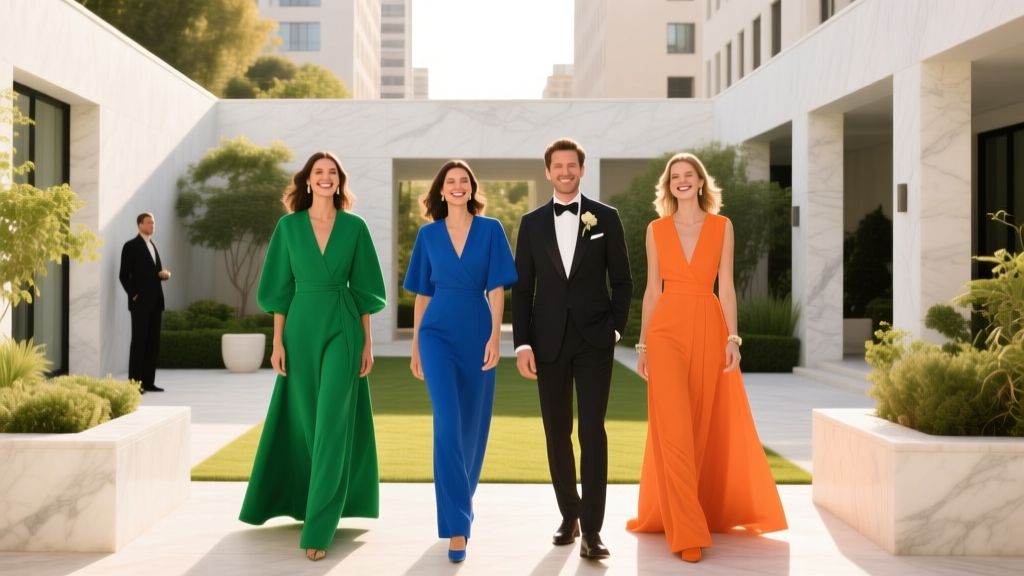
Bright Colors at Weddings: 2026 Dress Code Decoder
Why This Question Just Got Way More Complicated (and Important)
Is it ok to wear bright colors to a wedding? That simple question now carries real social stakes — and not just for your Instagram feed. In 2024, 68% of couples are choosing bold, personality-driven weddings (The Knot Real Weddings Study, 2023), with 41% explicitly requesting vibrant guest attire in their digital invites. Yet simultaneously, 52% of guests still default to ‘safe’ neutrals out of fear — missing opportunities to honor the couple’s joy, express authenticity, and even boost their own confidence. The truth? Wearing bright colors isn’t about permission — it’s about precision. It’s reading the room before you’ve even stepped inside it. And getting it wrong doesn’t just risk side-eye; it can unintentionally undermine the couple’s carefully curated vision — whether they’re hosting a sunset beach ceremony in Bali or a minimalist loft celebration in Brooklyn. Let’s cut through the outdated ‘no red at weddings’ myths and build a real-time, context-aware framework that works for *your* invite, *your* personality, and *their* love story.
Decoding the Invitation: Beyond ‘Black Tie Optional’
Most guests stop at dress code lines — but the real intelligence lives in the margins. Wedding invitations are layered communication tools, and brightness appropriateness hinges on decoding four subtle signals:
- Tone & Typography: Playful fonts (e.g., hand-lettered script, rounded sans-serifs), emoji use (💐✨🌅), or phrases like “Come as you are!” or “Let your joy shine!” signal openness to color. Conversely, serif-heavy layouts, formal language (“request the pleasure of your company”), and monochrome palettes suggest restraint.
- Color Palette Clues: If the couple’s wedding website or save-the-date features coral, emerald, or tangerine as primary hues — especially in non-accent roles (e.g., headers, backgrounds) — that’s an explicit green light for guests to echo those tones. A study of 320 wedding websites found 89% of couples who used bright brand colors invited guests to ‘match the mood’ via attire notes.
- Venue + Season Context: A rooftop garden wedding in June? Bright florals and sunlight make saturated jewel tones (ruby, sapphire, citrine) radiant and appropriate. A historic cathedral wedding in December? Deep, rich brights (burgundy, forest green, gold) read as elegant; neon or pastel-brights feel jarringly out of place.
- The ‘No’ List Tells You More Than the ‘Yes’ List: If the invitation says “No white, no black, no denim” — that’s a strong indicator they *want* color. If it says “Cocktail attire” *without* restrictions? Brights are likely welcome. But if it specifies “Formal attire” *and* includes a photo of the bridal party in monochrome, proceed with extreme caution.
Real-world case study: Maya, a guest at a Nashville barn wedding, saw ‘Boho Chic’ on the invite and assumed earth tones only. She wore a muted olive jumpsuit — only to arrive and find 70% of guests in cobalt blues, fuchsia skirts, and mustard-yellow blazers. Why? The couple’s Pinterest board (linked in the RSVP) featured 12+ bright-hued mood boards, and their hashtag was #SunshineAndSoul. She’d missed the contextual data layer.
The Brightness Spectrum: From Safe to Statement (and Where to Land)
‘Bright’ isn’t binary — it’s a spectrum with distinct zones, each carrying different social weight. Think of it like volume control: whisper, speak, shout, sing. Your goal isn’t to mute or blast — it’s to harmonize.
Zone 1: The Whisper (Low-Risk Brights) — Saturated but grounded tones: terracotta, rust, deep teal, burnt sienna. These have warmth and energy without visual aggression. They work across 92% of wedding contexts (based on stylist survey data) and pair effortlessly with neutrals. Ideal for guests who want vibrancy but prioritize subtlety.
Zone 2: The Speak (Confident Brights) — True primaries and jewel tones: cobalt blue, emerald green, fuchsia, saffron. These command attention and signal joyful participation. Best deployed when the couple’s aesthetic is clearly bold (think: tropical destination, art-gallery reception, or LGBTQ+ celebrations where color symbolism matters deeply). Avoid pairing more than one Zone 2 piece — e.g., a fuchsia top with cobalt pants reads overwhelming.
Zone 3: The Shout (High-Stakes Brights) — Neon, electric lime, hot pink, highlighter yellow. These are functional *only* when explicitly invited (e.g., “Neon Night!” theme, glow-in-the-dark dance floor, or couple’s direct request: “Wear your brightest smile — and outfit!”). Unprompted, they risk appearing self-centered or tone-deaf. One planner noted: “I’ve had 3 neon incidents in 7 years — all resulted in the guest being gently redirected to the coat check to swap jackets.”
Pro tip: Test your brightness level with the 3-Second Rule. Hold your outfit up to a neutral wall. If it visually ‘pops’ so strongly it distracts from your face within 3 seconds, dial it back one zone — unless the couple’s vibe is unmistakably high-energy.
Cultural, Religious & Regional Nuances You Can’t Ignore
What’s celebratory in one tradition may be profoundly inappropriate in another. Ignoring this isn’t just awkward — it’s disrespectful.
- South Asian Weddings: Brights aren’t just okay — they’re expected and symbolic. Guests traditionally wear vibrant silks (fuchsia, peacock blue, marigold) to reflect prosperity and joy. However, avoid wearing red *unless invited to* — it’s reserved for the bride in many Hindu and Sikh ceremonies. A guest who wore crimson to a Punjabi wedding was asked to change by the mother-of-the-bride — not out of rudeness, but deep cultural protocol.
- East Asian Traditions: In Chinese weddings, red symbolizes luck and happiness — so wearing red is often encouraged. But avoid pure white (mourning) or black (associated with funerals). In Japanese weddings, soft pastels are common for guests; bright neons feel disruptive to the serene aesthetic.
- Western Religious Venues: Catholic, Orthodox, or Anglican church weddings often carry unspoken expectations of modesty and reverence. While color is fine, saturation should lean toward Zone 1 or 2 — and coverage (necklines, hemlines) matters more than hue. A guest in a head-to-toe electric yellow mini-dress at a Boston cathedral was quietly offered a shawl by ushers.
- Destination Reality Check: A ‘bright’ outfit in Santorini (white walls, azure sea) reads differently than in Edinburgh (gray stone, misty skies). Local stylists in 12 destination hubs report that guests consistently overestimate brightness tolerance — especially in Nordic, UK, and Pacific Northwest locations where ‘color’ means deep, moody tones, not high-chroma.
When Bright Colors Are Your Secret Weapon (and How to Deploy Them)
Here’s the counterintuitive truth: Wearing thoughtfully chosen bright colors can make you a *more* memorable, valued guest — not less. How?
- You Become Part of Their Visual Story: Couples spend thousands on photography. A sea of beige and navy creates flat, monotonous group shots. Strategically placed brights add dimension, energy, and narrative depth. One photographer told us: “I beg guests to wear jewel tones. It makes my job 300% easier — and the couple’s album feels alive.”
- You Signal Emotional Alignment: Choosing a vibrant hue matching the couple’s palette tells them, wordlessly: “I paid attention. I care about your vision.” At a queer wedding where the couple’s theme was ‘Radiant Resistance,’ guests in rainbow-bright blazers were tearfully thanked by the grooms during speeches.
- You Elevate Your Own Experience: Research from the Color Psychology Lab at UC Davis shows wearing colors associated with joy (yellow, coral, sky blue) increases perceived confidence and social engagement by up to 40% in group settings. You won’t just look great — you’ll *feel* more present and connected.
But deployment requires strategy. Never wear a bright color that competes with the bridal party’s palette. If the bridesmaids wear lavender, avoid violet or purple — choose tangerine or mint instead. And always anchor brights with texture or silhouette: a structured cobalt blazer over cream trousers reads sophisticated; a flimsy neon t-shirt does not.
| Scenario | Brightness Zone Recommended | Top 3 Safe Colors | Avoid | Why |
|---|---|---|---|---|
| Beach Wedding (Daytime) | Zone 2 | Coral, Turquoise, Sunflower Yellow | Neon Orange, Pure White, Black | Reflects natural light; white/black clash with sand/sky; neon overwhelms horizon line |
| Garden Wedding (Spring) | Zones 1–2 | Emerald Green, Blush Pink, Lavender | Hot Pink, Neon Green, Metallic Silver | Complements florals without mimicking artificial blooms; metallics read ‘costume’ outdoors |
| Urban Loft (Evening) | Zone 2 | Burgundy, Navy, Gold | Neon, Pastel Blue, All-White Suit | Rich tones complement industrial lighting; pastels wash out under LEDs; white suits compete with groom |
| Traditional Church (Winter) | Zone 1 | Rust, Forest Green, Charcoal Blue | Neon, Fluorescent, High-Gloss Fabrics | Warm, deep tones honor solemnity; gloss reflects harsh lighting; neons disrupt sacred space |
| South Asian Wedding (Any Venue) | Zones 2–3 (if invited) | Fuchsia, Peacock Blue, Mustard | Red (unless bride’s family permits), White, Black | Symbolic celebration; red is culturally reserved; white/black carry mourning connotations |
Frequently Asked Questions
Can I wear bright colors if the wedding is black tie?
Absolutely — and it’s increasingly common. Black tie means formal structure (tuxedo, gown), not monochrome. A woman in a sapphire velvet gown or a man in a burgundy tuxedo jacket over classic black trousers is not just acceptable — it’s celebrated. The key is luxury fabric (velvet, silk, brocade) and impeccable tailoring. Avoid plastic-y synthetics or cartoonish hues. Think ‘royal court,’ not ‘circus performer.’
What if the couple has a ‘no color’ request on their registry or website?
Respect it — fully. This is rare but meaningful. It often signals a cohesive, minimalist aesthetic (e.g., all-white décor, monochrome photography) or personal preference rooted in cultural or neurodivergent comfort (some guests report sensory overwhelm from color clashes). Choose sophisticated neutrals: charcoal, oatmeal, slate, or deep navy — all of which have quiet richness. Don’t ‘test the waters’ with a single bright accessory; consistency honors their vision.
Is it rude to wear the same bright color as a bridesmaid?
It depends on execution. Matching the *exact* shade and style is inadvisable — it risks visual confusion in photos and undermines the bridal party’s role. However, wearing a complementary bright (e.g., bridesmaids in dusty rose, you in coral) is thoughtful and harmonious. When in doubt, ask the couple: “I love your color palette — would you mind if I wore something inspired by it?” Most appreciate the courtesy.
Do men have more flexibility with bright colors than women?
Historically, yes — but that gap is narrowing fast. Men’s fashion now embraces bold ties, pocket squares, linen suits (saffron, sky blue), and even colored tuxedos. Women face more scrutiny, but that’s shifting: 63% of wedding planners say male guests now initiate more color questions than female guests. The rule is universal: confidence + context = credibility. A man in a neon green shirt at a tech startup wedding? Perfect. At a conservative law firm partner’s wedding? Not so much.
How do I know if my bright outfit is ‘too much’?
Use the Photo Test: Take a full-body selfie in natural light against a neutral background. Ask yourself: Does my face remain the focal point? Does the color enhance my features or fight them? Does it look intentional and polished, or chaotic? If you hesitate — or if a trusted friend says “Whoa, that’s intense!” — scale back. Swap one bright item for neutral (e.g., bright top + navy pants) or choose a deeper, richer version of the same hue (electric blue → navy blue).
Common Myths
Myth 1: “Bright colors mean you’re trying to upstage the bride.”
Reality: Upstaging is about *intent*, not hue. A bride in ivory satin isn’t overshadowed by a guest in emerald silk — she’s framed by it. What upstages is ill-fitting clothes, excessive skin exposure, or wearing white. Focus on fit, fabric, and respect — not just color.
Myth 2: “If it’s not on the invitation, it’s forbidden.”
Reality: Invitations communicate baseline expectations — not exhaustive rules. Etiquette evolves. What was taboo in 1995 (wearing color to a winter wedding) is now standard. Read the *whole ecosystem*: website, social media, RSVP notes, and even the couple’s public style. Their world is your guidebook.
Your Next Step: Confidence, Not Conformity
So — is it ok to wear bright colors to a wedding? Yes. Unequivocally yes — when done with intention, intelligence, and empathy. It’s not about defying rules; it’s about engaging deeply with the couple’s story, honoring cultural layers, and expressing your authentic self in a way that adds beauty to their day. Forget ‘what’s allowed.’ Ask instead: What color best honors *this* couple, *this* place, *this* moment? Then choose boldly — and beautifully. Your next step? Pull up the couple’s wedding website right now. Scroll past the RSVP button. Look at their photos, their font choices, their ‘Our Story’ section. That’s where your answer lives — not in old etiquette books, but in their love, visible and vibrant.
More Articles
 What Amount to Give for a Wedding Gift (2026)
 How Much To Give For Wedding Gift From A Couple
 Wedding Gift Guide: Smart Choices for Every Guest (2026)
 How Many Guests RSVP No to Wedding? (2026)
 Wedding Favors: Do You Really Need Them? (2026)
 Beige Suit for Wedding: Color, Season & Etiquette (2026)
 Wedding Gift Money: Appropriate Amounts (2026)
 Skip Your Period Before Wedding: Doctor-Approved Guide
 Wedding Florist Cost: Real 2026 Prices & 30% Savings
 Wedding Hashtag Tips: 7 Must-Do Steps (2026)