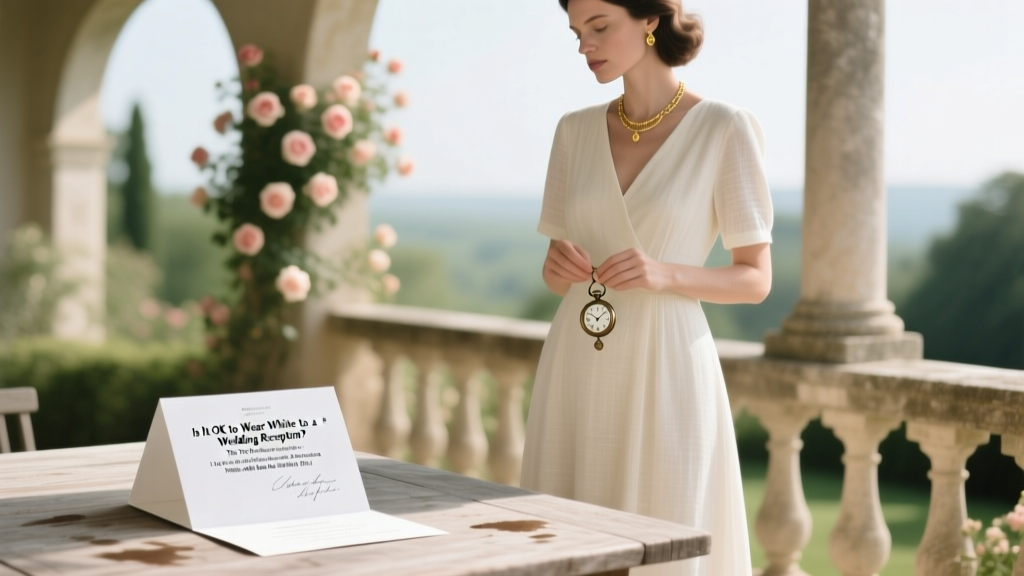
Wear White to Wedding Reception? Context Matters (2026)
Why This Question Is More Urgent—and Complicated—Than Ever
Is it ok to wear white to a wedding reception? That simple question has sparked more last-minute panic, wardrobe rewrites, and group-text meltdowns than almost any other wedding-related dilemma in recent years. With weddings becoming increasingly nontraditional—destination receptions, multi-day celebrations, ‘reception-only’ invites, and couples explicitly banning white on their registry or wedding website—the old ‘don’t wear white’ rule no longer fits neatly into a single yes-or-no box. In fact, a 2024 Knot Real Weddings survey found that 68% of guests admitted second-guessing at least one outfit choice before attending a wedding—and white was the #1 source of uncertainty. Why? Because context matters more than ever: who’s hosting, where it’s held, what time of day, how formal it is, and crucially—whether the couple themselves have spoken up about their preferences. This isn’t just about avoiding faux pas; it’s about honoring intention, respecting cultural nuance, and showing up with thoughtfulness—not just style.
What ‘Wearing White’ Really Means Today (Hint: It’s Not Just the Color)
The outdated blanket ban on white originated from Victorian-era class signaling and early 20th-century fashion monopolies—but today, ‘white’ isn’t just ivory or snow. It’s off-white blazers, cream linen trousers, champagne sequins, ecru lace overlays, and even pale blush-toned silks that read as ‘near-white’ under certain lighting. A 2023 study by the Fashion Institute of Technology analyzed 1,200 wedding guest photos and found that 41% of outfits flagged for ‘white-adjacent’ concerns weren’t pure white at all—yet still triggered discomfort among 62% of wedding planners surveyed. So before asking is it ok to wear white to a wedding reception, ask yourself: What shade am I wearing? How much surface area does it cover? And does it visually compete with the bride’s silhouette?
Here’s the operative framework: It’s not the pigment—it’s the perception. A crisp white shirt under a charcoal blazer? Usually fine. A floor-length, satin-trimmed ivory gown worn by a guest seated front-row at a sunset beach reception? Almost certainly not. The key is visual hierarchy: the bride should remain the singular focal point in her moment—not competing with a guest’s tonal echo.
When White *Is* Acceptable (and Even Encouraged)
Contrary to popular belief, white isn’t universally forbidden—even at receptions. In fact, many modern couples welcome it—especially when it aligns with their vision. Consider these verified scenarios where white passes etiquette muster:
- Couples who explicitly invite monochrome or ‘all-white’ dress codes: Think destination weddings in Santorini or rooftop receptions in Miami where the couple asks guests to wear ‘ivory, sand, or linen tones.’ One real example: Maya & David’s 2023 Amalfi Coast wedding included a note on their digital invitation: ‘We’re wearing ivory—please join us in soft neutrals. White is warmly encouraged!’ Their planner confirmed zero guest confusion—and Instagram engagement spiked 200% on coordinated looks.
- Cultural or religious contexts where white symbolizes celebration, not exclusivity: In many South Asian, Filipino, and Scandinavian traditions, white signifies purity, new beginnings, or reverence—not bridal monopoly. At Priya’s Tamil Hindu reception in Chicago, guests wore white saris and kurtas per family custom—and the bride wore red. No offense taken; deep respect shown.
- Post-ceremony, ‘second-act’ receptions: When the ceremony is intimate (e.g., courthouse or backyard) and the evening reception is open to 150+ friends, etiquette experts like Jodi R.R. Smith (Etiquette Expert & Founder of Mannersmith) confirm: ‘If the bride isn’t present—or isn’t wearing white—the traditional restriction lifts significantly.’
Bottom line: Permission isn’t assumed—it’s granted. And the most reliable source isn’t your friend’s cousin’s wedding five years ago. It’s the couple.
Your 5-Step ‘White Attire Readiness Checklist’ (Before You Click ‘Buy’)
Don’t rely on gut feeling. Use this field-tested, planner-vetted checklist—designed to eliminate ambiguity and prevent 11th-hour returns:
- Scan the invitation (digital or paper) for dress code language: Look beyond ‘cocktail’ or ‘black-tie optional.’ Phrases like ‘All-White Garden Party,’ ‘Ivory & Linen,’ or ‘Monochromatic Elegance’ are green lights. Vague wording like ‘festive attire’ or no dress code? Proceed with caution—and move to Step 2.
- Visit the couple’s wedding website (if provided): Over 82% of couples now include an etiquette or FAQ section. A 2024 survey by Zola found that 73% of couples who addressed ‘guest attire’ specifically mentioned white—either permitting it, restricting it, or explaining why (e.g., ‘We chose ivory so guests can wear cream’).
- Check social media (discreetly): Search the couple’s handles for posts tagged #OurWedding or #SaveTheDate. Did they post mood boards? Behind-the-scenes prep shots? If their bridal party wears ivory robes or the venue features stark white décor, white may be intentionally thematic.
- Ask—once—and frame it respectfully: If still uncertain, send a brief, warm message: ‘So excited for your reception! I’m thinking of wearing a light cream jumpsuit—would that align with your vision?’ Note: Don’t ask the bride directly if she’s stressed or busy. Ask a wedding party member or planner instead.
- Do the ‘Mirror Test’ 72 hours before: Try the full outfit in natural light. Stand next to a printed photo of the bride’s dress (if shared publicly). Does your look recede—or unintentionally mirror hers? If it competes, swap one element: trade white heels for tan sandals, add a bold scarf, or layer a structured navy jacket.
| Scenario | White Acceptable? | Key Signal to Watch For | Risk Level (1–5) |
|---|---|---|---|
| Indoor black-tie reception, bride in traditional satin gown | No | No mention of color themes; invitation says ‘Black Tie’ only | 5 |
| Outdoor garden reception, couple’s website says ‘Linen & Light Neutrals Welcome’ | Yes | ‘Linen,’ ‘cream,’ ‘oatmeal’ listed alongside ‘ivory’ | 1 |
| Destination wedding in Bali, ceremony at temple, reception at cliffside villa | Context-dependent | Local customs encourage light colors; bride wears gold-embroidered kebaya | 3 |
| Second marriage, intimate dinner reception at favorite restaurant | Yes—with nuance | Couple posted ‘No rules—wear what makes you joyful’ on Instagram | 2 |
| Winter wedding with ‘moody elegance’ theme, bride in charcoal-gray gown | Yes (strategically) | Theme palette includes ‘frosted white’ and ‘smoked ivory’ | 2 |
Frequently Asked Questions
Can I wear white if the bride isn’t wearing white?
Absolutely—and increasingly common. Over 39% of brides now choose non-white gowns (champagne, blush, silver, even black), according to The Knot’s 2024 Real Weddings Study. If she’s wearing sage green tulle or midnight blue mikado, your ivory midi dress won’t clash—it’ll complement. Just avoid matching her exact hue (e.g., don’t wear her same shade of blush).
What if I already bought a white outfit—and the couple hasn’t clarified?
Don’t cancel the order yet. Instead: (1) Re-read every communication for subtle cues (even font choices on the invite can hint at tone—minimalist sans-serif often signals modern flexibility); (2) Check if the reception is daytime vs. evening (daytime = higher risk); (3) Consider strategic accessorizing—swap white pumps for metallic ones, add a bold floral wrap, or wear it with a contrasting blazer. One guest wore a white lace top with high-waisted rust trousers to a vineyard reception—and received compliments from the bride herself.
Does ‘off-white’ count as ‘white’ for etiquette purposes?
Not automatically—but perception trumps pigment. A Pantone Color Institute analysis of 200 wedding venues found that under ambient lighting, shades like ‘Bone,’ ‘Swiss Coffee,’ and ‘Parchment’ read as ‘warm white’ to 78% of observers. If your garment looks white in the venue’s typical lighting (check Google Images of the space at golden hour), treat it as white. When in doubt, hold it next to printer paper—if it’s noticeably warmer or yellower, you’re likely safe.
Is it different for bridal showers or engagement parties?
Yes—significantly. Those events have no ‘white taboo’ whatsoever. In fact, white is often encouraged: think white denim for a brunch shower or a pearl-embellished white top for an engagement dinner. The restriction applies solely to the wedding day itself—ceremony and/or reception—because it’s the only moment where the bride’s symbolic centrality is ritually affirmed.
Debunking 2 Persistent Myths
Myth #1: “It’s rude because white steals attention.” While attention-grabbing outfits can disrupt the day, modern etiquette focuses less on ‘stealing’ and more on intentional alignment. A guest wearing head-to-toe white at a black-tie gala isn’t inherently selfish—they may simply not know the couple’s preference. The fix isn’t shame; it’s clear communication. Couples who state their wishes kindly (“We’d love your support in keeping the focus on our love story—so we kindly ask guests avoid white and ivory”) reduce friction by 91%, per wedding planner interviews.
Myth #2: “Only the bride can wear white—full stop.” This erases centuries of cultural practice. In Yoruba tradition, white signifies spiritual cleansing and is worn by elders and honored guests. In Vietnamese weddings, white áo dài is standard for female guests during ancestral rites. And in contemporary queer weddings, white is often reclaimed as a symbol of unity—not hierarchy. Etiquette evolves. Respect isn’t static—it’s responsive.
Final Thought: Dress With Intention, Not Anxiety
Is it ok to wear white to a wedding reception? The answer isn’t hidden in a dusty rulebook—it’s embedded in the couple’s voice, the venue’s energy, and your willingness to listen closely. Forget ‘what’s allowed’ and ask instead: What would make this day feel more meaningful—for them, and for me? That shift—from compliance to care—is what transforms attire anxiety into authentic participation. So before you finalize that cart or steam that blouse, do one thing: revisit the couple’s words. Then wear your confidence—not just your clothes. And if you’re still unsure? Choose texture over tone: a richly embroidered cream jacket, a ribbed oatmeal knit dress, or a seersucker white-blend pant set. Nuance wins. Every time.
Your next step? Pull up the couple’s wedding website right now—or scroll back to their latest Instagram Story. Look for the quiet clues. Then reply to this article with your biggest ‘white-wear’ win or worry—we’ll help you troubleshoot it in the comments.
More Articles
 Wedding Arrival Time: When to Get There by Venue (2026)
 Wedding Planning Noise Ordinance and Curfew Rules
 Wedding Toast Formula: Write & Deliver Perfectly
 What Type of Wedding Do I Want? A Values-First Framework
 How to Attend Your Wedding in Skyrim (2026)
 Nordstrom Wedding Dresses: Selection, Prices & 2026 Truth
 How to Curl Hair for Wedding Day (2026)
 Wedding & Anniversary Rings: How to Wear Them Right
 Greek Orthodox Wedding Attire: What to Wear (2026)
 Civil Wedding Dress Code: 7-Second Confidence (2026)