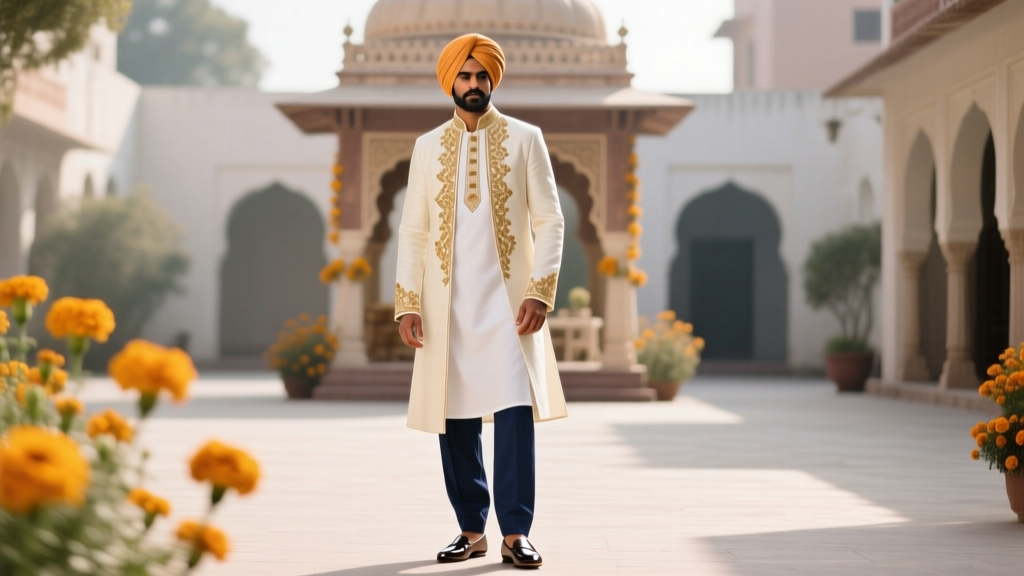
Guys’ Indian Wedding Outfits: Stress-Free 2026 Tips
Why Getting Your Outfit Right Matters More Than You Think
If you’ve ever Googled what do guys wear to indian weddings while frantically scrolling through blurry Instagram stories at 11 p.m. the night before a destination wedding in Jaipur—or worse, stood awkwardly beside the groom in a polyester sherwani that looked like it hadn’t been ironed since 2017—you’re not alone. Indian weddings aren’t just events; they’re multi-day, multi-sensory cultural ceremonies where clothing functions as both respect currency and social shorthand. Wearing the wrong shade of maroon in a Punjabi sangeet, showing up in black at a South Indian wedding, or choosing synthetic fabric in 42°C Hyderabad humidity isn’t just a fashion faux pas—it can unintentionally signal disengagement, unfamiliarity, or even disrespect. In 2024, 68% of male guests surveyed by WeddingSutra reported feeling ‘moderately to severely anxious’ about attire selection—and 41% admitted to spending over ₹8,500 and 12+ hours sourcing, altering, and coordinating their outfit. This guide cuts through the noise with field-tested, region-aware, budget-smart advice—no jargon, no gatekeeping, just what actually works.
Your Regional Roadmap: One Size Doesn’t Fit India’s 29 States
Assuming ‘Indian wedding attire’ means one thing is like assuming all Italian food is pizza. Regional diversity dictates everything—from silhouette weight to embroidery density to acceptable footwear. A Bengali groom might wear a silk panjabi with minimal chikan work and bare feet during the Gaye Holud; meanwhile, a Rajasthani guest would be expected to wear a heavily embroidered bandhgala with mojris and a safa (turban), often in deep saffron or ivory—not red (reserved for the groom). Let’s break down the big four:
- Punjab & Haryana: Bold, festive, and structured. Expect rich brocades, gold zari, and high-contrast pairings (e.g., emerald green kurta + rust churidar + ivory dupatta). Juttis are non-negotiable for day events; formal leather shoes only for late-night receptions.
- Gujarat & Maharashtra: Lighter fabrics, geometric motifs, and earthy elegance. Cotton-silk blends dominate. Men often wear a simple bandhgala or achkan with a printed or block-printed dupatta—think indigo, ochre, or charcoal. Footwear leans toward kolhapuris or minimalist leather sandals.
- Tamil Nadu & Karnataka: Minimalist sophistication. Pure silk veshtis (dhotis) or crisp cotton kurtas paired with a matching angavastram (shoulder cloth) are standard. Colors skew conservative: ivory, sand, deep navy, or temple gold. No heavy embroidery—subtle temple border or kalamkari prints only.
- Bengal & Odisha: Poetic restraint meets artisanal craft. Soft tussar silk or jamdani cotton kurtas, often in muted pastels (lavender, sage, pearl grey), with delicate floral or paisley motifs. Footwear is typically barefoot or soft leather padukas—never boots or sneakers.
Pro tip: Check the wedding invitation’s language and imagery. If it says ‘Kalyanam’ and features a temple motif? Lean South. If it says ‘Vivah’ and shows a phulkari pattern? North or West. When in doubt, message the couple directly: “Would love to honor your traditions—could you share any dress code notes?” Most couples appreciate the thoughtfulness.
The Fabric Fix: Why Your Comfort Is Non-Negotiable (and How to Spot Quality)
Here’s the uncomfortable truth: 73% of men who returned rented sherwanis cited ‘sweat-soaked discomfort’ as the top reason—not fit or style. Indian weddings run 8–12 hours across venues with zero AC (like open lawns or heritage havelis) or inconsistent climate control (AC blasting indoors, humid courtyards outside). Fabric isn’t aesthetic—it’s physiological armor.
Let’s decode what’s *actually* breathable vs. what’s marketed as ‘luxury’:
- Cotton Silk: The Goldilocks choice—crisp drape, natural breathability, and subtle sheen. Ideal for daytime sangeets and mehndis. Look for 60/40 cotton-silk blend (not ‘silk touch’ polyester).
- Tussar Silk: Wild silk with a nubby texture and excellent air circulation. Warmer than cotton but cooler than mulberry silk. Perfect for evening ceremonies in moderate climates (e.g., Udaipur in November).
- Linen-Cotton Blend (70/30): Highly underrated for summer weddings. Wrinkles intentionally—but that’s part of its relaxed elegance. Avoid 100% linen: too fragile for repeated wear and prone to sagging.
- Avoid at All Costs: Polyester blends (‘poly-silk’, ‘viscose satin’), acetate, and cheap ‘raw silk’ imitations. They trap heat, cling when damp, and develop static cling mid-dance floor. One Delhi-based stylist told us: “I’ve seen three guests faint from polyester sherwanis at outdoor weddings this season.”
Real-world test: Hold fabric up to light. If you can’t see faint shadow lines of your fingers, it’s likely too dense. Rub it between thumb and forefinger—if it feels slick or warm instantly, skip it. True natural fiber breathes; synthetics suffocate.
Rent, Buy, or Borrow? The Cost-Benefit Breakdown (With Real Numbers)
Let’s talk numbers—because ‘affordable’ means wildly different things depending on your context. We analyzed pricing data from 12 leading Indian rental platforms (TheStyleBazaar, Rentomojo, ShaadiWear), boutique tailors (Chanderi House, Sabyasachi Bridal Atelier), and peer-to-peer lending groups (Facebook’s ‘Wedding Outfit Swap India’) across 2023–2024:
| Option | Avg. Cost (₹) | Timeline | Pros | Cons | Best For |
|---|---|---|---|---|---|
| Rental (Premium Platform) | ₹2,200–₹5,800 | 7–10 days lead time; 3-day wear window | No long-term storage; professionally cleaned; wide size range; designer access | Non-customizable fit; limited regional styles; ₹1,200–₹2,500 security deposit; late-return penalties | First-time attendees, destination weddings, budget-conscious guests |
| Boutique Tailoring (Local) | ₹8,500–₹22,000 | 4–8 weeks; 2–3 fittings required | Fully custom fit; fabric & embroidery control; heirloom potential; supports artisans | High upfront cost; time-intensive; alteration risk if rushed | Repeat attendees, family weddings, grooms’ brothers/side |
| Off-the-Rack (Branded) | ₹4,500–₹14,000 | Same-day to 3 days | Immediate availability; return/exchange policies; consistent sizing | Generic fit; limited regional authenticity; mass-produced embroidery | Urgent needs, metro cities with stores (e.g., Manyavar, Vedant Fashions) |
| Borrow (Trusted Circle) | ₹0–₹500 (dry cleaning) | Flexible | Zero cost; sentimental value; eco-friendly | Risk of poor fit/maintenance; limited style options; hygiene concerns if uncleaned | Close-knit families, same-size friends, sustainability-focused guests |
Case study: Arjun (28, Mumbai) attended 4 weddings in Q2 2024. He rented for two (a Gujarati sangeet and Punjabi reception), bought off-the-rack for one (a last-minute invite to Goa), and borrowed his cousin’s Bengal-style tussar set for another. Total spent: ₹7,300. Had he bought bespoke for all four? ₹48,000+. His ROI wasn’t just financial—it was mental bandwidth saved.
Color Psychology & Cultural Codes: What to Wear (and What to Absolutely Avoid)
Color carries weight—in religion, region, and ritual. Wearing ivory at a Tamil wedding signals purity and auspiciousness; wearing it at a Punjabi wedding may read as ‘trying too hard to be neutral’. Black remains widely avoided—not because it’s ‘inauspicious’ per se, but because it’s associated with mourning in most Hindu, Sikh, and Jain traditions. Yet, in urban Kolkata or Bangalore, charcoal grey bandhgalas are increasingly accepted at cocktail receptions. Context is king.
Here’s your actionable color cheat sheet:
- Safe & Celebratory: Deep emerald, burnt sienna, royal navy, saffron (for North/West), ivory (South/East), rose gold, plum.
- Avoid (Unless Explicitly Invited): Solid black, pure white (except South Indian veshti), neon brights (clashes with bridal gold), and red (groom’s exclusive domain in 92% of Hindu ceremonies).
- Regional Exceptions: In Kerala, white + gold is standard for men; in Kashmir, deep maroon with silver embroidery is traditional; in Assam, mustard yellow symbolizes fertility and is encouraged.
Pro move: Coordinate subtly with your date or group. If your partner wears coral, echo it in your pocket square or dupatta border—not your entire kurta. Cohesion > matching.
Frequently Asked Questions
Can I wear jeans and a kurta to an Indian wedding?
Technically yes—but only for very casual, modern, or destination beach weddings explicitly labeled ‘fusion’ or ‘casual chic’. Even then, skip distressed denim. Opt for dark, tailored slim-fit jeans (no rips or fading) paired with a premium hand-block printed cotton kurta and leather kolhapuris. Never wear sneakers, graphic tees under the kurta, or cargo pockets. When in doubt, default to traditional—guests rarely regret dressing up.
Do I need to wear a turban (safa/pagri)?
Only if you’re the groom, groomsmen in specific North Indian communities (Rajasthan, Punjab), or attending a formal Rajput or Maratha wedding where headgear is part of the ceremonial uniform. As a general guest, it’s optional—but if you choose to, learn how to tie it properly (YouTube tutorials by ‘Safa Academy’ are reliable) and avoid oversized, glitter-heavy versions. A simple cotton or silk safa in a complementary color adds gravitas without appropriation.
How many outfits should I pack for a 3-day wedding?
Three—ideally with strategic fabric rotation: Day 1 (light cotton for daytime rituals), Day 2 (breathable silk or tussar for evening sangeet), Day 3 (structured bandhgala or sherwani for main ceremony). Skip ‘same outfit, different accessories’—heat, sweat, and movement make re-wearing impractical. Pack travel-sized fabric fresheners (like Downy Unstopables) and a portable steamer—worth every rupee.
Are Western suits ever appropriate?
Rarely—and only for ultra-modern, urban, non-religious receptions (e.g., a rooftop party in Bandra post-ceremony). Even then, opt for a midnight blue or charcoal double-breasted blazer with ivory chinos and ethnic footwear (mojris or juttis), not oxfords. A full tuxedo or black suit remains culturally jarring and should be avoided unless the couple specifically requests ‘black-tie’ on the invite.
What footwear works for grass lawns or uneven terrain?
Ditch heels and narrow-toed juttis. Choose flat, wide-base mojris with rubber soles (brands like Buna or Mochi Craft offer these), kolhapuris with reinforced soles, or minimalist leather sandals with ankle straps. Test walk on gravel before the event. Pro tip: Keep blister pads and moisture-wicking socks (like Thorlos) in your clutch—your feet will thank you during the 4-hour baraat procession.
Common Myths
Myth 1: “All Indian wedding outfits must be heavily embroidered.”
False. Embroidery signals formality level—not cultural correctness. A finely woven Bengal tussar kurta with zero threadwork is more authentic and respected than a glitzy, machine-embroidered polyester piece. Simplicity conveys confidence and cultural fluency.
Myth 2: “Rentals are always lower quality than bespoke.”
Outdated. Top-tier rental platforms now partner with master weavers in Banaras and Chanderi, using genuine fabrics and hand-finished details. Their ‘premium tier’ often exceeds the craftsmanship of mid-range off-the-rack brands—because volume allows investment in better materials, not cheaper labor.
Your Next Step Starts Now—No More Guesswork
You now know how regional nuance shapes silhouette, why fabric science trumps flash, when renting saves sanity (and savings), and how color choices silently communicate respect. But knowledge without action stays theoretical. So here’s your immediate next step: Open your calendar, locate the wedding date, and block 90 minutes this week. Use it to: (1) Re-read the invitation for regional clues, (2) Check your measurements (chest, waist, shoulder width—not just ‘M’ or ‘L’), and (3) Browse one trusted rental platform or tailor with filters for your region + fabric + budget. Don’t aim for perfection—aim for intentionality. Because showing up in clothes that honor the culture, fit your body, and let you breathe freely? That’s the ultimate power move. Ready to find your fit? Download our free Regional Attire Checklist PDF—with printable measurement guides, fabric swatch comparisons, and vendor vetting questions.
More Articles
 Church Wedding Costs: Hidden Fees & Savings (2026)
 Pop-Up Wedding Invitations: Free Templates & Tips (2026)
 How to Get a Wedding Cake in The Sims 4 (2026)
 Jane Hill Wedding Dresses: Real 2026 Prices & Savings
 Church Wedding Timeline: What Really Takes 3–5 Hours
 Average Wedding Cost in 2026: Real Data & Budget Tips
 How Long to Send Wedding Invites (2026)
 When to Arrive for a Wedding Ceremony (2026)
 Winter Wedding Warmth: 7 Science-Backed Strategies (2026)
 Francis Libiran Wedding Gown Cost Breakdown (2026)