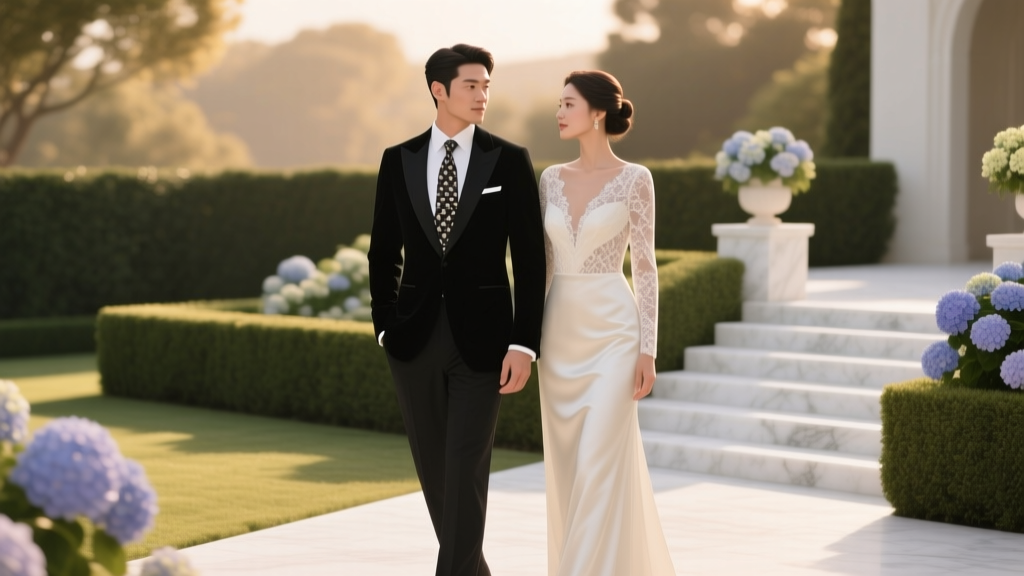
Black Tie Optional Wedding Attire: What to Wear (2026)
Why 'Black Tie Optional' Causes More Stress Than It Should
If you've ever stared into your closet after receiving a wedding invitation that says 'black tie optional' — heart racing, wondering whether your navy suit is 'enough' or if you *must* rent a tuxedo — you’re experiencing one of modern wedding culture’s most common yet under-explained dress code dilemmas. What is black tie optional wedding attire? At its core, it’s an intentional invitation to strike a balance: formal elegance without rigid formality. But in practice, it’s become a minefield of assumptions, mixed signals, and social anxiety — especially as couples increasingly blend traditions, host destination weddings, or lean into vintage, garden, or industrial venues where classic black tie feels jarringly out of place. With 68% of wedding guests reporting at least one outfit-related regret (The Knot 2023 Guest Survey), and 41% admitting they’ve worn something inappropriate due to dress code confusion, getting this right isn’t just about looking polished — it’s about honoring the couple’s vision, respecting their effort, and showing up fully present — not distracted by second-guessing your lapel pin.
Decoding the Dress Code: Beyond the Buzzwords
'Black tie optional' isn’t a loophole — it’s a nuanced directive. Unlike 'casual' or 'cocktail', which imply clear boundaries, 'black tie optional' lives in the elegant gray zone between traditional black tie and sophisticated semi-formal wear. Think of it as the sartorial equivalent of saying, 'We want you to feel special, but we don’t want you to feel burdened.' Historically rooted in mid-20th-century etiquette, the term emerged when hosts wanted to signal high formality while accommodating guests who didn’t own tuxedos or preferred more personal expression. Today, it’s evolved — especially among Gen Z and millennial couples — to reflect values like inclusivity, sustainability (no one wants to rent a tux they’ll wear once), and authenticity.
Crucially, 'optional' does not mean 'casual'. It means 'choose your level of formality within the black tie spectrum'. A well-fitted charcoal three-piece suit with a silk tie and pocket square is just as valid — and often more contemporary — than a rental tuxedo with a stiff wing collar. Likewise, for women, a luxe jumpsuit or a bold, floor-length crepe gown reads more intentionally modern than a generic beaded cocktail dress — even if both technically 'fit' the code.
Real-world example: When Maya and Diego hosted their rooftop wedding in Brooklyn last summer, their invitation read 'black tie optional' — but their Pinterest board was full of tailored separates, metallic accents, and minimalist silhouettes. Guests who showed up in full tuxedos looked respectful but slightly out of sync; those in elevated separates or sleek midi dresses with dramatic sleeves aligned perfectly with the couple’s aesthetic. The takeaway? Context matters more than dictionary definitions.
Men’s Attire: Your Tiered Decision Framework
Forget binary choices ('tux or no tux'). Instead, use this three-tier framework — calibrated to venue, season, time of day, and couple’s vibe — to select attire that’s intentional, not improvised:
- Tier 1 (Classic Black Tie): Peak formality. Full black tuxedo (not a suit), white pique or pleated shirt, black bow tie (self-tie preferred), cummerbund or waistcoat, patent leather oxfords. Best for evening weddings in ballrooms, historic hotels, or formal estates — especially November–March.
- Tier 2 (Black Tie Optional Core): The sweet spot for most 'optional' invites. Navy or charcoal peak-lapel blazer + matching trousers (not a full suit), crisp white dress shirt, silk knit or velvet bow tie (black or deep jewel tone), leather loafers or oxfords. Add a pocket square in silk or linen for polish. This look balances tradition with ease — and works beautifully at vineyard, mansion, or upscale garden weddings.
- Tier 3 (Elevated Interpretation): For creative, warm-weather, or non-traditional venues. A textured wool or velvet blazer in burgundy, forest green, or midnight blue — paired with black or charcoal dress trousers, a fine-gauge merino turtleneck or contrast-collar shirt, and sleek Chelsea boots or monk straps. Only choose this if the invitation’s tone (e.g., 'join us for an enchanted evening' vs. 'formal celebration') and venue photo suggest flexibility.
Pro tip: When in doubt, lean toward Tier 2. It’s universally respected, widely accessible, and signals thoughtfulness without overcommitting. And never wear a black suit labeled 'tuxedo' unless it has satin lapels and comes with matching tuxedo trousers — a common rental pitfall.
Women’s Attire: Rethinking Gowns, Lengths, and Expression
For women, 'black tie optional' is less about strict rules and more about intentional elegance. The outdated notion that 'optional' means 'you can wear cocktail' is dangerously misleading — and often leads to guests arriving in dresses better suited for a work holiday party. Here’s how to navigate it with confidence:
First, ditch the length obsession. While floor-length gowns are always safe, modern interpretations embrace sophistication at every hemline — provided the fabric, cut, and details elevate it. A liquid-silk midi dress with a sculptural neckline and statement earrings? Absolutely appropriate. A sequined mini with delicate lace overlay and heels? Yes — if the overall effect reads refined, not revelrous. What disqualifies an outfit isn’t length, but intention: casual knits, visible logos, denim, sandals, or overly revealing cuts (e.g., plunging backs with no structure) break the code.
Second, prioritize texture and detail over color. Jewel tones (emerald, sapphire, amethyst), rich neutrals (charcoal, oxblood, ivory), and metallics (gunmetal, antique gold) all thrive in this space. Avoid pastels unless the couple explicitly references a 'soft glamour' theme — they can unintentionally read as underdressed against deeper hues.
Third, accessories are your secret weapon. A structured clutch, opera-length gloves (for ultra-formal settings), or a vintage brooch transforms a simple silhouette into black tie–worthy attire. One case study: Sarah wore a custom-made, bias-cut rust-colored crepe gown to her friend’s 'black tie optional' barn wedding. Paired with antique gold heels and a single strand of pearls, she looked effortlessly luxurious — while others in basic black cocktail dresses faded into the background.
| Attire Element | Strongly Recommended | Acceptable (With Caveats) | Avoid |
|---|---|---|---|
| Dress Length | Floor-length gowns; elegant midis (knee-to-ankle); sophisticated minis (if fabric & construction scream luxury) | Cocktail-length (mid-thigh) only with luxe fabric (satin, velvet, beaded tulle) and elevated styling | Shorts, skater skirts, bodycon styles without tailoring, anything above mid-thigh in jersey or cotton |
| Footwear | Strappy stilettos, pointed-toe pumps, embellished sandals (with covered toes or elegant open toes) | Block-heel mules or sleek ankle boots (in black, navy, or metallic) — only for indoor or climate-controlled venues | Flops, sneakers, wedges, platform sandals with chunky soles, scuffed or casual leather shoes |
| Outerwear | Fur stoles (real or ethical faux), structured wool capes, silk shawls with fringe or embroidery | Minimalist cashmere cardigans (only for indoor ceremonies or warm-weather events) | Denim jackets, puffer vests, hoodies, oversized sweatshirts, unstructured blazers |
| Accessories | Pearls, vintage brooches, chandelier earrings, clutch bags with metallic hardware or beading | Delicate gold chains, minimalist watches, small hoop earrings — if balanced with stronger elements elsewhere | Logos (even subtle ones), plastic jewelry, baseball caps, scarves worn as headbands, anything overly sporty or collegiate |
Reading Between the Lines: How to Confirm Your Choice
Even with this framework, uncertainty lingers — and that’s where smart research comes in. Don’t rely solely on the invitation wording. Dig deeper:
- Study the couple’s social media: Scroll their Instagram or wedding website. Are they posting moody, cinematic shots? That leans toward Tier 1 or 2. Are they sharing candid, joyful moments in sun-dappled gardens? Tier 2 or 3 is safer.
- Check the RSVP deadline and wording: If the invite says 'black tie optional — please let us know your attire preference for seating', they likely expect tuxedos or gowns. If it says 'dress to impress in your favorite formal look', creativity is encouraged.
- Ask a mutual friend — tactfully: 'Hey, I’m finalizing my outfit for Sam and Lee’s wedding — did they mention any vibe or inspiration for the evening?' Most guests will happily share intel.
- When emailing the couple, lead with empathy: 'I want to honor your vision — could you share one word that captures the feeling you hope guests embody?' Their answer ('romantic', 'vintage', 'effortless', 'bold') tells you more than any dress code label.
And remember: When you’re unsure, under-promise and over-deliver. Choosing Tier 2 (men) or a refined floor-length gown (women) ensures you’ll never be the person people whisper about. But when you nail the couple’s true intention — like wearing a deep teal velvet blazer to match the groomsmen’s ties, or choosing a gown with embroidered wildflowers echoing the ceremony arch — you become part of the story, not just an attendee.
Frequently Asked Questions
Is a black suit acceptable for 'black tie optional'?
Yes — but only if it’s a true tuxedo, meaning it has satin or grosgrain lapels, matching tuxedo trousers (no belt loops), and is worn with a bow tie and formal shirt. A standard black business suit is not appropriate — it reads as underdressed and lacks the ceremonial weight the code implies. Opt instead for navy or charcoal, which offer more versatility and visual warmth.
Can I wear pants to a 'black tie optional' wedding?
Absolutely — and it’s increasingly encouraged. For women, wide-leg palazzo trousers in silk or crepe, paired with a structured silk blouse and statement jewelry, is a powerful, modern choice. For men, tailored dress trousers (never jeans or chinos) are standard in Tiers 2 and 3. Just ensure the entire ensemble reads cohesive and elevated — no mismatched textures or casual fabrics.
Do I need to wear a bow tie — or can I wear a necktie?
A bow tie is strongly preferred and signals intentional adherence to the code. However, a slim, luxurious silk necktie in black, deep navy, or a tonal pattern is acceptable in Tier 2 — especially if paired with a peak-lapel blazer and pocket square. Avoid skinny ties, novelty prints, or polyester blends. When in doubt, self-tie bow ties (even pre-tied versions with a natural knot) instantly raise the formality bar.
What if the wedding is outdoors or during the day?
‘Black tie optional’ applies regardless of time or venue — but interpretation shifts. For a 4 p.m. garden wedding, lean into Tier 2 or 3: think lightweight wool blazers, breathable silk gowns, and elegant sandals. For a beachfront sunset ceremony, avoid heavy tuxedos or floor-length satin — instead, choose airy fabrics, lighter colors, and footwear that won’t sink. The code remains; the execution adapts.
Common Myths
Myth #1: 'Black tie optional' means 'wear whatever you want.'
False. It means 'choose from within the black tie family' — not 'abandon formality'. Wearing a cocktail dress to a ballroom wedding or a polo shirt to a mansion event violates the spirit of respect and shared celebration the couple intended.
Myth #2: Women must wear long gowns — anything shorter is inappropriate.
Outdated. Modern etiquette prioritizes intention over length. A masterfully constructed, luxe mini dress worn with confidence, fine accessories, and impeccable grooming communicates elegance far more effectively than a poorly fitting, ill-chosen floor-length gown.
Your Next Step: Confident, Calm, and Completely Prepared
Now that you understand what is black tie optional wedding attire — not as a vague suggestion, but as a thoughtful, flexible framework rooted in respect and intention — you’re equipped to make a choice that feels authentic and honors the couple’s milestone. You don’t need to own a tuxedo or a ballgown. You just need clarity, context, and the confidence to interpret 'optional' as an invitation to express your best, most polished self. So go ahead: pull out that navy blazer, steam that silk dress, polish your heels — and step into the celebration knowing you belong, exactly as you are. Ready to finalize your look? Download our free Black Tie Optional Outfit Builder Checklist — a printable, step-by-step guide with fabric guides, color palettes, and venue-specific tips — and get wedding-ready in under 20 minutes.
More Articles
 Cheap Wedding Dresses Under $500 (2026)
 Stream Your Wedding Live: Pro Tips for Couples (2026)
 Dogs as Wedding Witnesses: The Legal Truth (2026)
 Wedding Floral Guest List: Who Actually Gets Flowers
 Engagement Ring on Wedding Day: 5-Step Protocol
 Wedding Gift Amount: Budget, Relationship & Venue (2026)
 Wedding Cake Steps: Pro Building Guide (2026)
 Best Wedding Flowers: 7 Seasonal, Budget-Savvy Picks (2026)
 Wedding Backdrop DIY: 7 Steps Under $120 (2026)
 Wedding Hair & Makeup Tipping: 2026 Ranges & Rules