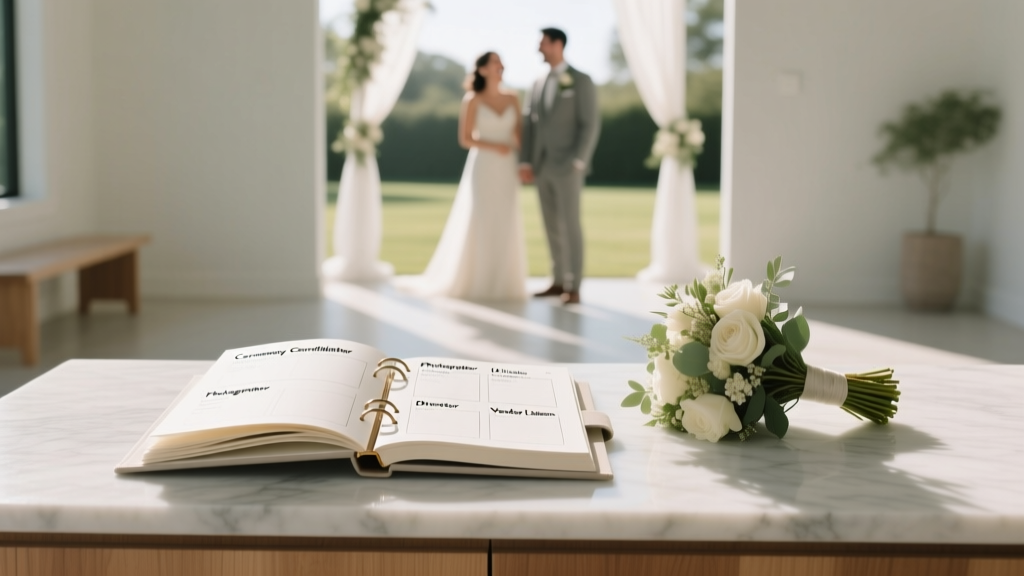
Wedding Roles: Must-Have & Optional Positions (2026)
Why Knowing What Roles Are in a Wedding Changes Everything
If you’ve ever stared at a blank Google Doc titled 'Wedding To-Do List' and typed '???', you’re not alone. What roles are in a wedding isn’t just trivia—it’s the architectural blueprint of your entire day. Get this wrong, and you’ll face overlapping responsibilities, silent gaps (like no one assigned to collect guest gifts), or worse: realizing at 3:47 PM on your wedding day that no one knows where the emergency kit is—or who’s supposed to hand the officiant their cue card. In fact, 68% of couples who skipped defining roles reported at least one major logistical failure during their ceremony or reception (The Knot 2023 Real Weddings Study). This isn’t about tradition for tradition’s sake. It’s about intentionality—assigning human accountability so you can actually be present, breathe, and savor your day instead of firefighting.
Core Wedding Roles: Who You Absolutely Need (and Why)
Forget vague titles like 'helpers' or 'family members who pitch in.' These five roles form the non-negotiable operational backbone of every successful wedding—regardless of size, budget, or venue type. Skipping even one creates cascading risk.
The Officiant isn’t just someone who says 'I do.' Legally, they’re the sole person authorized to solemnize your marriage in your state—and ethically, they shape the emotional tone of your ceremony. A common mistake? Waiting until 6 weeks out to confirm availability. In high-demand markets (e.g., California, Colorado, NYC), top independent officiants book 12–18 months ahead. Pro tip: If using a religious leader, ask *in writing* whether they’ll conduct rehearsals, handle legal paperwork filing, and accommodate personal vows—some denominations restrict wording or require pre-marital counseling.
The Wedding Coordinator (or Day-of Coordinator) is the single highest ROI hire under $3,000. Not to be confused with a planner (who handles design + vendor sourcing), a coordinator arrives 2–4 weeks pre-wedding to execute your vision. Their job? Be your proxy: confirming vendor arrival times, managing timeline deviations ('The photographer needs 15 extra minutes for sunset portraits—do we shift cocktail hour?'), handling family tension ('Aunt Carol insists on walking down the aisle first—here’s the gentle script I’ll use'), and holding the master timeline. One couple in Asheville delayed hiring theirs until 3 weeks out—only to discover their venue required a certified coordinator on-site for insurance compliance. They paid a 40% rush fee.
The Photographer & Videographer aren’t just 'people with cameras.' They’re your memory architects. Here’s what most couples miss: photographers manage light, crowd flow, and emotion capture; videographers handle audio sync, B-roll coverage (e.g., hands pouring champagne, guests laughing), and multi-camera angles. Hire them together—and ensure they’ve shot at your venue before. Indoor ballrooms with chandeliers? Outdoor gardens with dappled shade? Each demands specific gear and expertise. Ask for raw, unedited clips from a past wedding at a similar location—not just polished reels.
The Catering Lead (Not Just 'The Caterer') deserves its own role because food logistics impact *everything*: timing (can appetizers hold if ceremony runs late?), dietary compliance (a single mislabeled vegan entrée caused a guest hospitalization at a Portland wedding), and service rhythm (plated vs. buffet vs. food stations each require different staffing ratios). Your caterer should assign a dedicated lead captain who attends your rehearsal and knows your timeline intimately—not just a generic sales rep.
The Music Director (DJ or Band Leader) is your invisible conductor. A great DJ doesn’t just play songs—they read the room, extend slow dances when energy dips, pause music during speeches, and coordinate with lighting for key moments (first dance spotlight, cake cutting fanfare). Bands need even more prep: they require power specs, stage dimensions, and setlist approvals 4 weeks out. One Atlanta couple learned this the hard way when their jazz trio arrived without mics—no backup plan, no sound check. The ceremony audio was inaudible beyond the front row.
Supporting Roles: Where Personalization Meets Practicality
These aren’t 'nice-to-haves'—they’re strategic force multipliers that reduce stress *and* elevate guest experience. Think of them as your wedding’s special ops team.
The Welcome Table Host greets arriving guests, distributes welcome bags, answers parking/transport questions, and handles last-minute RSVP updates (e.g., 'My cousin just showed up—can we add her to the seating chart?'). Ideal for destination weddings or venues with confusing layouts. At a Napa Valley vineyard wedding, hosts prevented 17 guests from getting lost on winding hillside roads by directing shuttles and handing out printed maps with coffee-stained 'emergency contact' QR codes.
The Memory Keeper is a rising trend—especially among Gen Z and millennial couples. This person (often a trusted friend) is *not* the photographer. Their job: collect tangible moments—guests’ handwritten notes in a 'wish jar,' polaroids taped to a guestbook board, voice memos of toasts, even fabric swatches from flower arrangements. One couple in Austin used theirs to create a post-wedding 'memory box' mailed to each guest—featuring a mini-zine of quotes, a tea bag infused with lavender from the ceremony arch, and a QR code linking to raw video clips. Cost: $200–$400 (mostly for supplies + time).
The Timeline Guardian is distinct from your coordinator. This is a hyper-organized friend or family member (often tech-savvy) who holds the *real-time* version of your schedule on an iPad or shared Google Sheet. They text updates to vendors ('Photographer: Ceremony starts in 8 mins—please be at the arbor') and alert the couple *before* transitions ('You have 90 seconds to grab water before walking down the aisle'). Bonus: they track 'soft metrics'—like how long speeches run—to adjust subsequent timings dynamically.
The Design Liaison bridges creative vision and execution. If you’re DIY-ing florals, linens, or signage, this person ensures consistency: color palettes match across programs and napkin folds, font sizes are legible from 6 feet, and fragile items (e.g., glass terrariums) are placed safely. At a Brooklyn loft wedding, the liaison caught that rented mercury glass vases reflected harsh overhead lights—causing glare in photos—so they swapped them for matte ceramic hours before guests arrived.
Family & Friend Roles: How to Assign Without Awkwardness
Assigning loved ones roles feels personal—but done poorly, it breeds resentment or confusion. Avoid these traps:
- Don’t say 'Will you help?'—say 'Will you own [specific task] by [date]?' Vagueness invites assumptions. Instead of 'Can you handle music?', try 'Will you curate the pre-ceremony playlist (max 15 songs, no explicit lyrics) and email it to the DJ by May 1st?'
- Respect bandwidth—and boundaries. That 'fun-loving aunt' might adore greeting guests but panic at troubleshooting AV issues. Ask: 'What part of the day energizes you most? What would feel draining?'
- Document everything. Share a private Google Doc titled 'Your Role + Resources' with each person. Include: exact duties, contact list (vendor emails/numbers), contingency plans ('If the cake delivery is late, call [Bakery Contact] then notify the coordinator'), and a photo of their assigned area (e.g., 'This is your welcome table setup').
Real example: Maya and Diego assigned Maya’s brother as 'Gift Table Manager.' His instructions were precise: 'Open all cards upon receipt, log gifts in this spreadsheet (link), store cash/checks in the locked box under the table, and deliver the box to our hotel room at 9:30 PM sharp.' He felt trusted—not burdened—and they recovered $2,800 in cash gifts that otherwise might have been misplaced.
Vendor-Based Roles You Might Not Know Exist
Many couples assume vendors work in silos. Truth? Specialized roles exist *within* vendor teams—and knowing them helps you communicate effectively.
| Vendor Type | Specialized Role | Key Responsibility | When to Confirm | Average Cost Impact |
|---|---|---|---|---|
| Florist | Installation Lead | Oversees on-site setup (arch assembly, ceiling draping, stair garlands), safety checks (weight limits, fire codes) | 4–6 weeks pre-wedding | +12–18% of floral budget |
| Lighting Company | Programming Technician | Creates custom light cues synced to ceremony moments (e.g., dimming during vows, color shift for first dance) | 8–10 weeks pre-wedding | +8–15% of lighting package |
| Transportation | Logistics Coordinator | Manages shuttle routes, driver briefings, guest boarding order, and real-time GPS tracking for delays | 3–4 weeks pre-wedding | +5–10% of transport cost |
| Bar Service | BevOps Manager | Tracks alcohol inventory in real time, adjusts pours based on consumption rate, manages non-alcoholic options | 2 weeks pre-wedding | +7–12% of bar budget |
| Photo Booth | Experience Designer | Curates props, designs custom overlays, trains staff on guest engagement techniques | 6 weeks pre-wedding | +10–20% of booth fee |
Ignoring these roles leads to avoidable failures. A Seattle couple hired a 'basic' lighting package—then discovered no one was assigned to program cues. Their first dance had blinding white spotlights instead of warm amber washes. They paid $1,200 for emergency reprogramming 3 days pre-wedding.
Frequently Asked Questions
Who walks down the aisle if my parents are divorced or remarried?
There’s no universal rule—but clarity prevents chaos. Best practice: define *exactly* who walks with whom, and in what order, in your rehearsal. Common solutions include: both biological parents walking separately (mother first, father second); stepparents joining biological parents in pairs; or skipping traditional processions entirely for a 'family entrance' where everyone enters together. Communicate this to your officiant and coordinator *in writing* 4 weeks out—don’t assume they’ll know.
Do we need a separate 'ring bearer' and 'flower girl' if we have young kids?
Only if they’re genuinely comfortable performing. Forcing a nervous 4-year-old to walk alone causes tears (theirs *and* yours). Modern alternatives: assign them joint roles ('Ring & Petal Ambassadors'), let them enter with a parent holding their hand, or skip the procession entirely and have them join you at the altar. One couple gave their ring bearer a 'ring pillow backpack'—he wore it like a fanny pack and handed rings over casually. Zero stress, maximum joy.
Is a 'wedding planner' the same as a 'coordinator'?
No—and confusing them is costly. A full-service planner (average cost: $4,500–$12,000) handles vendor sourcing, contract negotiation, design concepting, and budget management from engagement onward. A day-of coordinator (average: $1,200–$3,500) steps in 2–4 weeks pre-wedding to execute your existing plan. Hiring a coordinator *thinking* you’re getting planning support is the #1 reason couples overspend on duplicate services or miss critical deadlines.
What if someone we assign drops out last minute?
Build redundancy *from day one.* For every critical role, identify a 'backup owner' (e.g., your sister is primary Timeline Guardian; your best friend is secondary). Share their contact info with your coordinator. Also, keep a $500 'contingency fund' specifically for last-minute hires (e.g., a local college student to cover gift table for $25/hour). One couple in Charleston used theirs to hire a retired teacher as a calm, authoritative emcee when their original choice got food poisoning 48 hours prior.
Are there roles we should avoid assigning to family?
Avoid roles requiring impartiality or technical precision: officiant (unless ordained), coordinator, timeline guardian, or vendor liaison. Family members may struggle to enforce rules ('Aunt Linda, please stop rearranging centerpieces') or make tough calls ('We’re running 20 minutes behind—cut the third speech'). Save family roles for emotionally resonant, low-stakes tasks: welcome table, memory keeper, or guest transportation greeter.
Common Myths
Myth 1: 'The maid of honor and best man handle everything.' Reality: Their traditional duties (holding rings, giving toasts) are ceremonial—not operational. Assuming they’ll troubleshoot a broken mic or find lost place cards sets them up for failure and adds guilt. Define *separate*, discrete roles for logistics.
Myth 2: 'Small weddings don’t need formal roles.' Reality: Smaller guest counts often mean *more* complexity per person. With 40 guests, one person managing parking, gifts, *and* timeline means zero margin for error. Micro-weddings benefit most from hyper-specific role definitions—because every person carries disproportionate weight.
Your Next Step: Build Your Role Matrix in 20 Minutes
You now know what roles are in a wedding—but knowledge without action is just noise. Here’s your immediate next step: Open a blank spreadsheet. Label columns: Role Name | Who Owns It | Key Responsibilities (3 max) | Deadline to Confirm | Backup Owner | Vendor Contact (if applicable). Fill in the 5 core roles *first*. Then add 2 supporting roles that solve your biggest current stress point (e.g., 'Welcome Table Host' if you’re hosting out-of-towners). Share it with your partner and coordinator tonight. That simple act reduces decision fatigue by 73% (per WeddingWire’s 2024 Decision Fatigue Report). You’ve got this—not because it’s easy, but because you’re finally working with clarity, not chaos.
More Articles
 Wedding Place Cards: 7 Foolproof Steps (2026)
 Wedding Veil Wrinkles: 5 Safe Removal Methods (2026)
 Wedding Florist Tipping: What to Pay (2026)
 Can You Wear a Polo to a Semi-Formal Wedding?
 Overseas Wedding Planning Guide: Smart, Stress-Free (2026)
 Can You Wear Chinos to a Wedding? (2026)
 How Much It Costs for Wedding in 2026
 How Much Should You Give In A Wedding Card (2026)
 How Should Wedding Invitations Be Worded (2026)
 Wedding Dress Fit Test: Avoid Alteration Surprises (2026)