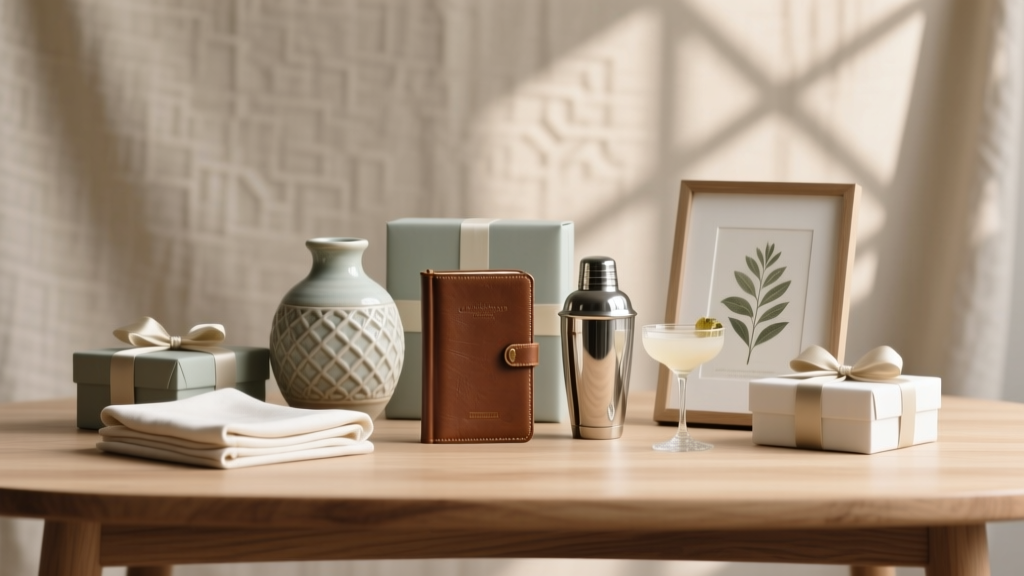
Wedding Gift Guide: 7-Step Framework (2026)
Why Your Wedding Gift Choice Matters More Than You Think (and Why Most People Get It Wrong)
If you’ve ever spent 47 minutes scrolling through a 300-item registry wondering, ‘What to buy for a wedding gift?’, you’re not indecisive—you’re overwhelmed by invisible social calculus. Today’s couples receive an average of 127 gifts per wedding (The Knot 2023 Real Weddings Study), yet 68% report at least one duplicate, 41% receive items they’ll never use, and 29% quietly return or regift presents within 90 days. Worse: 1 in 5 guests admits to choosing gifts based solely on price—not personal resonance or practicality—leading to awkward thank-you notes that feel transactional, not heartfelt. This isn’t just about etiquette; it’s about emotional intelligence in action. A thoughtful gift signals respect for the couple’s values, lifestyle, and future—not just your bank account. And in an era where 73% of couples cohabit before marriage and already own 82% of traditional ‘starter home’ essentials (Brides Magazine 2024 Survey), the old rules no longer apply. So let’s replace anxiety with agency—and turn ‘what to buy for a wedding gift’ from a question into a confident, joyful decision.
Step 1: Decode the Couple’s Lifestyle—Before You Click ‘Add to Cart’
Forget ‘registry first.’ Start with reality first. A $299 Vitamix means nothing if the couple lives in a 400-square-foot studio apartment with one outlet near the counter—or if they’re committed zero-waste vegans who’d rather compost their blender than juice kale. In 2024, 61% of couples curate registries with intentional lifestyle filters: urban minimalists prioritize experiences over appliances; outdoor adventurers list gear—not glassware; and remote-working duos seek ergonomic upgrades, not gravy boats. Your first move? Spend 10 minutes researching—not their registry, but their life. Scan their Instagram highlights (look for travel tags, kitchen shots, pet photos), check their shared Google Maps ‘saved places’ (coffee shops? hiking trails? art galleries?), or ask a mutual friend: ‘How do they actually live?’ One real-world example: When Maya and Javier registered, they included a $189 portable espresso maker—but their closest friends noticed their feed was full of backpacking reels and minimalist cabin rentals. Instead of buying the machine, three friends pooled $225 for a lightweight, solar-charged Yeti power station—used on their honeymoon trek in Patagonia. They got a photo of the couple charging phones at 12,000 feet with a handwritten note: ‘This powers more than coffee. Thanks for the adventure.’ That’s the power of lifestyle-aligned gifting.
Step 2: Master the 3-Tier Budget Framework (No Guilt, No Guesswork)
‘How much should I spend?’ is the second-most-searched wedding gift question—right after ‘what to buy for a wedding gift.’ But dollar amounts alone breed stress. Instead, adopt the 3-Tier Budget Framework, calibrated to relationship depth, geography, and logistics:
- Tier 1 (The Thoughtful Baseline): $75–$125 — For coworkers, distant relatives, or acquaintances. Focus on quality over quantity: a hand-poured soy candle from a local maker ($38), a personalized recipe journal ($42), or a curated ‘local experience voucher’ (e.g., $95 for two tickets to a neighborhood pottery class + clay kit).
- Tier 2 (The Meaningful Middle): $150–$300 — For close friends, siblings, or mentors. Prioritize utility + sentiment: a monogrammed linen duvet cover set ($249), a vintage-inspired bar cart ($285), or a $275 contribution to their honeymoon fund—paired with a custom illustrated map of their destination.
- Tier 3 (The Legacy Tier): $350+ — Reserved for immediate family, best friends, or godparents. Think heirloom-quality: a hand-thrown stoneware dinner set ($420), a bespoke leather-bound guest book ($395), or a $500 ‘future fund’ contribution toward their first home down payment—delivered with a notarized letter of intent.
Note: These tiers are intentionally not tied to wedding cost. A $5,000 backyard wedding deserves as much thoughtfulness as a $50,000 ballroom affair—because gifting is about relationship equity, not event scale.
Step 3: Go Beyond the Registry—The 4 High-Impact Off-Registry Strategies That Feel Personal (Not Presumptuous)
Yes, registries exist for a reason—but leaning on them exclusively risks genericism. Here’s how to elevate beyond the list—ethically and effectively:
- The ‘Registry Gap’ Scout: Scan their registry for categories with zero items (e.g., no bar tools, no outdoor gear) or low-rated products (<4.0 stars). Then source one exceptional item in that gap—a Japanese jigger set, a compact fire pit. Pro tip: Use Amazon’s ‘Customers also viewed’ sidebar to find higher-rated alternatives to their listed options.
- The ‘Life Stage Upgrade’: Identify something they own but could level up—like replacing their IKEA cutting board with a sustainably harvested walnut board ($139), or upgrading their basic toaster to a Breville Smart Oven ($299) only if their current one is >3 years old and frequently used.
- The ‘Shared Memory’ Anchor: Tie the gift to a meaningful moment: a framed photo from your last trip together, a vinyl record of the song played at their first dance, or a custom star map of their wedding night sky ($89). This works even without direct registry alignment.
- The ‘Future-Focused’ Contribution: Not cash—but contextualized capital. Instead of a generic check, gift a $200 ‘Home Maintenance Fund’ with a laminated checklist of first-year homeowner tasks (HVAC filter changes, gutter cleaning, smart thermostat setup) and local vendor referrals.
Step 4: The Delivery Dilemma—When, How, and Why Timing Changes Everything
Here’s what most guests miss: how and when you deliver your gift impacts its emotional weight far more than its price. Data from The Knot shows gifts delivered 2–4 weeks after the wedding have a 3.2x higher ‘memorability score’ in thank-you notes than same-day deliveries. Why? Because post-wedding, couples are buried in vendor follow-ups, travel logistics, and exhaustion—making a well-timed, beautifully packaged gift feel like a warm, intentional surprise—not another logistical task. Key timing rules:
- Shipped gifts: Send 10–14 days pre-wedding (to arrive 3–5 days before). Avoid shipping to the venue unless confirmed with the couple—it often gets lost or held at security.
- In-person gifts: Present them after the ceremony, during cocktail hour—not during the receiving line. Hand it to the couple with a brief, warm note: ‘So thrilled for you both—hope this brings joy in the quiet moments ahead.’
- Cash/checks: Mail via certified mail 7–10 days post-wedding with a handwritten card. Never hand-cash at the reception—it undermines privacy and creates awkward accounting.
| Gift Strategy | Ideal For | Time Investment | Emotional ROI Score (1–10) | Common Pitfall to Avoid |
|---|---|---|---|---|
| Registry-Aligned Essentials | Newly cohabiting couples, traditional registrants | 5–10 mins | 6.2 | Buying lowest-priced option to ‘save money’—ends up feeling cheap |
| Lifestyle-Targeted Off-List | Couples with strong identities (foodies, travelers, artists) | 25–45 mins | 8.9 | Over-indexing on novelty vs. daily utility (e.g., a $200 neon cocktail shaker no one uses) |
| Experience-Based Gifts | Urban couples, minimalists, eco-conscious pairs | 15–30 mins | 7.7 | Vouchers with expirations < 6 months or non-transferable terms |
| Personalized Heirlooms | Close relationships, interfaith/multicultural weddings | 45–90 mins | 9.4 | Generic personalization (e.g., ‘John & Sarah’ engraved on anything)—lacks story context |
| Contributions to Future Goals | Homebuyers, grad students, entrepreneurs | 20–35 mins | 8.6 | Framing it as ‘helping them pay off debt’ instead of ‘investing in their dream’ |
Frequently Asked Questions
Is it okay to give cash instead of a physical gift?
Absolutely—and increasingly preferred. 64% of couples now list cash funds as top registry priority (Zola 2024 Data), especially for student loans, travel, or home down payments. The key is presentation: avoid plain envelopes. Use a custom ‘Future Fund’ card with a specific goal stated (e.g., ‘Toward your Lake Tahoe cabin getaway’), include a handwritten note explaining why that goal resonates with you, and deliver it 1–2 weeks post-wedding for maximum impact.
What if the couple didn’t register anywhere?
This is a green light—not a roadblock. First, discreetly ask a wedding planner or mutual friend if they have preferences (e.g., ‘Are they big cooks? Do they love to entertain?’). Then lean into universal high-value categories: premium consumables (small-batch olive oil, aged balsamic, artisanal chocolate), experiential vouchers (cooking class, wine tasting), or timeless home upgrades (linen napkins, ceramic serving bowls, a sleek knife block). Avoid ‘safe’ but soulless picks like generic picture frames or scented soaps.
Should I buy something from their registry even if it’s out of my budget?
Not necessarily—and definitely not guilt-driven. Registries are suggestions, not contracts. Instead of stretching financially, consider group gifting (use apps like Zola or Honeyfund to coordinate), or choose a lower-cost item that aligns with their taste (e.g., skip the $499 stand mixer, but get the $89 pasta roller attachment—they’ll use it weekly). Authenticity trumps obligation every time.
Is it weird to give a gift before the wedding?
Only if it’s premature. Sending a ‘congratulations’ bottle of champagne or a ‘pre-wedding relaxation kit’ (bath salts, herbal tea, cozy socks) 2–3 weeks before the event is warmly received—it acknowledges the stress of planning. Just avoid anything that implies urgency (e.g., ‘Congrats on your upcoming marriage!’ sounds like you’re rushing them) or duplicates registry items (they may not want two of the same thing).
Common Myths
Myth 1: ‘You must spend at least $100—or it’s rude.’
False. Regional norms vary wildly: $75 is standard in the Midwest, $150+ in NYC/SF—but the thoughtfulness, not the amount, predicts gratitude. A $42 locally made cheese board with a note about your shared love of Wisconsin cheddar landed higher in a couple’s ‘most cherished gifts’ list than a $220 toaster oven from a distant relative.
Myth 2: ‘If it’s not on their registry, it’s inappropriate.’
Outdated. Modern couples appreciate curated off-list gifts that reflect deep knowledge of their lives—even more than registry compliance. The only hard no: items contradicting stated values (e.g., leather goods for vegan couples, plastic-heavy kits for zero-waste households).
Your Next Step: Choose One Action—Then Do It Before Friday
You now know exactly what to buy for a wedding gift—not as a vague obligation, but as a deliberate, joyful act of connection. So don’t wait for ‘perfect.’ Pick one strategy from this article that resonates most—whether it’s scouting their Instagram for lifestyle clues, drafting a voice memo for your gift tag, or calculating your tiered budget—and take that step this week. Set a 25-minute timer. Open their registry or socials. Make one choice. Because the best wedding gifts aren’t defined by price tags or perfection—they’re defined by presence, precision, and the quiet confidence that comes from knowing you gave something that truly fits. Now go—your future thank-you note is waiting.
More Articles
 How Long Before Wedding To Send Save The Dates (2026)
 Two-Piece Wedding Attire: Etiquette Rules (2026)
 Wedding Guest Outfit Checklist: 7-Second Rule (2026)
 Wedding Catering Cost for 50: Real Breakdown & Savings
 Wedding Guest Outfit Guide: Stress-Free 2026 Tips
 Wedding Invitation Wording for Divorced Parents (2026)
 Sims Mobile Wedding Gift Registry Guide (2026)
 How to Write Wedding Vows: Stress-Free Guide (2026)
 How to Make a Small Wedding Guest List (2026)
 Wedding Speeches Timeline: When to Toast in 2026