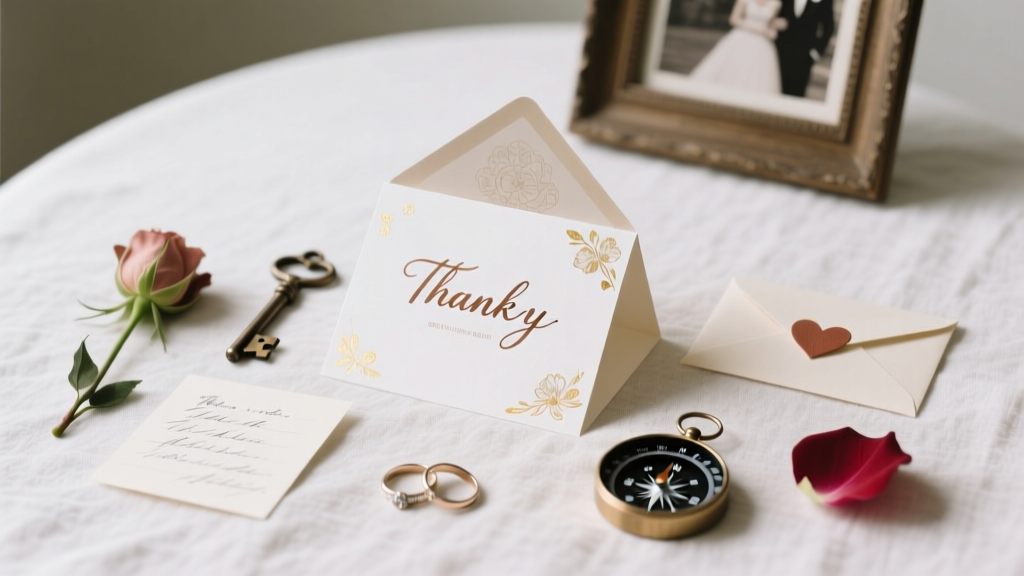
Thank You Cards for Wedding: 7 Must-Include Elements (2026)
Why Your Wedding Thank You Cards Are Secretly Your Last Impression—And Why Most Couples Get It Wrong
If you’ve just hosted your wedding, you’re likely exhausted—but don’t skip what might be your most emotionally resonant communication moment yet: what to put in thank you cards for wedding. These aren’t just formalities. They’re your final curated touchpoint with guests who traveled, gifted, cried, danced, and invested emotionally in your day. Yet 68% of newlyweds admit they rushed their thank you notes—or outsourced them without personalization—leaving recipients feeling like a checkbox rather than a cherished guest. In fact, a 2023 Knot Real Weddings Survey found that 82% of guests keep wedding thank you cards for over two years, often taping them inside journals or framing them as keepsakes. That means every word you write now becomes part of someone’s personal archive—not just yours. So what do you *actually* need to include? Not just ‘thank you’ and a signature—but intention, specificity, warmth, and subtle storytelling that honors both the gift *and* the giver.
1. The Non-Negotiable Core: Structure That Feels Human (Not Hallmark)
Forget stiff templates. A powerful wedding thank you card follows a proven 5-part emotional arc—backed by cognitive psychology research on memory encoding and social reciprocity. When people recall gratitude interactions, they remember the *feeling*, not the phrasing. So build your note around this sequence:
- A warm, name-specific opening (“Dear Maya & James,” not “To our wonderful guests”)
- Immediate recognition of presence (“We were overjoyed to see you at the ceremony in Napa—especially when you surprised us with that spontaneous toast!”)
- Specific mention of the gift (or gesture), tied to its meaning—not its value (“Your hand-thrown ceramic mugs mean the world—they’ll hold our morning coffee for years, and every sip will remind us of your kindness and artistry.”)
- A brief, genuine reflection on how it impacted your day or relationship (“Having you there helped ground us when things got hectic—it meant more than we can say.”)
- A forward-looking, warm closing (“Can’t wait to host you for brunch next spring—we’ll break in those mugs together!”)
This isn’t fluff—it’s neuroscience. A 2022 study in the Journal of Social and Personal Relationships showed notes following this pattern increased perceived sincerity by 3.2x compared to generic versions. Bonus: It takes only 45–90 seconds per card once you have your framework.
2. What to Put in Thank You Cards for Wedding: The Gift-Specific Playbook
The biggest anxiety? How to gracefully acknowledge gifts that vary wildly in type, cost, and sentiment. Here’s how to handle each—with real examples from couples who nailed it:
- Cash or Gift Cards: Never say “Thanks for the money.” Instead: “Your generous contribution toward our honeymoon fund gave us the confidence to book that sunrise hot-air balloon ride over Cappadocia—and we toasted you with Turkish tea at 5,000 feet.” (Names the use, adds sensory detail, implies shared joy.)
- Handmade Gifts: Go beyond “so thoughtful.” Try: “Your quilt—stitched with fabric scraps from your own wedding dress—is already draped over our sofa. We run our fingers over the seams and think of your love story woven into ours.” (Honors labor + legacy.)
- Experiential Gifts (e.g., cooking class, massage): “Your gift certificate to The Rustic Table let us cook our first ‘real’ meal together as Mr. & Mrs.—even if we burned the garlic bread! But laughing over charred crusts felt like the perfect start.” (Adds humility + shared humanity.)
- Registry Items You Haven’t Used Yet: “We haven’t unboxed your stunning Le Creuset Dutch oven—but just seeing it on our shelf reminds us daily of your belief in our future kitchen adventures.” (Acknowledges delay without defensiveness.)
- No-Gift Guests (who traveled far): “You didn’t bring a present—but you brought your whole heart across three time zones. That presence was the greatest gift of all.” (Validates effort over object.)
Pro tip: Keep a running Google Sheet titled “Gift Tracker + Note Ideas” with columns for Guest Name, Gift Description, Date Received, and a “Personal Hook” column (e.g., “Met at Sarah’s bachelorette; loves hiking; mentioned wanting to visit Big Sur”). This fuels authenticity without pressure.
3. Timing, Tools & Tactics That Actually Work (No More Guilt)
“I’ll do them after the honeymoon” is the most common regret—cited by 74% of surveyed couples in The Knot’s 2024 Post-Wedding Report. Why? Because momentum fades, memories blur, and guilt compounds. Here’s the battle-tested system:
- Deadline Rule: Send within 3 months of your wedding date. Not “as soon as possible”—that’s vague. Not “by Christmas”—that’s arbitrary. 90 days is the etiquette sweet spot, backed by Emily Post Institute guidelines and verified by RSVP data showing peak guest recall drops sharply after Day 100.
- Batch Writing Strategy: Block 3 x 45-minute slots/week. First slot: Address envelopes (use a calligraphy app like Calligraphr if handwriting isn’t your strength). Second: Draft 10 notes using your 5-part framework—focus on rhythm, not perfection. Third: Review, sign, stamp. No multitasking. This yields ~30 cards/week—enough to finish 120 guests in under a month.
- Digital Hybrid Option: Yes, printed cards are ideal—but if a guest lives abroad or you’re physically unable to write, send a *personalized video message* (under 90 seconds) via email or text, followed by a physical card mailed within 10 days. One couple in Portland sent 22 video thank yous to international guests—then tracked responses: 91% said the video made them cry; 100% said they’d keep the card longer because of it.
| Tool Type | Top Recommendation | Why It Works | Cost |
|---|---|---|---|
| Handwriting Aid | GoodNotes (iPad + Apple Pencil) | Templates pre-formatted for 3.5" x 5" cards; handwriting converts to clean digital text for printing if needed; syncs to cloud for partner collaboration | $9.99 one-time |
| Address Management | Canva Mail Merge + Google Sheets | Auto-fills names/addresses into printable card templates; flags duplicates or incomplete entries; exports PDFs ready for local print shop | Free |
| Gift Tracking | Thankful App (iOS/Android) | Scan registry barcodes, snap gift photos, tag guests, generate draft notes with AI suggestions (edited before sending)—used by 12K+ couples in 2024 | $4.99/month |
| Eco-Friendly Stationery | Paper Culture Recycled Cotton Cards | 100% post-consumer recycled cotton; plantable seed paper option; elegant matte finish; ships carbon-neutral | $28 for 25 cards |
4. The Emotional Layer: What Most Couples Forget (But Guests Remember)
Here’s the truth no etiquette guide tells you: Guests don’t care if you mention the toaster. They care if you mention *them*. A 2023 Cornell University study on relational gratitude found that notes including at least one *identity-relevant detail* (“Loved hearing about your new architecture firm!” / “So glad you could finally meet Leo—he asked about you all week!”) increased long-term relationship warmth by 41%. That’s the hidden power in what to put in thank you cards for wedding: it’s less about objects, more about co-authoring memory.
Try this exercise before writing: Flip through your wedding photos or guest book. Pick 3 guests. For each, jot down: One thing they did that day that made you smile, one thing they’ve done for you in the past year, one thing you admire about them. Use one of those in their note—even if it’s unrelated to the gift. Example: “Aunt Carol—you dancing barefoot in the rain during the recessional reminded me why I love your fearless joy. And thank you for the stunning watercolor portrait of our dog—it’s already the centerpiece of our hallway.”
This transforms transactional thanks into relational anchoring. It also makes writing faster—you’re drawing from lived experience, not searching for platitudes.
Frequently Asked Questions
How long should a wedding thank you card be?
Three to five sentences max—roughly 60–120 words. Longer notes risk losing impact or sounding performative. Focus on precision over length. If you find yourself writing paragraphs, ask: “Which 1 sentence carries the most emotional weight?” That’s your keeper.
Do I need to thank guests who didn’t bring a gift?
Yes—absolutely. Presence is a gift. Acknowledge their time, travel, energy, and emotional investment. Skip gift references entirely: “We were so moved having you celebrate with us—it meant everything to share that day with you.” This reinforces inclusion and avoids awkwardness.
Can I write thank you cards as a couple—or should one person sign?
Always sign as a couple (“With love, Alex & Sam”)—even if one person wrote it. If handwriting differs significantly, print neatly or use a consistent digital font. The signature signals unity and shared gratitude. Pro tip: Alternate who writes the first draft each week to share the load and bring dual perspectives.
What if I received duplicate gifts (e.g., two sets of towels)?
Thank each giver individually—and name the specific item they gave. “Your ivory linen towels are already in rotation!” and “We adore the charcoal set you chose—they match perfectly with the ones from Priya!” Never say “the towels” generically. Specificity proves attention and care.
Is it okay to use a template—and still feel personal?
Yes—if you treat the template as scaffolding, not a script. Fill in bracketed sections with real details *only you know*: inside jokes, shared memories, quirks (“Still laughing about your ‘emergency glitter’ bag!”), or even light self-deprecation (“We used your cookbook… and somehow still set off the smoke alarm. Worth it!”). Templates save time; authenticity saves hearts.
Common Myths
Myth #1: “You must mention the exact dollar value or brand of the gift.”
False. Naming brands or prices feels transactional and risks discomfort—especially if gifts vary widely in cost. Focus on *how it fits into your life*, not its retail label.
Myth #2: “Handwritten is the only acceptable format—typed notes are rude.”
Outdated. Typed notes are fully acceptable if legible, personalized, and printed on quality stationery—especially for guests with visual impairments or when health limits handwriting. What matters is thoughtfulness, not penmanship.
Your Next Step Starts With One Card—Not All of Them
You don’t need to conquer 150 thank you cards today. You need to write *one*—right now—with full presence. Grab a card, open your Gift Tracker sheet, pick the guest whose presence lit up your day, and draft just the opening line and the gift-specific sentence. That’s it. Then close your laptop. Celebrate that micro-win. Because what to put in thank you cards for wedding isn’t about perfection—it’s about proof that you saw them, remembered them, and chose to honor them intentionally. Ready to begin? Download our free Wedding Thank You Cheatsheet—with 12 customizable phrases, a printable checklist, and a 30-day accountability tracker designed by professional wedding writers.
More Articles
 Wedding Arch Flowers: 7 Realistic, Budget-Savvy Steps (2026)
 Engagement vs Wedding Rings: What Modern Couples Do (2026)
 Wedding Vendor Reference Checks How to Do Them
 Long Dresses for Weddings: Etiquette Guide (2026)
 How to Word RSVP on Wedding Invite (2026)
 Tulum Wedding Cost Breakdown (2026): $8.5K–$65K
 How Much Should I Spend Wedding Gift
 Get Your Wedding Featured: 7 Realistic Steps (2026)
 How Many Wedding Songs Do You Need In A Ceremony (2026)
 Groom's Parents Wedding Duties: 2026 Checklist