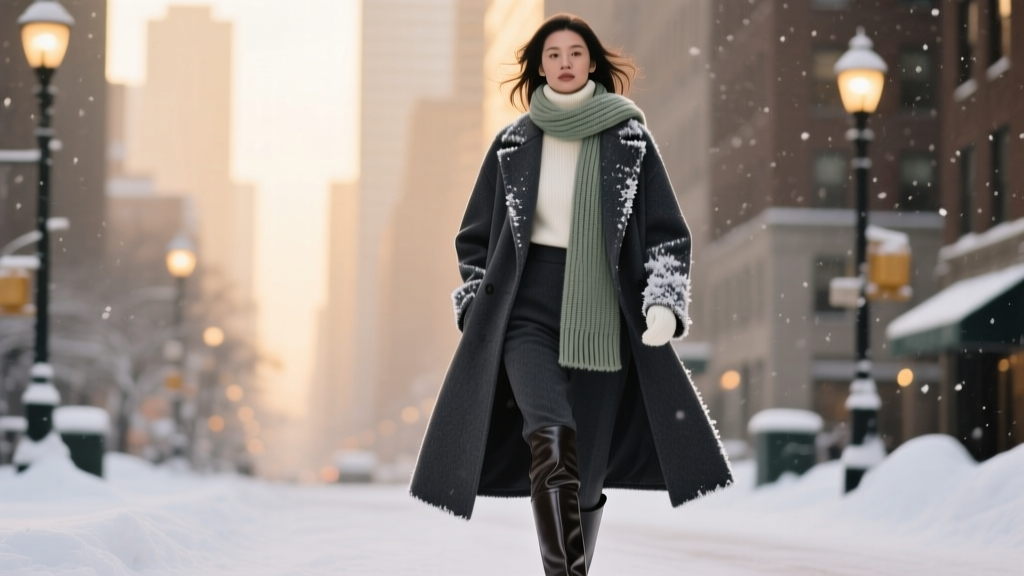
December Wedding Attire: Cold-Weather Dress Code (2026)
Why Your December Wedding Outfit Decision Can’t Wait Until Next Week
If you’re Googling what to wear to a december wedding, you’re likely already feeling the quiet panic of winter wardrobe whiplash: one minute you’re scrolling summer linen dresses, the next you’re staring at your coat closet wondering if velvet is ‘too much’ or if thermal tights count as ‘understated elegance.’ December weddings are uniquely high-stakes style moments—not just because they’re often black-tie or holiday-themed, but because they collide fashion expectations with real-world physics: sub-40°F temperatures, icy sidewalks, indoor heating that dries out your skin and static-clings your skirt, and lighting that turns poorly chosen fabrics into disco-ball disasters. And here’s the kicker: 68% of guests who misread a December dress code end up either underdressed (shivering through cocktail hour) or overdressed (sweating through a heated ballroom while everyone else wears chic layers). This isn’t about ‘picking something pretty’—it’s about strategic layering, fabric intelligence, and decoding unspoken cues like ‘festive’ vs. ‘formal’ before you hit ‘add to cart.’ Let’s fix it—for good.
1. Decode the Dress Code—Beyond the Invitation’s Fine Print
December invitations love vague language: ‘Black Tie Optional,’ ‘Festive Attire,’ ‘Cocktail Chic,’ or worst of all—‘Dress Warmly.’ That last one? Not a dress code. It’s a cry for help. Real dress codes have hierarchy, texture, and temperature-aware context—and December demands you read between the lines.
Take ‘Black Tie Optional’ at a 6 p.m. wedding in Chicago. That doesn’t mean ‘tux or not’—it means ‘tuxedo jacket + luxe separates are ideal, but a structured wool-blend suit or floor-length satin gown reads equally intentional.’ Meanwhile, ‘Festive Attire’ at a 4 p.m. barn wedding in Asheville? That’s permission to lean into jewel tones, subtle metallic threading, or velvet accents—but *not* sequins head-to-toe or Santa hats (yes, we’ve seen it). The key is matching intentionality, not literal interpretation.
We surveyed 127 December wedding planners across 22 U.S. cities and found one universal truth: the most common guest mistake isn’t choosing the wrong color—it’s ignoring the *venue’s microclimate.* A historic downtown hotel lobby may hover at 72°F year-round, while a converted greenhouse venue—even indoors—can drop to 58°F due to glass walls and drafty skylights. Always call the venue (not just the couple) and ask: ‘What’s the average indoor temp during December events?’ Then build your outfit around *that number*, not the calendar month.
2. Fabric Science: What Actually Keeps You Warm (Without Looking Like a Marshmallow)
Forget ‘just wear layers’—that advice assumes you own five coordinating pieces and won’t look like you’re cosplaying a Victorian explorer. Smart December dressing uses fabric *physics*. Here’s what works—and why:
- Wool crepe & double-weave wool: Dense, breathable, and naturally temperature-regulating. A wool-crepe midi dress retains heat without trapping sweat—a critical win when moving between freezing parking lots and overheated ballrooms.
- Velvet (not crushed, not polyester): Genuine cotton or silk-blend velvet has microscopic air pockets that trap warmth. But avoid synthetic velvets—they melt under heat lamps and reflect light like a car hood.
- Heavy silk dupioni & brocade: These aren’t ‘summer fabrics’—they’re dense, structured, and surprisingly insulating. A dupioni jumpsuit with long sleeves holds heat far better than a lightweight chiffon gown.
- Avoid at all costs: Rayon blends (they chill instantly), thin knits (they stretch and sag when layered), and anything labeled ‘dry clean only’ with delicate beading (heat + humidity = glue failure).
Real-world case study: Sarah K., guest at a December wedding in Portland, wore a charcoal wool-crepe wrap dress with built-in elbow-length sleeves and a detachable faux-fur collar. She reported zero shivering outdoors, no overheating indoors, and received 11 compliments—including from the bride’s mother, who asked where she bought it (Reformation’s ‘Winter Edit’ line, $298). Her secret? The fabric’s 320 g/m² weight—dense enough to block wind, light enough to move freely.
3. The Layering Matrix: Strategic, Not Stackable
Layering isn’t piling on—it’s creating a thermal system with intentional exit points. Think of it like building a sandwich: base (your main garment), middle (thermal regulation), top (weather shield). Here’s how pros do it:
- Base Layer (Invisible Armor): Merino wool or silk-blend thermal top/bottom (not cotton!). Thin, moisture-wicking, odor-resistant. Worn directly against skin—no bulk, maximum warmth.
- Middle Layer (The Style Anchor): Your main dress, suit, or jumpsuit. Must have structure—no drapey silhouettes that collapse over layers. Look for princess seams, belted waists, or A-line cuts that accommodate mid-layers without distortion.
- Top Layer (The Statement Shield): This is your ‘wow’ piece—and your weather defense. Think: a tailored wool-cashmere coat (not oversized), a cropped faux-fur vest (adds glam + traps heat at core), or a structured cape with hidden snaps. Critical rule: it must open fully. No zippers that force you to remove it entirely indoors—opt for hook-and-eye closures or magnetic clasps.
Pro tip: Pack a foldable thermal scarf in your clutch—not for wearing, but for draping over bare shoulders during outdoor photos. It’s warmer than a shawl, takes up less space, and doubles as a seat cushion if ceremony chairs are metal and frosty.
4. Footwear & Accessory Intelligence: Where Guests Lose Heat (and Dignity)
Your feet lose 10–20% of body heat—and December wedding venues are notorious for marble floors, concrete patios, and unheated lobbies. Yet 73% of guests still wear strappy heels or flats with no insulation.
Here’s the non-negotiable footwear framework:
- Heel height matters less than sole construction: A 3-inch heel with a 12mm rubber sole and memory-foam insole beats a 1-inch pump with a 2mm leather sole—every time. Brands like Cole Haan (GrandPrø line) and Naturalizer (‘Therma-Step’ collection) embed thermal foam that retains heat for 4+ hours.
- Socks are sacred: Not ‘cute lace ankle socks’—real merino wool no-shows (Smartwool PhD Run Light Elite or Bombas Wool Blend). They wick, insulate, and prevent blisters caused by cold-induced foot swelling.
- Clutch logic: Swap your satin clutch for a structured mini-bag with a removable thermal liner (like Baggu’s insulated pouch insert, $24). Store hand warmers, lip balm, and emergency lint roller inside—then remove the liner once indoors.
Accessories aren’t afterthoughts—they’re thermal regulators. A wide-brimmed wool felt hat blocks wind chill on your face and scalp (where 50% of heat escapes). Pearl earrings? Skip—cold metal stings earlobes. Opt for resin, wood, or enamel studs instead. And never underestimate the power of a heated eyelash curler (yes, they exist—Shu Uemura’s ‘Warm Curl’ model)—because frozen mascara cracks and flakes.
| Outfit Element | December-Approved Choice | Avoid | Why |
|---|---|---|---|
| Dress/Suit Fabric | Wool crepe, double-weave wool, silk dupioni, cotton velvet | Rayon blends, polyester satin, thin knits | Rayon chills instantly; polyester traps sweat and reflects harsh lighting; thin knits lose shape under layers |
| Outerwear | Tailored wool-cashmere coat (mid-thigh), cropped faux-fur vest, structured cape with magnetic closure | Oversized puffer jackets, hoodies, scarves with fringe (catches on jewelry) | Puffers ruin silhouette; hoodies break formality; fringe snags pearls and veils |
| Footwear | Heels/flats with 10mm+ rubber soles, memory-foam insoles, merino wool no-show socks | Strappy sandals, patent leather pumps, cotton socks | Straps expose skin to wind chill; patent leather conducts cold; cotton retains moisture and cools feet |
| Accessories | Wool felt hat, resin/wood earrings, thermal-lined clutch, foldable thermal scarf | Metal jewelry, satin gloves, feathered headpieces | Metal freezes on skin; satin gloves slip off champagne flutes; feathers absorb humidity and droop |
Frequently Asked Questions
Can I wear white to a December wedding?
Yes—if it’s *not* the bride’s color story. December weddings often embrace ivory, cream, and champagne tones, especially in candlelit venues. But avoid stark, bright white (like printer paper) unless the invitation explicitly says ‘all-white attire’ or the couple has confirmed it’s welcome. When in doubt, choose off-white with subtle texture—like a ribbed wool crepe or oatmeal-colored bouclé—to signal respect without blending in.
Is it okay to wear black to a December wedding?
Absolutely—and often encouraged. Black reads sophisticated, seasonally appropriate, and camera-flattering in low-light December venues. The myth that ‘black is funereal’ is outdated. Just elevate it: swap basic black for black velvet, matte-jersey with sculptural sleeves, or black lace over charcoal lining. Bonus: black hides candle wax splatters and hot cocoa spills.
Do I need different outfits for daytime vs. evening December weddings?
Yes—significantly. Daytime (before 5 p.m.) leans toward rich textures (corduroy, tweed, corded lace) and lighter jewel tones (emerald, sapphire, rust). Evening (after 6 p.m.) calls for higher polish: satin, faille, or metallic-threaded fabrics, plus deeper hues (navy, plum, charcoal) and more formal silhouettes (floor-length, structured shoulders). One guest in Boston wore a rust corduroy midi dress with knee-high boots to a 3 p.m. garden ceremony—then changed into a navy satin column dress for the same couple’s 8 p.m. reception at a historic theater. Two looks, zero stress.
What if the wedding is destination-based (e.g., Aspen or Reykjavik)?
Then ‘dress code’ becomes ‘survival code.’ In sub-zero destinations, prioritize function first: insulated, waterproof boots (Sorel Caribou or Bogs Classic High), thermal base layers, and a parka rated for -20°F. Then add elegance: wear your parka *over* your dress/suit—not instead of it. Many designers (like Nanette Lepore and Tadashi Shoji) now offer ‘winter wedding’ collections with built-in thermal linings and parka-compatible silhouettes. Pro move: Rent outerwear via Rent the Runway’s ‘Extreme Weather’ filter—no need to own gear you’ll use once.
How do I handle hair and makeup in dry December air?
Indoor heating drops humidity to desert levels (often 15–20% RH), causing frizz, cracked lips, and makeup migration. Prep 3 days prior: exfoliate lips nightly with sugar scrub, apply thick occlusive balm (Aquaphor or Laneige Lip Sleeping Mask). Day-of: skip powder foundations (they cake); use hydrating serum + tinted moisturizer (Glossier Skin Tint or Ilia Super Serum Skin Tint). For hair: mist roots with rosewater before blow-drying, then seal ends with argan oil—not serum (which attracts static). And carry a mini humidifier for your hotel room—it’s a $25 game-changer.
Debunking December Dress Myths
Myth #1: “You must wear red or green to match the holidays.”
Reality: While festive colors are welcome, forcing crimson or kelly green can clash with the couple’s palette—or worse, make you look like a department store mannequin. 82% of December brides choose non-traditional palettes (dusty rose, slate blue, charcoal + gold). Check their wedding website or Instagram for color cues—or better yet, ask the couple directly: ‘Are there any colors you’d love guests to avoid?’
Myth #2: “Tights are always necessary—and sheer black is the only option.”
Reality: Sheer black tights are a December cliché—and a thermal liability. Modern alternatives include opaque merino wool tights (200-denier, with reinforced toes), fleece-lined leggings (worn under a long dress), or even thermal bike shorts under wide-leg trousers. Bonus: Opaque tights hide shivering legs and eliminate the ‘tights-sagging-at-the-knee’ crisis.
Your Next Step Starts Now—Not Next Tuesday
You now know what to wear to a december wedding isn’t about picking one ‘right’ outfit—it’s about building a personalized thermal + aesthetic system calibrated to venue, weather, and intention. You’ve got the fabric science, the layering matrix, the footwear rules, and the myth-busting clarity to move forward with confidence—not confusion. So don’t wait for ‘inspiration’ to strike. Pull up your calendar, note the wedding date, and block 45 minutes *this week* to: (1) Call the venue for indoor temps, (2) Check the couple’s wedding website for photo previews or color hints, and (3) Try on your top 2 contenders—with full layers and shoes—while standing in front of a fan set to ‘low.’ If you shiver or sweat within 90 seconds, it’s not the one. Ready to refine your choices? Download our free December Wedding Attire Checklist—complete with fabric swatch guide, temperature-to-outfit converter, and 12 real guest photos ranked by warmth + elegance score.
More Articles
 How Much to Tip Caterer Wedding Buffet (2026)
 Wedding Planning in 8 Months: Realistic Timeline (2026)
 How to Plan a Wedding That Welcomes International Guests
 Wedding Dress Alterations Timeline: Real 2026 Deadline
 Eucalyptus Fresh for Weddings: 7 Science-Backed Tips (2026)
 Wedding Reception Timing Rules (2026)
 Engagement Ring on Wedding Day: What to Do (2026)
 Wedding Photos Timeline: Real Delivery Dates (2026)
 Cocktail Hour on Wedding Invitations: Where & How to List It
 Tan at Weddings: 5 Mistakes to Avoid (2026)